Diamond Clarity Plot Guide
Use the plot to locate the feature, then inspect it on the stone.
By Rob Cornfield, Co-Founder of YourDiamondGuys.com. Cofounder and diamond sourcing specialist focused on cut quality, light performance, and trade value.
A clarity plot is a map, not a photograph and not a safety certificate. It helps locate selected inclusions and blemishes. It does not show every feature, exact relief, eye visibility, transparency, or durability by itself.
The lower the clarity, the larger the stone, and the more open the facet pattern, the more I want that map.
GIA describes the clarity diagram as an approximate representation. Red symbols identify internal characteristics, while green or black symbols identify external characteristics on the report guide.
When does a diamond clarity plot matter most?
A plot matters most for large diamonds, SI and I clarity, emerald and Asscher cuts, exposed corners, durability concerns, and identity checks. High clarity stones need it less.
A diamond grading report can include a plot, comments, both, or neither depending on service.
A GIA Diamond Dossier omits the plot. The Dossier versus full report guide explains when that shorter file is enough.
What does a clarity plot show?
See GIA’s photographed diamond and plotting diagram and compare the marks on the diagram with their location on the stone.
The plot shows the approximate type and position of selected clarity characteristics as seen through the crown and pavilion diagrams. A key identifies symbols for crystal, feather, cloud, needle, cavity, and other features.
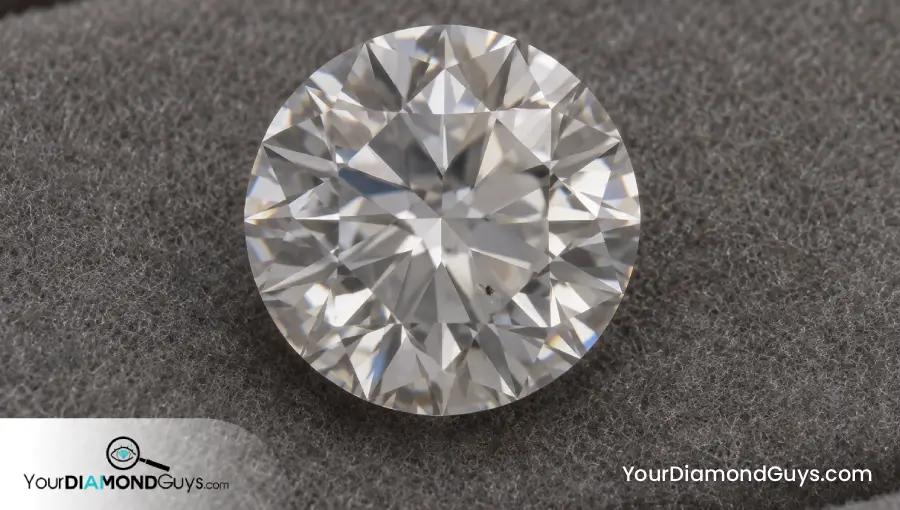
Face up round diamond with a small dark feature off center.
Location changes buyer questions. A crystal under the table can affect eye cleanliness. A feather at the girdle can raise durability or setting questions. An indented natural near a corner can affect outline and future repair.
The pattern can help identify the stone when the inscription is missing or blocked. It becomes stronger when measurements, weight, comments, and microscope features also match.
| Situation | Plot value | Extra proof |
|---|---|---|
| VVS or VS round | Useful but often less critical | Eye clean video and identity match |
| SI or I clarity | High | Microscope images and durability review |
| Emerald or Asscher cut | High | Face up inclusion visibility |
| Large natural diamond | High | Independent inspection |
| Dossier with no plot | Unavailable by design | Inscription, images, comments, appraiser |
| Cloud based transparency concern | Incomplete alone | Neutral transparency comparison |
What does the plot leave out?
It leaves out exact size, depth, relief, color, visibility, and every minor feature. Symbols are not drawn to photographic scale.
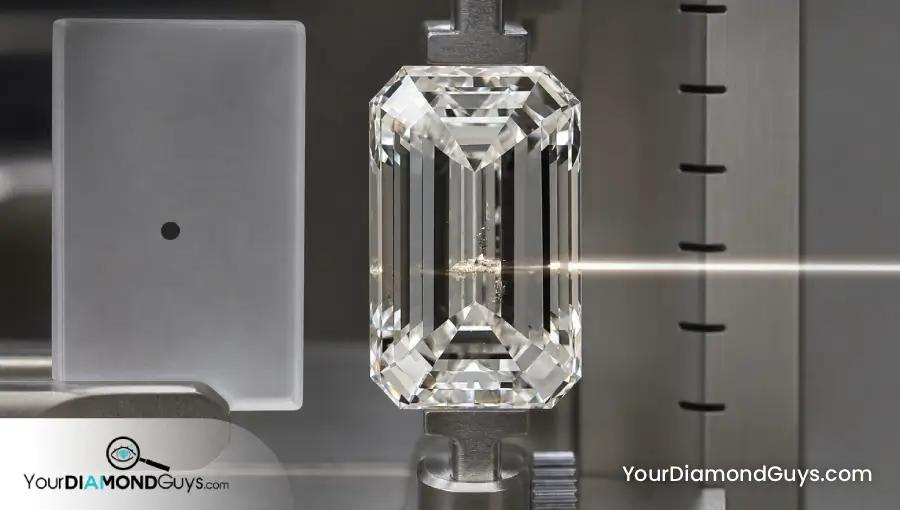
Emerald cut diamond scanned beside a flat location dot to reveal hidden inclusion depth and relief.
Comments can state pinpoints not shown, surface graining not shown, or additional clouds not shown. A sparse plot can still belong to an SI diamond when unplotted features set the grade.
Read the comments section guide before treating the drawing as the whole clarity story.
Why do step cuts need more clarity evidence?
Emerald and Asscher cuts use broad open steps. They reveal inclusions and reflections more directly than busy brilliant patterns.
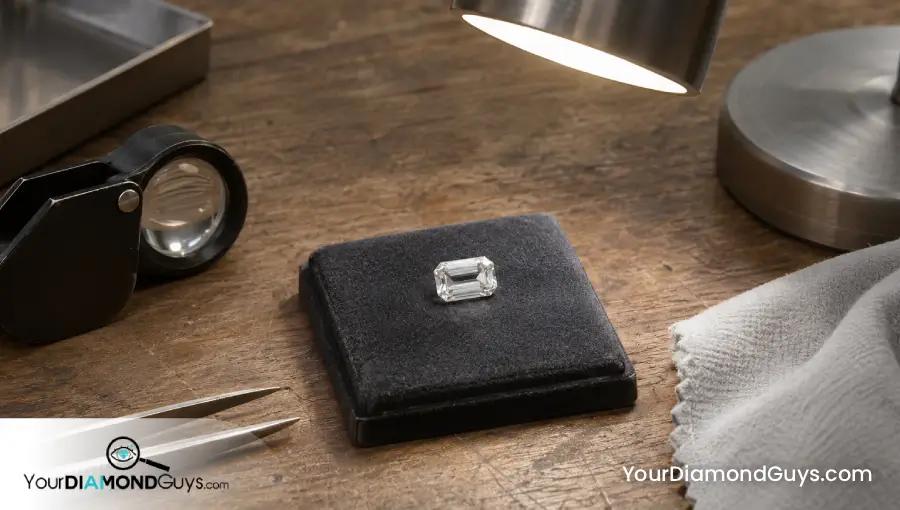
Emerald-cut diamond under a neutral inspection light.
A small dark crystal can repeat through the pavilion and appear in several places. A feather can align with a step and become more visible. The same report grade can look cleaner in one stone than another.
For an SI step cut, I want the plot, high resolution face up and side images, and normal scale video. A seller saying eye clean is not enough without defining distance and lighting.
Which features raise durability questions?
Bruise, chip, cavity, knot, etched channel, indented natural, and a significant feather at an exposed edge deserve direct review. Position, depth, setting plan, and girdle thickness decide the risk.
A red symbol near the edge is not an automatic break warning. A tiny feature can be harmless. A large surface reaching feature can affect setting, wear, or future repair.
Ask a qualified appraiser or gemologist to inspect the actual feature. Report symbols start the question. They do not answer structural safety.
How do you buy safely with no plot?
Use the inscription, official report lookup, exact measurements, carat, comments, microscope images, and independent inspection. The evidence needs to replace the missing map.
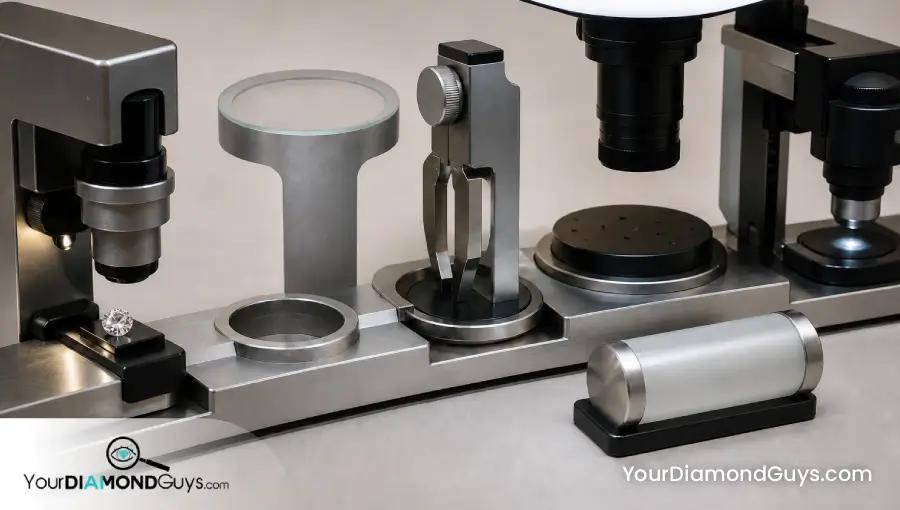
High clarity round diamond entering inscription measurement video and microscope checks around an empty plot socket.
Ask which inclusion sets the grade and where it sits. Get the answer in writing and compare it with the video.
From years of sorting, I trust a clean no plot file when the stone is high clarity and the identity chain is strong. I do not trust no plot plus lower clarity plus weak images. Too many open questions stack together.
How should a plot change the buying decision?
Use the plot to direct the microscope and video review. Edge feature, inspect durability. Table feature, inspect visibility. Cloud pattern, inspect transparency.
When no plot appears, increase independent proof in proportion to the risk. A VVS round and an SI emerald cut should not receive the same evidence standard.
A plot based decision in practice
Stone A is a 1.10 carat VS1 round with a Dossier, matching inscription, and clean video. The seller identifies a tiny feather near the edge. No plot is manageable.
Stone B is a 2.30 carat SI2 emerald cut with no plot, one compressed video, and no microscope image. The seller cannot identify the grade setting feature.
Stone A can proceed to independent inspection. Stone B does not deserve a payment until the evidence file changes.
Plot reading traps that create false confidence
- Treating symbol size as exact inclusion size.
- Calling an empty plot an eye clean guarantee.
- Ignoring comments and unplotted features.
- Rejecting every edge feather.
- Buying an SI step cut without locating inclusions.
- Using the plot without matching it to the stone.
Evidence to request when the plot is incomplete
- Which plotted or unplotted feature sets the grade?
- Is the feature visible without magnification?
- Does it reach the surface or girdle?
- Can I see it in microscope and normal scale video?
- Does it affect transparency or durability?
- Can the appraiser match the stone to the plot?
My bottom line on clarity plots
Demand more clarity evidence as size, visibility, and durability risk rise. A plot is especially useful for lower grades and open facet shapes.
When the report has no plot, do not invent certainty. Replace the missing map with inscription, images, comments, and independent eyes.
After years of sorting stones, I treat the plot as a locator, not a verdict. The microscope and normal viewing distance decide whether the feature is harmless, visible, or risky.
The "fake" clarity trick: What is fracture filling?
Questions? Reach out directly for a free consultation, or drop them in the Diamond Buyers Academy community — Rob and Josh answer personally.
What do buyers ask about clarity plots?
← Browse all diamond grading guides
Want another set of eyes on the diamond?
Send the listing, grading report, price, and any video you have. We can look at the lab report, measurements, video, and price to make sure the evidence supports the price.
*Some links on our site may earn us a small commission at NO EXTRA cost to you, helping us keep our content free*