Diamond Report Comments Decoded

Ask to see the feature behind a comment that could affect appearance or durability.
By Rob Cornfield, Co-Founder of YourDiamondGuys.com. Cofounder and diamond sourcing specialist focused on cut quality, light performance, and trade value.
The comments line can matter more than the clarity plot. It carries treatments, unplotted features, inscription details, and the sentence that explains why a clean looking plot still produced an SI grade.
Most comments are routine. A few change the entire deal.
GIA’s report guide explains that the comments section records identifying characteristics and information not represented elsewhere. It also states that detected treatments such as laser drilling appear there.
Which diamond report comments matter most?
Treatment disclosures, clarity based on unplotted clouds, durability related features, altered inscription details, and origin language require immediate review. Routine omitted features usually require context, not panic.
First understand what the diamond grading report can and cannot establish.
For a natural diamond, start with GIA and read every comment before price. A clean headline grade does not cancel a risky sentence.
Which comments are usually routine?
Pinpoints not shown, surface graining not shown, and minor details not shown can be routine. Laboratories avoid cluttering the plot with every tiny feature.

Round diamond under a clear inspection plate showing a few isolated routine pinpoint and graining details.
Additional clouds not shown also can be harmless when the diamond remains transparent and the clarity grade is strong. The wording becomes more important as the grade drops or the video looks soft.
An inscription comment simply records text, symbols, or a report number on the girdle. Verify it physically rather than treating the line as a warning.
| Comment pattern | Typical meaning | Buyer action |
|---|---|---|
| Pinpoints not shown | Tiny omitted inclusions | Check transparency and grade context |
| Surface graining not shown | Minor external growth texture omitted | Inspect finish and visibility |
| Additional clouds not shown | Cloud material not fully plotted | Request crisp neutral video |
| Clarity based on clouds not shown | Unplotted clouds set the grade | Require direct transparency proof |
| Laser drilling present | Clarity treatment detected | Understand treatment and value before proceeding |
| Report number inscribed | Identity text on girdle | Match inscription to official record |
Which treatment comments change the deal?
Laser drilling, fracture filling, coating, and color treatment require a separate value and durability conversation. Natural origin does not mean untreated.

Included round diamond inspected for a narrow treatment channel beside isolated care and repair equipment.
Some treatments are stable. Some can be damaged by heat, chemicals, repair, or repolishing. The report wording and laboratory service determine what is disclosed.
For most engagement ring buyers, I prefer untreated natural diamonds. Treatment can be acceptable for a deliberate budget purchase, but only with full disclosure, appropriate price, care instructions, and insurer acceptance.
When do clouds and graining signal transparency risk?
See the graining micrographs in GIA’s Figure 10 for examples of how internal features appear under magnification.
Clarity grade based on clouds not shown gets my attention because the omitted cloud material carried major grading weight. It does not prove a milky diamond. It tells me to test transparency.
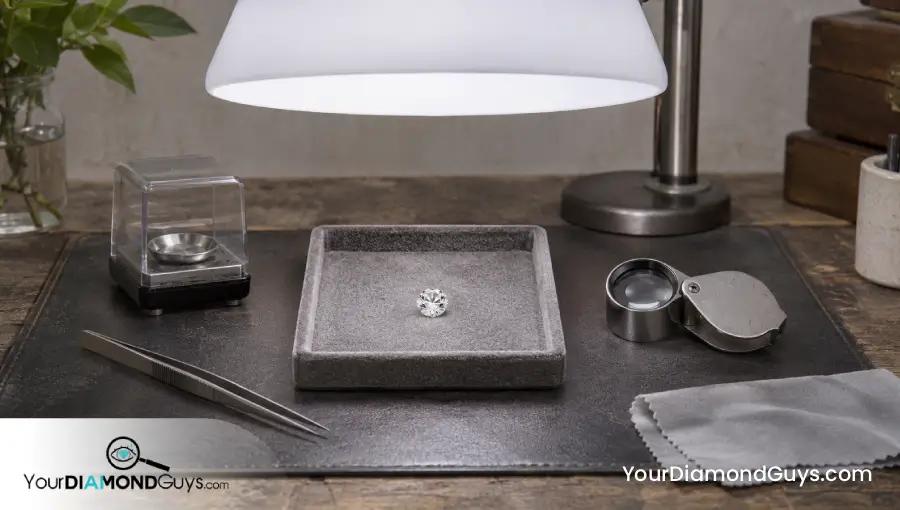
Loose diamond beneath a white diffuser beside a loupe.
Internal graining can be harmless, reflective, colored, or whitish. Extensive whitish graining can soften appearance. A lab comment cannot show the degree your eye will notice.
Request a clean video with locked exposure and a side by side transparent reference. Jewelry store spotlights can hide softness behind fast flashes.
Which clarity features deserve direct questions?
Bruise, chip, cavity, knot, etched channel, and indented natural deserve direct inspection because they can affect durability, repair, setting, or future repolishing.
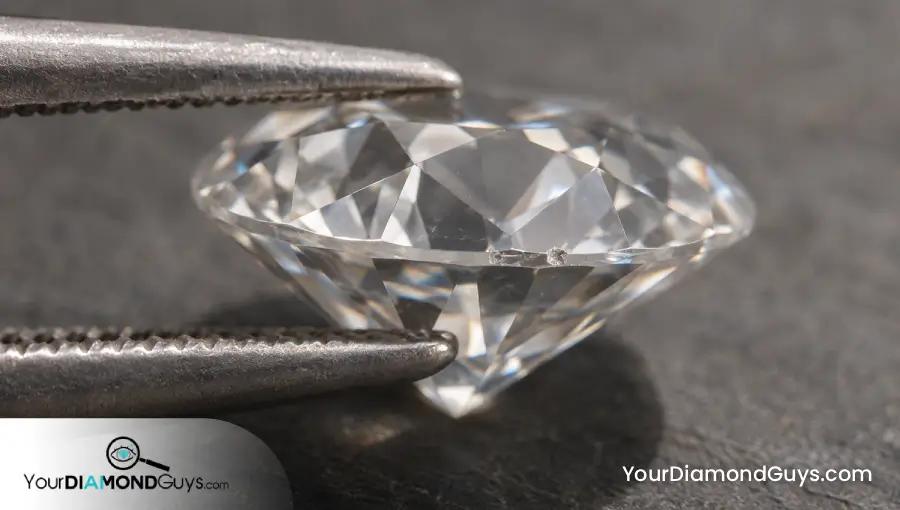
Close view of a round diamond’s girdle held at an angle.
A feather needs location and size. A feather near a protected edge can be manageable. One reaching an exposed corner or very thin girdle can be a different risk.
Use the clarity plot guide to locate plotted features, then ask what the comments add or omit.
How do lab grown comments read differently?
Lab grown comments can state Laboratory Grown origin, CVD or HPHT growth process, post growth treatment, as grown status, and inscription language.
Those lines describe production history. They do not automatically tell you whether the diamond has brown, blue, gray, or pink nuance, strain, phosphorescence, or haze.
The IGI lab report guide shows how missing growth or treatment information changes the diligence plan without becoming an automatic accusation.
How should a report comment change the shortlist?
Routine omitted features trigger a visual check. A grade setting cloud comment triggers a transparency test. A treatment disclosure triggers price, care, and insurance review. An identity conflict stops the deal.
That hierarchy keeps you from rejecting harmless notes and keeps you from ignoring the sentence that matters.
A hidden comment dealbreaker in practice
Stone A is a GIA VS2 with pinpoints not shown and a crisp video. The comment adds identification detail but creates no visible problem.
Stone B is a GIA SI1 with clarity based on clouds not shown. Its facet edges look soft in neutral video and the seller will not confirm transparency.
Stone A stays. Stone B goes. The comment did not convict Stone B alone. The comment and visible evidence agreed.
Comment reading shortcuts that hide real risk
- Skipping comments because the grades look strong.
- Treating every omitted feature as dangerous.
- Ignoring treatment language on a natural diamond.
- Reading a clarity plot without comments.
- Accepting seller paraphrase instead of the complete report.
- Using spotlights to test transparency.
Evidence to request after a concerning comment
- Does this comment identify, disclose, or warn?
- Which feature sets the clarity grade?
- Does any treatment affect care or value?
- Can I see the diamond in neutral light?
- Can an appraiser confirm durability and transparency?
- Does the inscription wording match the physical stone?
My rule for the comments section
Read comments before you fall in love with the grades. Translate each line into a specific inspection question.
Routine wording becomes safe when evidence answers it. Risky wording stays risky when the seller avoids the evidence.
On the sourcing side, the short comment that sends us back to the microscope matters more than a clean looking headline grade. That habit saves money.
What a GIA report can tell you
Questions? Reach out directly for a free consultation, or drop them in the Diamond Buyers Academy community — Rob and Josh answer personally.
What do buyers ask about diamond report comments?
← Browse all diamond grading guides
Want another set of eyes on the diamond?
Send the listing, grading report, price, and any video you have. We can look at the lab report, measurements, video, and price to make sure the evidence supports the price.
*Some links on our site may earn us a small commission at NO EXTRA cost to you, helping us keep our content free*