IGI Lab Grown Diamond Report Checks
Read the comments before drawing conclusions about growth or treatment.
By Rob Cornfield, Co-Founder of YourDiamondGuys.com. Cofounder and diamond sourcing specialist focused on cut quality, light performance, and trade value.
The IGI report is useful. The D VVS1 headline is not the useful part. Start with laboratory grown disclosure, report number, measurements, growth process, treatment wording, comments, and inscription. Then decide whether the video supports the grades.
Lab grown inventory is full of beautiful paper. Weak tint, strain, haze, and cut can still sit behind it.
IGI says its lab grown report identifies origin and can note growth process and treatments in comments upon request. It also describes Laserscribe as a way to link the stone with its report.
What should you check first on an IGI lab grown report?
Confirm Laboratory Grown origin, report number, shape, measurements, carat, color, clarity, cut data, comments, growth process, treatment wording, fluorescence, and inscription before reviewing price.
Use the certified diamond guide to keep the report in its proper role. It identifies and grades. It does not judge the whole appearance.
The natural versus lab report guide explains why an IGI D VVS1 should not be converted into a current GIA Premium assessment.
Which identity fields need to match?
Verify the report number through IGI’s official site. Match report date, Laboratory Grown wording, shape and cutting style, measurements, carat, color, clarity, cut grade when present, polish, symmetry, fluorescence, comments, and inscription.
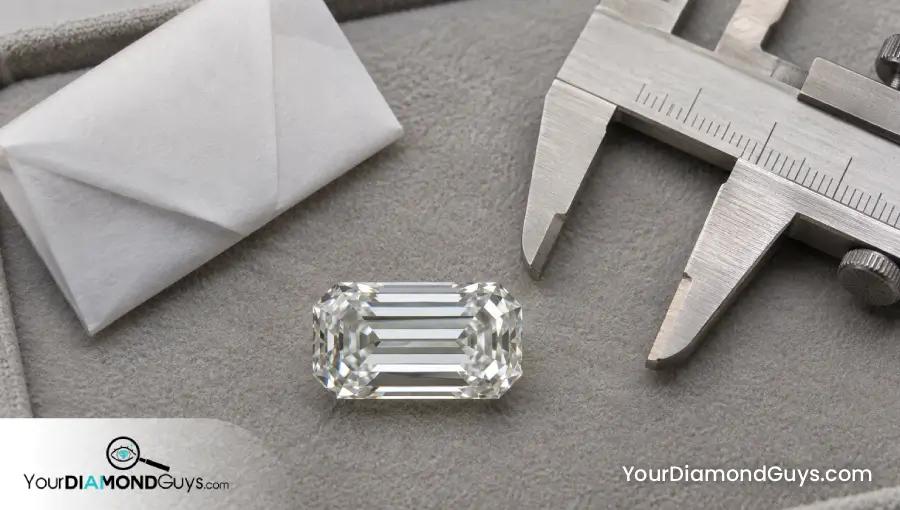
Elongated diamond on an inspection pad beside a caliper.
The seller listing can shorten wording. It cannot change origin, grades, or dimensions. A report PDF hosted by the seller is not enough when the official lookup is available.
After delivery, locate the inscription under magnification. A copied real report number can still be paired with the wrong stone, so measurements and physical features need to agree. Follow the report number verification steps before the return window closes.
What do CVD and HPHT tell you?
CVD and HPHT identify growth process. They do not rank beauty.
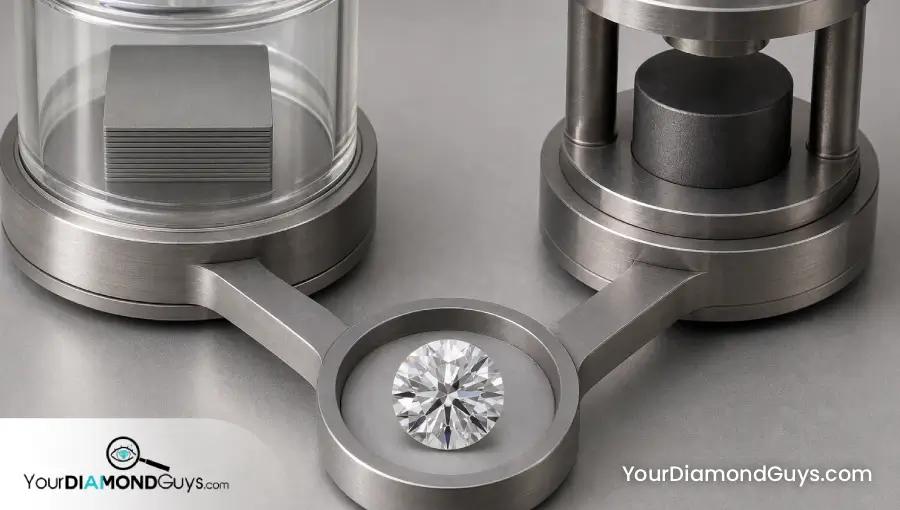
Finished round diamond below equal deposition and high-pressure manufacturing paths.
CVD stones can show brown, gray, or pink nuance, strain lines, or post growth treatment history. HPHT stones can show blue nuance, metallic inclusions, or phosphorescence. Those are possible behaviors, not automatic outcomes.
The report tells you where to look. Neutral video and direct inspection tell you whether the actual diamond has a problem.
| Report clue | What it means | Buyer follow up |
|---|---|---|
| CVD growth process | Layer based laboratory growth | Check tint, strain, and transparency |
| HPHT growth process | High pressure high temperature growth | Check nuance, inclusions, and glow |
| As grown | No indicated post growth treatment | Still inspect color and transparency |
| Treatment possibility noted | Post growth treatment cannot be excluded or is broadly disclosed | Ask for exact report and seller explanation |
| No growth line | Some services or report formats omit it | Ask what was ordered and what is known |
How should you read post growth treatment wording?
Treatment is not an automatic deal breaker. It is part of the manufacturing history and often relates to color improvement.
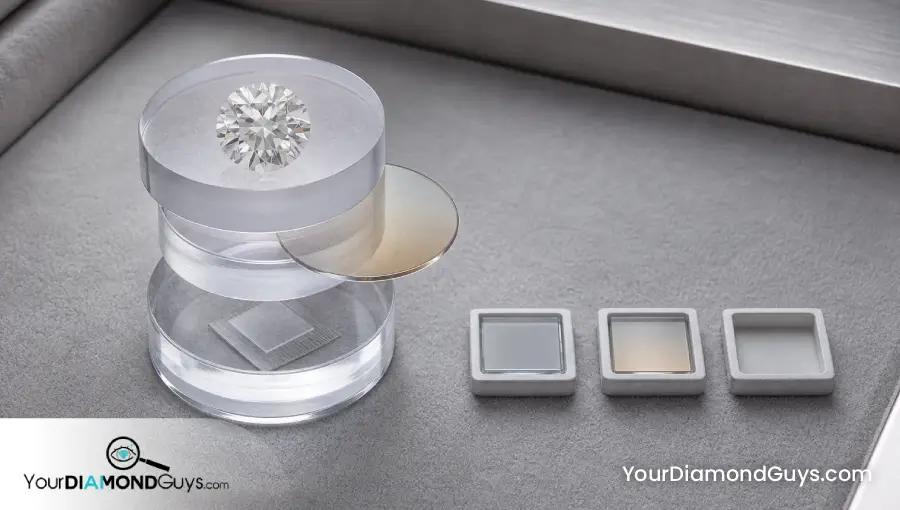
Round diamond above a layered growth history with an optional treatment wafer and evidence sockets.
The problem is missing or vague disclosure paired with a seller who claims more certainty than the report provides. Ask whether the diamond is described as grown, shows no indication of post growth treatment, or states that treatment can be present.
Keep the claim tied to the document. Do not let a salesperson turn broad treatment wording into definitely untreated or turn as grown into a promise of better appearance.
Which high grades still need visual proof?
All of them. D color can still show a nuance the grade does not communicate well in listing thumbnails. VVS clarity can still coexist with strain or optical texture you dislike.
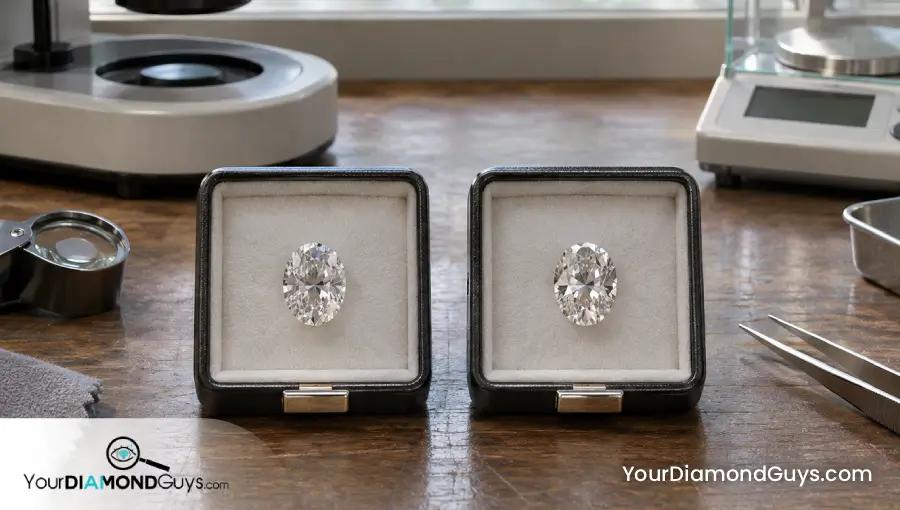
Two oval diamonds in matching holders under the same light.
For rounds, narrow around table 56 to 58 percent, depth 60 to 62.4 percent, crown angle 34 to 35 degrees, pavilion angle 40.6 to 41 degrees, and Excellent polish and symmetry. Then inspect light return.
For fancy shapes, ratios and total depth are not a cut grade. Look for bow ties, windows, crushed areas, dark bands, weak shoulders, and face up tint.
When does missing information require more diligence?
A missing growth process line can reflect the service ordered or report format. It does not prove the seller hid something.
It does mean you have less production history. Ask the seller for the complete report, official lookup, inscription image, and any manufacturer documentation. Make the return right long enough for independent inspection.
From the sourcing side, I care less about a perfect explanation than a consistent one. Report, seller, video, and price should tell the same story. When they do not, move on.
How does an IGI report change the buying decision?
The report narrows identity and quality. Growth and treatment comments define the inspection questions. Video decides tint, transparency, and cut. Price and return terms decide whether the remaining uncertainty is acceptable.
A high grade does not earn forgiveness for weak evidence. Lab grown supply is broad. You do not need to rescue a questionable listing.
A strong IGI review in practice
A 2.10 carat IGI round is graded E VS1 with Excellent cut, polish, and symmetry. The comments identify CVD growth and state as grown with no indication of post growth treatment. The inscription matches.
The proportions fall into a clean search zone, but the video shows persistent gray tone and a soft center. I skip it. The report did its job and the actual stone failed the visual test.
Another F VS2 with better transparency, balanced contrast, and a lower price can be the better diamond even though the grade line looks less impressive.
IGI report shortcuts that hide appearance risk
- Reading color and clarity before origin and comments.
- Treating CVD or HPHT as a quality ranking.
- Assuming as grown guarantees good color.
- Ignoring tint because the report says D or E.
- Using proportions as proof for a fancy shape.
- Skipping inscription verification after delivery.
Evidence to request with an IGI lab grown diamond
- Does the official IGI lookup match the complete report?
- What growth process and treatment wording appear?
- Why is any expected information missing?
- Can I see the diamond in neutral lighting against white?
- Can I see the inscription under magnification?
- Can an independent appraiser inspect it before the return deadline?
My bottom line on IGI reports
Use IGI as a detailed identity and grading file for lab grown diamonds. Read comments before grades and visual proof before price.
When the report is complete, the inscription matches, and the diamond looks crisp and color neutral for its grade, the document is doing exactly what you need.
Lab Grown vs Natural Diamond — They Look Identical. Here
Questions? Reach out directly for a free consultation, or drop them in the Diamond Buyers Academy community — Rob and Josh answer personally.
What do buyers ask about IGI lab grown reports?
← Browse all diamond grading guides
Want another set of eyes on the diamond?
Send the listing, grading report, price, and any video you have. We can look at the lab report, measurements, video, and price to make sure the evidence supports the price.
*Some links on our site may earn us a small commission at NO EXTRA cost to you, helping us keep our content free*