Heart Shape Diamond Guide
By Josh Allen, Co-Founder of YourDiamondGuys.com. Fifth generation diamantaire with 30+ years in the global diamond trade. Former supplier to Tiffany & Co., Cartier, and Harry Winston.
A heart diamond has to read clearly as a heart. Symmetry, cleft depth, lobe balance, and size matter more than most buyers expect.
Heart shapes are emotional. That is the appeal. But the shape only works when the outline is crisp enough for people to see it right away.
For natural diamonds, start with GIA. The report gives the first facts worth trusting, but the actual images and video still decide whether the diamond earns the money.
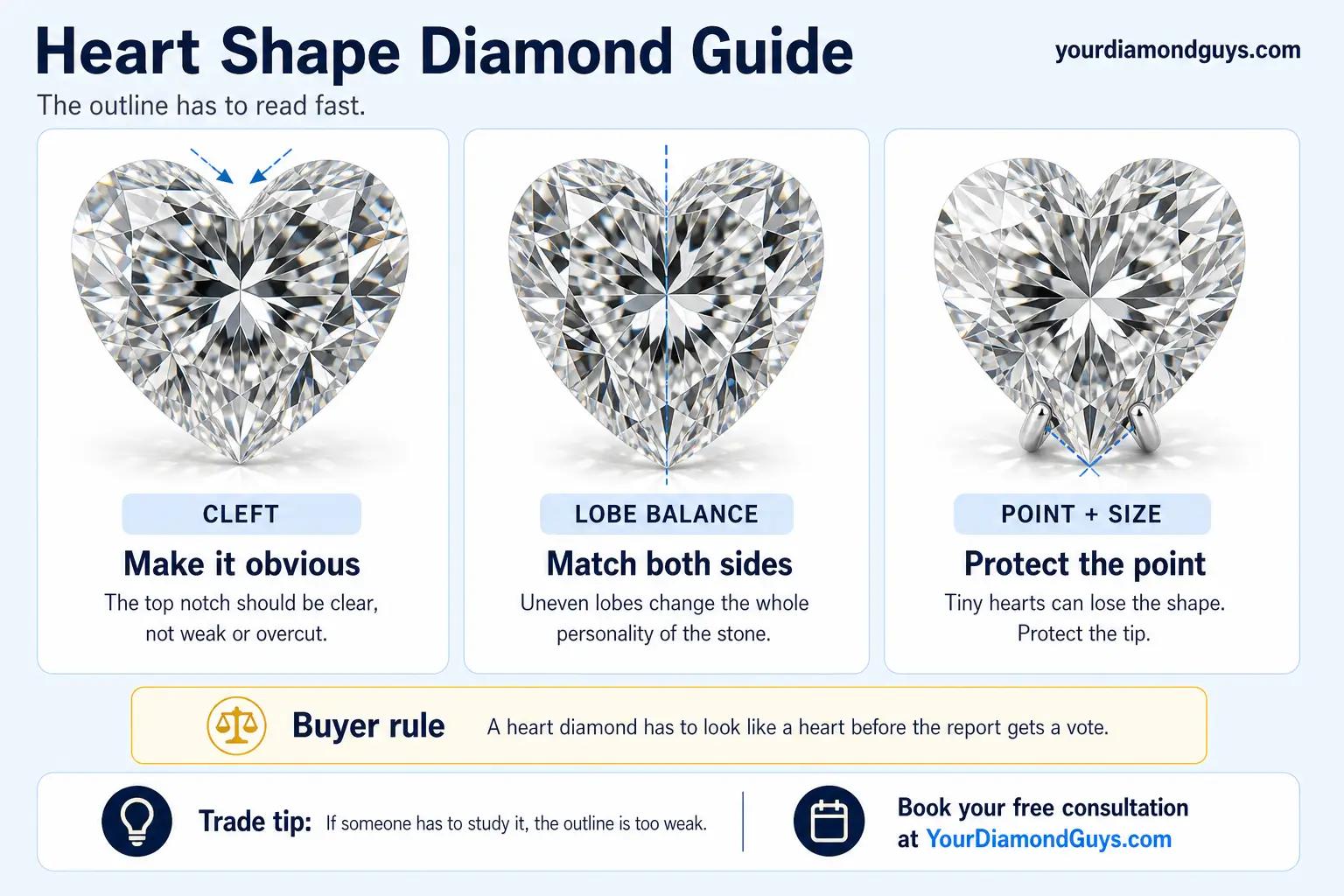
Small heart diamonds often lose the shape on the hand. In the trade, we look at the lobes and cleft first because a weak heart outline does not get fixed by a nice report.
What To Check First
| Check | Buyer Meaning |
|---|---|
| Cleft | The top indentation should be clear without looking too deep. |
| Lobes | Both sides should look balanced. |
| Point | The bottom point needs protection. |
| Size | Tiny hearts often do not read cleanly. |
| Setting | The setting should not hide the outline. |
The Shape Has To Read Fast
If someone has to study the diamond to see the heart, the shape is not doing its job. The outline should be obvious from normal viewing distance.
That gets harder at smaller sizes. Be honest about that before you buy.
Symmetry Is The Buy
One uneven lobe changes the whole personality of the stone. A weak cleft can make the diamond look like a rounded triangle.
Use video and top view images. Do not approve a heart from the report alone.
My Buying Call
Buy a heart because the heart looks good, not because the idea sounds romantic. The outline has to earn it.
Reach out to Rob or me at YourDiamondGuys.com, or book your free consultation. We will look at the actual stone with you. No sales pitch.
How This Connects To The Rest Of The Buy
A heart diamond makes the whole buying decision more visual. The cleft, lobes, point, size, and setting all have to work together or the romance of the shape falls apart.
Use the diamond shapes guide if you are still comparing shapes. Then check length to width ratio guide, shape durability ranking, and shape setting compatibility before you approve a specific heart.
That order keeps the emotion honest. The diamond has to read clearly first. The setting has to protect the point second. The report comes after the shape earns the money.
A Buyer Example
A buyer brings me two heart diamonds. One has the cleaner looking report. The other has better lobe balance, a clearer cleft, and a point that the setting can protect cleanly. I am taking the second stone seriously if the video, measurements, and price support it.
The paper is not the prize. The actual diamond is. That is the trade habit buyers need to borrow before they spend real money.
Mistakes I Would Skip
- Do not buy the report before judging the actual diamond.
- Do not compare price until the shape passes its visual checks.
- Do not ignore video, outline, spread, color visibility, or clarity visibility.
- Do not assume the same spec target works for every shape.
Questions I Ask Before Approval
- Does the diamond match the job of this page: Choose a heart shape diamond with a clear outline and balanced proportions.
- Can I see the actual diamond video, not a sample image?
- Does the shape create any durability, bowtie, windowing, color, or clarity issue?
- Is the price right for the stone in front of me?
What Makes Hearts and Arrows Diamonds So Special?
Compare Heart Shapes And Finished Rings
Use these sites as comparison tools, not automatic recommendations. I would compare heart shape listings on Blue Nile and heart ring styles on Brilliant Earth, then check the lobes, cleft, point, and face up balance.
Questions? Reach out directly for a free consultation, or drop them in the Diamond Buyers Academy community — Rob and I answer personally.
Questions Buyers Ask Us
Heart shapes usually need enough size for the outline to read clearly. Tiny hearts can lose the cleft and lobe shape.
They need more visual review than many buyers expect because symmetry and outline matter so much.
Choose a setting that protects the point and does not hide the outline.
*Some links on our site may earn us a small commission at NO EXTRA cost to you, helping us keep our content free*