Shape Setting Compatibility
By Josh Allen, Co-Founder of YourDiamondGuys.com. Fifth generation diamantaire with 30+ years in the global diamond trade. Former supplier to Tiffany & Co., Cartier, and Harry Winston.
The best setting is the one that flatters the shape and protects its weak points. Points, corners, ratio, and outline should guide the setting choice.
A setting can make a diamond look larger, safer, softer, sharper, or completely wrong. Shape and setting are not separate decisions.
For natural diamonds, start with GIA. The report gives the first facts worth trusting, but the actual images and video still decide whether the diamond earns the money.
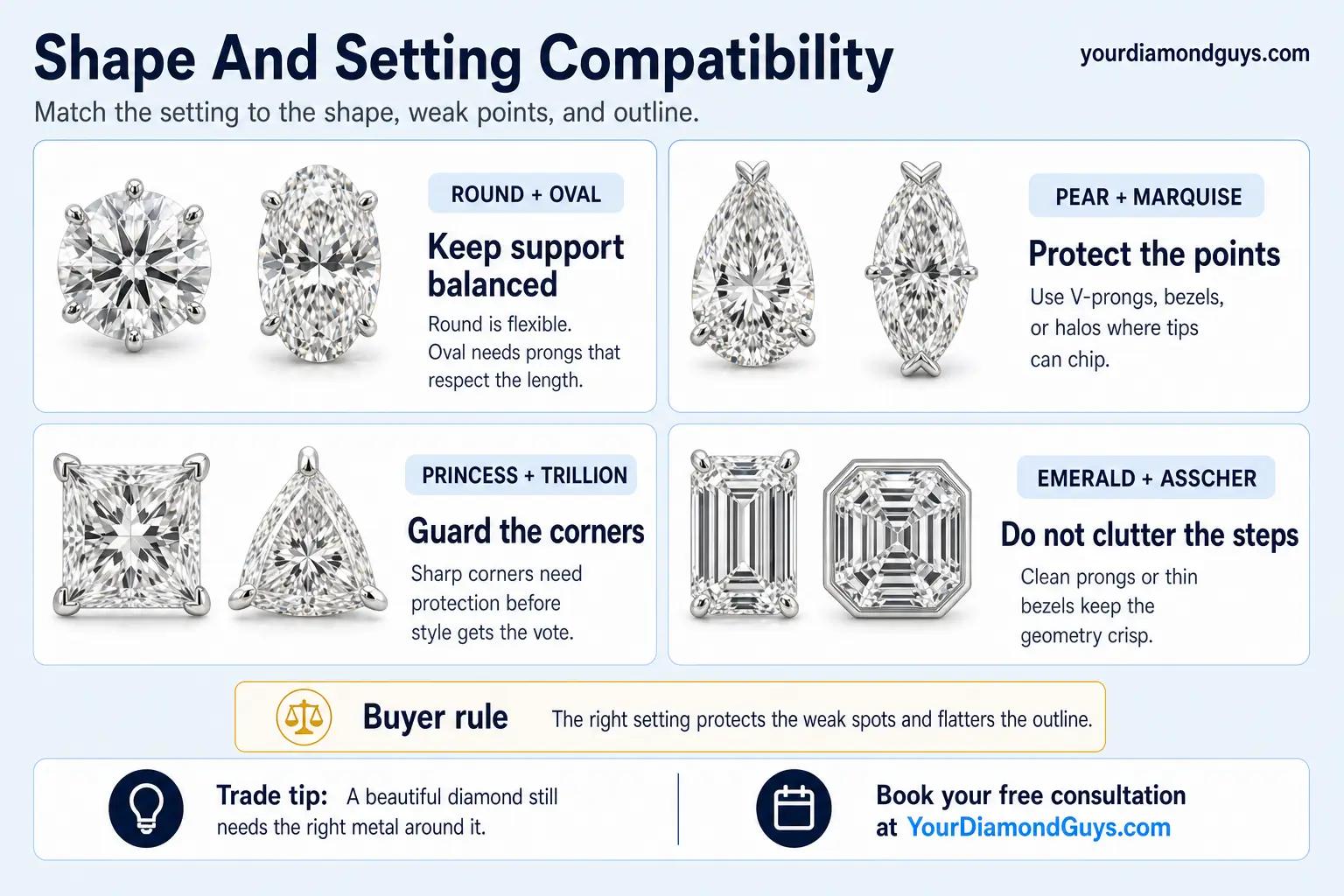
The right setting protects the weak spots and flatters the outline.
In real buying, the stone and setting get judged together. A beautiful pear with an exposed tip is not finished advice. It is half advice.
What To Check First
| Check | Buyer Meaning |
|---|---|
| Round | Works with almost anything, from solitaire to halo. |
| Oval | Needs prongs that support the long outline. |
| Pear and marquise | Need point protection. |
| Princess | Needs protected corners. |
| Emerald and Asscher | Need clean prongs that do not clutter the geometry. |
Protection Comes First For Points
Use shape durability ranking before choosing a setting for pear, marquise, princess, heart, or trillion.
V tips, bezels, halos, and smart prong placement can protect vulnerable areas without ruining the look.
Proportion Changes The Look
A halo can make a diamond look bigger. It can also make a delicate shape feel bulky. Side stones can flatter an emerald or compete with it.
The setting should support the shape, not fight it.
My Buying Call
Choose the diamond and setting together. The right pairing protects the stone and makes the outline look intentional.
Reach out to Rob or me at YourDiamondGuys.com, or book your free consultation. We will look at the actual stone with you. No sales pitch.
How This Connects To The Rest Of The Buy
Setting choice is where the shape becomes a ring. The outline, weak spots, prong placement, shank width, and side stones all have to work together.
Use the diamond shapes guide if you are still choosing the outline. Then use shape durability ranking with pear, marquise, princess, heart, and trillion before you approve exposed points or corners.
Use best shapes for small hands when footprint is the issue, prong hide strategy when an edge inclusion is involved, and setting terminology when you need the language for prongs, bezels, halos, shanks, and side stones.
A Buyer Example
A buyer sends me a pear shape in a delicate setting with the tip barely protected. The diamond is pretty, but the setting is doing half the job. I would rather see a clean V tip or protective bezel detail than approve a ring that leaves the most fragile part hanging out there.
The paper is not the prize. The actual diamond is. That is the trade habit buyers need to borrow before they spend real money.
Mistakes I Would Skip
- Do not buy the report before judging the actual diamond.
- Do not compare price until the shape passes its visual checks.
- Do not ignore video, outline, spread, color visibility, or clarity visibility.
- Do not assume the same spec target works for every shape.
Questions I Ask Before Approval
- Does the diamond match the job of this page: Choose a setting that protects and flatters the chosen diamond shape.
- Can I see the actual diamond video, not a sample image?
- Does the shape create any durability, bowtie, windowing, color, or clarity issue?
- Is the price right for the stone in front of me?
Diamond Shapes Explained
Compare The Setting And The Protection Plan
Use these links as comparison tools, not automatic recommendations. I would compare setting styles on Brilliant Earth and protection details through BriteCo, then think through prongs, coverage, exclusions, and appraisal rules.
Questions? Reach out directly for a free consultation, or drop them in the Diamond Buyers Academy community — Rob and I answer personally.
Questions Buyers Ask Us
*Some links on our site may earn us a small commission at NO EXTRA cost to you, helping us keep our content free*