Length To Width Ratio Cheat Sheet by Shape
By Josh Allen, Co-Founder of YourDiamondGuys.com. Fifth generation diamantaire with 30+ years in the global diamond trade. Former supplier to Tiffany & Co., Cartier, and Harry Winston.
Length to width ratio helps you filter shape, but it does not choose the diamond. The outline still has to look balanced in real images and video.
Ratios are useful. They are also dangerous when buyers treat them like a magic answer. Two diamonds can share a ratio and look different on the hand.
For natural diamonds, start with GIA. The report gives the first facts worth trusting, but the actual images and video still decide whether the diamond earns the money.
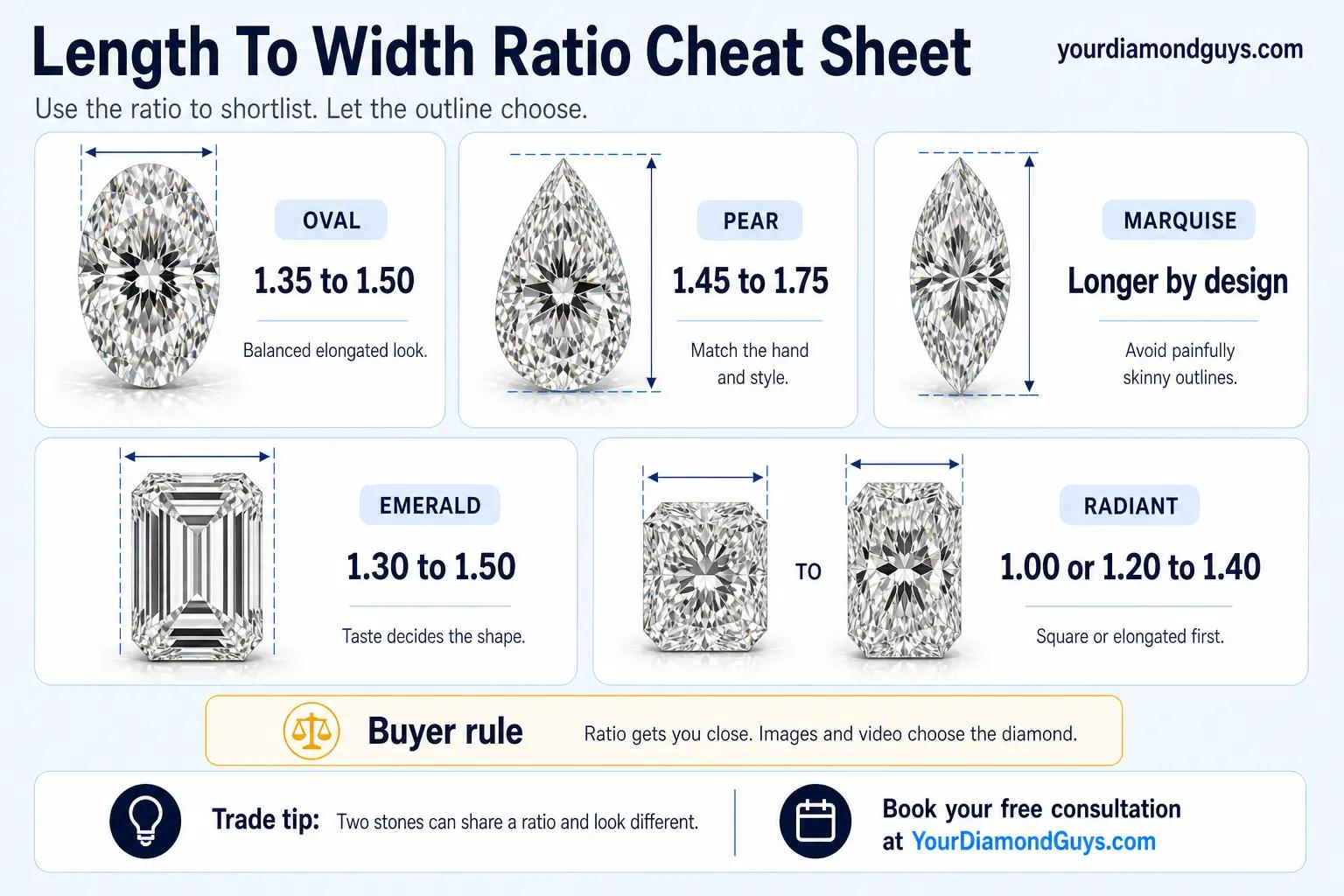
In the trade, ratio gets us close. Then the outline gets judged with the eyes. That is where the real buying decision happens.
What To Check First
| Check | Buyer Meaning |
|---|---|
| Oval | Often around 1.35 to 1.50 for a balanced elongated look. |
| Pear | Often around 1.45 to 1.75 depending on hand and style. |
| Marquise | Often longer, but avoid painfully skinny outlines. |
| Emerald | Often around 1.30 to 1.50, depending on taste. |
| Radiant | Square near 1.00, elongated often around 1.20 to 1.40. |
| Heart | Stay close enough to balanced that the cleft, lobes, and point read clearly. |
Ratio Is A Filter
Use ratio to avoid shapes that are obviously too short or too stretched. Then look at the actual outline.
A number cannot tell you whether an oval has graceful shoulders or whether a pear looks balanced.
The Hand Changes The Decision
Use the shape and size tool and compare real millimeters. A long shape can flatter short fingers. It can also look too stretched if the setting is narrow or the hand is small.
This is where style meets measurement.
My Buying Call
Use ratio to build the shortlist. Use images and video to choose the stone.
Reach out to Rob or me at YourDiamondGuys.com, or book your free consultation. We will look at the actual stone with you. No sales pitch.
How This Connects To The Rest Of The Buy
Ratio is useful because it keeps the shortlist honest. It helps you avoid ovals that look stubby, pears that look stretched, marquise diamonds that look too skinny, and radiants that land in the wrong style lane.
Use the diamond shapes guide as the hub when the ratio question is really a shape choice question.
Use the oval, pear, marquise, emerald, radiant, and heart guides when you want shape-specific judgment. Then use the shape and size tool, best shapes for small hands, and looks biggest per carat when hand fit and spread are the real decision.
That order keeps the number in its place. Ratio builds the shortlist. The outline, hand fit, and video decide whether the diamond deserves money.
A Buyer Example
A buyer brings me two ovals with the same ratio. One has awkward shoulders and a dark center. The other has a cleaner outline, better movement, and the same basic number on paper. I am taking the second stone seriously if the video, measurements, and price support it.
The paper is not the prize. The actual diamond is. That is the trade habit buyers need to borrow before they spend real money.
Mistakes I Would Skip
- Do not buy the report before judging the actual diamond.
- Do not compare price until the shape passes its visual checks.
- Do not ignore video, outline, spread, color visibility, or clarity visibility.
- Do not assume the same spec target works for every shape.
Questions I Ask Before Approval
- Does the diamond match the job of this page: Pick a length to width ratio that fits the shape and the buyer's hand.
- Can I see the actual diamond video, not a sample image?
- Does the shape create any durability, bowtie, windowing, color, or clarity issue?
- Is the price right for the stone in front of me?
Diamond Size Secrets: What Buyers Should Know
Compare Ratios In Real Listings
Use these sites as comparison tools, not automatic recommendations. I would compare length to width ratios on Ritani and Blue Nile, then look at the actual outline on video.
Questions? Reach out directly for a free consultation, or drop them in the Diamond Buyers Academy community — Rob and I answer personally.
Questions Buyers Ask Us
It is the diamond length divided by its width. It tells you how square, balanced, or elongated a shape looks.
No. Many buyers like 1.35 to 1.50, but outline and bowtie matter more.
Sometimes. Very popular ratios can cost more, but visual quality matters more than chasing a number.
*Some links on our site may earn us a small commission at NO EXTRA cost to you, helping us keep our content free*