Looks Biggest Per Carat
By Josh Allen, Co-Founder of YourDiamondGuys.com. Fifth generation diamantaire with 30+ years in the global diamond trade. Former supplier to Tiffany & Co., Cartier, and Harry Winston.
Marquise, oval, and pear usually look biggest per carat because they spread across the finger. The win only counts when depth, outline, and bowtie are under control.
Carat weight tells you weight. It does not tell you how large the diamond looks. Shape and depth change that fast.
For natural diamonds, start with GIA. The report gives the first facts worth trusting, but the actual images and video still decide whether the diamond earns the money.
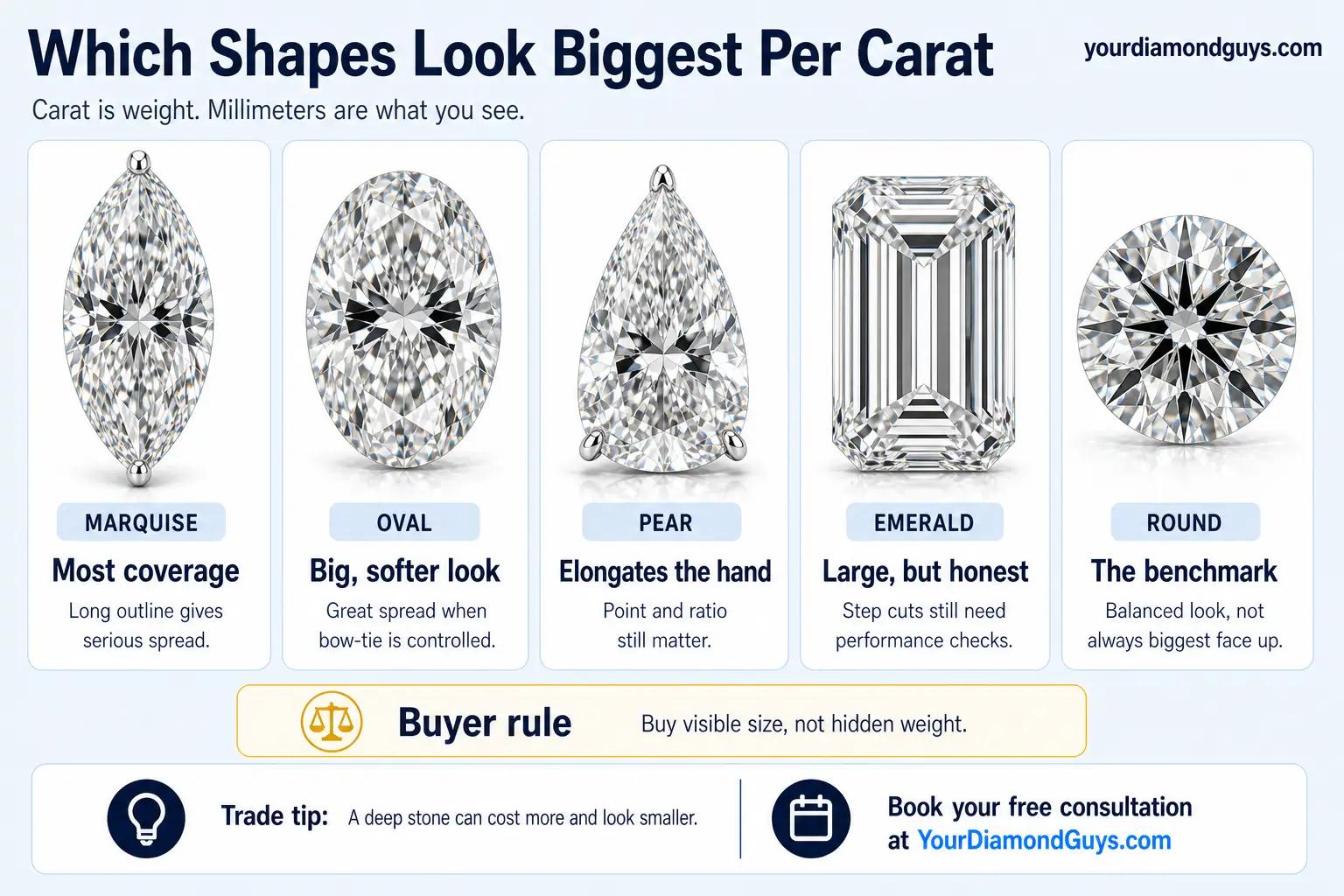
Buy visible size, not hidden weight.
Dealers compare millimeters because carat weight can lie to the eye. A deep stone can sound bigger on paper and look smaller on the hand.
What To Check First
| Check | Buyer Meaning |
|---|---|
| Marquise | Usually the strongest finger coverage. |
| Oval | Large look with softer outline. |
| Pear | Elongating shape with a distinctive point. |
| Emerald | Can look large, but step cut performance still matters. |
| Round | Balanced benchmark but not always the largest face up look. |
Face Up Size Beats Carat Alone
Use shape and size tool and compare length and width in millimeters.
A diamond that carries weight in depth can cost more without giving you more visual size.
The Biggest Look Has Tradeoffs
The biggest looking shapes often bring other checks with them. Ovals, pears, and marquise cuts need bow tie effect review. Points need protection. Long outlines need good ratio.
That is why size per carat is only one part of the decision.
My Buying Call
Buy for visible size, not just listed carat. The stone should look large and still look good.
Reach out to Rob or me at YourDiamondGuys.com, or book your free consultation. We will look at the actual stone with you. No sales pitch.
How This Connects To The Rest Of The Buy
Visible size is a value decision, not just a shape preference. A diamond can win on millimeters and still lose if the outline is awkward, the bowtie is dark, or the price jumped more than the spread did.
Use the diamond shapes guide as the hub when you need to compare visible size against sparkle style, durability, and setting fit.
Use oval, pear, and marquise when you want more finger coverage. Use emerald when you like a larger rectangular look but understand that step cut performance still has to be clean.
Then compare the length to width ratio guide, price by shape, and shape and size tool. That keeps the buy honest: spread, ratio, and price all have to make sense together.
A Buyer Example
A buyer sends me a deep 1.50 carat round and a well spread 1.30 carat oval. The round sounds bigger on paper, but the oval can look larger on the hand if the outline is clean and the bowtie stays under control. I am not buying the heavier number. I am buying the better visual result for the money.
The paper is not the prize. The actual diamond is. That is the trade habit buyers need to borrow before they spend real money.
Mistakes I Would Skip
- Do not buy the report before judging the actual diamond.
- Do not compare price until the shape passes its visual checks.
- Do not ignore video, outline, spread, color visibility, or clarity visibility.
- Do not assume the same spec target works for every shape.
Questions I Ask Before Approval
- Does the diamond match the job of this page: Choose a diamond shape for visible size without overpaying for hidden weight.
- Can I see the actual diamond video, not a sample image?
- Does the shape create any durability, bowtie, windowing, color, or clarity issue?
- Is the price right for the stone in front of me?
Diamond Size vs. Carat Weight: What Really Matters?
Compare Spread Against Real Ring Proportion
Use these sites as comparison tools, not automatic recommendations. I would compare millimeter spread on Ritani and finished ring styles on Brilliant Earth, then decide whether the diamond looks big and still looks good.
Questions? Reach out directly for a free consultation, or drop them in the Diamond Buyers Academy community — Rob and I answer personally.
Questions Buyers Ask Us
*Some links on our site may earn us a small commission at NO EXTRA cost to you, helping us keep our content free*