Shape Affects Color Clarity
By Rob Cornfield, Co-Founder of YourDiamondGuys.com. 30+ years in the global diamond trade. Specialist in diamond cut and light performance.
Shape changes how much color and clarity you see. Step cuts show more. Round brilliants hide more. Elongated and mixed cuts sit in the middle.
Do not use the same color and clarity target for every shape. That is how buyers overpay in one shape and under protect themselves in another.
For natural diamonds, start with GIA. The report gives the first facts worth trusting, but the actual images and video still decide whether the diamond earns the money.
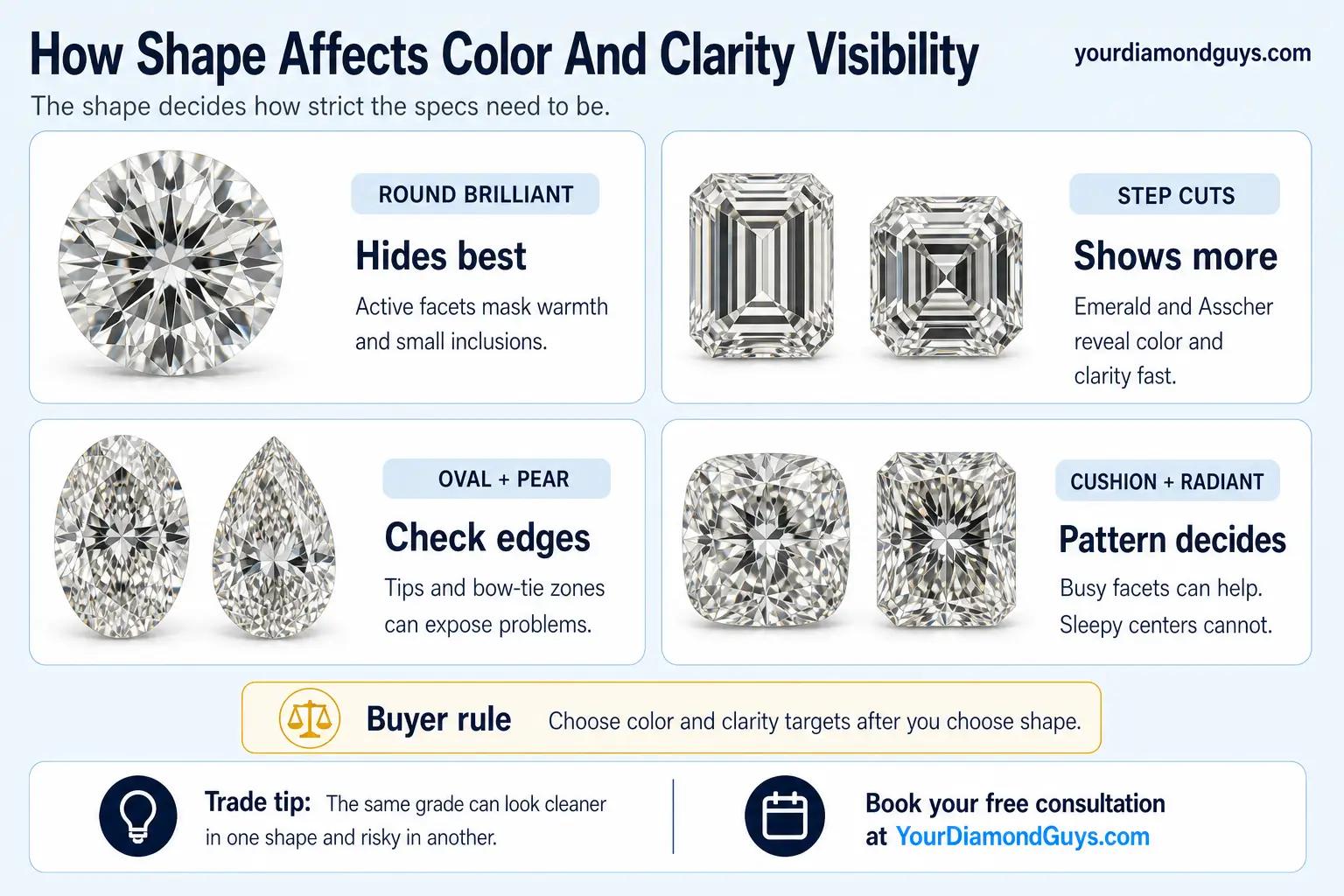
Choose color and clarity targets after you choose shape.
I have seen G color look clean and bright in one shape and warmer than expected in another. The grade did not change. The way the shape handled light did.
What To Check First
| Check | Buyer Meaning |
|---|---|
| Round | Best at hiding warmth and small inclusions. |
| Emerald and Asscher | Show color and inclusions more clearly. |
| Oval and pear | Can show warmth near tips and visible inclusions in the center. |
| Cushion and radiant | Facet style changes the answer. |
| Baguette | Needs clean matching because step facets are open. |
Step Cuts Need Stricter Eyes
Use shape color visibility and inclusions by shape before lowering specs on emerald, Asscher, or baguette stones.
Open facets do not give you much cover. That is the beauty and the risk.
Brilliant Cuts Give More Flexibility
Round brilliants can hide small inclusions and warmth better because the facet pattern returns more light. Ovals, pears, cushions, and radiants can still need care because shape, size, and facet pattern vary.
The certificate grade is the same. The visual behavior is not.
My Buying Call
Choose color and clarity after you choose shape. The shape decides how strict you need to be.
Reach out to Rob or me at YourDiamondGuys.com, or book your free consultation. We will look at the actual stone with you. No sales pitch.
How This Connects To The Rest Of The Buy
Shape decides how much help the facet pattern gives you. A step cut makes you pay attention to transparency. A brilliant cut gives more hiding power. A mixed cut can go either way depending on the texture.
Use the diamond shapes guide as the hub when you are still deciding which shape makes the color and clarity tradeoff easiest.
Use emerald and asscher when you are judging step cut openness, then check emerald and Asscher color, shape color visibility, and inclusions by shape before you lower specs.
Use cushion and radiant when facet texture is the question. Then compare color vs clarity so you spend the budget where the shape actually shows the problem.
A Buyer Example
A buyer shows me an SI1 round and an SI1 emerald cut. Same clarity grade, very different conversation. If the round has a small white inclusion off to the side, it can disappear in the sparkle. If the emerald has a dark crystal under the table, everyone sees it. The grade did not fail. The shape changed the tolerance.
The paper is not the prize. The actual diamond is. That is the trade habit buyers need to borrow before they spend real money.
Mistakes I Would Skip
- Do not buy the report before judging the actual diamond.
- Do not compare price until the shape passes its visual checks.
- Do not ignore video, outline, spread, color visibility, or clarity visibility.
- Do not assume the same spec target works for every shape.
Questions I Ask Before Approval
- Does the diamond match the job of this page: Choose color and clarity targets based on diamond shape.
- Can I see the actual diamond video, not a sample image?
- Does the shape create any durability, bowtie, windowing, color, or clarity issue?
- Is the price right for the stone in front of me?
The "Fake" Clarity Trick: What is Fracture Filling
Compare Color And Clarity In The Right Context
Use these sites as comparison tools, not automatic recommendations. I would compare standard color and clarity listings on Blue Nile and fancy color examples on Leibish, then judge what the shape actually shows.
Questions? Reach out directly for a free consultation, or drop them in the Diamond Buyers Academy community — Rob and I answer personally.
Questions Buyers Ask Us
*Some links on our site may earn us a small commission at NO EXTRA cost to you, helping us keep our content free*