Diamond Shapes That Show Inclusions Most
By Josh Allen, Co-Founder of YourDiamondGuys.com. Fifth generation diamantaire with 30+ years in the global diamond trade. Former supplier to Tiffany & Co., Cartier, and Harry Winston.
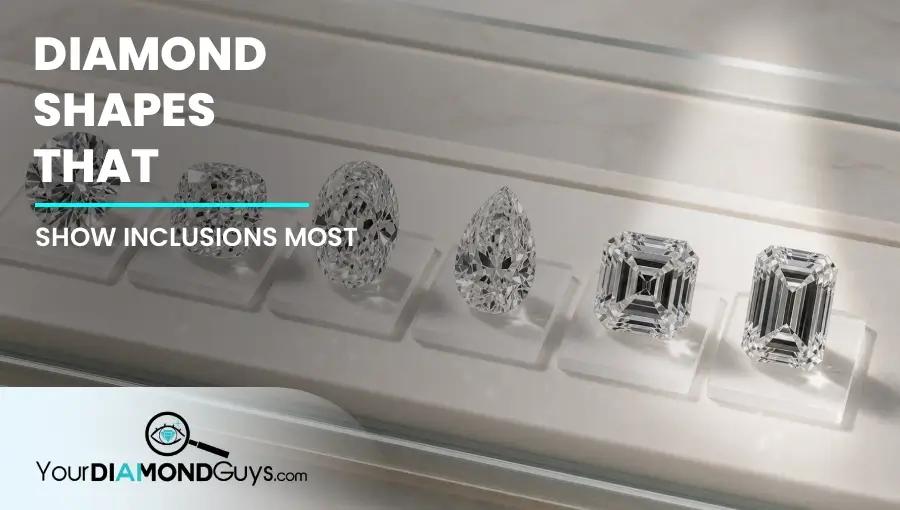
Diamond shape changes how much an inclusion shows. Rounds hide the most. Step cuts show the most. Fancy shapes sit in the middle, and each one has its own trouble zone inside the clarity decision.
This is why two diamonds with the same grade can feel totally different on the hand. The facet pattern decides how much your eye can lock onto the mark.
I still want the GIA report and plot. Then I match the inclusion to the shape, because shape is the visibility filter.
Trade desk rule: do not buy clarity by grade until you know how that shape handles inclusions.
Shapes That Hide Marks Best
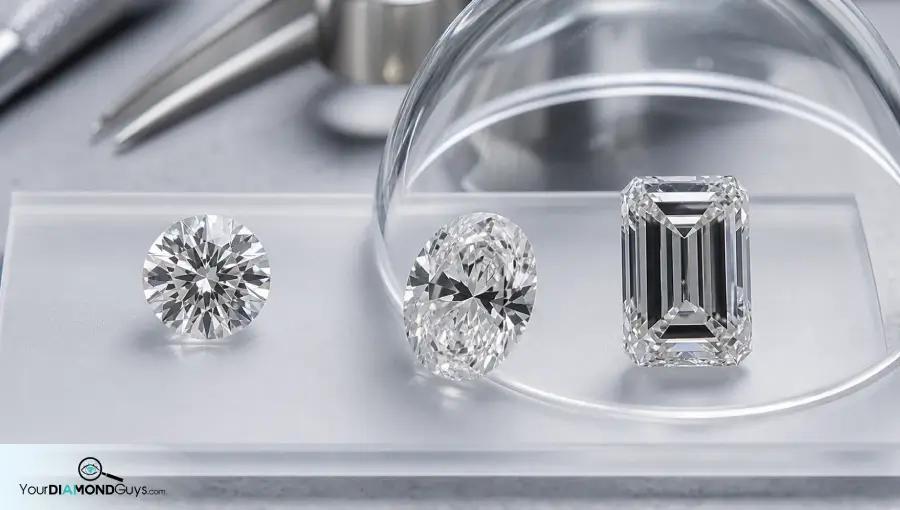
Round brilliants hide inclusions best because the facet pattern breaks up the view. Radiants and many cushions can hide well too, but they need video because crushed ice patterns can also make a stone look busy.
If you want the most forgiving shape for a clean SI1, start with a round and run the eye clean test before you celebrate the price.
Step Cuts Need Higher Standards
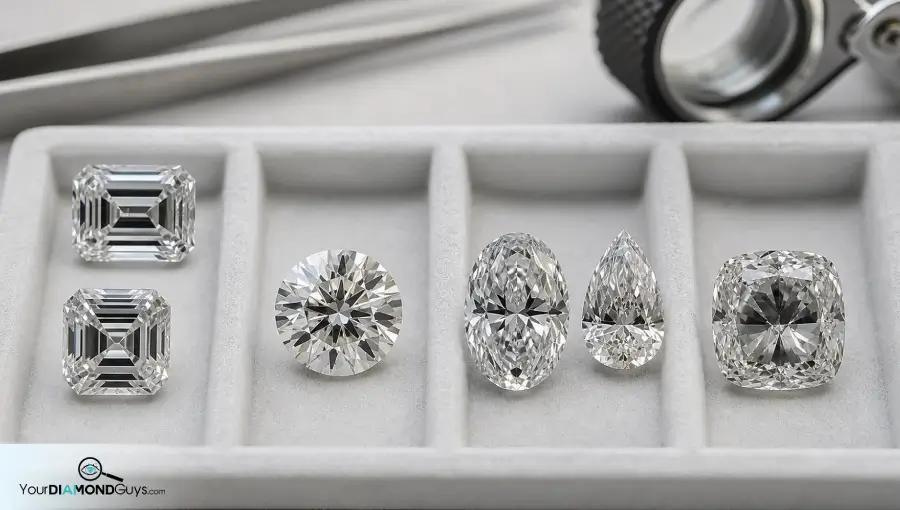
Emerald and Asscher cuts have open steps. They do not scatter your eye the way a round does. A mark under the table gets a stage.
| Shape | Visibility Pattern | Clarity Move |
|---|---|---|
| Round brilliant | Best at hiding small inclusions | VS2 or clean SI1 often works |
| Oval and pear | Center and tips show more | Start VS2, inspect video |
| Cushion and radiant | Can hide marks but can look busy | Check contrast and haze |
| Emerald and Asscher | Open steps reveal marks | Start VS1 or very clean VS2 |
Fancy Shape Danger Zones
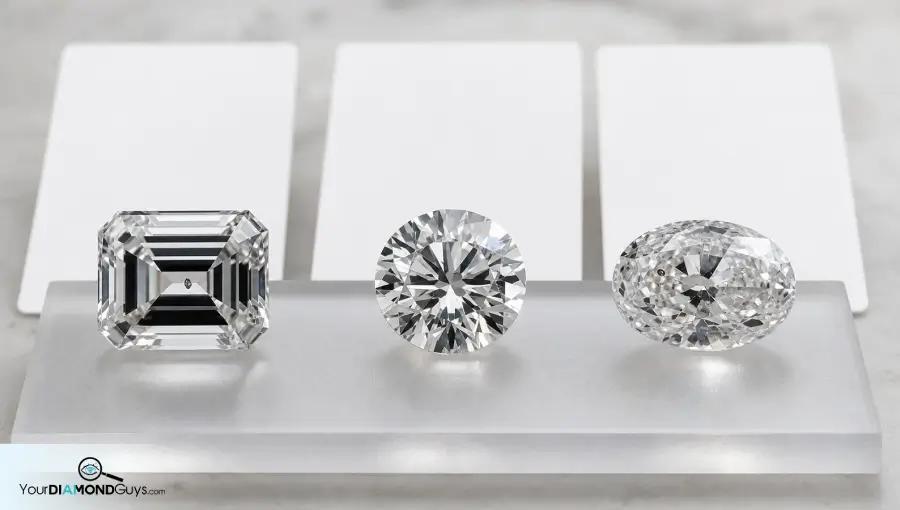
Tips, corners, and long centers matter. A feather near a pear tip, a chip on a princess corner, or a black crystal in an oval belly changes the buy. Use the location guide with the shape guide, not after it.
Bow tie areas can also pull attention. If the inclusion sits where your eye already goes, the grade has less room to forgive it.
Shape By Shape Inclusion Screen
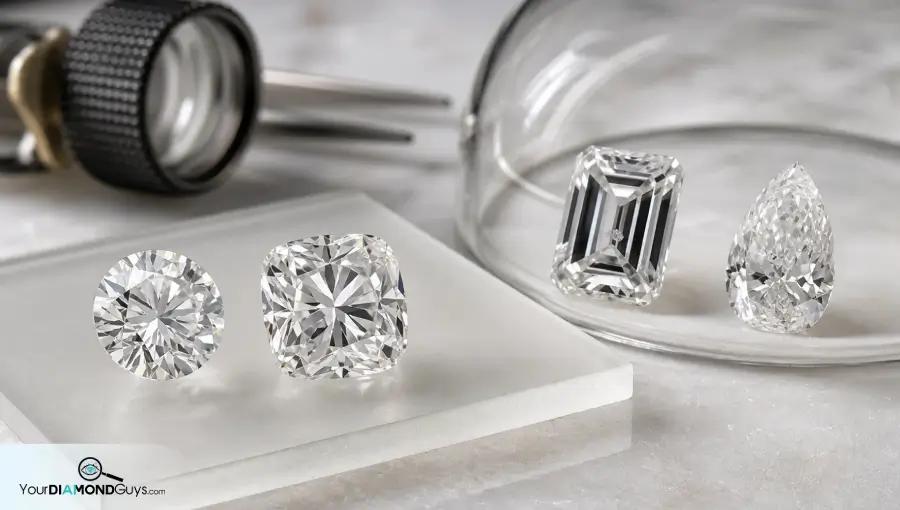
- Rounds: inspect black table crystals and cloud haze.
- Ovals and pears: check center marks, tip feathers, and repeated reflections.
- Emerald and Asscher: reject obvious table marks and long white lines.
- Princess: inspect corners for chips or bruises before setting.
Shape Links For The Clarity Cluster
- Use black vs white inclusions when contrast changes visibility.
- Use crystal inclusions when the plot shows crystals.
- Use feather inclusions when the mark sits near an edge, tip, or corner.
Use Videos By Shape
Compare actual videos on Brilliant Earth and Blue Nile only against stones of the same shape. A clean looking round does not tell you how an emerald cut will behave.
Pause the video in the face up position, then tilt. If the inclusion appears in every angle, it belongs in the price conversation.
Questions To Ask By Shape
- Where does this shape expose inclusions most often?
- Does the inclusion sit in the table, tip, corner, belly, or edge?
- Would the same inclusion look quieter in a round brilliant?
- Does the video prove the shape is hiding the mark, or only the lighting?
Choosing the Right Diamond Shape?
Questions? Reach out directly for a free consultation, or drop them in the Diamond Buyers Academy community — Rob and Josh answer personally.
Shape And Inclusion FAQs
*Some links on our site may earn us a small commission at NO EXTRA cost to you, helping us keep our content free*