Brian Gavin Diamonds Review: Cut Quality, Collections and Value
Brian Gavin puts cutting first. Signature, BLACK, Blue and Cape take that in different directions. Here is how I would compare them and decide what deserves your ring budget.
Your consultation is free. Retailers can pay us a commission on qualifying referrals at no extra cost to you. Read how referrals work.
Our verdict
Shop Brian Gavin when cut quality comes first.
If cut quality comes first, start with a Signature round. Put BLACK beside it to judge the extra cutting work. Consider Blue if you are open to fluorescence, or Cape if you like a warmer diamond.
Check which images come with your stone. An in house Signature diamond and a Virtual Selection listing do not automatically give you the same tools. Your setting choice can change the return rules too.
What we like
A clear focus on optical precision, useful live chat in our shopping test, and collections that offer distinct choices in cut, fluorescence and body color.
What to watch
Inspection material varies by listing. Technical search fields take some learning. Custom and certain designer settings bring final sale restrictions.
Brian Gavin’s background is in diamond cutting.
Brian Gavin is a fifth generation diamond cutter from South Africa. He introduced A Cut Above before launching Brian Gavin Diamonds in 2009. His Houston business specializes in precision cutting and custom jewelry. Brian Gavin’s background
That experience is a reason to take a look. Before recommending a diamond, I still want to see its images, know how it looks in normal lighting and check the finished ring price.
Shopping and service
Live chat helped us make a better comparison.
The iPad search got in our way. Desktop worked better. Live chat was the useful part: the representative could see our selected listing and discuss alternatives without making us copy a string of links.
We asked about choosing a smaller F color diamond or a larger I color stone. After we pushed for a clearer answer, the representative suggested H color and showed us larger options. That gave us something useful to compare.
The in house stone had more inspection material than the off premises option. Setting selection and checkout were easier to follow. I would use the search to find two possibilities, then ask the team what I gain and lose between them.
Cut quality
Check the optical images and a normal video.
Get the Hearts and Arrows images, the ASET map and a normal video. The pattern shows optical symmetry. ASET shows how the diamond handles light. The video lets you judge the look you are buying.
For a natural round, start with GIA. These are my practical screening ranges, not Brian Gavin’s proprietary specifications or an automatic approval.
Table and depth
Table 56 to 58 percent. Depth 60 to 62.4 percent.
Crown and pavilion
Crown angle 34 to 35 degrees. Pavilion angle 40.6 to 41 degrees.
Finish and fluorescence
Excellent polish and symmetry. None to faint fluorescence for the usual shortlist.
The angles work together. Passing this screen earns a closer look, not a purchase. Blue needs a separate fluorescence check because its stronger response is part of the collection.
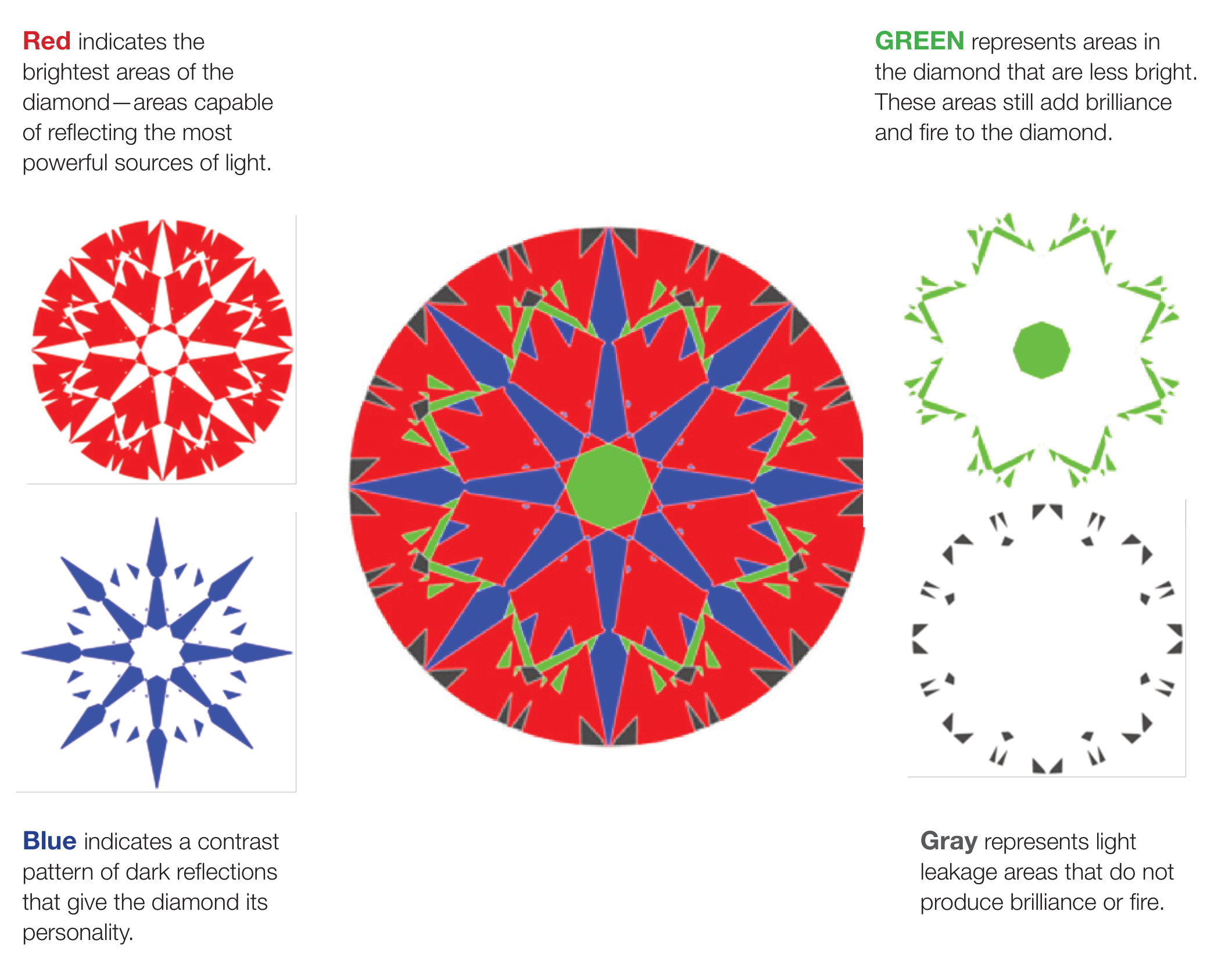
Use ASET to read how the diamond handles light.
Red shows bright light return, green indirect light, blue contrast and gray leakage. Use this key with your diamond’s ASET map. The Hearts and Arrows images answer a separate symmetry question.
GIA educational example. This is not a Brian Gavin diamond or a Hearts and Arrows certificate.
Credit: GIA, AGS Ideal Report training module, page 7
Some collection pages still refer to older AGS reports. For a natural diamond purchase, request the GIA report for the exact stone. GIA’s supplemental AGS Ideal Report adds light performance information; it does not replace the grading report. GIA’s report explanation
For a closer look at the report fields, read our GIA cut grade guide. Use the measurements to narrow the search, then judge the diamond.
Diamond collections
What separates Signature, BLACK, Blue and Cape?
Do not read the collection menu as a simple ranking from good to best. BLACK emphasizes a proprietary cutting process. Blue makes fluorescence part of the value conversation. Cape puts visible warmth into the design.
01
Signature Hearts and Arrows: start with optical precision
A complete Hearts and Arrows pattern is Brian Gavin’s stated standard for Signature rounds. Ask for the pattern images of the stone you want. Signature collection guide
Choose two stones that leave room for your setting. Compare their hearts images, arrows images and normal videos. Look for a balanced pattern, then decide which appearance you prefer. A collection name should help you find the evidence, not replace it.
02
BLACK: compare the cutting claim with the actual stone
Brian Gavin says BLACK adds work on secondary angles, symmetry and inspection through its Gavin Effect process, linked to U.S. Patent 10,405,618. Its stated criteria are D to G color up to 2.9 carats and IF to VS2 clarity, with lower colors considered above 3 carats. BLACK’s stated criteria
Those color and clarity limits affect the price comparison as well as the cut. Ask for a Signature alternative close in size, color and clarity. Compare videos under similar lighting and the final quotes. Pay more when the difference matters to you. Do not let a patent number make the decision.
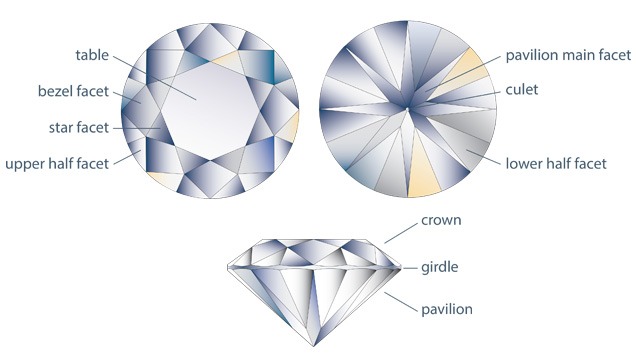
Small facets help shape the pattern.
The left view labels the crown’s star and upper half facets. The right shows the pavilion’s lower half and main facets. These help you locate the secondary facets discussed in BLACK’s cutting claims. To judge the result, compare the two stones’ images and videos.
GIA anatomy diagram. It does not show BLACK’s proprietary angles or compare the two Brian Gavin collections.
Credit: GIA, Diamond Cut: Anatomy of a Round Brilliant, facet arrangement diagram
03
Blue: check how the diamond looks beyond UV lighting
Brian Gavin Blue features medium to strong blue fluorescence. The retailer says it inspects each stone for adverse effects and offers the collection to buyers willing to consider fluorescence. Blue collection details
Blue is the collection name, not a promise of blue body color. Ask to see the diamond indoors and in daylight. Check transparency separately. A lower price is useful only when you like the diamond.
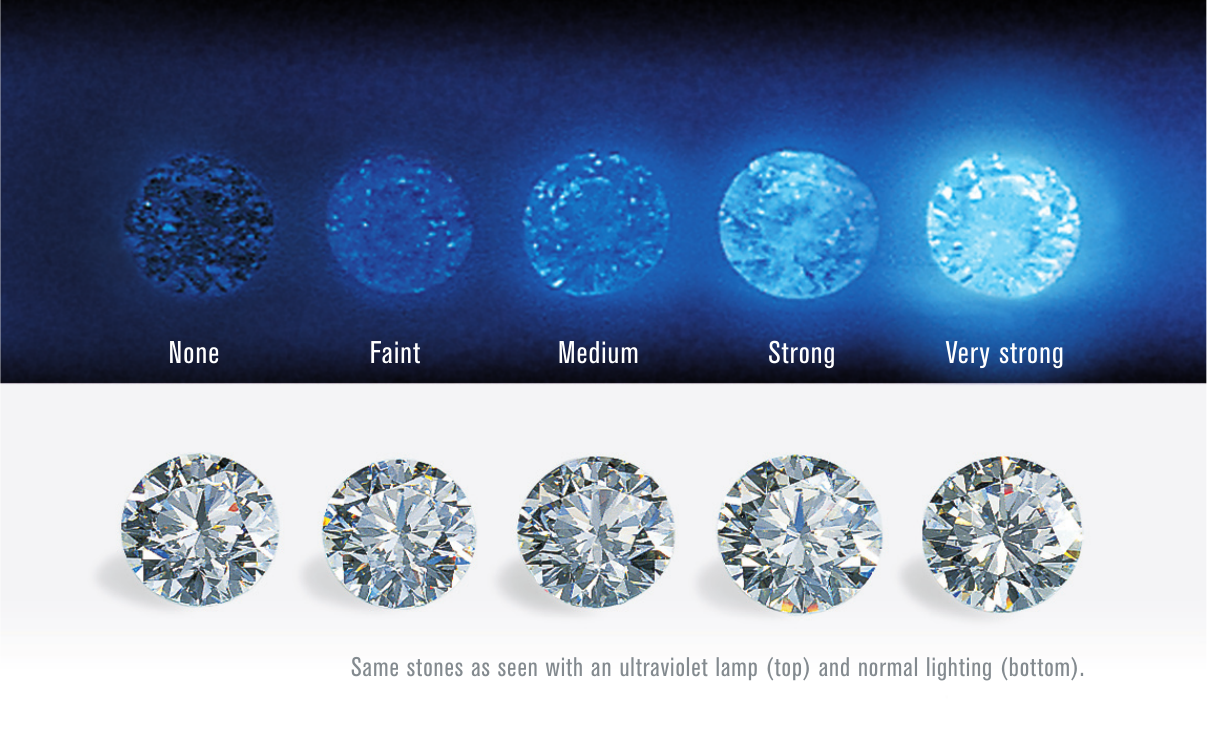
NoneFaintMediumStrongVery strong
Blue describes a UV response, not a blue body color.
Same stones, different lighting. UV is on top. Normal lighting is below. Blue’s name describes its UV response. Start with how the diamond looks in the light where you will wear it.
GIA comparison stones. These photographs do not document Brian Gavin Blue inventory.
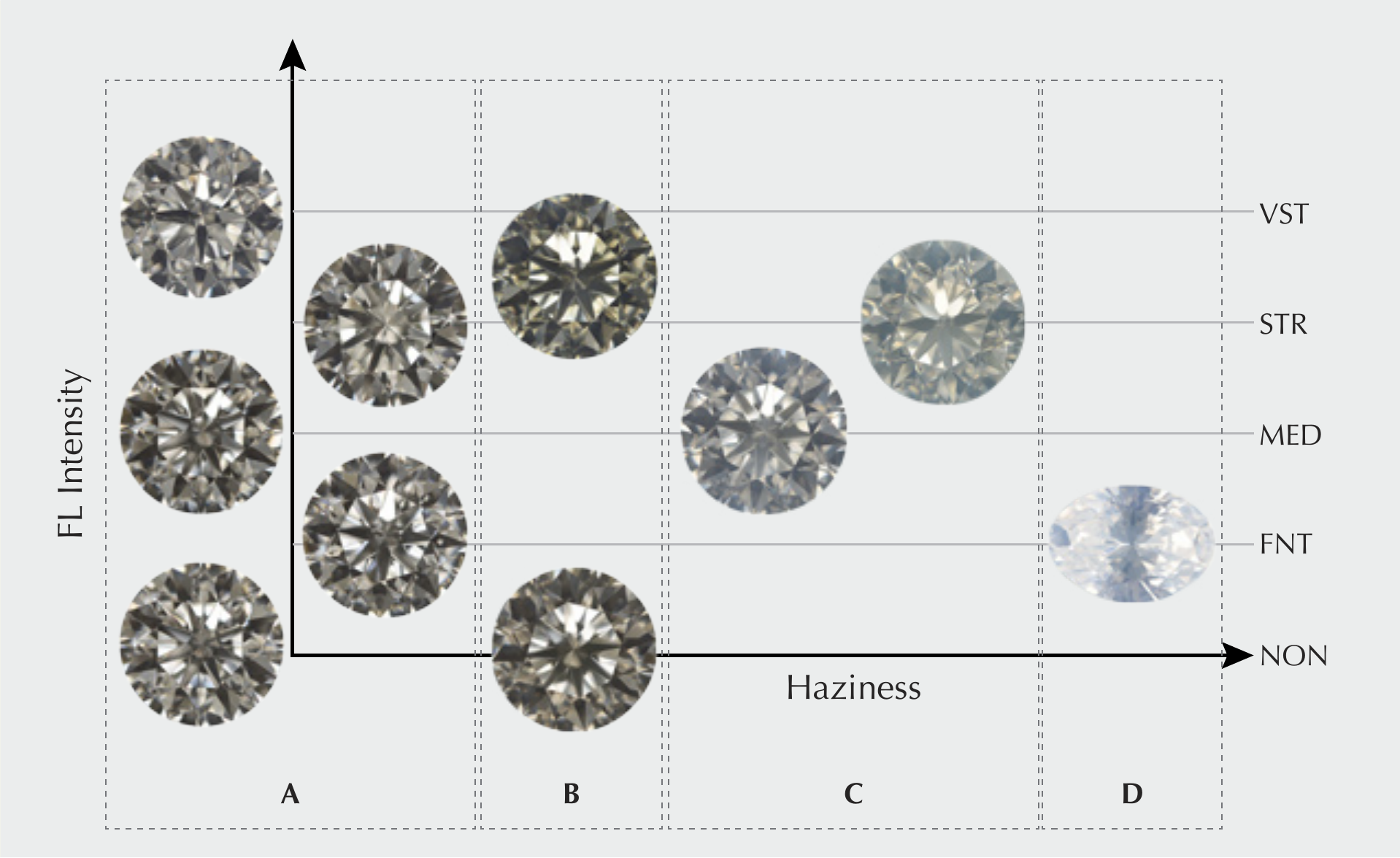
A fluorescence label does not answer the haze question.
Read fluorescence up the vertical axis and haziness across the horizontal axis. Group A includes clear stones at several fluorescence intensities. Groups B to D show increasing haze in the study examples. NON means None, FNT Faint, MED Medium, STR Strong and VST Very Strong.
Figure 9 from GIA’s 2021 study. These are selected research examples, not a frequency chart or a Brian Gavin quality test. Ask to inspect transparency separately.
Credit: GIA, Gems & Gemology, Summer 2021, Luo et al., Figure 9
04
Cape: choose the warm appearance on purpose
The Cape Series focuses on warmer diamonds in the M to Z range, paired with Brian Gavin’s Signature cutting approach. It is a deliberate color choice. Cape Series guide
Show your partner the warmth before choosing it for them. Compare the diamond against the intended metal and any side stones. A warm center beside whiter accents creates a different look from a ring built around the same color throughout. Decide which look you want before chasing a larger carat weight.
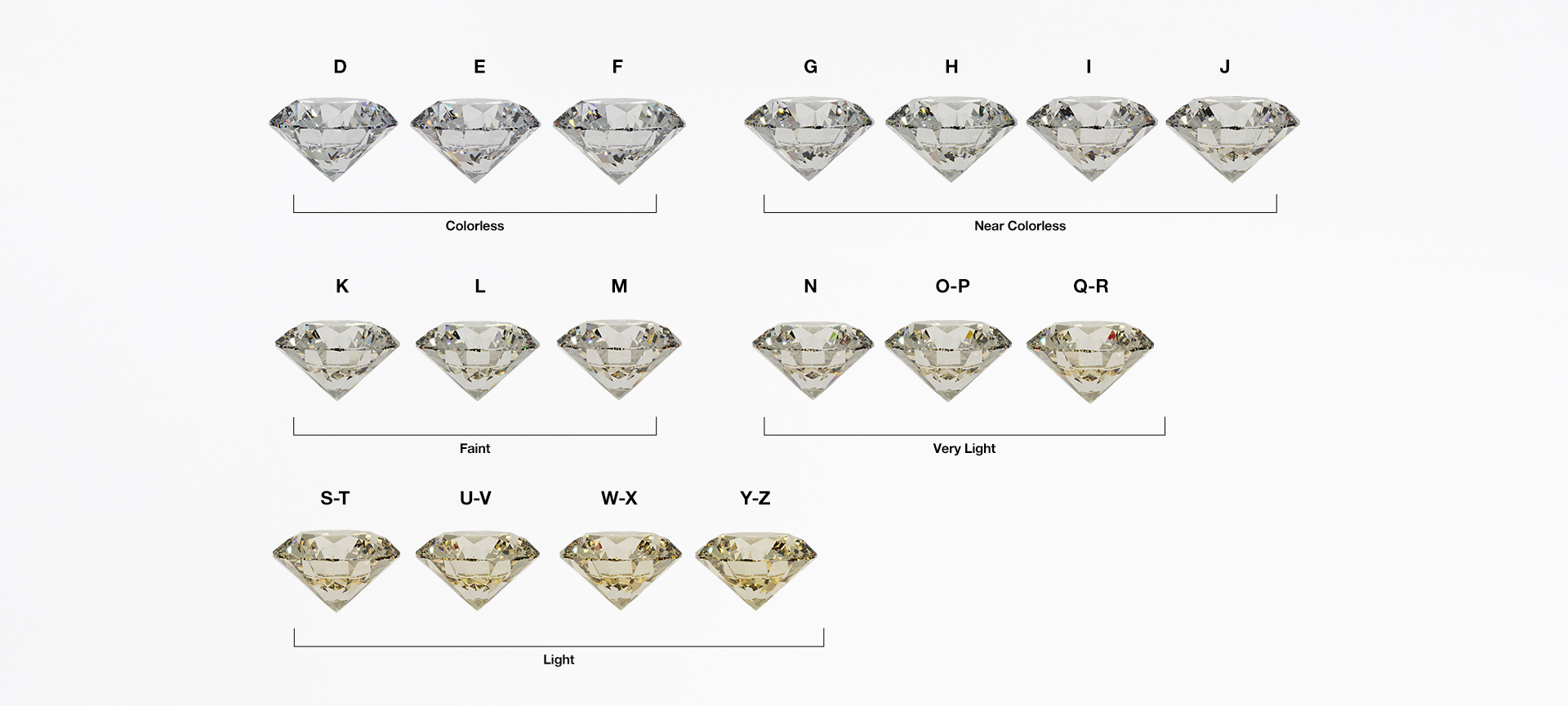
See the warmth you are choosing with Cape.
D to F is the colorless end. The examples grow warmer toward Z. Cape’s M to Z range gives you a deliberate choice of warmth. Use this chart as a reference, then look at your diamond in the intended setting.
A color reference, not Cape inventory. Lighting, your screen and the setting affect the appearance you see.
Virtual Selection diamonds come from outside suppliers.
The site also lists diamonds from outside suppliers through Virtual Selection. Ask whether the stone is in house, what images are available and whether the team has inspected it. A virtual listing is not automatically a Signature diamond.
For cushions, ovals or emerald cuts, ask for advice specific to that shape. The round proportion ranges above do not apply to every shape. Look at the outline, pattern and dimensions of the diamond you are considering.
Price and value
Compare the finished ring, not just the collection name.
There is no single Brian Gavin premium I would apply to every quote. Size, grades, collection and setting change the bill. Put two rings you would happily own side by side. Then ask what the extra money buys.
Build a comparison you can actually use
Use your own quotes. This is a buying method, not a current price estimate.
Set the total ring budget. Reserve the amount needed for the metal, setting and any custom work.
Compare a Signature round with a similar BLACK option. Record diameter, color, clarity, inspection images and complete price.
Make the extra spend explain itself. Decide whether the visible difference is worth the change in size, grades or setting.
Add Blue or Cape only when you want to explore their fluorescence or color choices. Keep those differences visible in the comparison.
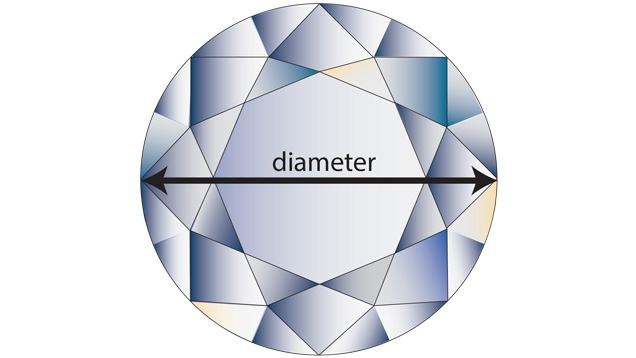
Compare diameter, not just the carat number.
The arrow measures width across the girdle. For a round, average the smallest and largest diameters on the report. Put those millimeters beside each price. Are you paying for more visible size, better cutting, or both?
GIA diameter diagram, not Brian Gavin inventory. Width measures visible size. It does not establish light performance or the value of a particular diamond.
Credit: GIA, Diamond Cut: Anatomy of a Round Brilliant, average girdle diameter diagram
A higher clarity grade is not automatically a better use of the budget. Ask whether inclusions are visible at normal viewing distance and where they sit. Have the team check for damage or durability concerns such as a bruise, chip, cavity, knot, etched channel or indented natural. A clean looking video alone does not settle those questions.
Where Whiteflash belongs in the comparison
Whiteflash is another specialist worth putting beside a Brian Gavin finalist. Compare the actual cut evidence, complete price and upgrade conditions. Keep the same priorities on both sides. Our Whiteflash review explains its approach.
Choose the design before the diamond uses up the budget.
Ring height, metal and band shape affect what you will enjoy wearing. Decide those early. Then confirm that your Brian Gavin diamond fits the setting without changes that push the total beyond your budget.
The retailer offers its own setting collections, custom work and designer routes including Sholdt, Sylvie and Parade. Current collection navigation Bring a reference image and ask which route gets you the look you want.
Get these answers before approving the ring
What is the complete price for this diamond, setting and metal?
How high will the center sit, and will the wedding band fit alongside it?
Which design changes make the order final sale?
When will the finished ring be ready, including time to obtain a virtual stone?
Do not choose a bezel because it looks secure and discover the purchase restrictions afterwards. Design and return eligibility belong in the same conversation.
Purchase terms
Read the return and upgrade rules for your complete order.
Returns
15 days, with receipt as day one. Custom items, artistic engraving, bezel settings and specified third party designer settings are final sale.
Natural upgrades
Eligible collections require at least 50 percent additional spend. Credit excludes tax and shipping. A market adjustment clause and document requirements apply.
Bezel restrictions
Bezel set diamonds are also excluded from upgrade and buyback.
Buyback
Eligible Signature diamonds qualify within one year at 70 percent of current market price, subject to condition and original report requirements.
Timing
Virtual stones can take 7 to 10 days to reach the retailer after payment. Rings take about 15 business days; custom work up to four weeks.
Shipping
U.S. shipping service depends on order value. International shipping, insurance and import charges need a separate quote.
Confirm eligibility and delivery in writing. Lab diamond rules differ.
Buyer questions
Brian Gavin Diamonds review FAQs
Is Brian Gavin Diamonds worth considering?
Yes, if cut quality is where you want to spend your money. Signature is a useful starting point. Keep other retailers in the comparison if size or setting choice matters more to you.
Is BLACK better value than Signature Hearts and Arrows?
Not automatically. Compare similar sizes and grades so you can see what the cutting difference costs. I would pay more for an appearance I prefer. I would not pay more just because BLACK sits at the top of the menu.
Are Brian Gavin Blue diamonds blue in normal lighting?
No. Blue refers to fluorescence under UV. You are not buying a fancy blue diamond. Ask to see it indoors and in daylight, and check that it looks clear.
Will a Cape diamond look white once it is set?
Do not buy Cape on that assumption. You are choosing a warmer diamond. Look at it in the intended metal and beside any side stones. Buy the color because you like it, not because someone promises the setting will hide it.
Which report should I request for a natural Brian Gavin diamond?
Start with GIA and match the report to the exact stone. Then ask for the optical images and normal video. GIA’s supplemental AGS Ideal Report adds light performance information when available. A collection name alone is not enough.
Can I return a custom Brian Gavin ring?
No. Custom items are final sale under the published policy. Confirm the terms for your exact setting before approving the design.