Antique And Vintage Natural Diamonds
By Josh Allen, Co-Founder of YourDiamondGuys.com. Fifth generation diamantaire with 25 years of experience in the global diamond trade. Former supplier to Tiffany & Co., Cartier, and Harry Winston.
Antique and vintage natural diamonds do not play by modern perfection rules.
That is part of the charm. It is also where buyers get into trouble when they excuse every problem as character.
For natural antique and vintage diamonds, start with documentation when available. GIA, a credible appraisal, and a careful condition check matter.
On a dealer desk, old cuts get judged with different eyes. But damage is still damage.
Old Cut Beauty Is Different
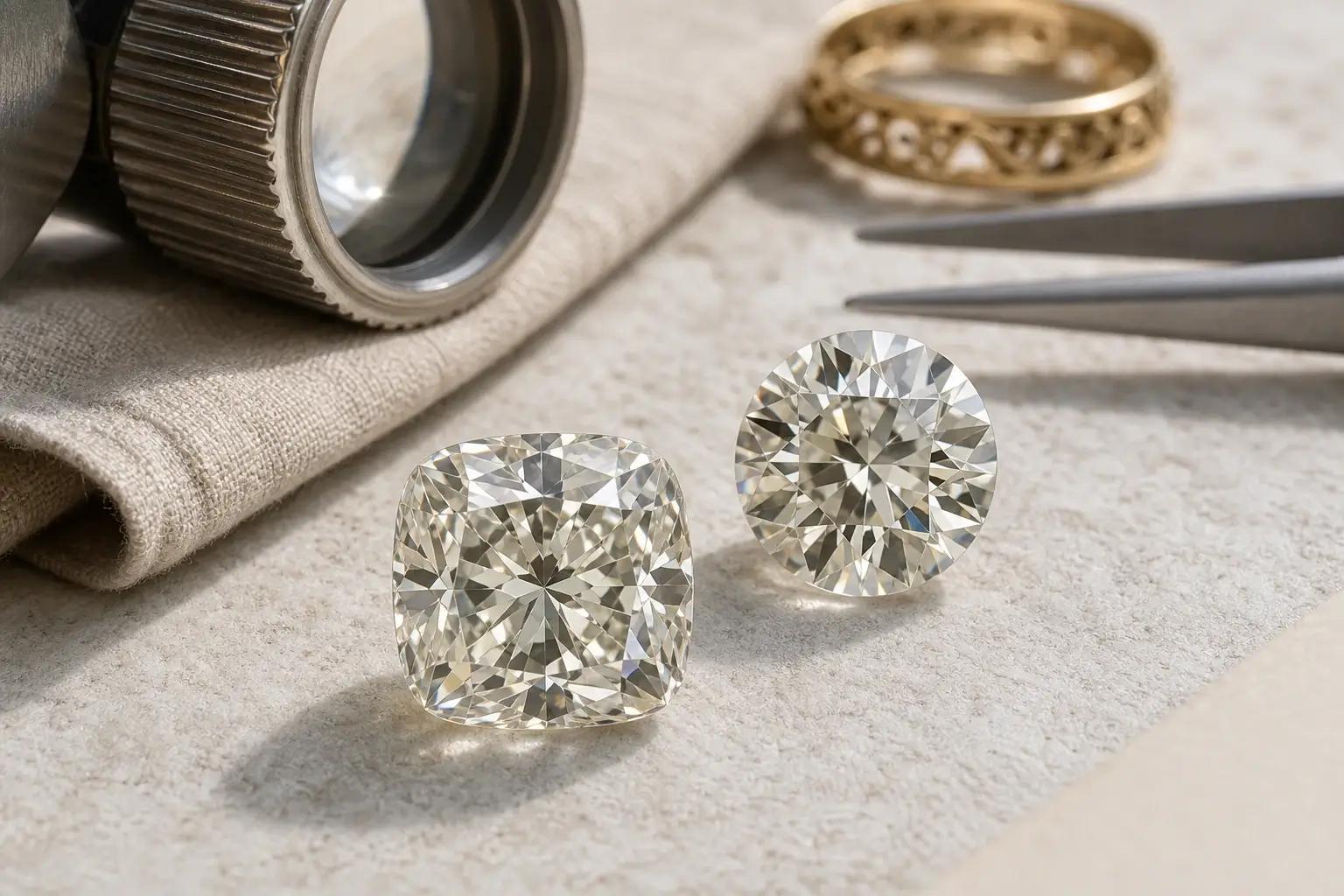
Old European cuts and old mine cuts often show chunkier flashes, higher crowns, smaller tables, and visible culets. That can look romantic and beautiful.
Use the culet size guide before assuming every open culet is a problem. In old cuts, it can be part of the look.
Condition Still Matters
Check chips, abrasions, girdle wear, symmetry issues, recut history, and setting wear. A vintage diamond can be charming and still need a repair budget.
Warm color can be beautiful in antique styles. Use the warm diamonds guide when the color is part of the design.
The Buyer Filter
This is the antique diamond filter.
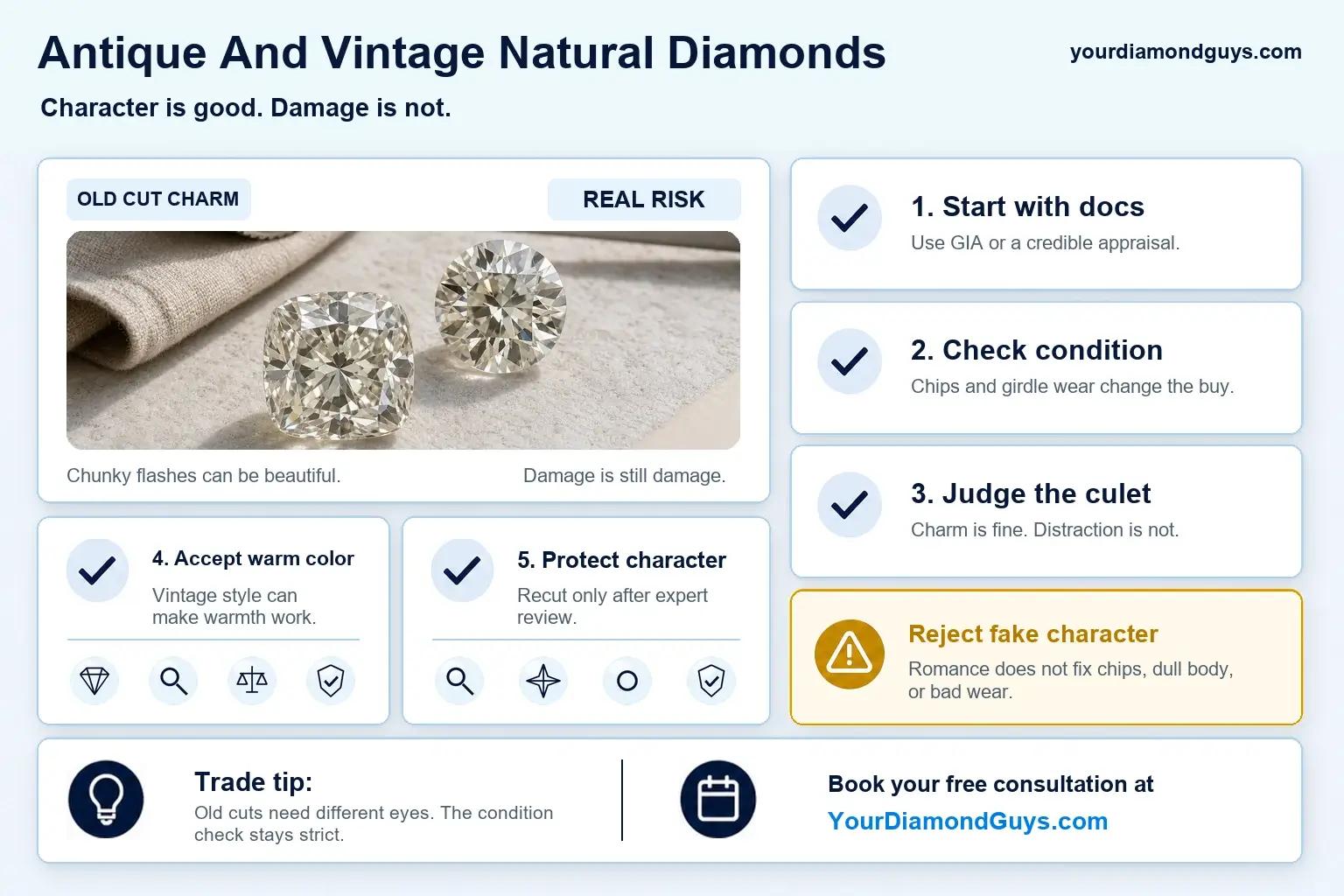
| Feature | Acceptable Character | Real Risk |
|---|---|---|
| Open culet | Normal in many old cuts | Off center or distracting |
| Warm color | Intentional vintage look | Gray or dull body color |
| Symmetry variation | Hand cut personality | Unbalanced outline |
| Girdle wear | Minor age marks | Chip or durability issue |
| Recut potential | Sometimes useful | Loss of antique character |
My Buyer Recommendation
Buy antique diamonds for beauty and character, but keep the condition check strict. Romance does not fix a chip.
Reach out to Rob or me at YourDiamondGuys.com, or book your free consultation. We will look at the actual stone with you.
How This Fits Into A Real Buying Decision
A buyer comparing an old mine cushion to a modern cushion should decide whether they love chunky vintage flashes or want modern brightness.
Mistakes I Would Avoid
- Do not judge old cuts by modern round brilliant rules.
- Do not ignore condition because the stone feels special.
- Do not buy without documentation or a credible appraisal.
- Do not assume recutting is always the right answer.
A Practical Example
A warm old European cut can look incredible in yellow gold. The same warmth in a modern white metal solitaire can bother the buyer. Context decides.
What To Ask Before You Buy
- Is the diamond documented by GIA or a credible appraisal?
- Are there chips, abrasions, or girdle issues?
- Does the culet add charm or distraction?
- Does the setting protect the old stone properly?
Where I Would Compare Vintage Style Options
Use these sites as comparison tools, not automatic recommendations. I would compare vintage style options on Brilliant Earth and Blue Nile, then check condition, documentation, cut personality, and setting fit before buying the story.
Questions? Reach out directly for a free consultation, or drop them in the Diamond Buyers Academy community — Rob and Josh answer personally.
Questions Buyers Ask Us
*Some links on our site may earn us a small commission at NO EXTRA cost to you, helping us keep our content free*