Diamond Culet Size: When It Matters

By Josh Allen, Co-Founder of YourDiamondGuys.com. Fifth generation diamantaire with 30+ years in the global diamond trade. Former supplier to Tiffany & Co., Cartier, and Harry Winston.
Simple rule, diamond culet size should usually be none or not visible in modern engagement ring stones. Culet visibility matters when the antique style or price makes the visible culet worth it.
Most modern diamond buyers do not need to obsess over culet size. That is the honest answer. Old cut exceptions exist, but when the culet is visible or misaligned on a modern stone, it becomes part of the face up look.
I always start with GIA for natural diamonds. Not because the cut grade alone is enough, but because GIA gives me proportions I can actually trust. Softer lab reports do not give me the same confidence in those numbers.
On modern stones, a visible culet usually makes me pause. On antique style stones, it can belong to the design. The report wording is the same, but the buying decision is not.
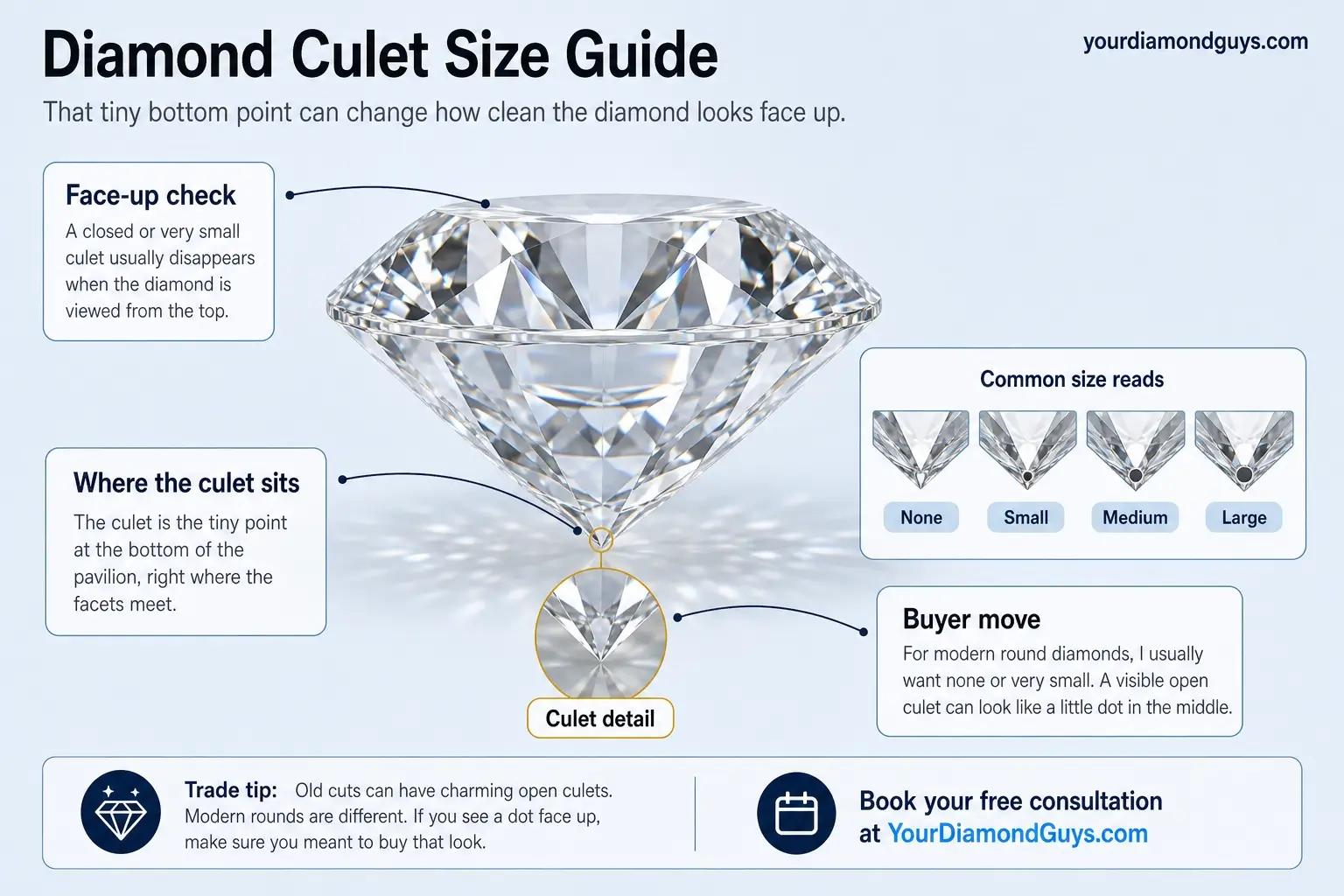
What The Culet Is
The culet is the tiny point or facet at the bottom of the diamond. In many modern round brilliant diamonds, the report will say None.
A small culet can be acceptable. A medium or large culet can become visible as a dot or opening in the center of the diamond.
When Culet Size Becomes A Problem
The problem is visibility. If you can see the culet face up, it can interrupt the center pattern. Once you notice that dot, you do not unsee it.
In old mine cuts and antique style stones, an open culet can be part of the charm. In a modern round brilliant, I usually do not want to see it.
| Culet Grade | Common Meaning | Buyer Action |
|---|---|---|
| None | Modern standard | Good first screen |
| Very small or small | Often acceptable | Check face up visibility |
| Medium | Can be visible | Review images closely |
| Large | Usually visible | Reject for most modern buyers |
Culet Alignment And Symmetry
Culet position can hint at symmetry. If the culet looks off center, the pattern is not always balanced.
This is not the first thing I check. But when a diamond already has questionable symmetry or a messy pattern, culet alignment becomes another clue.
My Call On Modern Stones
For most modern engagement ring diamonds, choose None or very small unless the stone is intentionally antique in style.
Then check the full video. A culet line on a report is not enough to approve the diamond.
Reach out to Rob or me at YourDiamondGuys.com, or book your free consultation. We will look at the actual stone with you. No sales pitch.
Where The Style Exception Matters
An antique style diamond can have an open culet and still be beautiful. That is part of the look. A modern round brilliant is different. If a modern stone shows a visible culet, the seller needs a reason, and the price needs to respect the tradeoff.
Mistakes I Would Skip
- Do not worry about culet size before the main cut screen passes.
- Do not approve a visible culet in a modern round unless the style and price justify it.
- Do not compare antique style culets with modern round brilliant standards.
- Do not ignore an off center culet when the pattern already looks uneven.
The Dot In The Center Test
A modern round with no visible culet is easy. A modern round with a visible culet needs a closer look. If the buyer can see a small dot in the center, that dot becomes part of the diamond. On an antique style stone, that can be charming. On a modern engagement ring diamond, I usually move on unless the price and design make real sense.
Discover the Secrets of the Round Brilliant Cut Diamond
Questions I Ask Before Approving It
- What culet grade appears on the report?
- Is the culet visible face up?
- Is this diamond modern or intentionally antique in style?
- Does the culet look centered in the face up pattern?
Where I Would Compare Protection Options
Use these insurance links as comparison tools, not automatic recommendations. I would review BriteCo and Lavalier for coverage, exclusions, appraisal rules, and claim process, then pick what fits the ring and your comfort level.
Questions? Reach out directly for a free consultation, or drop them in the Diamond Buyers Academy community — Rob and I answer personally.
Questions Buyers Ask Us
Think of the culet as the bottom point or small facet of a diamond. It sits at the bottom of the pavilion.
Yes. For most modern round brilliant diamonds, None is the standard report result I prefer.
A very small or small culet can be acceptable if it is not visible face up and the rest of the diamond performs well.
Many antique cuts were designed with open culets. That can be part of their style, but it is not usually desired in a modern round brilliant.
Yes. An off center culet can support a broader symmetry concern. It should be reviewed with the full face up pattern.
*Some links on our site may earn us a small commission at NO EXTRA cost to you, helping us keep our content free*