Natural Diamond Treatments To Avoid
By Rob Cornfield, Co-Founder of YourDiamondGuys.com. 35+ years of experience in the global diamond trade. Specialist in diamond cut and light performance.
A treated natural diamond is not the same buying decision.
Treatment can change appearance, durability, value, and trust. That is why disclosure matters.
For natural diamonds, start with GIA and read the comments. A price that looks strange often has a reason hiding in the paperwork.
On the trade side, undisclosed or poorly explained treatment changes the conversation fast. It should for buyers too.
The Treatments That Should Slow You Down
Laser drilling, fracture filling, and coatings are the big natural diamond treatment red flags for most buyers. They are not just labels. They affect durability, care, value, and resale confidence.
Use the GIA report guide before you trust the listing language. The report and seller disclosure should tell the same story.
Separate Natural Treatments From Lab Grown Processing
Do not mix this page with lab grown post growth processing. That is a different buying path covered in the lab grown treatment guide.
For natural stones, the concern is whether the treatment explains a low price, weak long term durability, or a disclosure problem.
The Buyer Filter
This is the buyer risk screen.
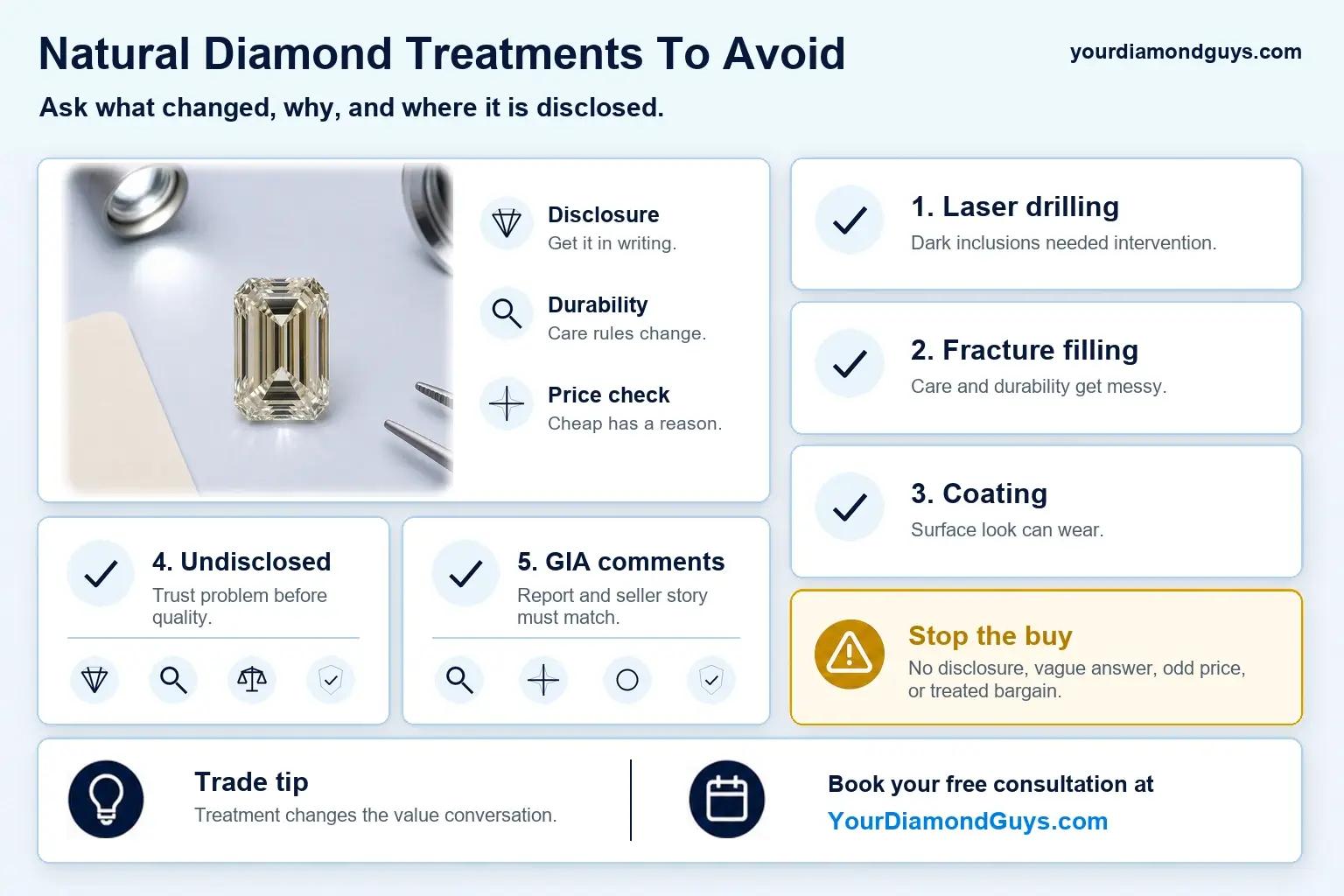
| Treatment | What It Tries To Improve | Why I Slow Down |
|---|---|---|
| Laser drilling | Dark inclusions | It signals a clarity problem needed intervention |
| Fracture filling | Visible cracks or feathers | Durability and care get more complicated |
| Coating | Surface appearance or color | Wear and disclosure become serious issues |
| Undisclosed treatment | Unknown | Trust problem before quality problem |
My Buyer Recommendation
I would rather buy an honest lower grade natural diamond than a treated stone dressed up as a bargain. If treatment is involved, the price and disclosure need to make complete sense.
Reach out to Rob or me at YourDiamondGuys.com, or book your free consultation. We will look at the actual stone with you.
How This Fits Into A Real Buying Decision
A buyer sees a natural diamond priced far below similar stones. Before getting excited, check the report comments and ask the seller directly about treatment.
Mistakes I Would Avoid
- Do not ignore report comments.
- Do not assume a treatment is harmless because the diamond looks clean.
- Do not compare treated and untreated stones as equal inventory.
- Do not buy a treated stone without understanding care and value impact.
A Practical Example
A fracture filled diamond can look tempting because the visible clarity appears better than the price. I would not treat that as a normal VS or SI decision. The treatment is part of the value.
What To Ask Before You Buy
- Does the GIA report disclose treatment?
- Does the seller explain the treatment in writing?
- How does treatment affect cleaning, setting, and repair?
- Is the price low enough to reflect the added risk?
Where I Would Compare Disclosure Quality
Use these sites as comparison tools, not automatic recommendations. I would compare disclosure language on Blue Nile and Brilliant Earth, then avoid any diamond where treatment details feel vague, buried, or hard to verify.
Discover the Perfect Diamond with YourDiamondGuys App!
Questions? Reach out directly for a free consultation, or drop them in the Diamond Buyers Academy community — Rob and Josh answer personally.
Questions Buyers Ask Us
*Some links on our site may earn us a small commission at NO EXTRA cost to you, helping us keep our content free*