Diamond Girdle Thickness: Safe vs Costly

By Josh Allen, Co-Founder of YourDiamondGuys.com. Fifth generation diamantaire with 30+ years in the global diamond trade. Former supplier to Tiffany & Co., Cartier, and Harry Winston.
Look closer, diamond girdle thickness matters when it creates durability risk, hidden weight, or a smaller face up look for the money.
Most buyers skip the girdle line on the report. That can cost them. The girdle can point to durability risk, hidden weight, and whether the stone is using its carat weight well.
I always start with GIA for natural diamonds. Not because the cut grade alone is enough, but because GIA gives me proportions I can actually trust. Softer lab reports do not give me the same confidence in those numbers.
A girdle comment can be harmless on one shape and serious on another. I read it with the outline, setting style, and where the thin or thick area sits.
What The Girdle Is
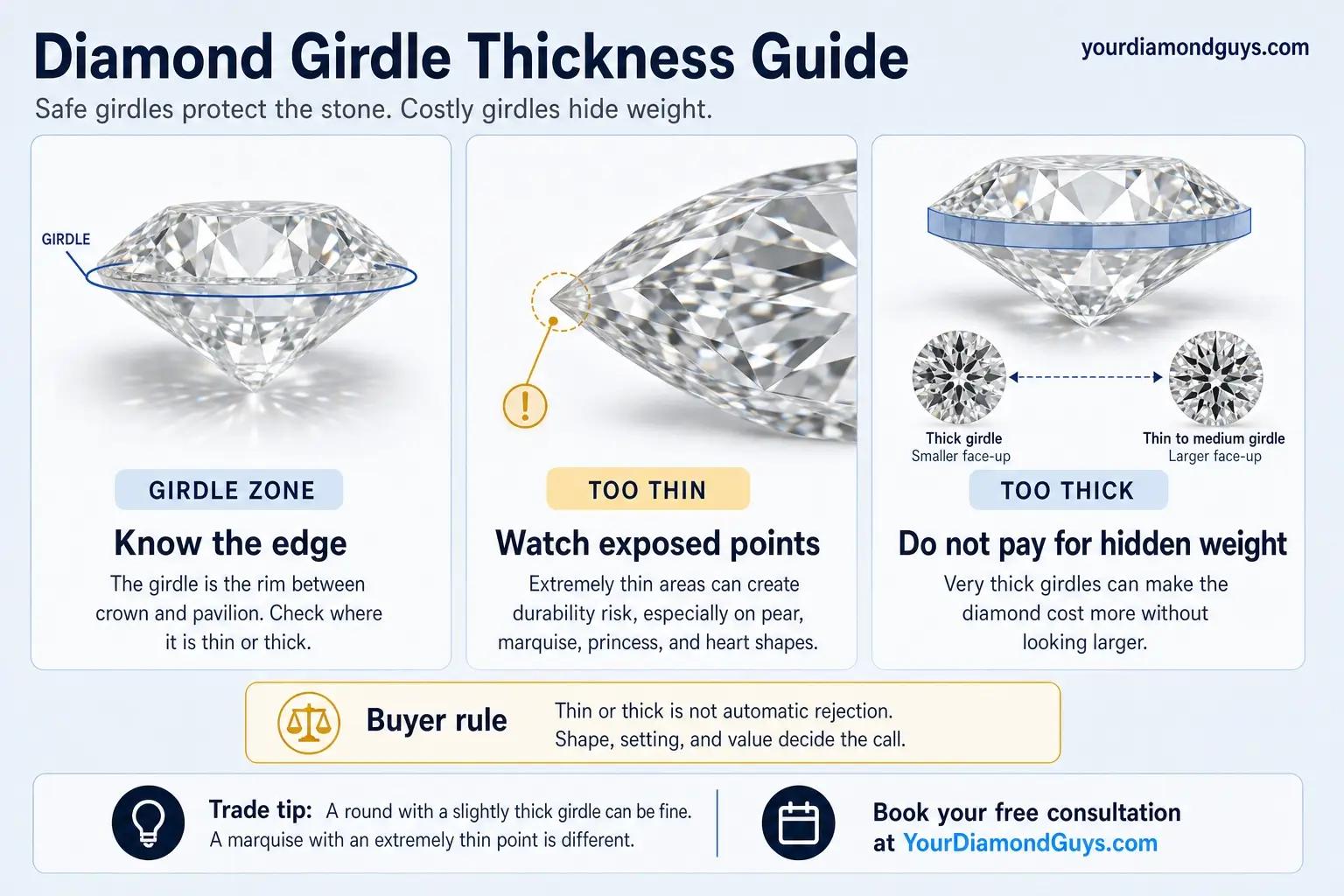
The girdle is the outer edge of the diamond where the crown and pavilion meet. It is the widest outline of the stone.
On a report, you can see descriptions like extremely thin, very thin, thin, medium, slightly thick, thick, very thick, or extremely thick.
Thin Girdles Create Durability Risk
A thin girdle is not always bad. An extremely thin area can be a problem, especially on exposed points like pear, marquise, princess, and heart shapes.
When I see very thin or extremely thin on a pointed shape, I want to know where it is. A small area protected by a setting is different from a vulnerable point that can chip.
Thick Girdles Can Hide Weight
A very thick girdle can hold carat weight where the eye does not benefit. That can make the diamond cost more without looking larger.
This is one of those trade details buyers miss. Dealers look at spread and girdle immediately because hidden weight affects value.
| Girdle Description | Main Concern | Buyer Action |
|---|---|---|
| Very thin or extremely thin | Chipping risk | Check location and shape |
| Thin to medium | Often acceptable | Confirm with full cut review |
| Slightly thick | Often acceptable | Check spread |
| Very thick or extremely thick | Hidden weight | Compare millimeter size and price |
My Recommendation
For round brilliants, I usually want a normal girdle range that does not create durability risk or waste weight. For fancy shapes, I am stricter when the shape has points.
Do not approve or reject from the girdle line alone. Use it with the cut quality checklist, measurements, shape, setting style, and video.
Reach out to Rob or me at YourDiamondGuys.com, or book your free consultation. We will look at the actual stone with you. No sales pitch.
Where Girdle Thickness Shows Up
Use girdle review with shape, measurements, and setting style. A round diamond with a normal girdle is simple. A pear, marquise, princess, or heart shape with a very thin point needs more caution because the setting has to protect that area.
Mistakes I Would Skip
- Do not ignore extremely thin girdle areas on pointed shapes.
- Do not pay full value for a very thick girdle that hides weight.
- Do not judge girdle thickness without checking the shape and setting.
- Do not assume every thin or thick girdle is automatic rejection.
Thin Edge Example
A round diamond with a slightly thick girdle can be fine. A marquise with an extremely thin point is more serious. Shape changes the risk. The pointed end of a pear, marquise, or heart needs protection. If the report says very thin, I want to know where the thin area sits. The same wording can be harmless in one stone and risky in another.
Round Brilliant Cut Diamonds Explained
Questions I Ask About The Girdle
- What is the full girdle description?
- Where is the thinnest or thickest area located?
- Does the girdle create durability risk for this shape?
- Does girdle thickness reduce face up spread?
Where I Would Compare Setting Risk
Use these insurance links as comparison tools, not automatic recommendations. I would review BriteCo and Lavalier for coverage, exclusions, appraisal rules, and claim process, then pick what fits the ring and your comfort level.
Questions? Reach out directly for a free consultation, or drop them in the Diamond Buyers Academy community — Rob and I answer personally.
Questions Buyers Ask Us
Girdle thickness describes the outer edge of the diamond. It affects durability, spread, and how carat weight is distributed.
A thin girdle can be acceptable. Very thin or extremely thin areas need caution, especially near exposed points.
A thick girdle can hide weight and reduce face up size for the price. It is not automatic rejection, but it needs value review.
Pear, marquise, princess, and heart shapes need more caution because points can chip if they are too thin or poorly protected.
Yes. A good setting can protect vulnerable points. The diamond still needs to be judged before you rely on the setting to solve the issue.
*Some links on our site may earn us a small commission at NO EXTRA cost to you, helping us keep our content free*