Diamond Appraisal vs. Grading Report
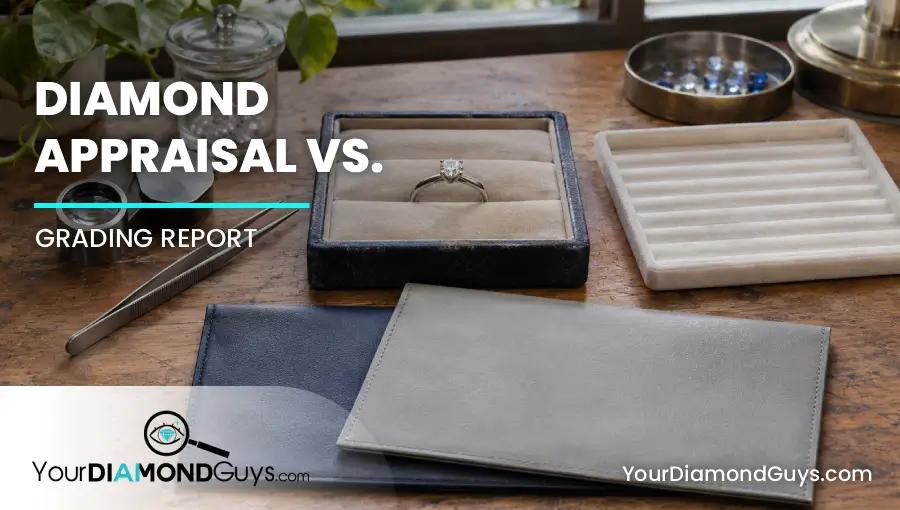
Use the report for quality and ask your insurer what appraisal it needs.
By Josh Allen, Co-Founder of YourDiamondGuys.com. Fifth generation diamantaire with 30+ years in the global diamond trade. Former supplier to Tiffany & Co., Cartier, and Harry Winston.
A $20,000 appraisal does not make a $10,000 ring a bargain. The grading report describes the diamond. The appraisal identifies the complete item, states a value for a defined purpose, and supports insurance or another financial decision.
Different jobs. Different order.
GIA explains that a grading report gives an unbiased quality assessment and does not state monetary value. An appraisal estimates value under its stated purpose and assumptions.
What is the difference between a report and an appraisal?
A grading report identifies and grades the loose diamond. An appraisal describes the finished item and assigns value for insurance, estate, resale, tax, or another stated purpose.
The certified diamond guide explains why a lab report is not certification of beauty or price.
For a natural diamond, start with GIA before purchase. Obtain the appraisal after the final ring and invoice exist.
What job does the grading report do?
Open GIA’s sample grading report to see which fields describe the diamond.
The grading report records origin, shape, measurements, carat, color, clarity, cut information, finish, fluorescence, comments, and identifying characteristics under the lab’s service.
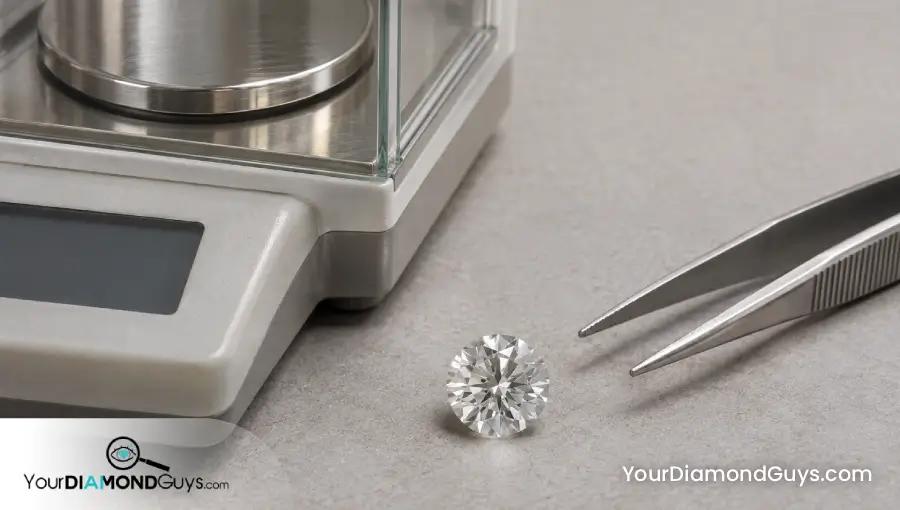
Loose diamond beside a precision balance and jeweler’s tweezers.
It describes a loose diamond at examination. It does not price the setting, craftsmanship, brand premium, taxes, or replacement logistics.
Use it before purchase to compare quality and verify identity. The report number verification guide makes sure the paper belongs to the stone.
| Document | Main job | Best timing | Does it set sale price? |
|---|---|---|---|
| Grading report | Diamond identity and quality | Before purchase | No |
| Sales invoice | Actual transaction and terms | At purchase | Records paid price |
| Appraisal | Value for a stated purpose | After purchase or event | No guaranteed market result |
| Insurance policy | Contracted coverage and settlement | After appraisal when required | Controls claim terms |
What job does the appraisal do?
An appraisal identifies the ring, metal, setting, center diamond, side stones, condition, maker when relevant, and value as of a date. The report should state its purpose and market.
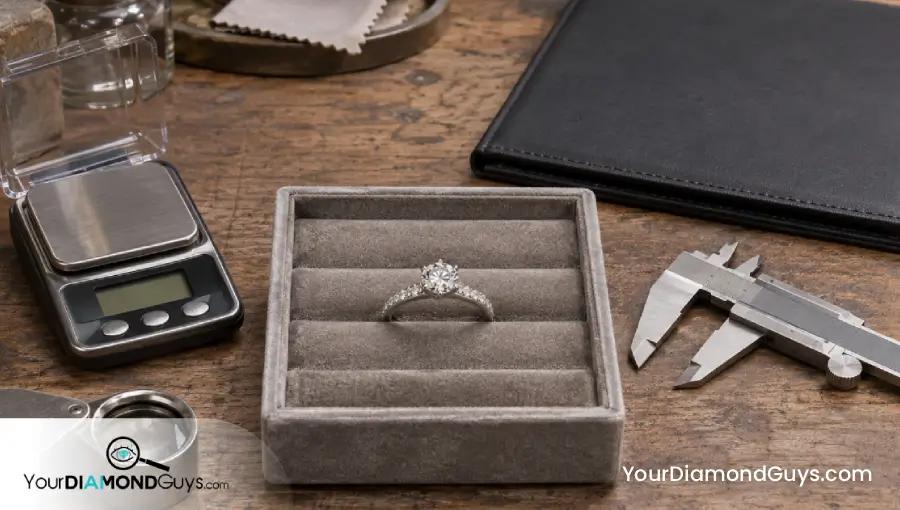
Mounted engagement ring beside a caliper and appraisal folio.
Insurance replacement, fair market value, estate distribution, donation, divorce, and resale are not the same value assignment. Ask which one the appraiser is calculating.
A useful appraisal includes enough detail to replace the item accurately. A vague line saying diamond ring, $20,000 is poor protection even when the number feels generous.
Why do replacement values look inflated?
Some appraisals use broad retail replacement assumptions, add cushion for future price changes, or simply aim high because clients like a large number. The result can sit well above the actual transaction.
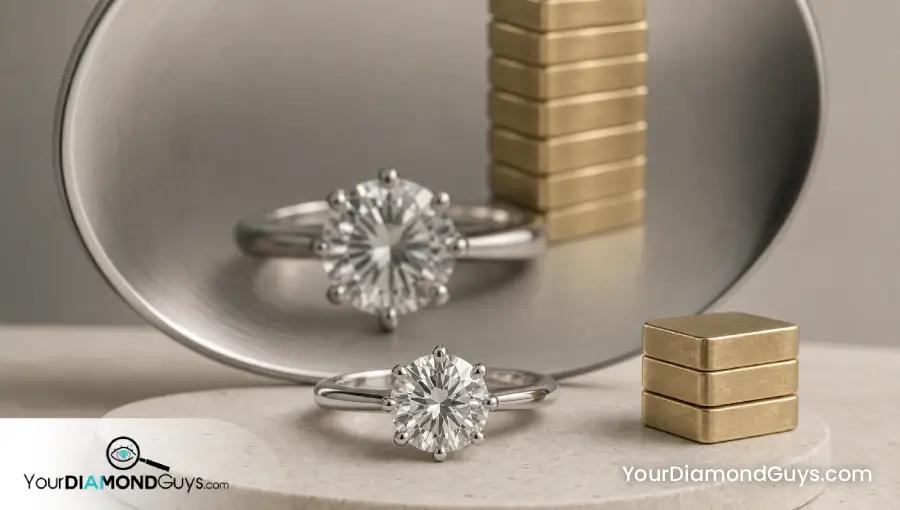
Round solitaire before a concave mirror with an oversized reflection and taller valuation blocks.
A high appraisal does not create equity. It can increase insurance premiums if coverage uses that number. Claim payment still follows the policy contract, replacement process, limits, exclusions, and settlement terms.
Ask the appraiser to explain the market, comparable items, effective date, and difference from your invoice. Clean logic matters more than a flattering number.
What is the correct order from report to insurance?
First, verify the independent grading report. Second, buy the actual ring under written return terms. Third, obtain an independent appraisal when needed. Fourth, bind insurance and read the policy.

Single solitaire ring moving clockwise through empty grading, purchase, appraisal, and protection stations.
Keep the grading report, invoice, appraisal, photographs, inscription image, and setting specifications together. Update the file after a recut, reset, major repair, or material market change.
Do not send the only copy of an old report away without scans. Documentation is part of ownership.
- Verify the grading report and diamond.
- Complete the purchase and save the invoice.
- Appraise the finished item for the correct purpose.
- Choose coverage and read settlement terms.
- Update documents after material changes.
How do you choose an independent appraiser?
Look for formal gemological training, appraisal education, proper instruments, clear fee structure, professional insurance, and no financial interest in buying or selling your ring.
Ask whether the appraiser can verify the inscription, inspect setting condition, identify treatments or recommend lab testing, and explain the valuation market.
I want someone comfortable saying the seller’s paperwork is wrong. Independence matters most when the answer costs somebody money.
The report buying checklist gives the appraiser a clean list of identity and condition questions to close before the return deadline.
How should documents affect a real purchase?
Use the grading report to decide what the diamond is. Use the invoice to record what you paid. Use the appraisal to document what the finished item would cost under a stated purpose. Use the policy to understand what happens after loss.
When those four disagree, resolve the reason. Do not average the numbers and call it value.
An inflated appraisal in practice
A buyer pays $9,500 for a GIA graded natural diamond ring. The seller provides an appraisal for $18,000 and calls the purchase a 47 percent saving.
The appraisal uses an undefined retail replacement number and gives little detail about the setting. It does not prove the buyer saved $8,500.
An independent appraiser documents the exact diamond, setting, condition, and realistic replacement market at $11,200. That lower number can create a better insurance file and a more rational premium.
Documentation traps that inflate false value
- Using appraisal value as proof of a discount.
- Buying before verifying the grading report.
- Letting the seller grade and value its own diamond.
- Using an insurance appraisal for resale expectations.
- Ignoring policy settlement terms.
- Failing to update documents after a recut or reset.
Questions for the appraiser and insurer
- What is the purpose and market for this value?
- How did you support the number?
- Does the description match the grading report and ring?
- Will the policy pay cash, repair, or replace through a network?
- Are loss, theft, damage, and mysterious disappearance covered?
- When should the appraisal and policy be updated?
My bottom line on reports and appraisals
Report, purchase, appraisal, insurance. Keep that order.
Use independent people for independent jobs. A realistic detailed appraisal protects you better than a giant number with no method behind it.
In the trade, a huge replacement number impresses nobody who has to settle the claim or resell the stone. Accurate identity and a defensible method do the real work.
GIA Certificate Secrets: Why One Diamond Can Get Two Different Grades
Questions? Reach out directly for a free consultation, or drop them in the Diamond Buyers Academy community — Rob and Josh answer personally.
What do buyers ask about appraisals and reports?
← Browse all diamond grading guides
Want another set of eyes on the diamond?
Send the listing, grading report, price, and any video you have. We can look at the lab report, measurements, video, and price to make sure the evidence supports the price.
*Some links on our site may earn us a small commission at NO EXTRA cost to you, helping us keep our content free*