GIA Dossier vs. Full Diamond Report
Choose the full report when a clarity plot could change your decision.
By Josh Allen, Co-Founder of YourDiamondGuys.com. Fifth generation diamantaire with 30+ years in the global diamond trade. Former supplier to Tiffany & Co., Cartier, and Harry Winston.
The Dossier is not a weaker grade. It is a shorter evidence file. You still get the 4Cs and key grading information. What you do not get is the plotted clarity diagram found on the full GIA Diamond Grading Report.
Whether that matters depends on size, clarity, shape, price, and how much independent inspection you can get.
GIA lists the Diamond Dossier for loose natural D to Z diamonds from 0.15 through 1.99 carats. It includes a full 4Cs assessment and a report number laser inscription, while the full Diamond Grading Report includes a plotted clarity diagram.
What is the difference between a GIA dossier and full report?
Both provide GIA 4Cs grading. The Dossier covers eligible natural diamonds through 1.99 carats and includes an inscription, but it omits the plotted clarity diagram found on the full report.
For natural diamonds, both start from the GIA standard I want. The choice is about documentation depth, not a different color or clarity scale.
The certified diamond guide explains why either report still needs physical verification and visual review.
Which fields appear on both report types?
See GIA’s annotated Diamond Dossier and compare its fields with the full Diamond Grading Report linked in this guide.
Both identify the diamond, record the report number and date, list shape and cutting style, measurements, carat, color, clarity, and finish details. A standard round brilliant can receive a cut grade and proportions.
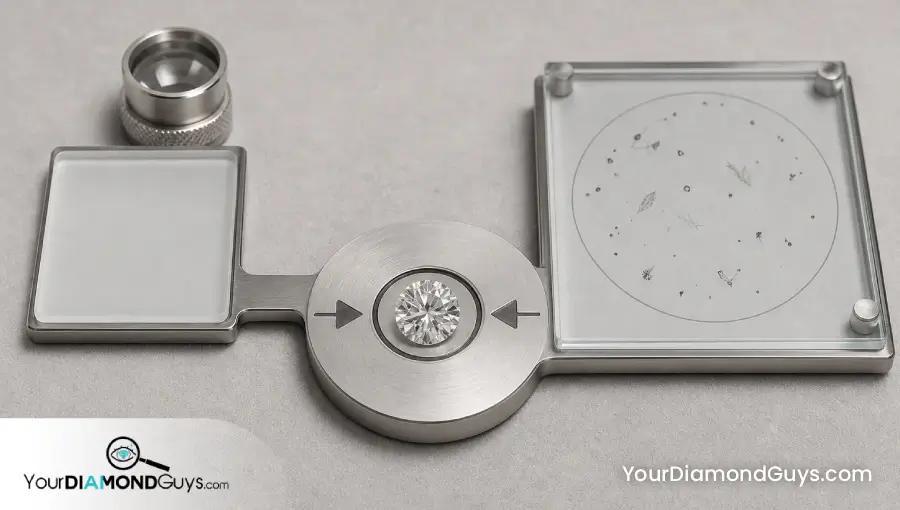
One round diamond connected to compact identity evidence and an expanded inclusion-location panel.
Both can include comments and fluorescence information. The Dossier includes the GIA report number inscription, which gives the buyer a direct physical identity check.
The important missing piece is the plot. The full report maps selected clarity characteristics and gives a key to their symbols.
| Feature | Diamond Dossier | Full Diamond Grading Report |
|---|---|---|
| GIA 4Cs assessment | Yes | Yes |
| Measurements and proportions | Yes | Yes |
| Cut grade for eligible rounds | Yes | Yes |
| Comments and fluorescence | Yes | Yes |
| Report number inscription | Included | Can be included or requested |
| Plotted clarity diagram | No | Yes |
| Current size eligibility | 0.15 to 1.99 carats | 0.15 carats and above |
When is a diamond dossier enough?
A Dossier can be enough for a smaller, higher clarity diamond with clean video, a matching inscription, and a seller who answers inclusion questions directly.
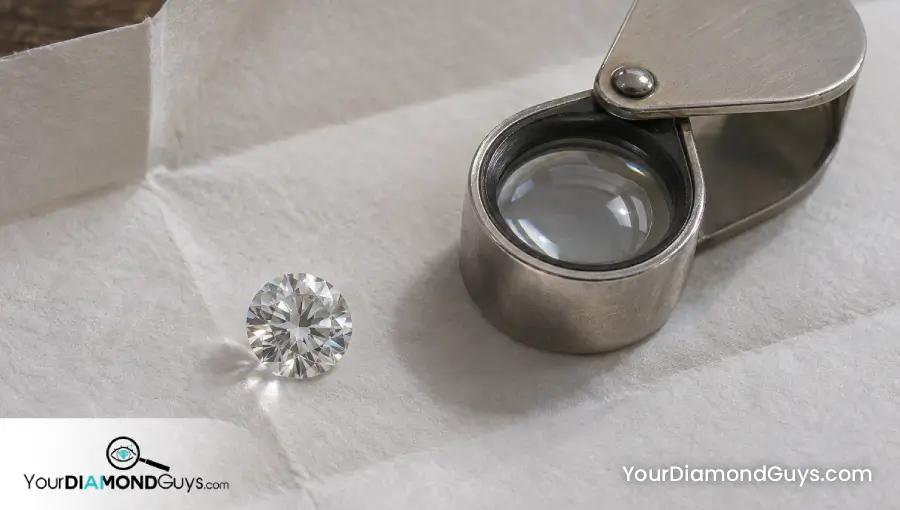
Small round diamond on folded gem paper beside a compact loupe.
It works especially well when the expected clarity concern is low and the price does not justify paying for more documentation. The report still needs to match the listing and stone.
Ask for a microscope image or independent inspection when the absence of a plot leaves an open question. A Dossier is concise. It is not permission to guess.
When should you prefer the full report?
Prefer the full report for larger natural diamonds, lower clarity grades, step cuts, expensive purchases, estate files, and situations where future resale or insurance scrutiny matters.
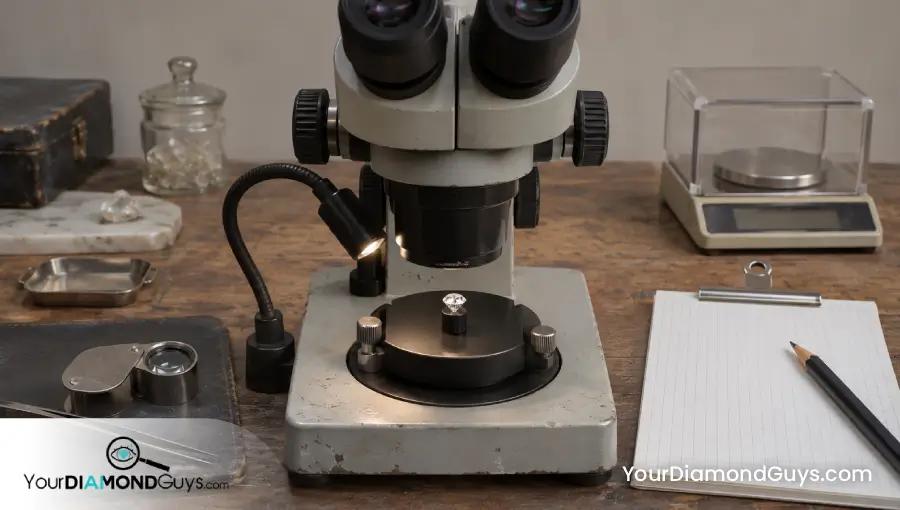
Diamond under a microscope beside an inspection pad and pencil.
Emerald and Asscher cuts show inclusions more easily through broad open facets. SI and I grades can contain features where position matters. A plot helps you ask whether a feather reaches the girdle or a crystal sits under the table.
The clarity plot guide explains why large stones, step cuts, and busy clarity stories deserve the extra map.
What can a plot tell you that comments cannot?
A plot shows approximate type and position for selected features. Comments can tell you that pinpoints are not shown, surface graining is not shown, or an inscription exists, but they do not replace location.
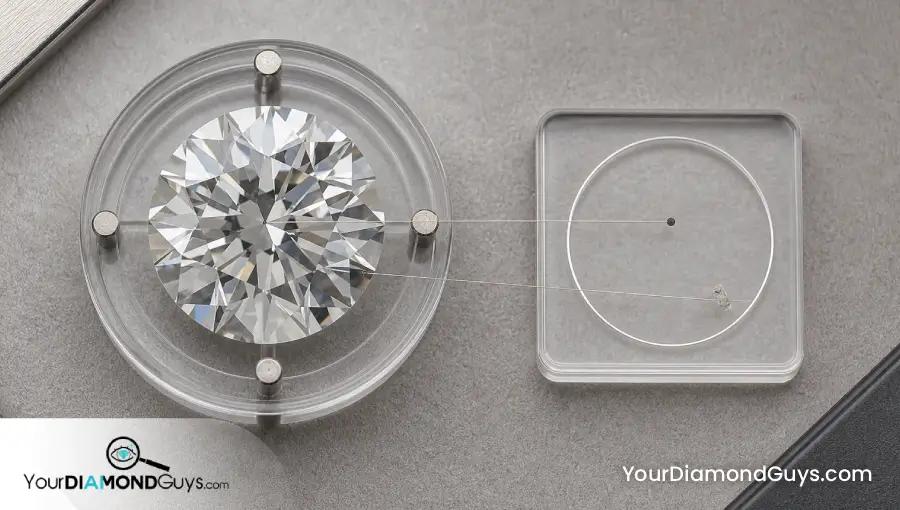
Round diamond linking a central crystal and edge feather to their positions on a blank clarity map.
Position changes the question. A feather near a protected area is different from one opening at a vulnerable corner. A dark crystal under the table is different from a white feather near the edge.
The plot does not show every feature or prove eye cleanliness. Read it with the comments section, microscope images, and actual video.
Does the dossier affect price or resale?
The Dossier does not lower the GIA grades. Some buyers still prefer the fuller identification file when the stone is valuable or clarity sensitive.
That preference can affect how quickly another buyer, appraiser, or dealer gets comfortable. The effect is about evidence and transaction friction, not a secret penalty attached to the word Dossier.
I have bought plenty of good stones with concise reports. I only get uncomfortable when the seller uses the shorter report to avoid showing the actual inclusion story.
How do you choose the right GIA report format?
Match documentation to risk. Higher value, lower clarity, open facets, and weaker inspection access point toward the full report.
Smaller, cleaner, well documented stones can work perfectly well with a Dossier. The inscription and return window need to stay part of the plan.
A dossier versus full report decision in practice
Stone A is a 0.72 carat round, G color, VVS2 clarity, with a GIA Dossier, matching inscription, clean microscope video, and a solid return policy. The missing plot creates little practical concern.
Stone B is a 1.85 carat emerald cut, H color, SI1 clarity, with a Dossier and one fast video. The broad facets and lower clarity make location and nature of the grade setting inclusion important.
I would accept Stone A’s documentation and ask for more visual proof. For Stone B, I want a full report or an independent inspection detailed enough to replace the missing plot.
Dossier shortcuts that remove useful evidence
- Calling the Dossier a lower quality grade.
- Assuming the inscription proves condition.
- Buying an SI step cut without locating the grade setting inclusion.
- Ignoring comments because no plot appears.
- Paying for a large stone with weak inspection access.
- Assuming every current GIA report type has the same eligibility.
Evidence to request when the plot is missing
- Which feature sets the clarity grade?
- Can I see microscope images from several angles?
- Is the diamond eye clean at normal viewing distance?
- Does the inscription match the Dossier number?
- Has the stone been repolished since grading?
- Can an independent appraiser inspect it during the return period?
My bottom line on the dossier
Use the Dossier when the diamond’s risk is simple and the visual evidence is strong. Ask for the full report when inclusion position, size, value, or future transaction confidence makes the plot useful.
More paper does not make a better diamond. Better evidence makes an easier decision.
Get Your Free GIA Report Analysis
Questions? Reach out directly for a free consultation, or drop them in the Diamond Buyers Academy community — Rob and Josh answer personally.
What do buyers ask about GIA dossier reports?
← Browse all diamond grading guides
Want another set of eyes on the diamond?
Send the listing, grading report, price, and any video you have. We can look at the lab report, measurements, video, and price to make sure the evidence supports the price.
*Some links on our site may earn us a small commission at NO EXTRA cost to you, helping us keep our content free*