HRD vs. GIA Diamond Reports For Buyers
Compare the individual report fields before comparing prices.
By Josh Allen, Co-Founder of YourDiamondGuys.com. Fifth generation diamantaire with 30+ years in the global diamond trade. Former supplier to Tiffany & Co., Cartier, and Harry Winston.
HRD Antwerp is a real established laboratory. That does not make an HRD grade interchangeable with GIA in every market. European buyers see HRD reports more often. United States buyers, dealers, and insurers usually know GIA better for natural diamonds.
Buy the diamond at a price that reflects the report the next buyer will accept.
HRD Antwerp says its Natural Diamond Grading Report confirms authenticity and describes the 4Cs. HRD also provides MyHRD access for report records, while GIA provides its own Report Check system.
Is HRD as good as GIA for a natural diamond?
HRD is an established European laboratory, but start with GIA for natural diamond grade and price comparisons. Treat an HRD stone on its own evidence and market acceptance.
The certified diamond guide explains why lab choice affects trust without deciding beauty.
Do not use a blanket grade conversion. Verify the HRD report, inspect the stone, and model the price if a future GIA result comes back differently.
What is HRD Antwerp?
HRD Antwerp grew from the center of the European diamond trade and provides natural diamond, lab grown diamond, colored diamond, and jewelry report services.
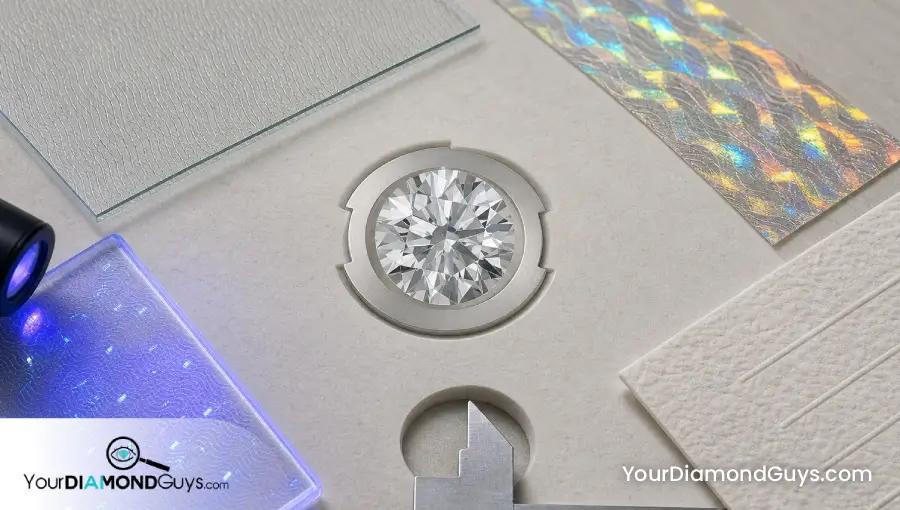
Round diamond aligned with microline glass fluorescent security material holographic foil and secure paper texture.
Its natural diamond report records carat, color, clarity, cut information, measurements, fluorescence, finish, and other identifying details according to the service. HRD also describes security features such as microtext, fluorescent marks, line structure, hologram, and secure paper.
That makes it a legitimate document to verify and read. Legitimacy and market equivalence are different questions.
| Buyer question | HRD Antwerp | GIA |
|---|---|---|
| Where is it most familiar? | Europe and Antwerp trade | Global natural diamond market |
| How do you verify? | MyHRD official record | GIA Report Check |
| What is the buyer stance? | Evaluate report and market discount | Start here for natural diamonds |
| Can grades be compared one for one? | No automatic conversion | Use as the common reference |
| Does the report prove beauty? | No | No |
Why does market familiarity affect price?
Reports reduce uncertainty only when the next person trusts and understands them. A European retailer can be comfortable with HRD. A buyer or dealer elsewhere can ask for GIA before paying the same grade price.
That transaction friction shows up as a discount, regrading request, or slower sale. It does not prove the diamond changed. The market changed around the paper.
The lab choice price guide explains why a cheaper non GIA listing can already include grade and liquidity risk.
How do you compare HRD and GIA grades safely?
Compare fields, not logos. Match shape, measurements, carat, color, clarity, cut or proportions, polish, symmetry, fluorescence, comments, and inscription.
Diamond in a holder between two report envelopes.
Then price a range of GIA outcomes. Do not assume HRD is always one grade different or always identical. The actual diamond can sit clearly inside a grade or near a boundary.
For a large natural diamond, make the purchase contingent on a current GIA report when the asking price depends on exact color or clarity.
The cross laboratory buyer guide shows how HRD fits beside the major grading and cut report options.
What should import buyers check?
Confirm the seller’s identity, return terms, insured shipping, customs duties, taxes, payment protection, and responsibility for a grading mismatch. A report does not fix a weak cross border contract.
Loose diamond in a transport case beside a blank document folder.
Verify the HRD record through the official portal before sending funds. Save the complete listing, currency, invoice, report, videos, and written promises.
Arrange independent inspection before the return period runs out. International shipping can consume days, so build the inspection timeline into the deal.
When should an HRD diamond be regraded?
Consider GIA regrading when a valuable natural diamond is entering the United States market, a sale depends on exact grades, an insurer or estate needs a current file, or the price sits close to GIA comparables.
Keep HRD when the diamond is modest in value, the buyer and market accept the report, the price already reflects it, and independent inspection resolves the remaining questions.
Use the legacy report regrading guide to count unsetting, shipping, grading, resetting, and downside risk before deciding.
How should an HRD report change your offer?
Price the diamond for the market where you expect to own, insure, trade, or sell it. A report familiar in Antwerp can need extra proof in another market.
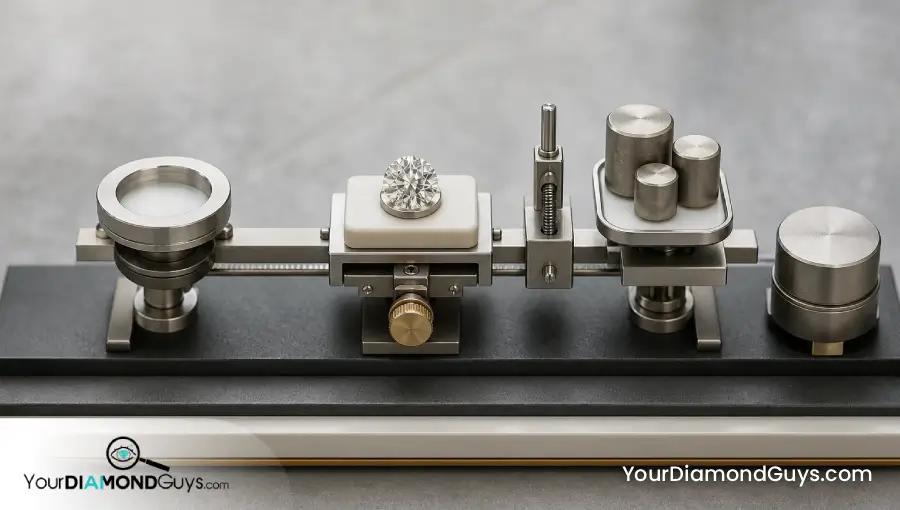
Round diamond on a protected offer carriage between a comparison collar and conservative risk weights.
If the seller wants GIA equivalent money, ask for GIA confirmation. If the price protects you from a conservative outcome and the stone looks good, the HRD report can be workable.
An HRD import decision in practice
A European seller offers a 1.70 carat natural oval with an HRD E VS1 report. The price sits 10 percent below GIA E VS1 comparables.
I verify MyHRD, match dimensions and inscription, inspect bow tie and transparency, and compare GIA F VS2 and F VS1 prices. Then I add duties, shipping, return cost, and possible GIA grading.
If the discount disappears under conservative outcomes, it is not enough. If the price remains fair and the seller accepts independent inspection, the report can support the deal.
Cross market traps in an HRD versus GIA comparison
- Calling HRD fake because it is less familiar.
- Calling HRD and GIA grades automatically equal.
- Using a fixed grade conversion.
- Ignoring the destination resale market.
- Forgetting customs, tax, and return timing.
- Skipping official MyHRD verification.
Evidence to request with an HRD diamond
- Can I verify the report through MyHRD?
- Does the inscription and listing match the report?
- How is the price protected if GIA grades differ?
- Will the seller accept a GIA contingency?
- Who covers insured return shipping and customs?
- Will my appraiser, insurer, or future buyer accept HRD?
My bottom line for european buyers
For natural diamonds, start with GIA. An HRD diamond can still be worth buying when identity is verified, the stone looks strong, and the price reflects cross market report risk.
Do not insult the laboratory and do not worship the paper. Normalize the deal.
GIA Is Not Perfect: What Your Diamond Report Doesn
Questions? Reach out directly for a free consultation, or drop them in the Diamond Buyers Academy community — Rob and Josh answer personally.
What do buyers ask about HRD and GIA?
← Browse all diamond grading guides
Want another set of eyes on the diamond?
Send the listing, grading report, price, and any video you have. We can look at the lab report, measurements, video, and price to make sure the evidence supports the price.
*Some links on our site may earn us a small commission at NO EXTRA cost to you, helping us keep our content free*