Should You Regrade An Old Diamond Report?
Get a regrading quote when the result could change the decision.
By Josh Allen, Co-Founder of YourDiamondGuys.com. Fifth generation diamantaire with 30+ years in the global diamond trade. Former supplier to Tiffany & Co., Cartier, and Harry Winston.
Treat an old report as history, not a current promise. The diamond can still be wonderful. The paper can still identify it. But age, laboratory reputation, later damage, and modern detection can change how a buyer, appraiser, or insurer reads the file.
Regrade when better information can change real money or prevent a bad decision.
GIA offers follow up services that can verify, reevaluate, update, or convert eligible reports. A full grading report requires the diamond to be loose because a setting can affect color, clarity, and exact weight.
Should you regrade an old EGL or legacy diamond?
Regrade when a current GIA result can improve saleability, purchase confidence, insurance accuracy, estate division, or recut planning by more than the total cost and risk.
Start with the certified diamond guide. An old certificate describes an examination at a past date. It cannot prove current condition.
For a natural diamond, use GIA as the current comparison target. Do not assume an old EGL color or clarity grade will transfer directly.
Why do legacy reports need extra caution?
Older report formats can lack online verification, modern security, current treatment detection, detailed proportions, or a clear inscription link. The lab can also have changed ownership, standards, services, or market acceptance.
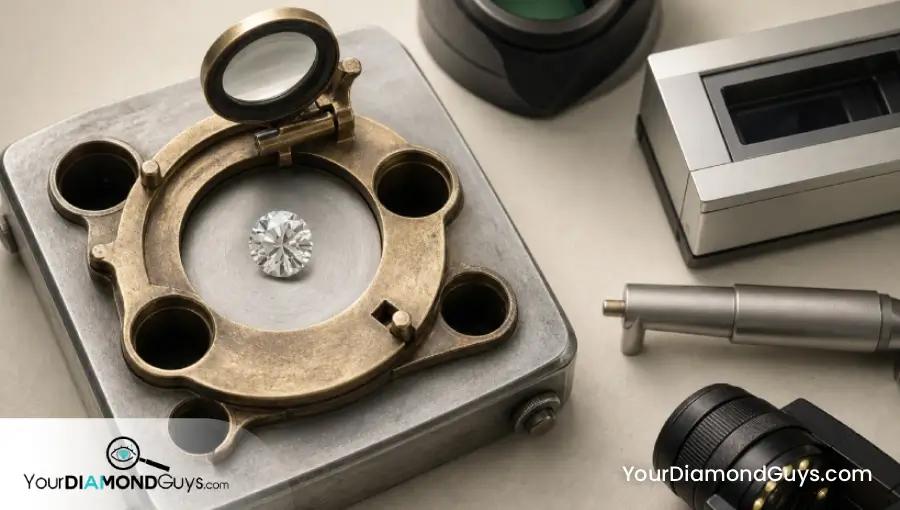
Large round diamond inside an incomplete legacy evidence frame beside modern verification tools.
EGL was not one single global experience for every buyer. Different branches and eras developed different market reputations. That is exactly why I do not apply one automatic grade adjustment.
The diamond’s life matters too. Chips, bruises, repolishing, recutting, setting wear, and repairs after the report date can change weight, clarity, finish, or measurements. An older European file needs the same care, and the HRD versus GIA guide handles that regional comparison.
| Reason to regrade | Potential benefit | Main cost or risk |
|---|---|---|
| Buying a valuable natural diamond | Current quality and identity reference | Grade can come back lower |
| Selling or trading | More buyer confidence and liquidity | Fees and timing |
| Estate division | Common independent file | Unsetting and handling |
| Insurance update | Current description | Appraisal still needed |
| Recut planning | Before and after baseline | Weight and grade can change |
| Sentimental ownership only | Better documentation | Little financial return |
What can happen when the new grades arrive?
The grades can stay close, move lower, or occasionally move higher. A current lab can also detect treatment, damage, or identity details that the old report did not record.
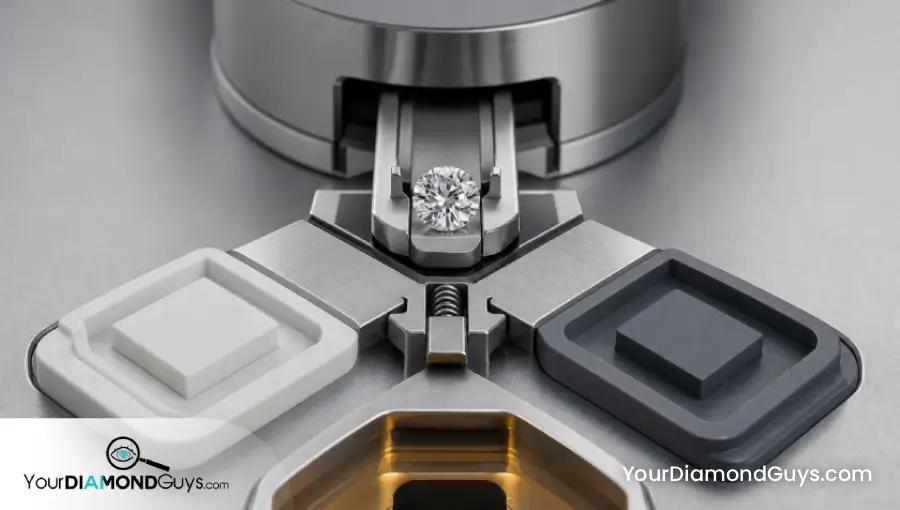
Round diamond leaving a grading cylinder before three empty conservative outcome docks.
Plan for the conservative outcome. Ask what the stone is worth one color lower, one clarity lower, or with a treatment disclosure. Do not spend money only because the best case feels exciting.
The grade change guide explains boundary calls and resubmission results without pretending every difference is an upgrade.
What costs belong in the decision?
Count laboratory fees, insured shipping, unsetting, cleaning, possible repair, resetting, appraisal updates, and time without the ring. For high value stones, custody and insurance limits matter.
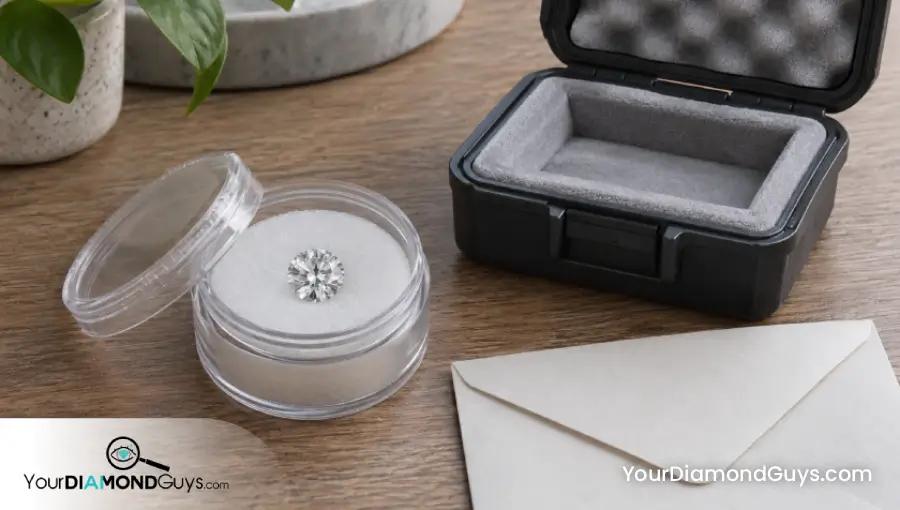
Diamond in a gem holder beside a padded transport box.
A mounted diamond can need removal before full grading. Thin girdles, sharp corners, old settings, and brittle prongs raise handling risk. Use a jeweler who documents condition before work.
Current fee schedules change by carat, service, location, and speed. Get written quotes instead of using a generic online number.
When is regrading usually worth it?
It is usually worth serious consideration for a large natural diamond, a sale or trade, an estate, a high premium insurance policy, a purchase contingent on grade, or any report the market discounts heavily.
It makes less sense for a small sentimental diamond that will stay in the family and does not need a new financial decision. You can still document it through an independent appraisal without chasing a report that costs more than the information changes.
The key is decision value. Better paper needs to change confidence, price, protection, or planning.
How do you prepare a legacy diamond for regrading?
Photograph the ring and stone from every angle. Save the old report, invoice, appraisal, inscription images, repair records, and family history.
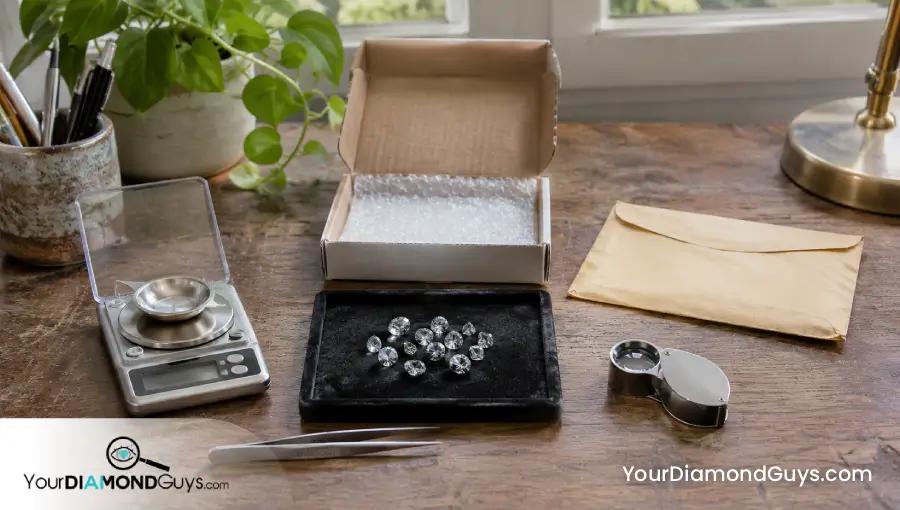
Gem parcel and older report envelope beside a padded box.
Have the jeweler inspect prongs, girdle, chips, abrasion, and setting condition. Agree on custody, shipping insurance, damage responsibility, and what happens if the stone cannot be safely removed.
After grading, use the appraisal versus report guide to update value and insurance in the right order. If a cutter can remove damage or improve performance, read the recut and recertification guide before submitting the stone.
How do you calculate the value of regrading?
Estimate the transaction with and without a current GIA report. Subtract every direct cost and the value of downside risk.
If the new report can materially improve a sale, stop a purchase, settle an estate, or correct insurance, the information has value. If nothing changes, keep the old document and spend carefully.
A legacy regrading decision in practice
A family ring contains a 2.05 carat round with a 2004 EGL report showing F VS1. The owner wants to sell it, and buyers are pricing the stone conservatively.
A current GIA report can reduce uncertainty, but the stone must be unset. The owner gets quotes for removal, insured shipping, grading, reset, and appraisal, then prices GIA G VS2 and H VS2 downside cases.
If the expected sale still improves across conservative outcomes, regrade. If the owner plans to keep the ring and the policy already documents it adequately, the value case is weaker.
Regrading shortcuts that destroy the economics
- Assuming old grades will transfer exactly.
- Calling every EGL report identical.
- Ignoring damage after the report date.
- Forgetting unsetting and resetting risk.
- Using an old appraisal as a grade confirmation.
- Regrading without a financial or documentation goal.
Costs and evidence to confirm before submission
- What decision will a current report change?
- Does the diamond need to be unset?
- Who insures each stage of custody?
- What are the conservative grade and value outcomes?
- Could a recut improve the result first?
- Will the old report and inscription be returned or referenced?
My bottom line on legacy reports
Regrade valuable natural diamonds when current information has a job to do. Use GIA as the destination for the cleanest current market comparison.
Do not chase a better grade. Chase a more useful file. Be ready to accept what the diamond actually is today.
Dealers discount uncertainty before they pay for an old report stone. Your regrading budget should follow the same logic, including the downside result.
Stop Trusting Every Diamond Lab!
Questions? Reach out directly for a free consultation, or drop them in the Diamond Buyers Academy community — Rob and Josh answer personally.
What do buyers ask about old EGL and legacy reports?
← Browse all diamond grading guides
Want another set of eyes on the diamond?
Send the listing, grading report, price, and any video you have. We can look at the lab report, measurements, video, and price to make sure the evidence supports the price.
*Some links on our site may earn us a small commission at NO EXTRA cost to you, helping us keep our content free*