Diamond Recut & Recertification Guide
Ask what the recut could improve and how much weight you could lose.
By Josh Allen, Co-Founder of YourDiamondGuys.com. Fifth generation diamantaire with 30+ years in the global diamond trade. Former supplier to Tiffany & Co., Cartier, and Harry Winston.
A recut can make a dead diamond come alive. It can also turn 1.02 carats into 0.94 and erase the financial win. The goal is not always more sparkle. Recutting can remove a chip, improve symmetry, change outline, reduce a risky inclusion, or create a modern shape from an old stone.
Model the finished diamond before a cutter touches the rough.
GIA offers new grading and follow up services for loose natural diamonds. After a material recut, a new examination and report create the useful current record.
Should you recut and recertify a diamond?
Recut when the expected gain in beauty, durability, saleability, or documentation exceeds weight loss, carat threshold risk, cutting fees, handling risk, and the value of the current shape.
The old diamond grading report describes the pre recut stone. New weight, measurements, proportions, finish, clarity, and inscription can require a new file.
For a natural diamond, plan on GIA after cutting. That gives the finished stone the clearest grade and market reference.
What problems can a recut fix?
A recut can improve crown and pavilion relationships, remove severe leakage, sharpen optical symmetry, correct an awkward outline, reduce windowing, and repair chips or abrasions.
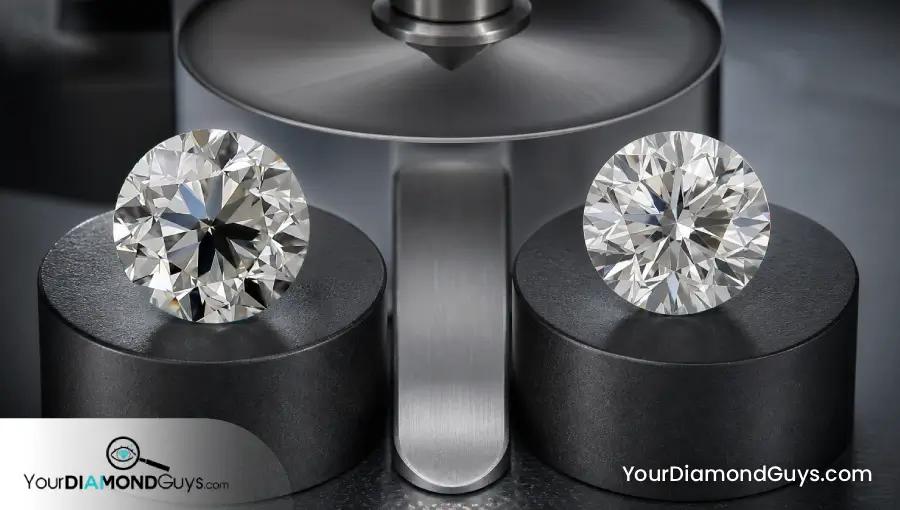
Deep round diamond compared with a better spread recut target showing improved center light return and a repaired edge.
It can sometimes remove or reduce a surface reaching clarity feature. It cannot erase deep inclusions without sacrificing large amounts of weight.
Old European cuts and antique cushions deserve special care. Their charm comes from broad facets, high crowns, small tables, and pattern. Turning every old stone into a modern brilliant can destroy the reason it was special.
| Recut goal | Possible benefit | Main tradeoff |
|---|---|---|
| Improve round light return | More brightness and balanced contrast | Diameter and weight loss |
| Remove chip or abrasion | Safer edge and cleaner finish | Shape or girdle change |
| Improve fancy outline | Better symmetry and coverage | Loss of length or width |
| Reduce windowing | Stronger face up return | Deeper recut or smaller footprint |
| Modernize antique cut | Different performance style | Loss of period character |
| Remove inclusion | Possible clarity improvement | Uncertain yield and grade |
Why does yield decide the economics?
Yield is the finished weight divided by starting weight. Every facet correction removes material, and some problems require much more removal than others.
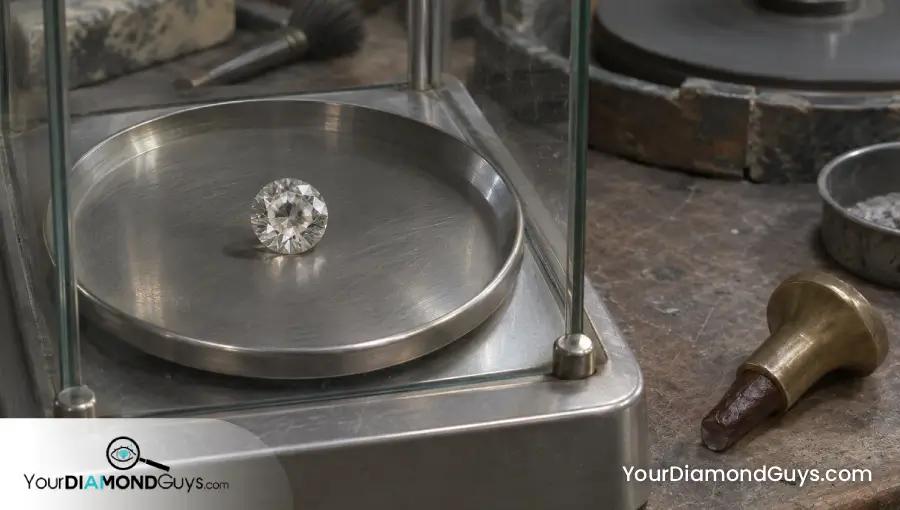
Loose old cut diamond on a precision balance beside a cutter’s dop.
Carat thresholds magnify the impact. Dropping from just above 1.00, 1.50, 2.00, or another market break can reduce price per carat as well as total weight.
Do not judge yield by percentage alone. A smaller diamond with far better light return can be more valuable and more beautiful. The model needs both finished weight and finished quality.
How do you plan a recut before committing?
Use an experienced cutter or planner with scanning technology and real recut examples. Ask for multiple outcome models, not one optimistic target.
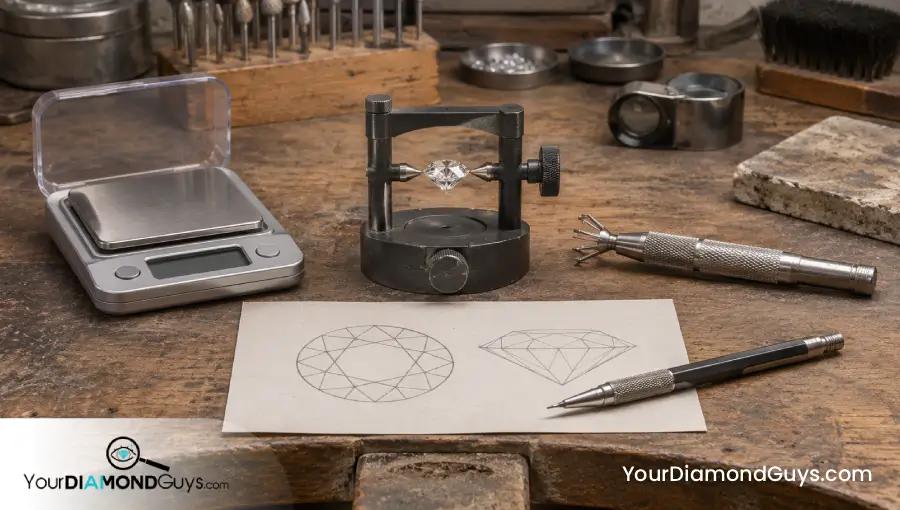
Loose diamond held in a measuring gauge on a jeweler’s bench.
Each model should estimate finished shape, carat, measurements, cut or performance, clarity impact, inscription status, fee, timeline, and breakage risk. Ask what happens if an inclusion opens or a feather grows during polishing.
The best planners tell you when to leave the stone alone. That answer can be more valuable than a beautiful rendering.
Can recutting change color or clarity?
Weight, measurements, cut, polish, and symmetry will change. Clarity can improve if the cutter removes a surface feature, or worsen if a hidden weakness opens, a chip forms, or a remaining feature becomes more prominent.
Color usually reflects the material, but shape, depth, and viewing path can change face up appearance. A new laboratory result still comes from a fresh examination.
The grade change guide explains why nobody should guarantee the next color or clarity line before the lab sees the finished stone.
What happens to the report and inscription?
A material recut makes the old measurements, weight, proportions, finish, plot, and inscription record outdated. The old report belongs in the provenance file, not the current sales file.
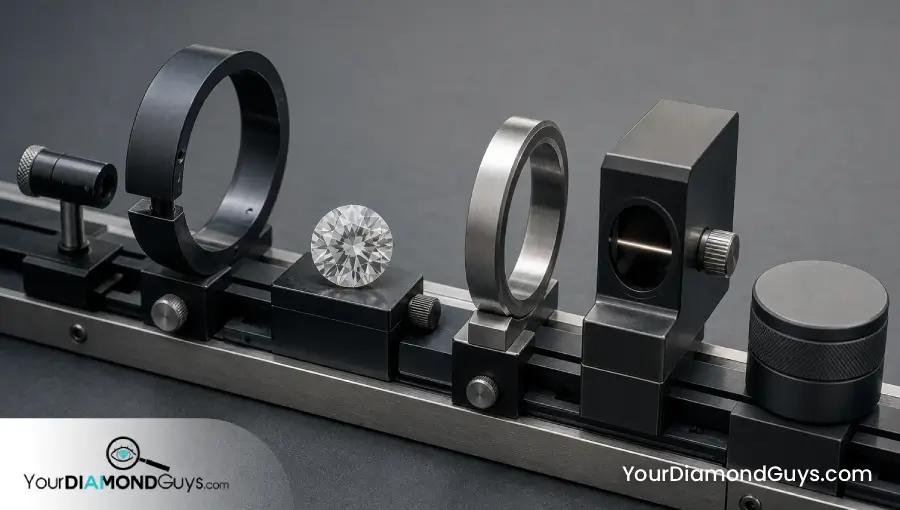
Finished recut round diamond leaving an outdated measurement collar for new inspection and inscription verification.
Polishing the girdle can remove the old inscription. Arrange a new report number inscription with the new grading service when appropriate.
Save before and after images, planning files, cutter invoice, old report, new report, and appraisal. That chain tells the honest story and helps insurance.
Use the appraisal versus grading report guide to rebuild the finished jewelry and insurance file in the right order.
How do you decide whether the recut works on paper?
Compare current as is value with conservative finished outcomes. Subtract cutting, grading, insured shipping, setting work, appraisal, and threshold loss.
Then add the nonfinancial goal. A safer heirloom or a diamond you finally enjoy wearing can justify a project that does not maximize resale.
A recut decision in practice
A 1.08 carat natural round has a deep make, 6.20 millimeter diameter, and weak center. Planning shows two outcomes: 0.99 carat with excellent light return or 1.02 carat with only modest improvement.
The 0.99 option crosses a carat threshold but can look larger and brighter because the diameter and return improve. The 1.02 option preserves paper weight but does not fix the reason for cutting.
Price both finished outcomes with a new GIA report. If the real goal is beauty, the sub carat result can still win. If the economics depend on staying above 1.00, do not pretend the better cut is free.
Recutting shortcuts that destroy value
- Starting without a written yield model.
- Optimizing only for carat retention.
- Ignoring carat price thresholds.
- Destroying antique cut character without intent.
- Assuming clarity must improve.
- Selling from the old report after the stone changes.
Numbers and proof to get from the cutter
- What are the conservative and best case finished weights?
- Which optical or durability problem will the recut fix?
- What can go wrong during polishing?
- How will the outline and diameter change?
- Who insures the stone in transit and at the wheel?
- Which new report and inscription will be ordered?
My bottom line on recutting
Recut for a defined outcome, not a vague hope. Get conservative models and a cutter willing to say no.
After a material recut, obtain a new GIA report for a natural diamond and keep the old file as provenance. Let the finished stone own its new facts.
At the cutting wheel, saving a paper carat can cost the optical result you hired the cutter to create. Price both outcomes before the first facet moves.
Get Your Free GIA Report Analysis
Questions? Reach out directly for a free consultation, or drop them in the Diamond Buyers Academy community — Rob and Josh answer personally.
What do buyers ask about diamond recutting?
← Browse all diamond grading guides
Want another set of eyes on the diamond?
Send the listing, grading report, price, and any video you have. We can look at the lab report, measurements, video, and price to make sure the evidence supports the price.
*Some links on our site may earn us a small commission at NO EXTRA cost to you, helping us keep our content free*