Why Diamond Color & Clarity Grades Change

Price the diamond on the evidence you have today.
By Josh Allen, Co-Founder of YourDiamondGuys.com. Fifth generation diamantaire with 30+ years in the global diamond trade. Former supplier to Tiffany & Co., Cartier, and Harry Winston.
A grade change does not mean the diamond changed. Sometimes the opinion changed at the boundary. Color and clarity grading use controlled standards and trained observers. They are still judgments applied to a continuous natural material.
Upgrade is trade slang for a better result. It is not proof that the second report discovered a better diamond.
GIA’s report limitations state that another examination can differ depending on when, how, and by whom the item is examined, as well as changes in techniques and equipment. That is why a report is an opinion tied to an examination.
Why can a diamond receive a different grade?
Color or clarity can change when a stone sits near a grade boundary, condition or cleaning changes, new evidence appears, the diamond is repolished, or a different laboratory applies its system.
The certified diamond guide explains why report does not mean permanent guarantee.
For natural diamonds, start with GIA and compare GIA outcomes. A cross laboratory difference can reflect different systems as well as normal boundary judgment.
How do grade boundaries create different results?
See GIA’s diamond grading equipment and process photos for context on the conditions used when evaluating a stone.
Diamond color is a continuum. The material does not jump from G to H. Graders compare the stone with master references under controlled conditions and assign the closest category.

Two diamond samples in a comparison tray under neutral light.
Clarity also uses boundaries. Size, number, position, nature, and relief of features combine into a grade. A feature near the threshold can support VS2 in one examination and SI1 in another.
The larger the value jump at the boundary, the more the trade notices. That does not make the boundary fake. It makes conservative pricing important.
| Reason for change | What changed | Buyer meaning |
|---|---|---|
| Boundary judgment | Observer outcome | Price both nearby grades |
| Cleaning | Visibility of features | Dirty stones can distort inspection |
| Damage | Physical condition | New chip or bruise can lower clarity |
| Repolishing or recut | Weight, finish, geometry, features | Old report can stop matching |
| New technology | Detection capability | Treatment or origin finding can change |
| Different laboratory | System and market reference | Do not compare grades one for one |
What is a recheck versus a resubmission?
A recheck asks the laboratory to reassess a result under its follow up process, often before the item leaves or under stated timing rules. A resubmission can create a new examination and report workflow.
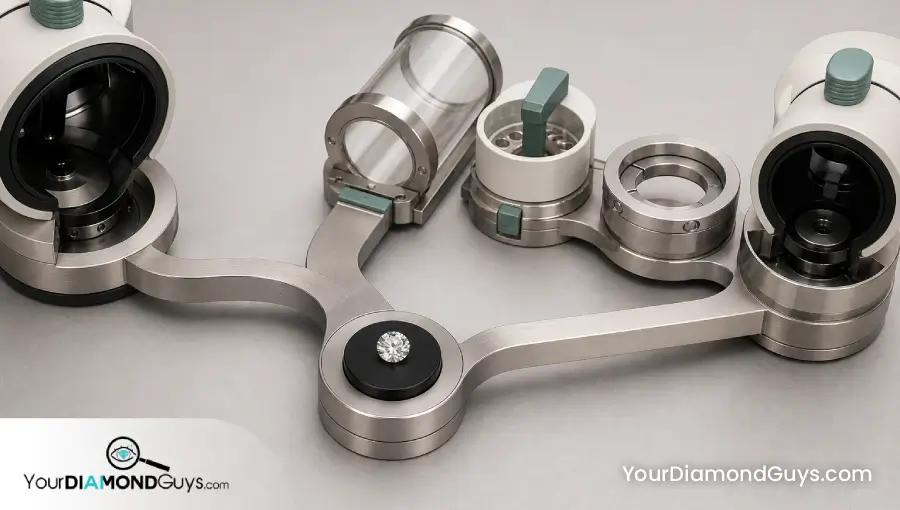
One round diamond at a fork between a short laboratory recheck loop and a new submission workflow.
Rules, fees, report surrender, inscription handling, and service eligibility vary. GIA publishes current follow up services for updates, reexamination, conversion, and verification.
Do not assume the old result stays visible or that repeated submissions must move the grade. Ask the lab and document exactly which service you are buying.
Can cleaning or damage change the grade?
Cleaning can reveal the diamond more accurately. Oil, polishing compound, dirt, and setting debris can hide surface features or make a stone look worse than it is.
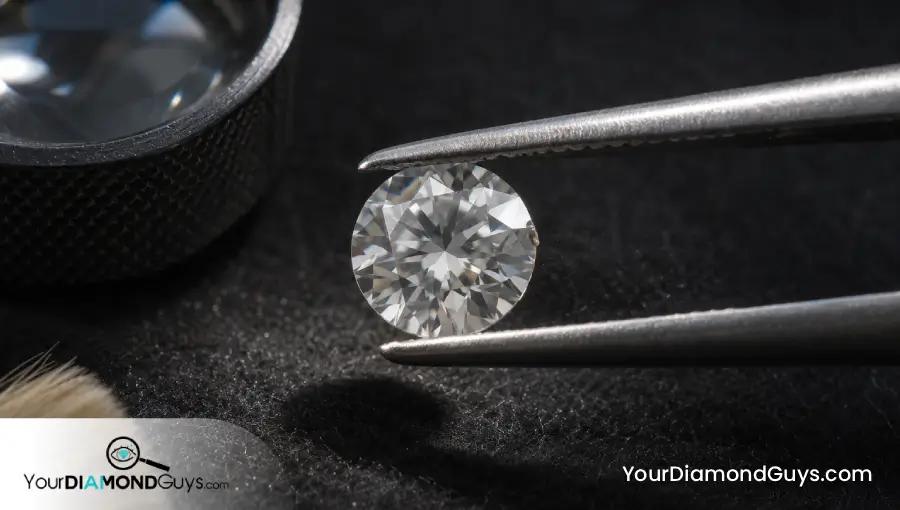
Loose round diamond held for close examination of its girdle.
Damage can change clarity. A new chip, bruise, abrasion, or cavity after impact can make the old report inaccurate. Repolishing can remove damage but also reduce weight or alter proportions.
The report date matters because condition is not frozen. That is why an old clean grade does not replace current inspection.
When the starting document is old or carries weak market acceptance, the legacy report regrading guide helps decide whether fresh information is worth the cost.
Why do dealers resubmit borderline stones?
One color or clarity grade can change price enough to justify fees and time. A dealer can resubmit a borderline diamond because the upside is larger than the cost.

Unchanged round diamond on a resubmission loop beside stepped outcome docks and market value blocks.
That incentive does not guarantee a better result. It means the market has sharp price steps sitting on top of continuous material.
I have seen stones come back the same, better, and worse. The mistake is treating the best paper outcome as proof of appearance. The stone looked the same when it left and returned.
How should buyers price grade wiggle room?
Ask whether you would still buy the diamond one grade lower. If the answer is no, the deal is too dependent on the border.
Compare prices at the printed grade, one color lower, one clarity lower, and both lower when the lab or report history creates uncertainty. Use the lab choice price guide for the full normalization process.
Buy visible beauty and acceptable risk, not the hope of a future upgrade. If a later report improves, treat it as a documentation outcome, not the reason you owned the stone.
When should a grade change affect a purchase?
It matters when the price, return right, insurance, or resale case depends on the exact boundary. Make the contract say which report and outcome controls.
It matters less when the diamond looks excellent, the price works at a conservative grade, and you plan to keep it. Paper risk becomes manageable when the purchase is not built on optimism.
Grade wiggle room in a real purchase
A 1.40 carat natural round has an older report showing G VS2. The seller says a new submission could upgrade to F VS2 and prices it near F.
I ignore the upgrade story. I compare current GIA G VS2 and H SI1 downside values, inspect condition, and ask for a current GIA report before paying an F premium.
If the diamond is worth the price as G VS2, the deal can stand. If it only works as F, the seller should carry the submission risk.
Grade change assumptions that cost buyers money
- Calling every different result an error.
- Assuming repeated submission guarantees an upgrade.
- Ignoring report date and current condition.
- Paying for a hoped for future grade.
- Comparing different laboratories as one system.
- Forgetting carat loss after polishing or recutting.
Evidence to request before accepting a new grade
- Was this a recheck, update, reexamination, or new submission?
- Did the diamond change physically between reports?
- Which report and inscription belong to the current stone?
- Were treatments or new features detected?
- How does the price work one grade lower?
- Will the sale be contingent on a current GIA result?
My rule for changing grades
Assume honest grading variation near boundaries and protect yourself with conservative price comparison.
Never buy a diamond because someone promises the paper will improve. Buy it because the stone, current report, and current price already work.
Color or clarity? Cut or size? Round or oval?
Questions? Reach out directly for a free consultation, or drop them in the Diamond Buyers Academy community — Rob and Josh answer personally.
What do buyers ask about changing diamond grades?
← Browse all diamond grading guides
Want another set of eyes on the diamond?
Send the listing, grading report, price, and any video you have. We can look at the lab report, measurements, video, and price to make sure the evidence supports the price.
*Some links on our site may earn us a small commission at NO EXTRA cost to you, helping us keep our content free*