Cut Style By Shape
By Josh Allen, Co-Founder of YourDiamondGuys.com. Fifth generation diamantaire with 30+ years in the global diamond trade. Former supplier to Tiffany & Co., Cartier, and Harry Winston.
Pick brilliant, step cut, or mixed cut based on the kind of light you want to see. This is the sparkle personality decision before the spec decision.
Shape names do not tell the whole story. Round, emerald, and radiant diamonds behave differently because their facet architecture is different.
For natural diamonds, start with GIA. The report gives the first facts worth trusting, but the actual images and video still decide whether the diamond earns the money.
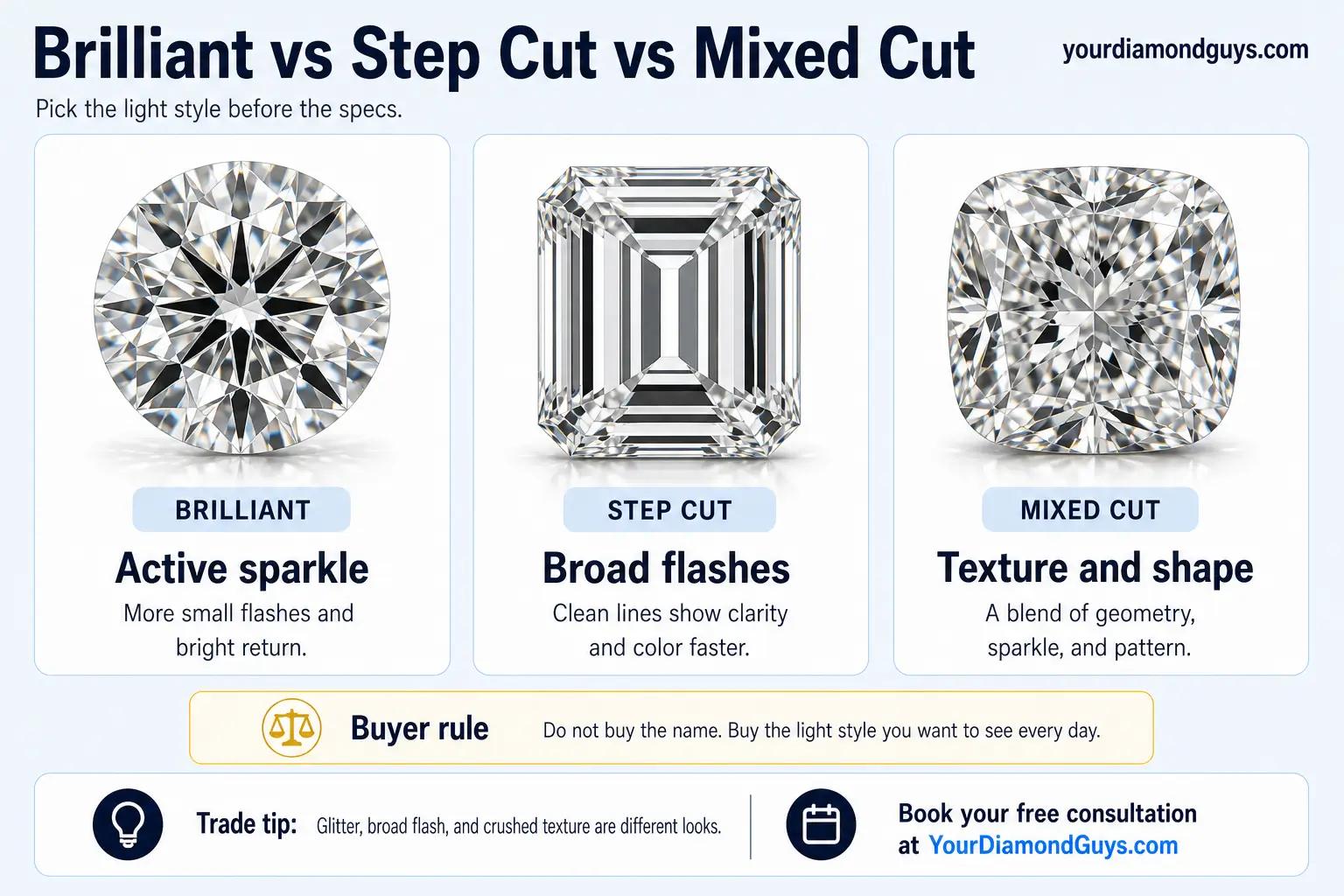
Do not buy the name. Buy the light style you want to see every day.
When a buyer says they want sparkle, I ask what kind. Bright glitter, broad flashes, and crushed texture are not the same look.
What To Check First
| Check | Buyer Meaning |
|---|---|
| Brilliant cuts | More active sparkle and smaller flashes. |
| Step cuts | Clean lines and broad flashes. |
| Mixed cuts | A blend of shape, sparkle, and geometry. |
| Clarity | Step cuts need stricter clarity review. |
| Lifestyle | Choose the light style you want to see every day. |
Brilliant Cuts Give More Action
Round brilliants, ovals, pears, marquise, princess, and many cushions give more active sparkle. They can also hide small inclusions and warmth better than step cuts.
That does not make them automatically better. It makes them a different look.
Step Cuts Are Quieter And Less Forgiving
Emerald, Asscher, and baguette shapes need stricter review because step cut windowing and visible inclusions show faster.
When step cuts are good, they look clean and expensive. When they are weak, there is nowhere for the problem to hide.
Mixed Cuts Need Video, Not Labels
Radiants, cushions, and some modified fancy shapes sit in the messy middle. They can have bright mixed sparkle, chunky flashes, crushed ice texture, or a blend of all three.
Mixed cut is not a quality grade. It is a style category. I want to see whether the small reflections move cleanly, whether the corners stay alive, and whether the center goes watery in real video.
My Buying Call
Choose the light style before you compare specs. If you want glitter, do not buy a step cut because it sounds elegant. If you want calm flashes, do not force yourself into a brilliant cut.
Reach out to Rob or me at YourDiamondGuys.com, or book your free consultation. We will look at the actual stone with you. No sales pitch.
How This Connects To The Rest Of The Buy
Cut style is the fork in the road before the specs start mattering. Once you know the light style you like, the next checks get much easier.
Use the diamond shapes guide as the hub when you are still choosing the shape family before comparing brilliant, step, and mixed cuts.
Use round brilliant for classic brilliant sparkle, cushion and radiant for mixed patterns, and emerald, asscher, and baguette when you want step cut structure.
Then move into diamond cut quality, the fancy shape cut guide, crushed ice vs chunky facets, and step cut windowing. That keeps the buyer comparing the right problem instead of chasing a prettier label.
A Buyer Example
A buyer tells me they want sparkle, then sends an emerald cut because it looks elegant in the listing. That is not a bad choice, but it is a different job. If they want glitter, I move them toward a brilliant or lively mixed cut. If they want calm flashes and clean geometry, now the step cut makes sense.
The paper is not the prize. The actual diamond is. That is the trade habit buyers need to borrow before they spend real money.
Mistakes I Would Skip
- Do not buy the report before judging the actual diamond.
- Do not compare price until the shape passes its visual checks.
- Do not ignore video, outline, spread, color visibility, or clarity visibility.
- Do not assume the same spec target works for every shape.
Questions I Ask Before Approval
- Does the diamond match the job of this page: Choose a diamond shape by cut style and sparkle personality.
- Can I see the actual diamond video, not a sample image?
- Does the shape create any durability, bowtie, windowing, color, or clarity issue?
- Is the price right for the stone in front of me?
Discover the Perfect Diamond, Effortlessly
Compare The Cut Style Against Real Proof
Use these sites as proof libraries, not automatic recommendations. I would compare brilliant cut performance on Whiteflash and precision examples on Brian Gavin Diamonds, then use that eye when judging mixed and step cuts elsewhere.
Questions? Reach out directly for a free consultation, or drop them in the Diamond Buyers Academy community — Rob and I answer personally.
Questions Buyers Ask Us
*Some links on our site may earn us a small commission at NO EXTRA cost to you, helping us keep our content free*