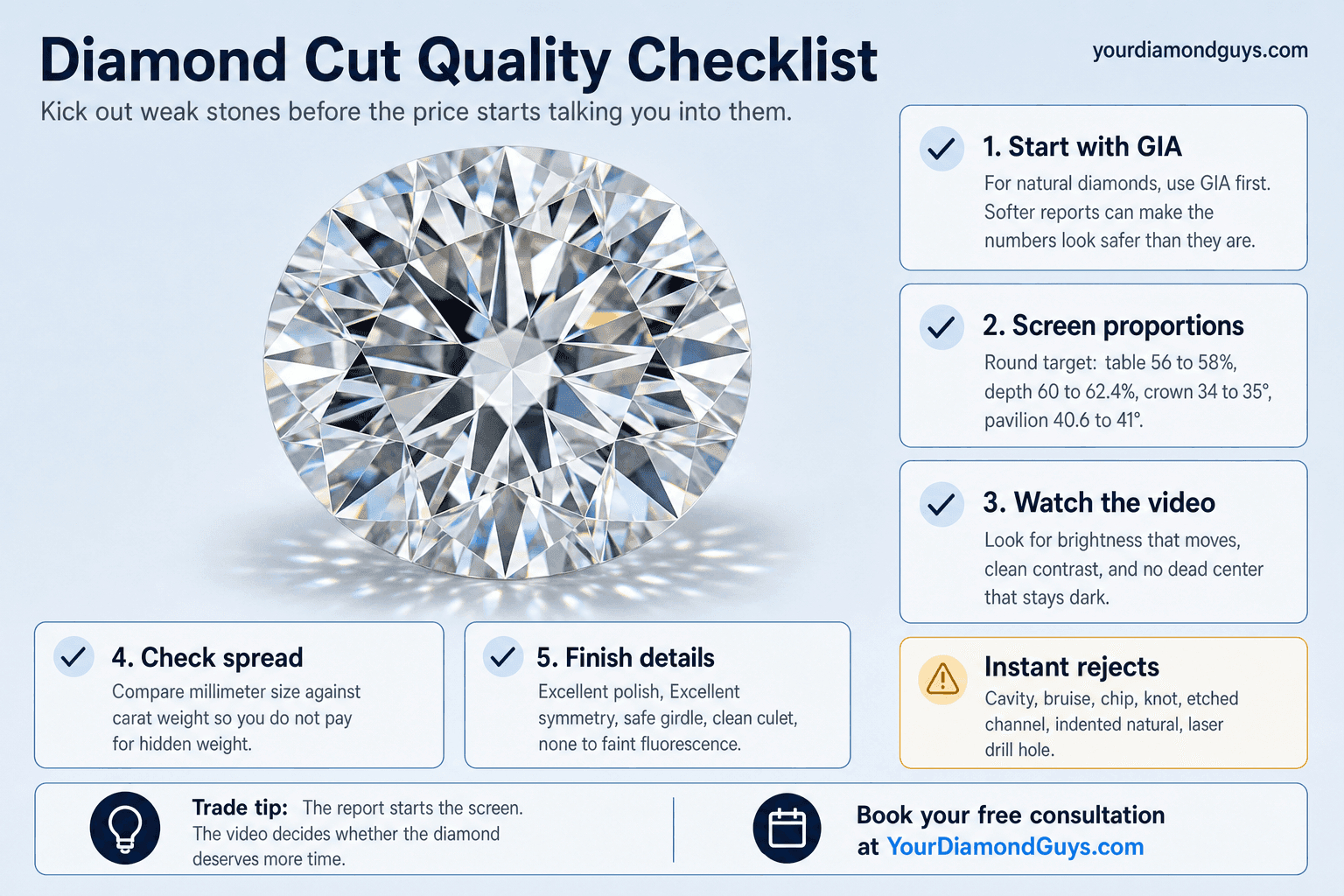
Cut Quality Checklist
Use this before you compare prices. It tells you whether a diamond deserves more attention.
Free expert guidance by email or video chat.
No pressure, No sales pitch. Just honest help from diamond experts.
By Josh Allen, Co-Founder of YourDiamondGuys.com. Fifth generation diamantaire with 30+ years in the global diamond trade. Former supplier to Tiffany & Co., Cartier, and Harry Winston.
Start here, diamond cut quality decides whether a diamond looks alive, faces up well, and deserves the price before color, clarity, or carat weight gets serious.
Most buyers treat cut like one line on a report. That is the expensive mistake. Cut controls light return, fire, scintillation, spread, contrast, leakage, and the difference between a stone that looks good on paper and a stone that actually performs.
For natural diamonds, I start with GIA. Not because the GIA cut grade finishes the job, but because it gives me proportion data I trust enough to start the review.
Inside the trade, two diamonds with the same GIA grades do not get treated the same when they hit the desk. The better cut gets attention first because dealers know it will look better when the buyer sees it away from perfect lighting.
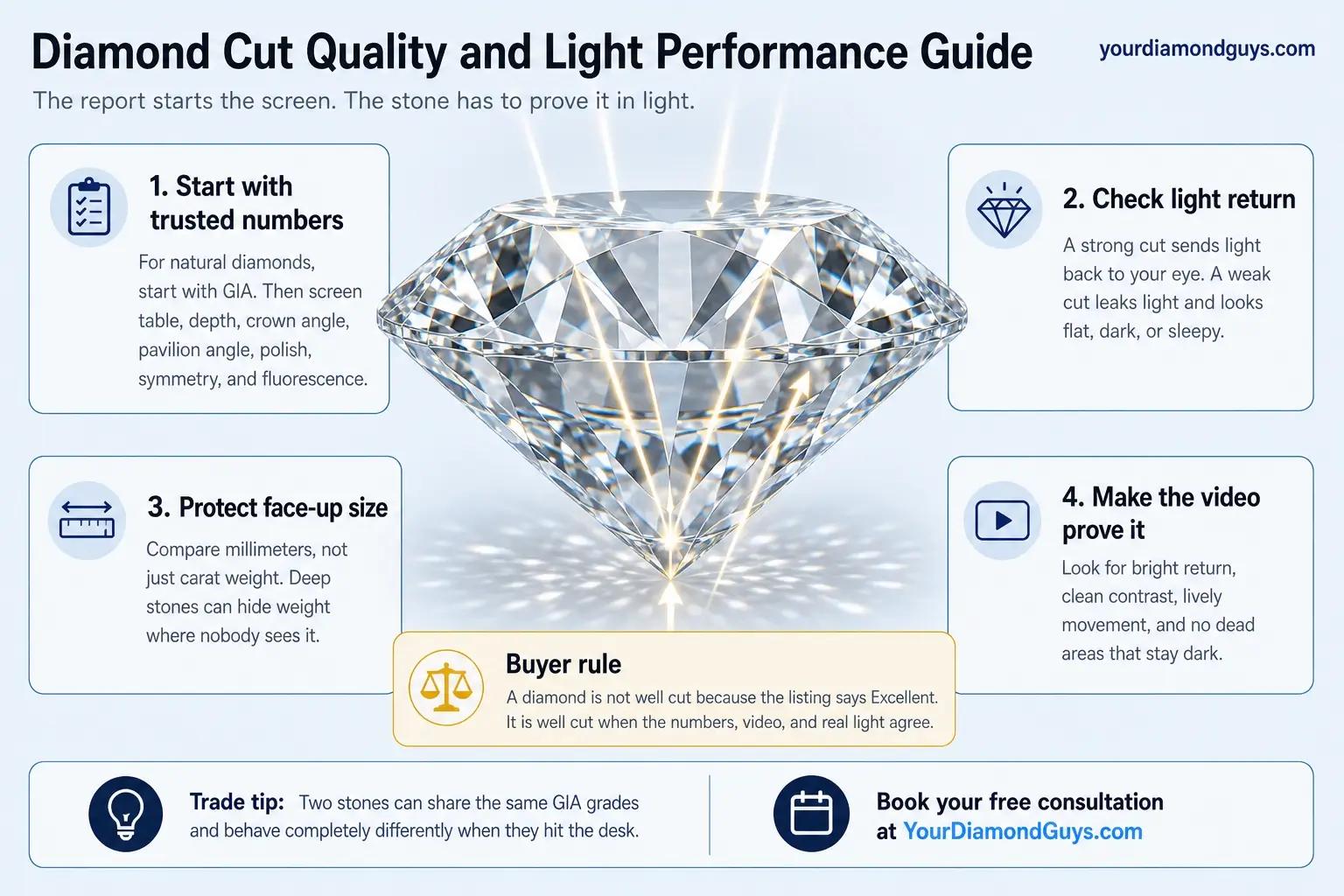
My short answer: use the cut quality checklist first, then check the GIA report, round proportions, video, leakage, lighting behavior, spread, and proof images before you talk yourself into the price.
This page is the starting point for the whole cut quality cluster. If you are early in the search, begin with the fast screen. If you are comparing serious candidates, move into the specific guides below.
Use this before you compare prices. It tells you whether a diamond deserves more attention.
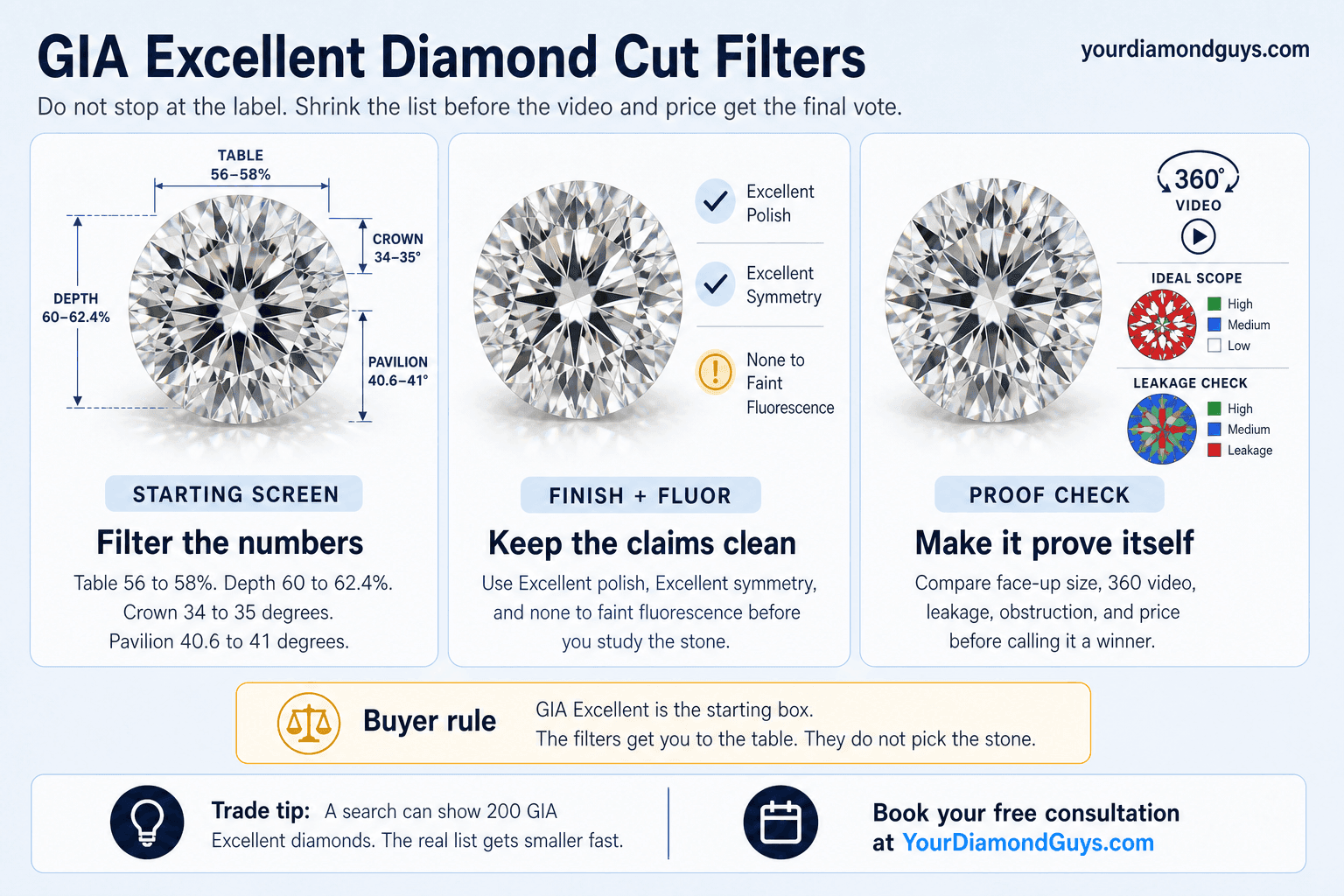
GIA Excellent is broad. These filters narrow the field before video review.
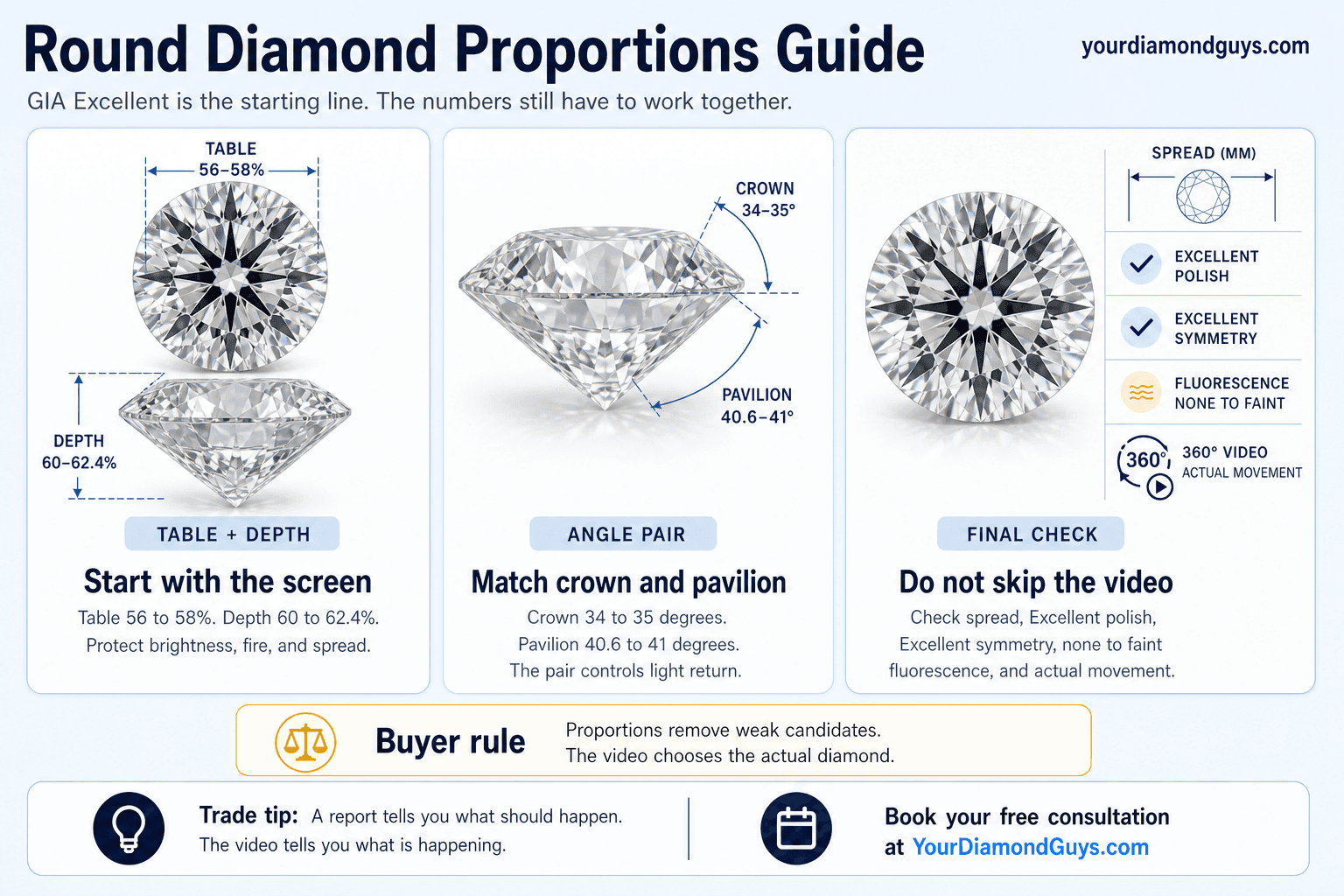
Start with table, depth, crown angle, pavilion angle, spread, polish, symmetry, and fluorescence.
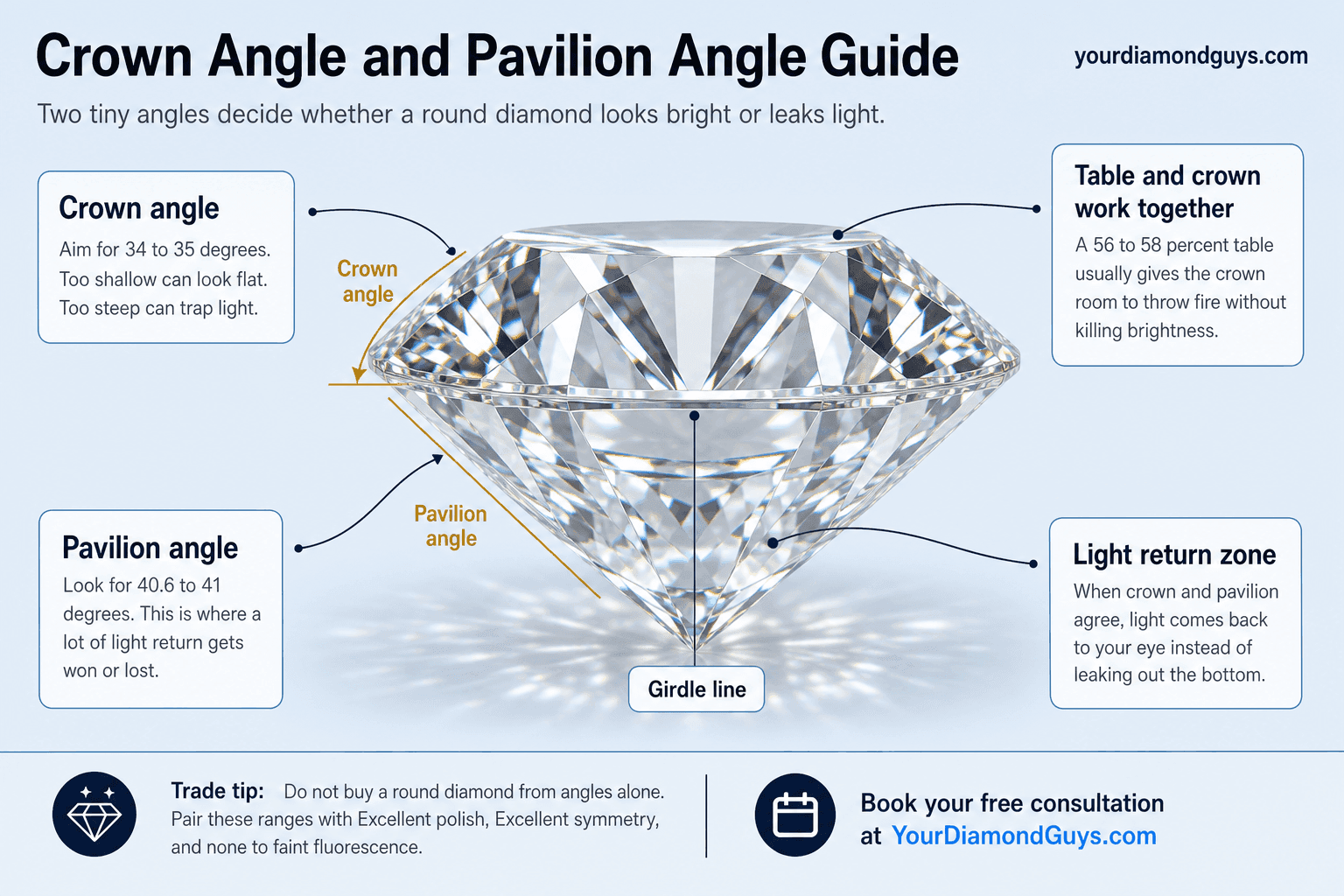
One angle does not make the diamond. The pair decides whether the stone works.
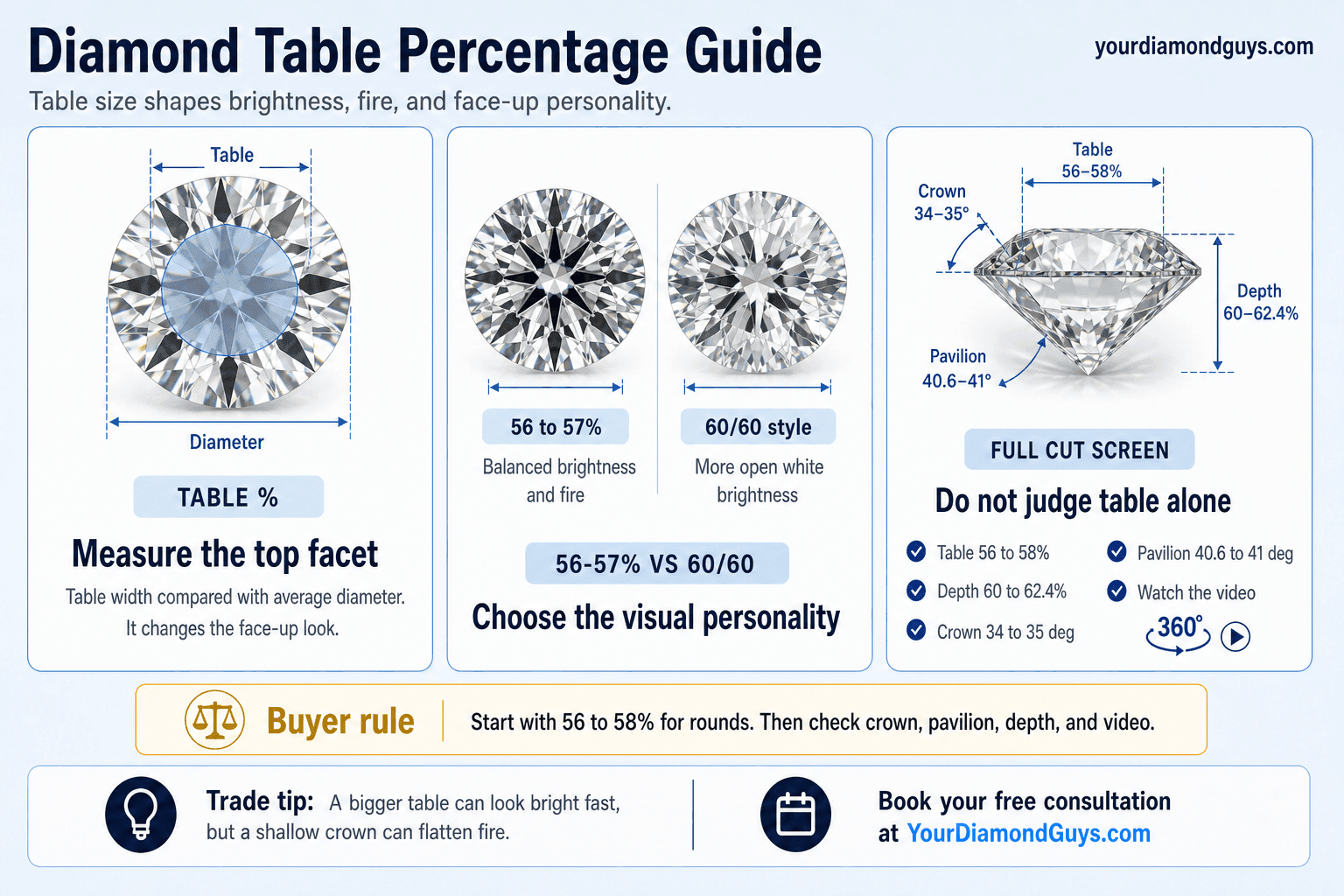
A bigger table is not automatically better. It changes brightness, fire, and spread.
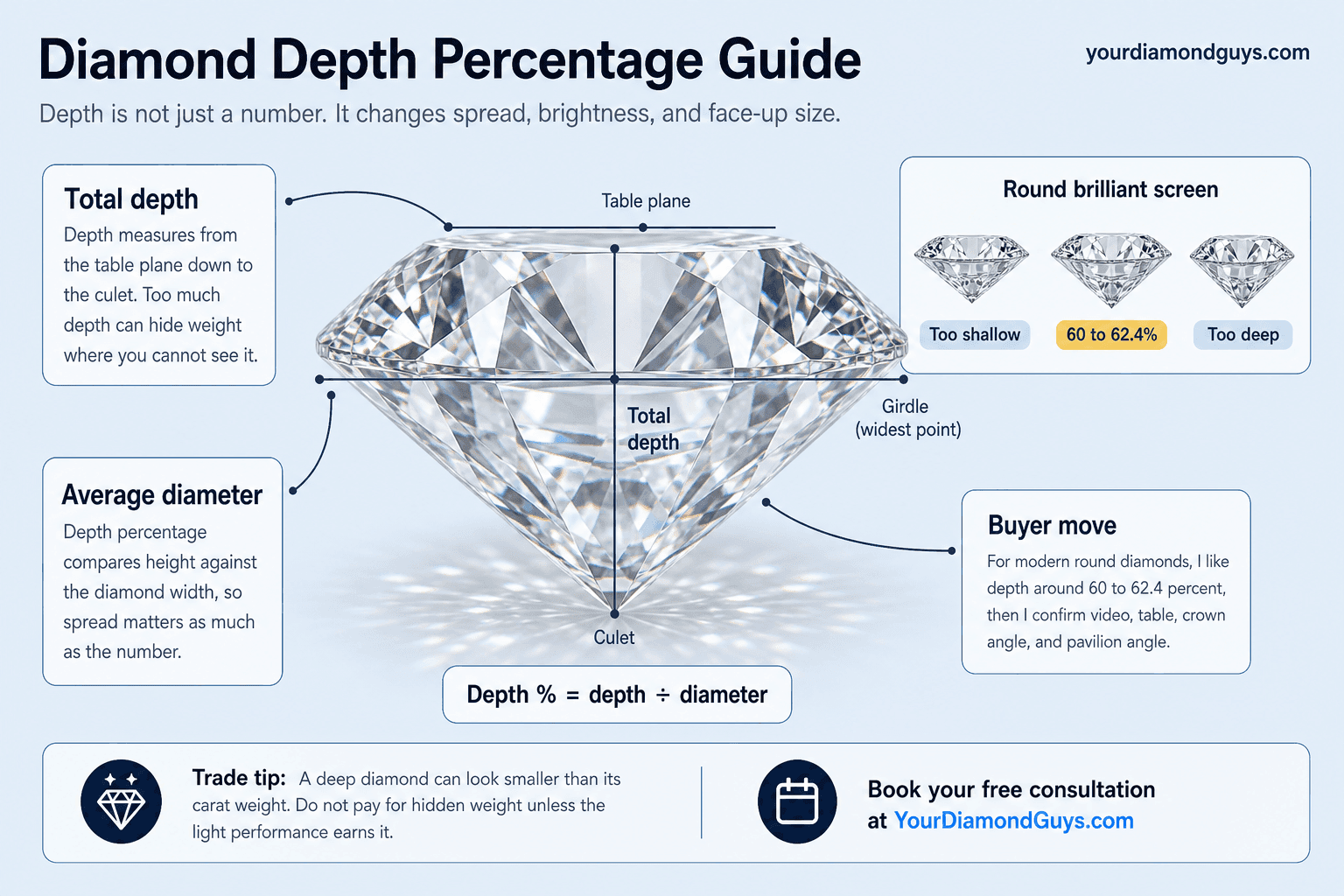
Depth tells you whether carat weight shows up on the hand or hides in the stone.
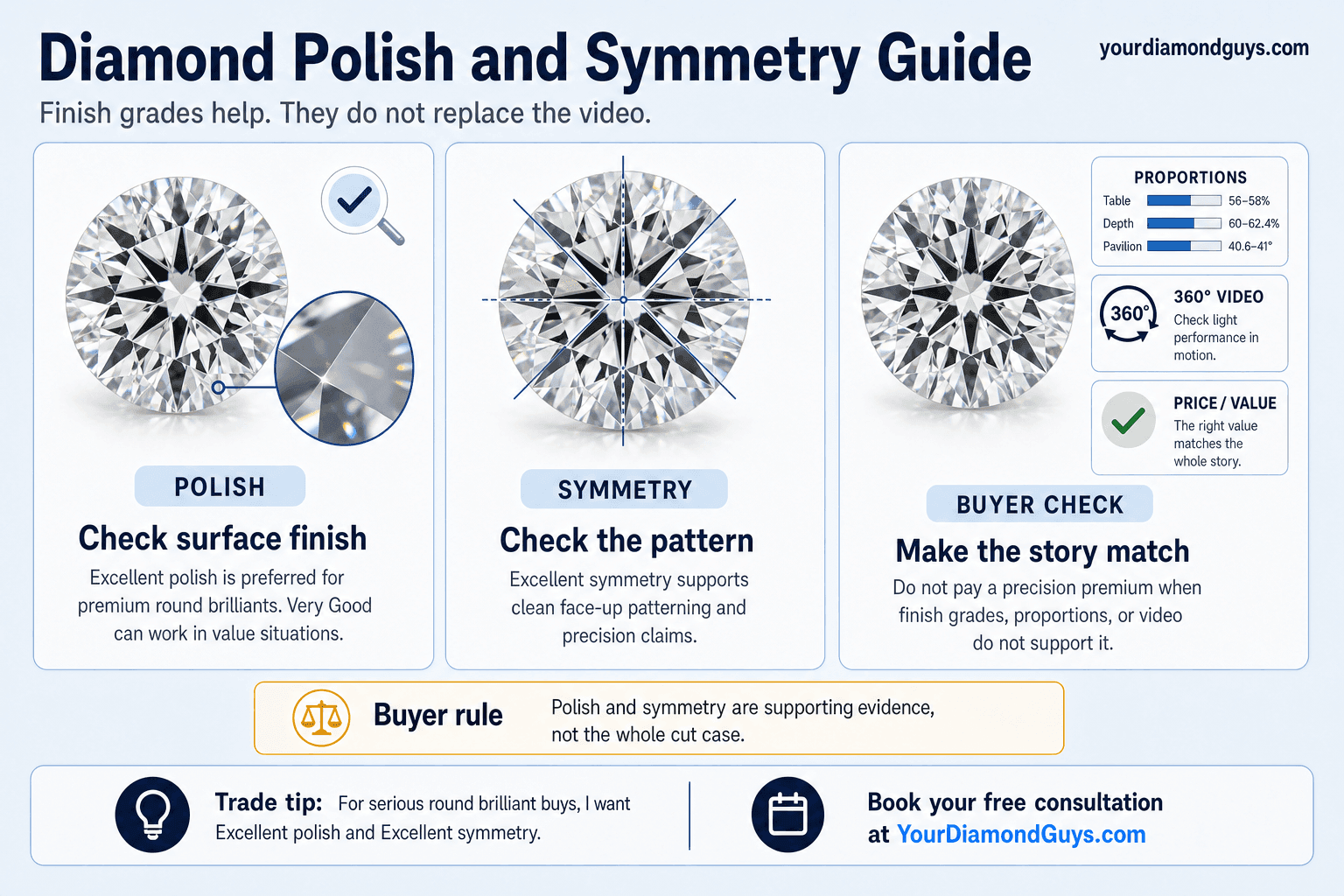
Finish grades matter, but they do not rescue weak proportions or bad light return.
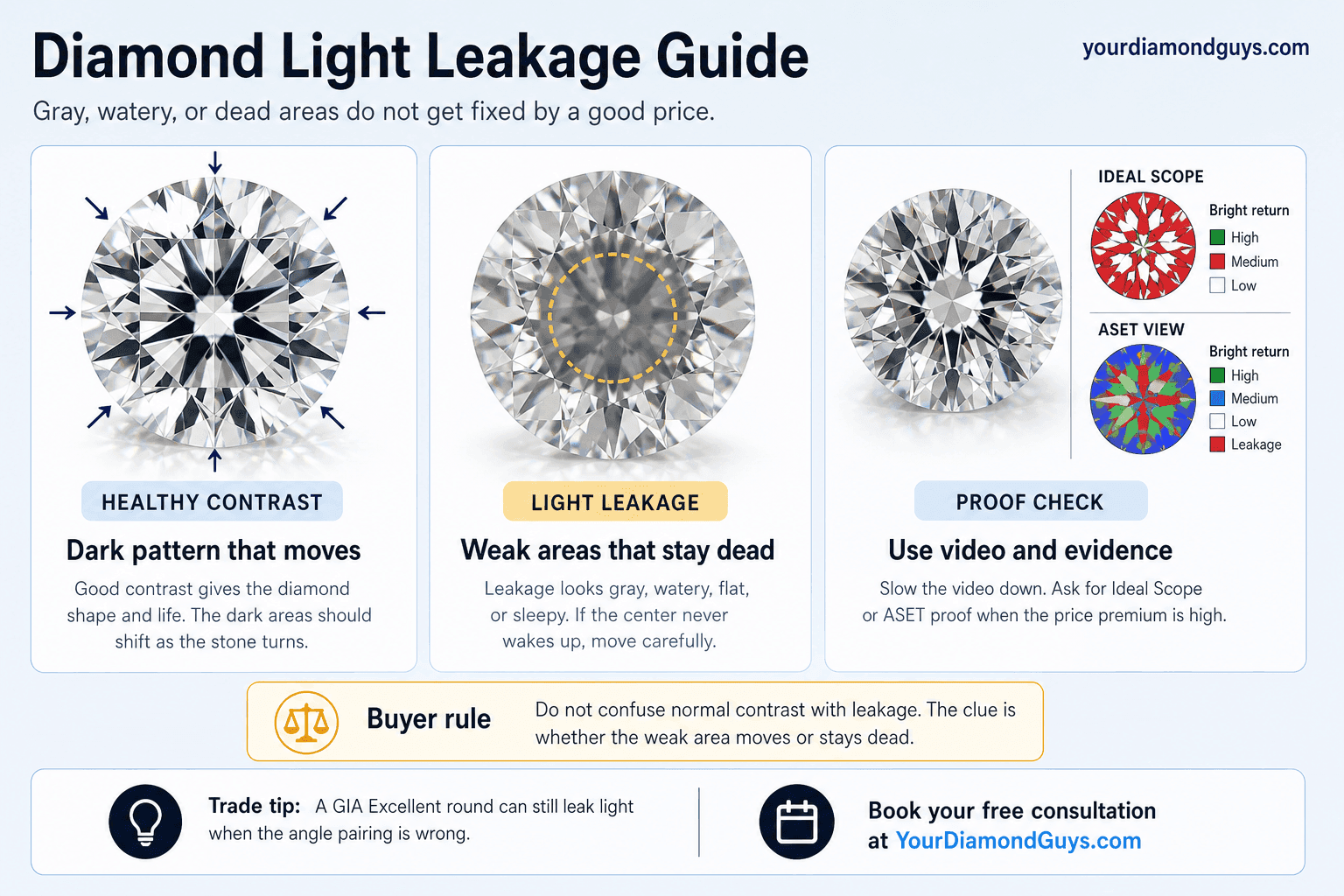
Learn how gray, watery, or dead zones show up in video, Ideal Scope, and ASET style proof.
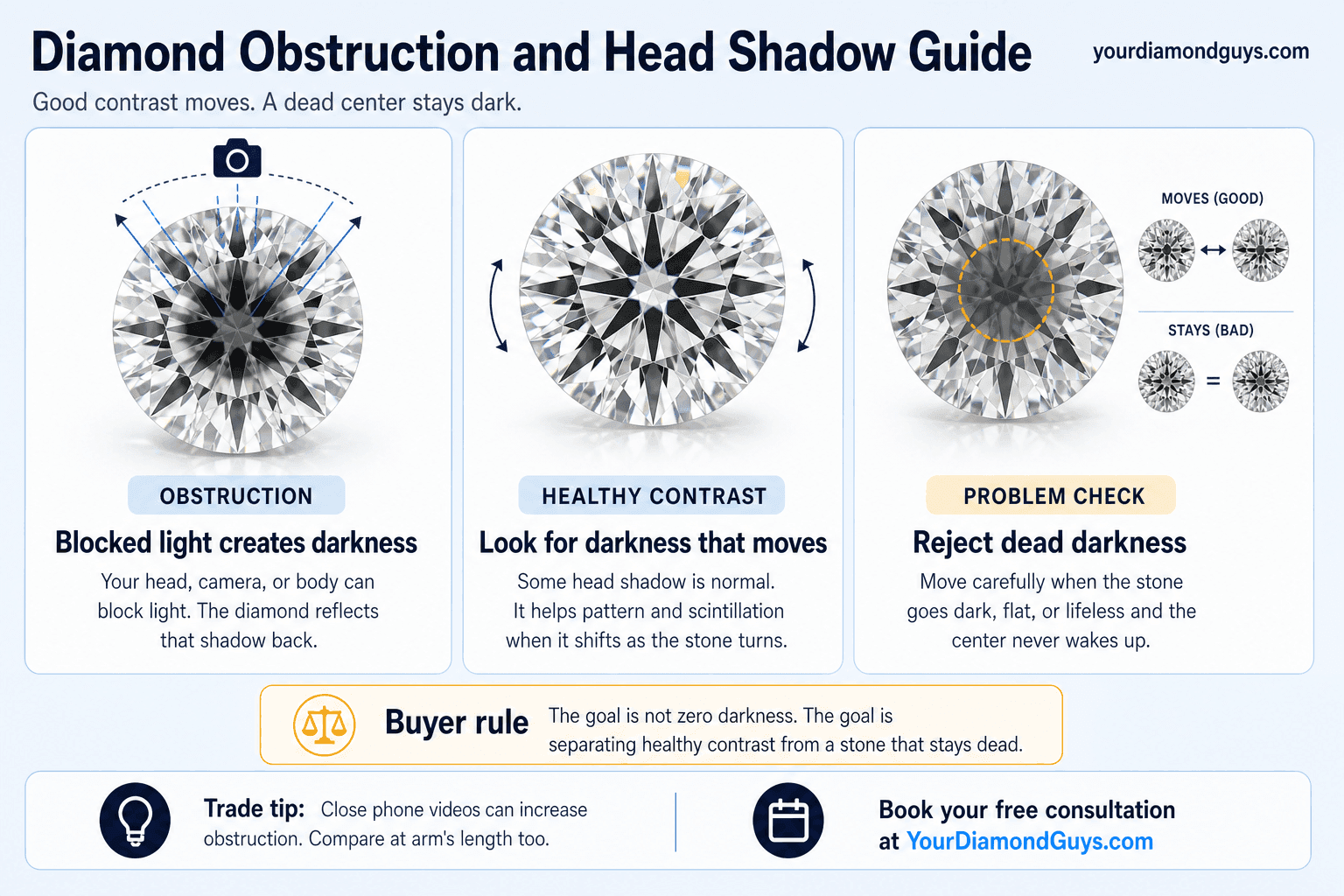
Some darkness is normal. The wrong darkness makes the diamond go flat up close.
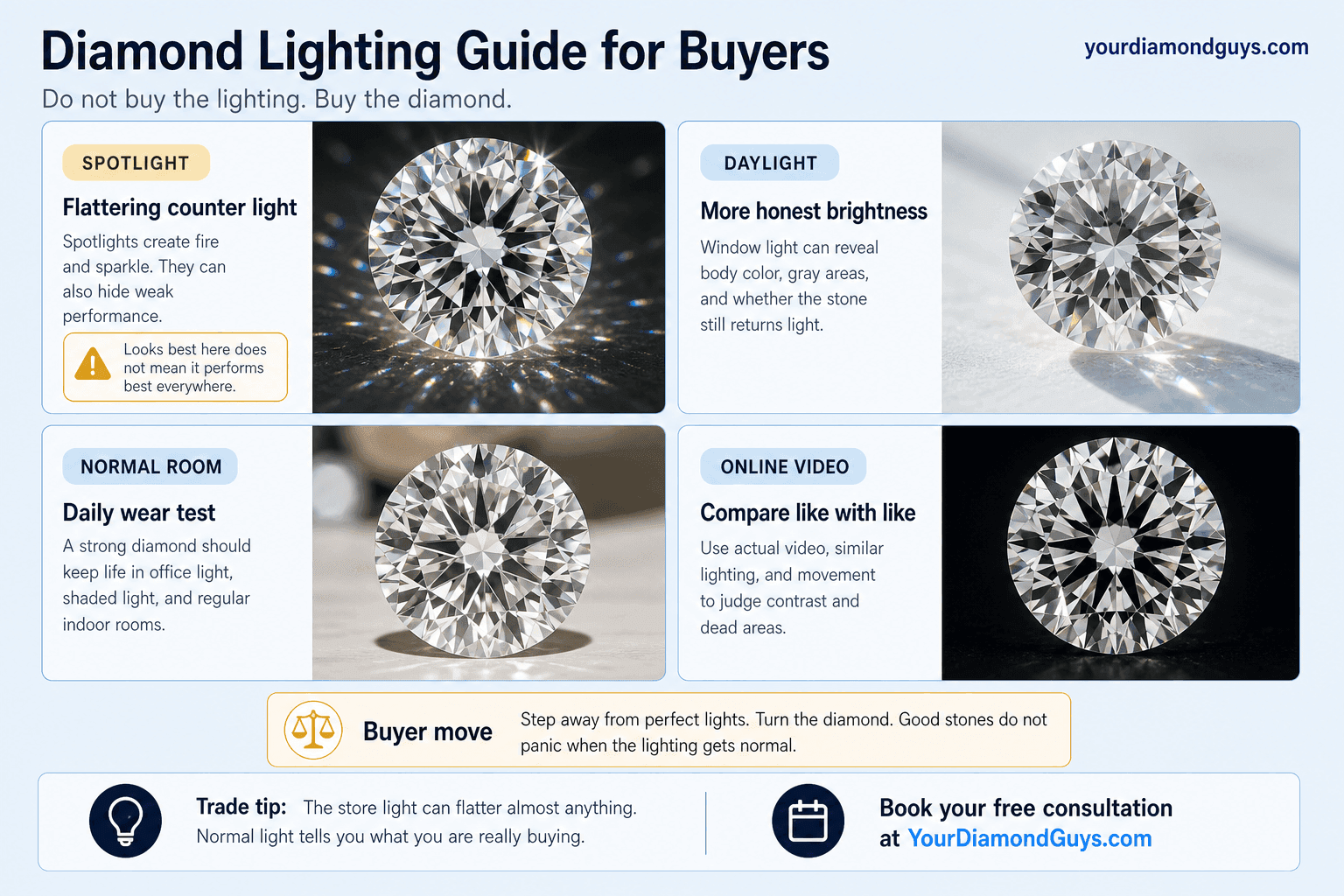
Store lighting can flatter almost anything. This helps you judge normal conditions.
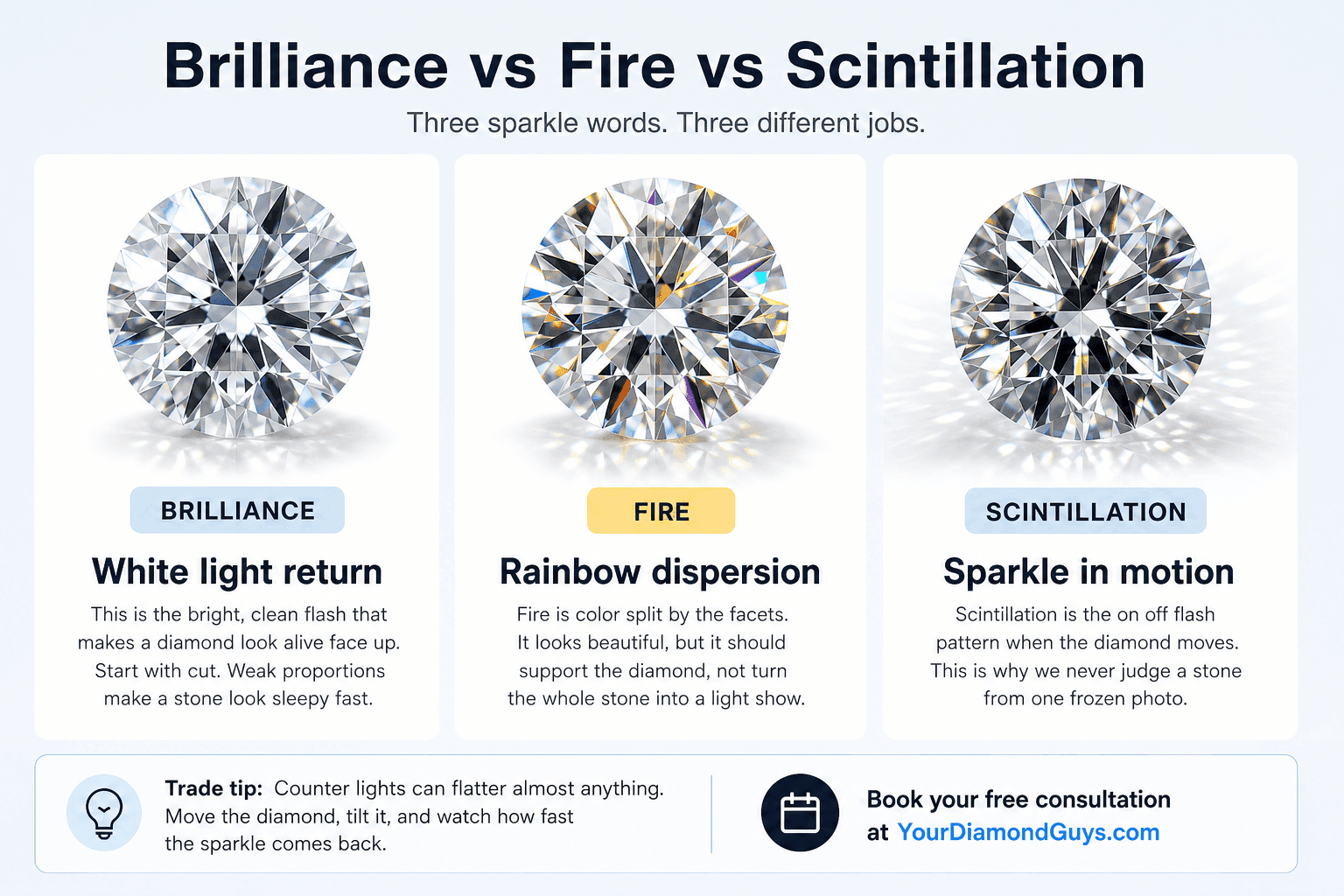
Sparkle is not one thing. This guide explains white light, rainbow fire, and movement.
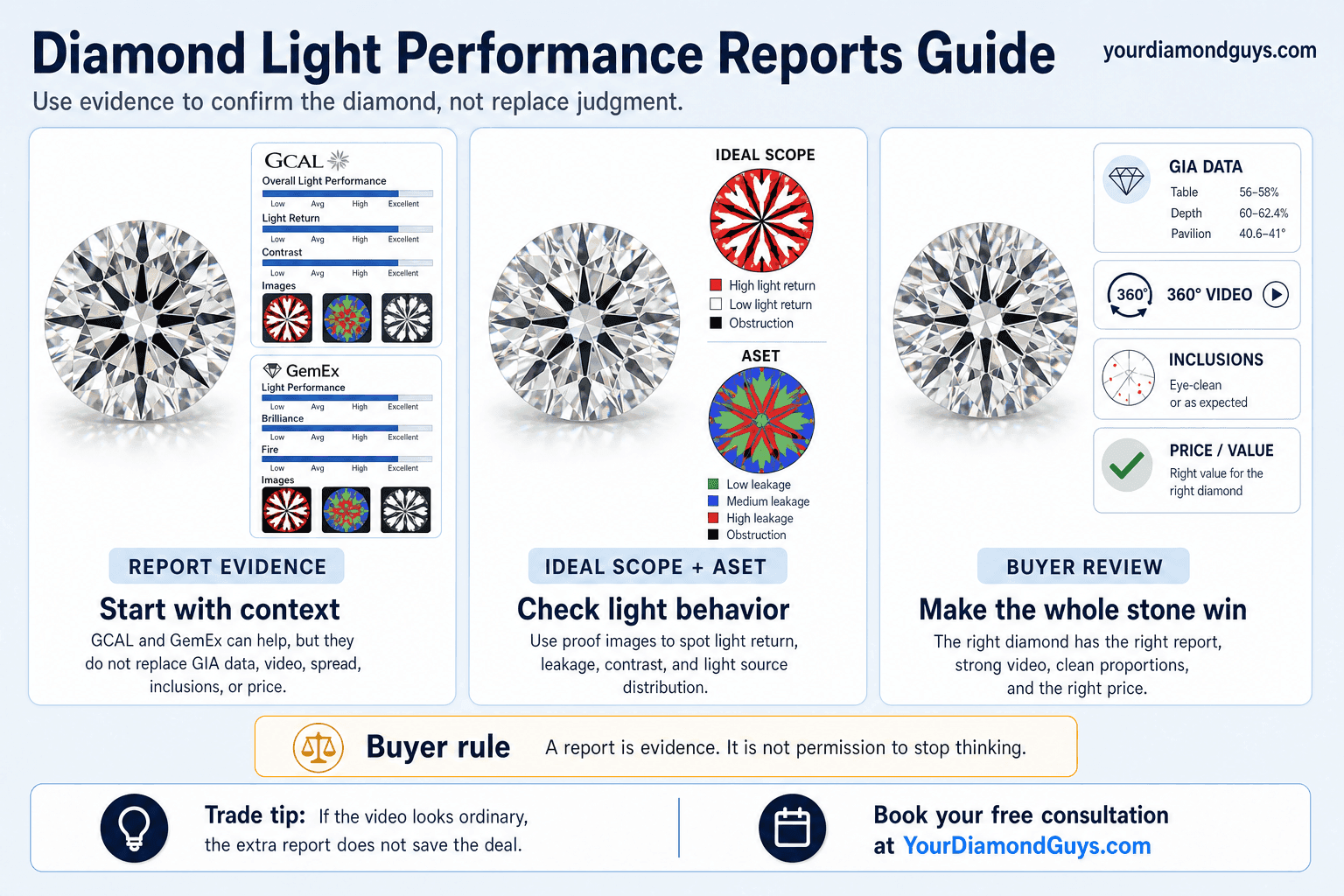
Reports can help when the diamond carries a premium, but proof still needs context.
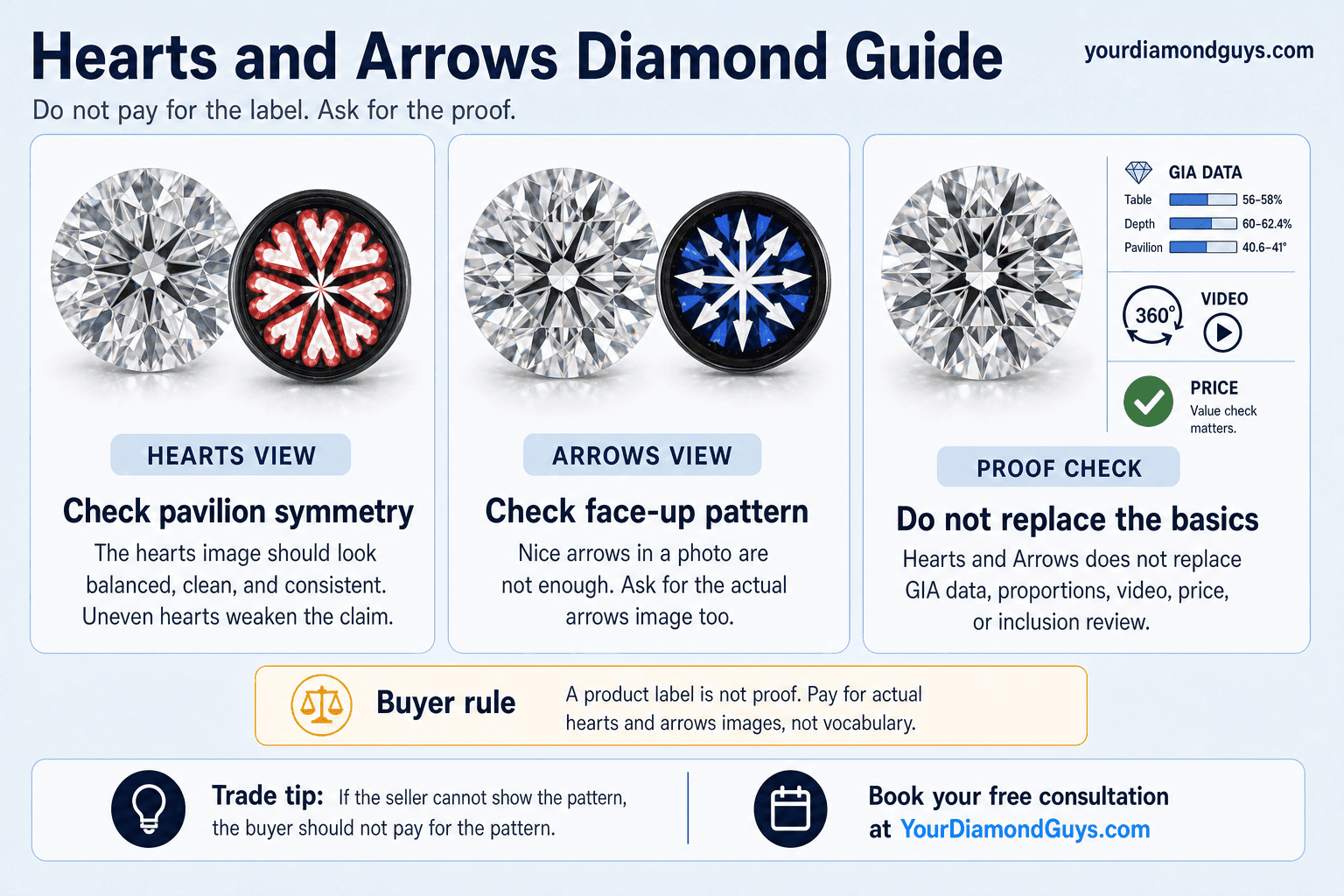
The pattern should be visible, aligned, and worth the premium being asked.
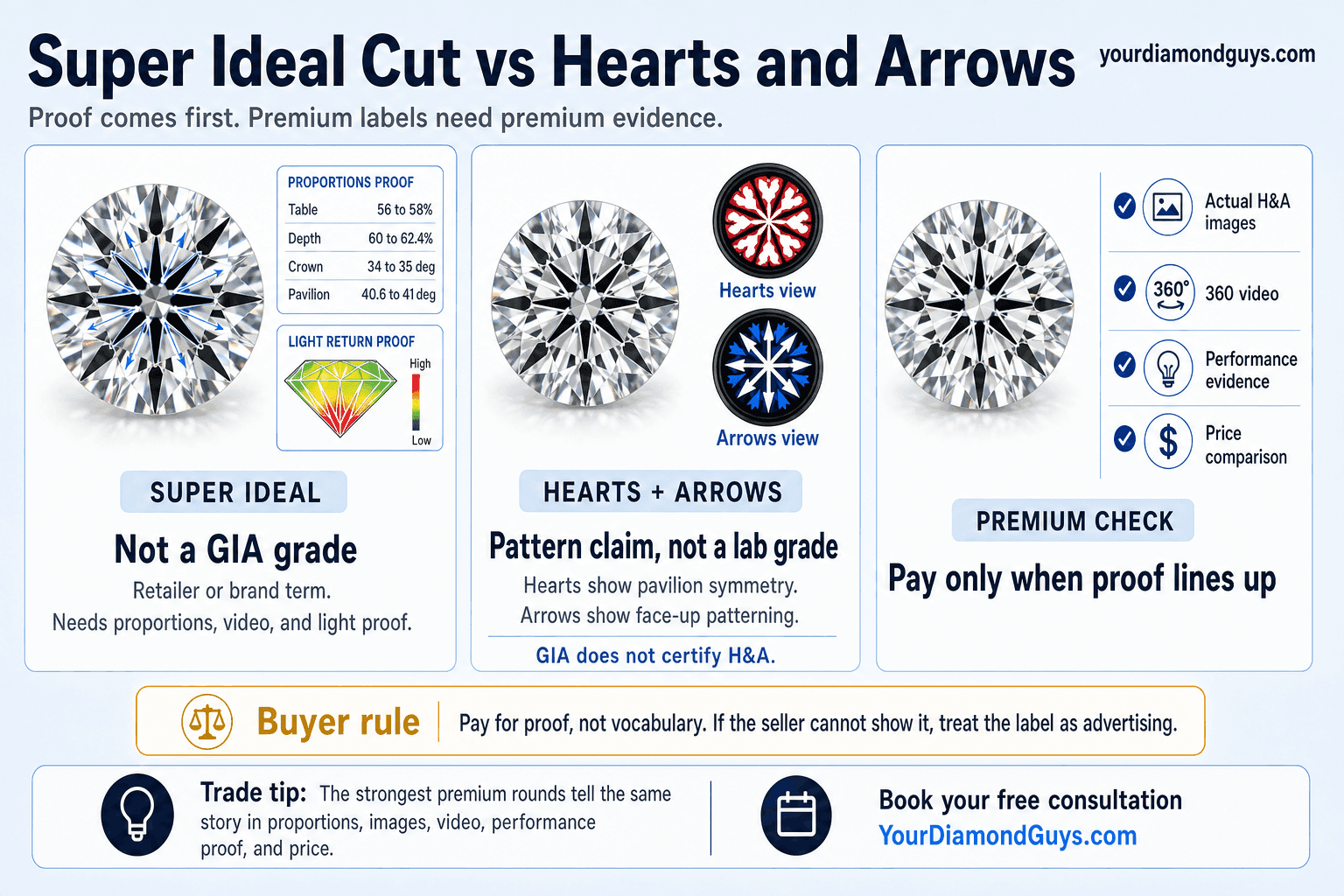
A premium label is not proof. This shows what needs to back up the claim.
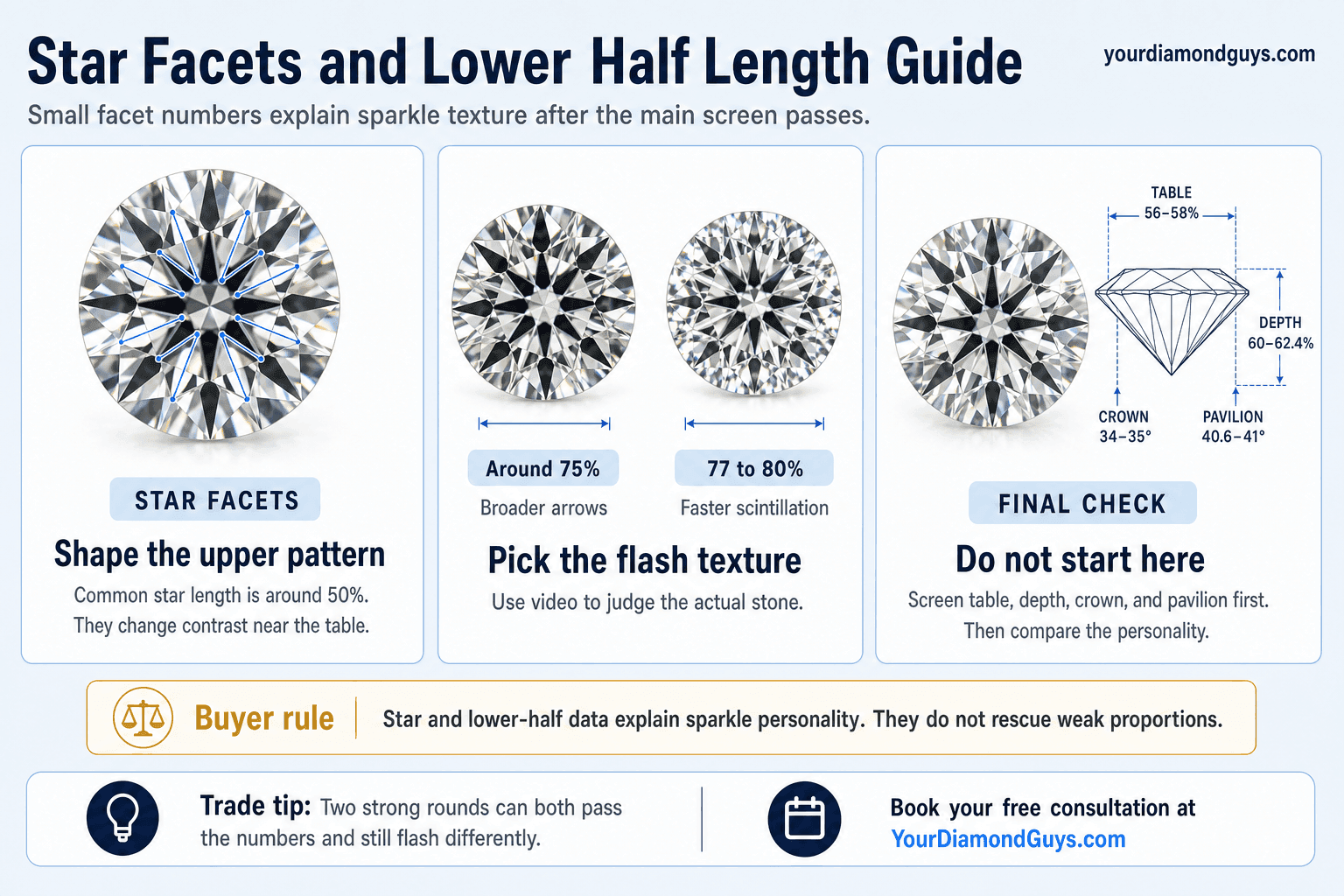
Advanced round data can explain sparkle texture after the main proportions pass.
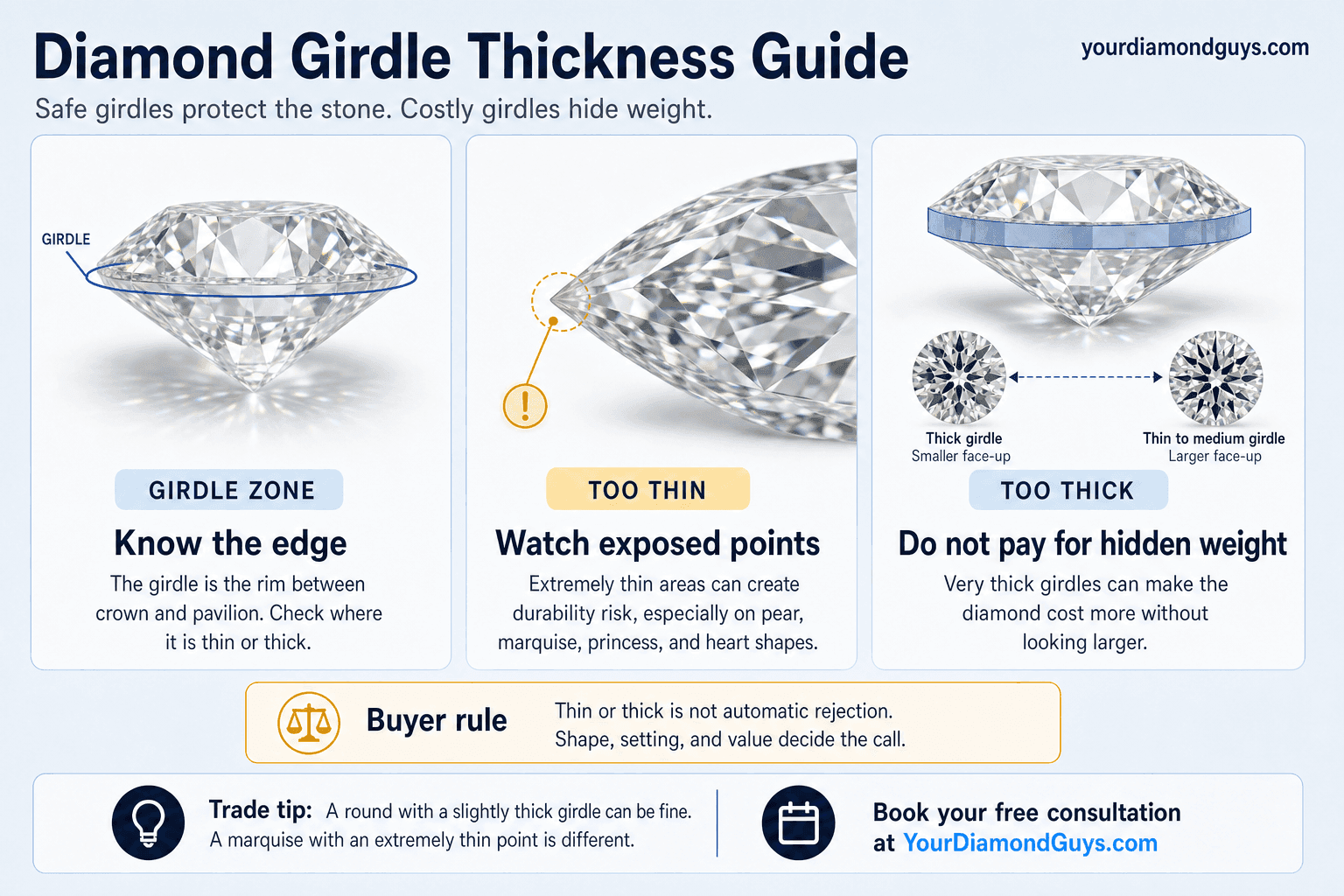
The girdle can point to durability risk, hidden weight, or shape problems.
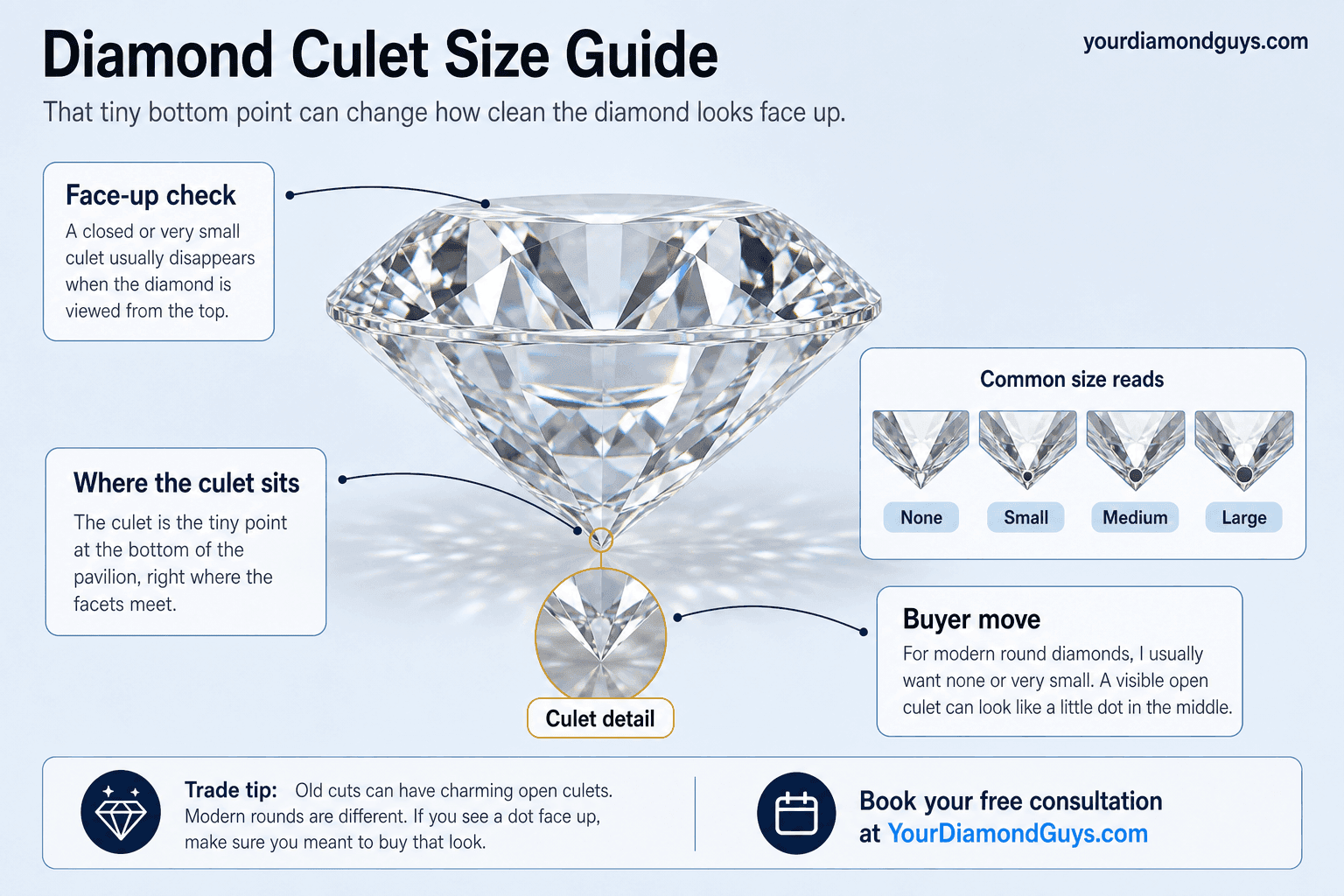
Most modern diamonds should not make you think about the culet at all.
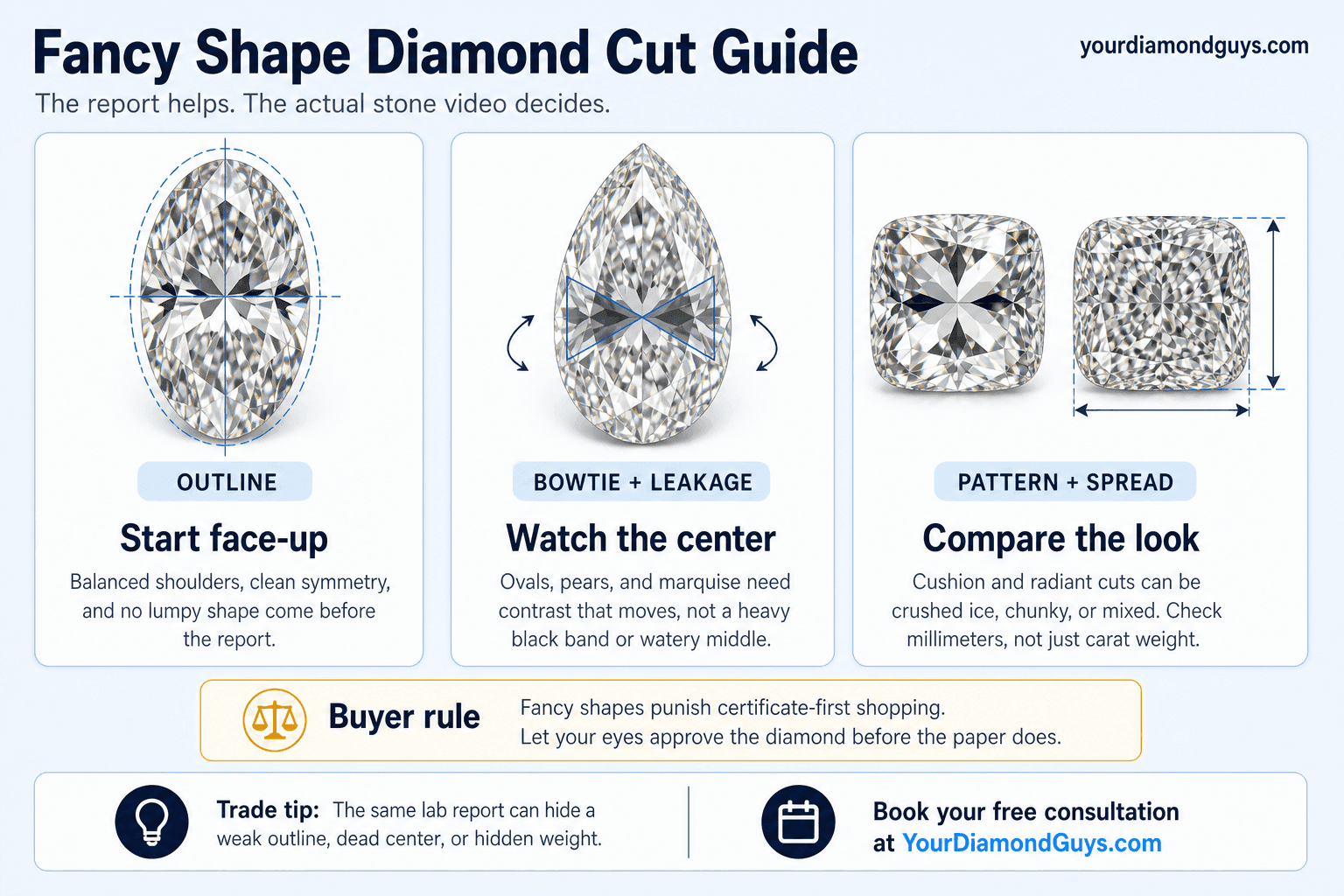
Ovals, cushions, pears, radiants, emeralds, and asschers need more visual review than rounds.
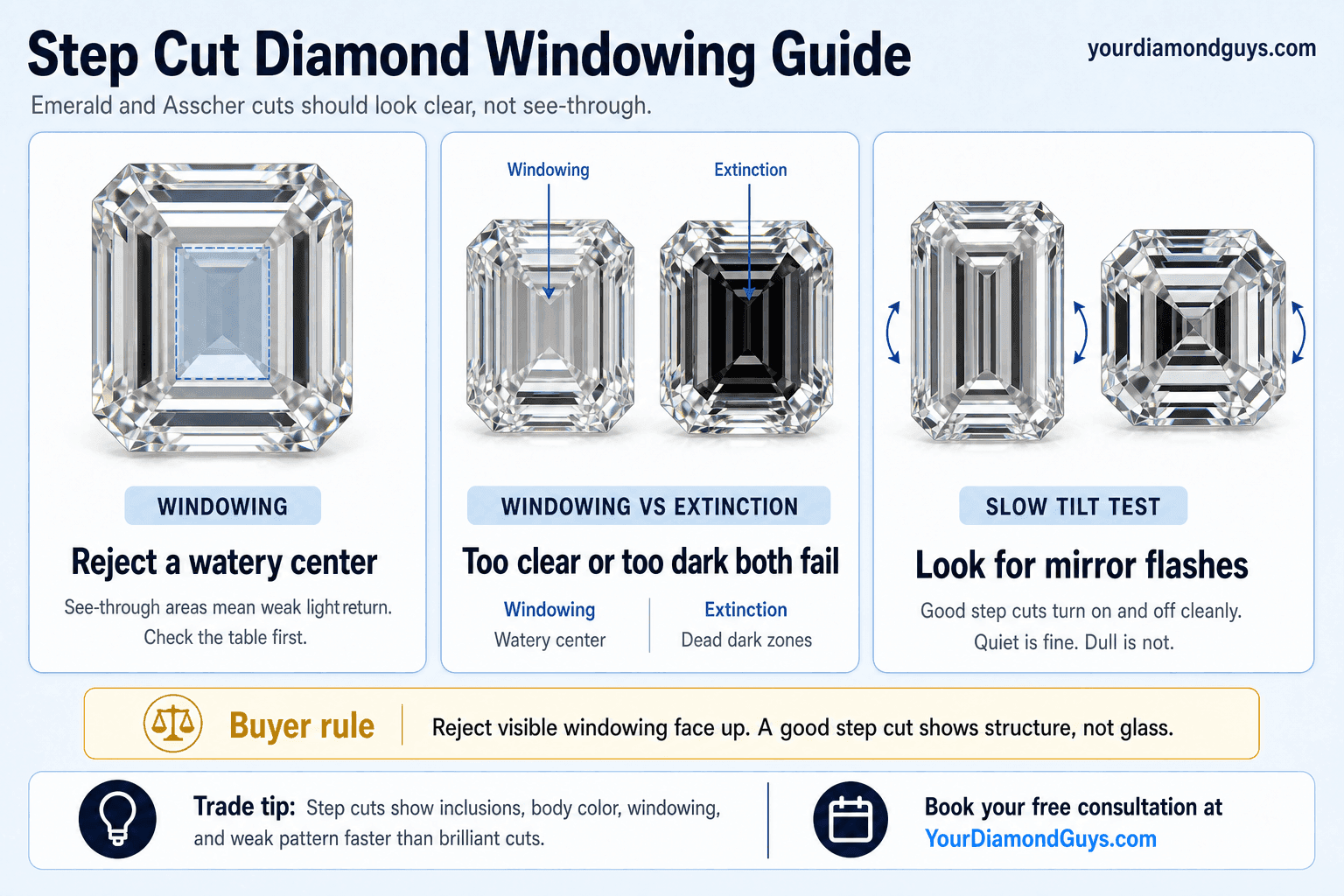
Emeralds and asschers do not hide much. This guide shows where weak cuts leak.
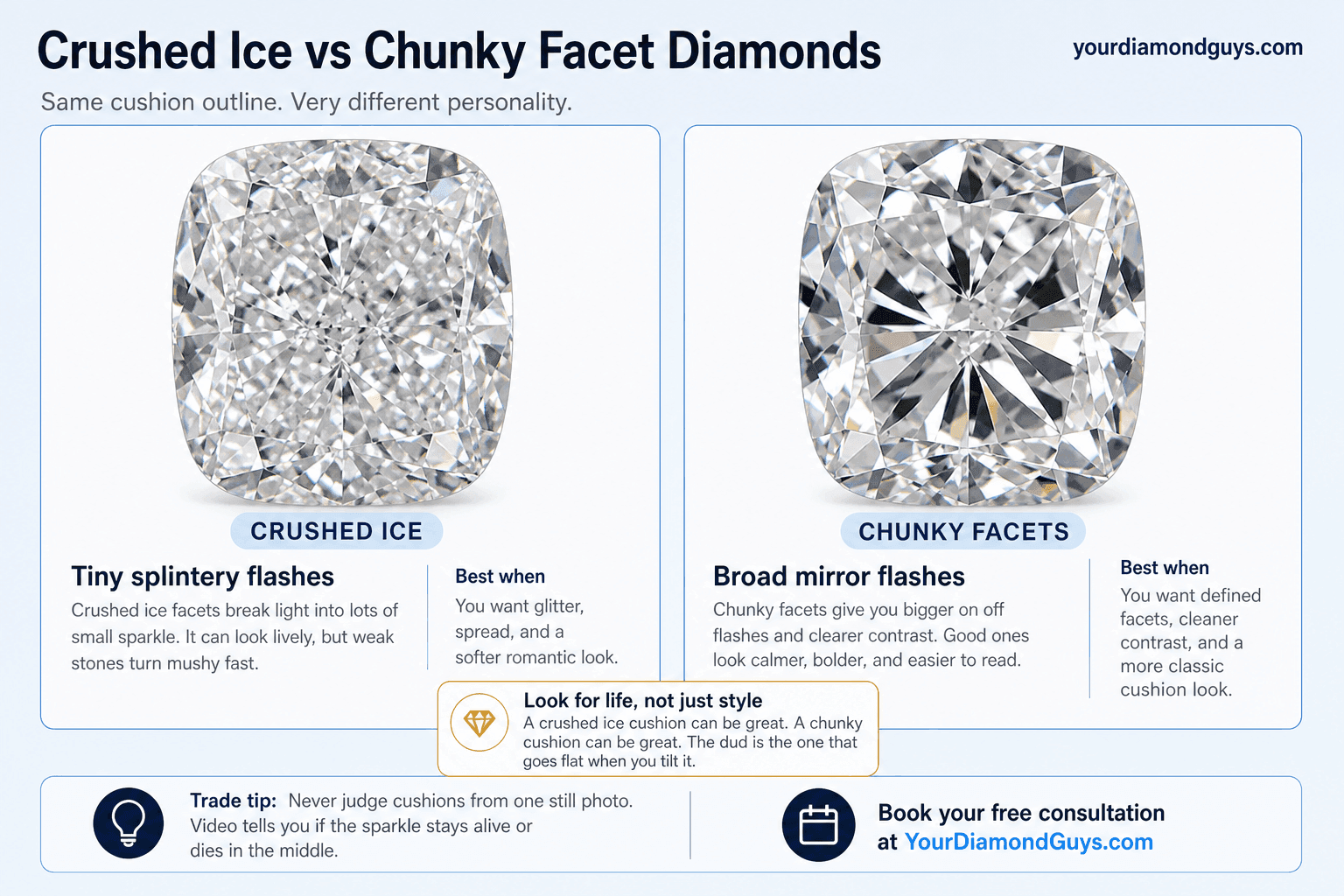
Neither look is automatically better. The right call depends on pattern and taste.
Cut is the first filter because it controls how the diamond uses light. A high color grade does not fix weak light return. A clean clarity grade does not fix a dead center. A bigger carat weight does not help much when the stone hides weight in the wrong places.
For round brilliants, my starting screen is table 56 to 58 percent, depth 60 to 62.4 percent, crown angle 34 to 35 degrees, pavilion angle 40.6 to 41 degrees, Excellent polish, Excellent symmetry, and none to faint fluorescence.
Those numbers do not approve the diamond. They keep the search disciplined. After that, the video and images have to prove the stone is bright, balanced, and priced correctly.
| Cut Check | What I Want To See | Where To Go Deeper |
|---|---|---|
| Round proportions | Balanced table, depth, crown, pavilion, spread, finish, and fluorescence | Round proportions guide |
| Angle pair | Crown and pavilion angles that work together, not against each other | Crown and pavilion angle guide |
| Table and depth | Brightness, fire, spread, and hidden weight checked together | Table guide and depth guide |
| Finish | Excellent polish and symmetry when the diamond is sold as a premium round | Polish and symmetry guide |
| Visual proof | Actual video, clean contrast, no dead zones, and performance evidence when price demands it | Light performance reports guide |
Cut quality controls more than sparkle. It controls how much light gets returned, how the diamond handles contrast, how large it looks for the carat weight, and whether the pattern feels crisp or messy.
The report gives clues. The diamond still has to perform. I want to see brightness across the face, clean contrast, no ugly leakage, no dead center, and no obvious weight hiding that makes the stone cost more than it looks.
Round brilliants give buyers the best report data, but that does not mean the report can pick the diamond by itself. GIA Excellent can include stones I would happily recommend and stones I would reject fast.
Use GIA Excellent filters to narrow the field. Then study the table percentage, depth percentage, crown and pavilion angles, spread, fluorescence, polish, symmetry, and actual video.
Once the main screen passes, details like star facets and lower half length can explain sparkle texture. They should not rescue weak main proportions.
Fancy shapes do not give buyers the same simple path as round brilliants. That is why the fancy shape cut guide starts with the actual stone, not a neat report label.
Ovals, pears, and marquise cuts need bowtie review. Cushions and radiants need facet pattern review because crushed ice and chunky facets create very different looks. Emerald and asscher cuts need windowing and extinction checks because step cuts are more transparent.
For fancy shapes, I also check girdle thickness, point protection, face up measurements, and whether the diamond carries hidden weight.
A diamond can look dark for different reasons. Light leakage means the stone is losing light. Obstruction means your head, camera, or body is blocking light. Good contrast is different from a dead stone.
This is where buyers get fooled by store lighting. Jewelry cases can make average diamonds look exciting. Use the diamond lighting guide to compare normal room light, daylight, office light, and online video before trusting one dramatic sparkle moment.
Super Ideal and Hearts and Arrows can be meaningful. They can also become expensive words without enough proof. If a seller wants a premium, ask for actual images, strong proportions, clean video, and performance evidence.
Use the Super Ideal vs Hearts and Arrows guide when a listing is asking for extra money. Use the Hearts and Arrows guide when the seller claims optical precision. The pattern should be visible. The price should still make sense.
A buyer sees two 1.20 carat G VS2 round diamonds with GIA Excellent on both reports. One has a 56 percent table, 61.5 percent depth, 34.5 degree crown, and 40.8 degree pavilion. The other is deeper, faces up smaller, and looks darker under the table in video.
On paper, the second stone can look like the better deal because the price is lower. On the desk, the first stone usually gets the attention. That is the trade moment buyers miss. The discount often exists because somebody already saw the performance problem.
Reach out to Rob or me at YourDiamondGuys.com, or book your free consultation. We will look at the actual stone with you. No sales pitch.
Questions? Reach out directly for a free consultation, or drop them in the Diamond Buyers Academy community — Rob and I answer personally.
Diamond cut quality is how well the diamond returns light, handles contrast, shows spread, and looks in real viewing conditions. It is the first thing I check before price.
No. GIA Excellent is the starting box for a natural round diamond, not the finish line. You still need proportions, video, spread, and leakage review.
For many round brilliants, I start with table 56 to 58 percent, depth 60 to 62.4 percent, crown angle 34 to 35 degrees, pavilion angle 40.6 to 41 degrees, Excellent polish, Excellent symmetry, and none to faint fluorescence.
No. Fancy shapes need video and image review because outline, bowtie, windowing, leakage, facet pattern, and spread decide whether the stone works.
Ask for the GIA report, actual diamond video, face up measurements, clear images, and light performance evidence when the diamond carries a cut premium.
*Some links on our site may earn us a small commission at NO EXTRA cost to you, helping us keep our content free*