Start with the right question
Ask what the extra money buys.
Same carat, color, and clarity? That still isn't enough to call a diamond overpriced. Look at cut, haze, visible size, and where the inclusions sit. Then add the setting and the services you're actually getting. Compare the whole bill.
Start with GIA for a natural diamond. Keep natural and lab comparisons separate. Then save the full reports, current asking prices, actual videos, and setting details for two or three serious candidates. Our diamond second opinion service uses those details to work through the value question.
Look past the three headline grades.
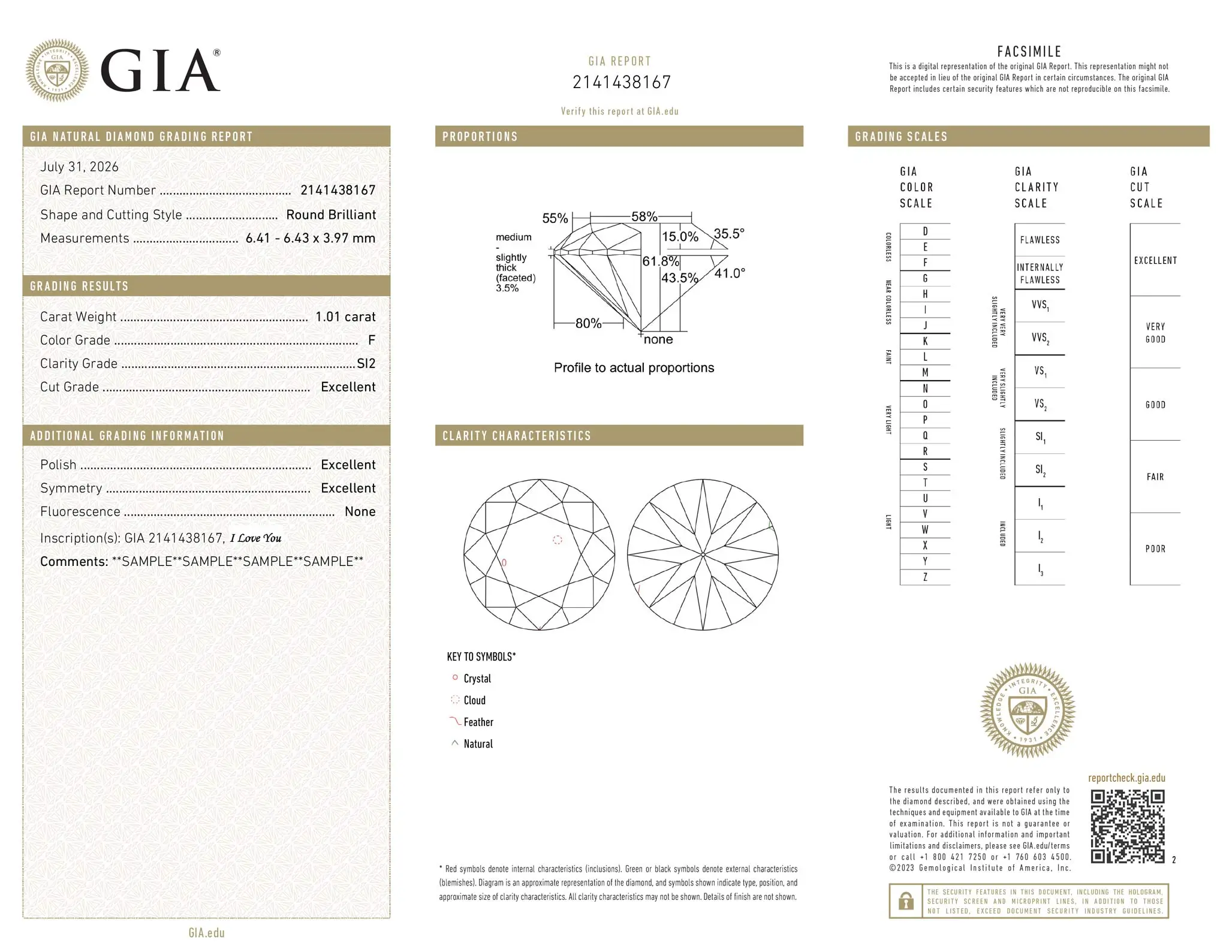
This sample GIA report shows the measurements, cut, proportions, and inclusion map behind the headline grades. Check those details on each stone. Then compare the actual videos, setting, services, and final prices separately.
Sample report: GIA. See GIA's report guide.
We're checking your quote here. Our diamond pricing hub explains the wider market. An average price or a replacement appraisal can't tell you whether this particular ring is worth buying.
Build a useful comparison
Match the things you will actually receive.
| Part of the quote | Match or document | Why it matters |
|---|---|---|
| Diamond identity | Origin, shape, GIA report for natural stones, weight, color, and clarity. | A natural diamond and a lab diamond do not belong in the same price sample. |
| Visible size | Length and width in millimeters, with depth noted. | Extra weight below the girdle does not guarantee a larger face up appearance. |
| Appearance | Actual video, transparency, inclusion placement, and relevant optical evidence. | A cleaner specification line does not prove a better looking diamond. |
| Finished ring | Metal, band dimensions, side stones, construction, size, and setting work. | Two settings with similar photographs can have different construction and costs. |
| Purchase route | Payment method, tax, delivery, return eligibility, and included services. | The useful price is the amount due for a purchase you can evaluate and keep. |
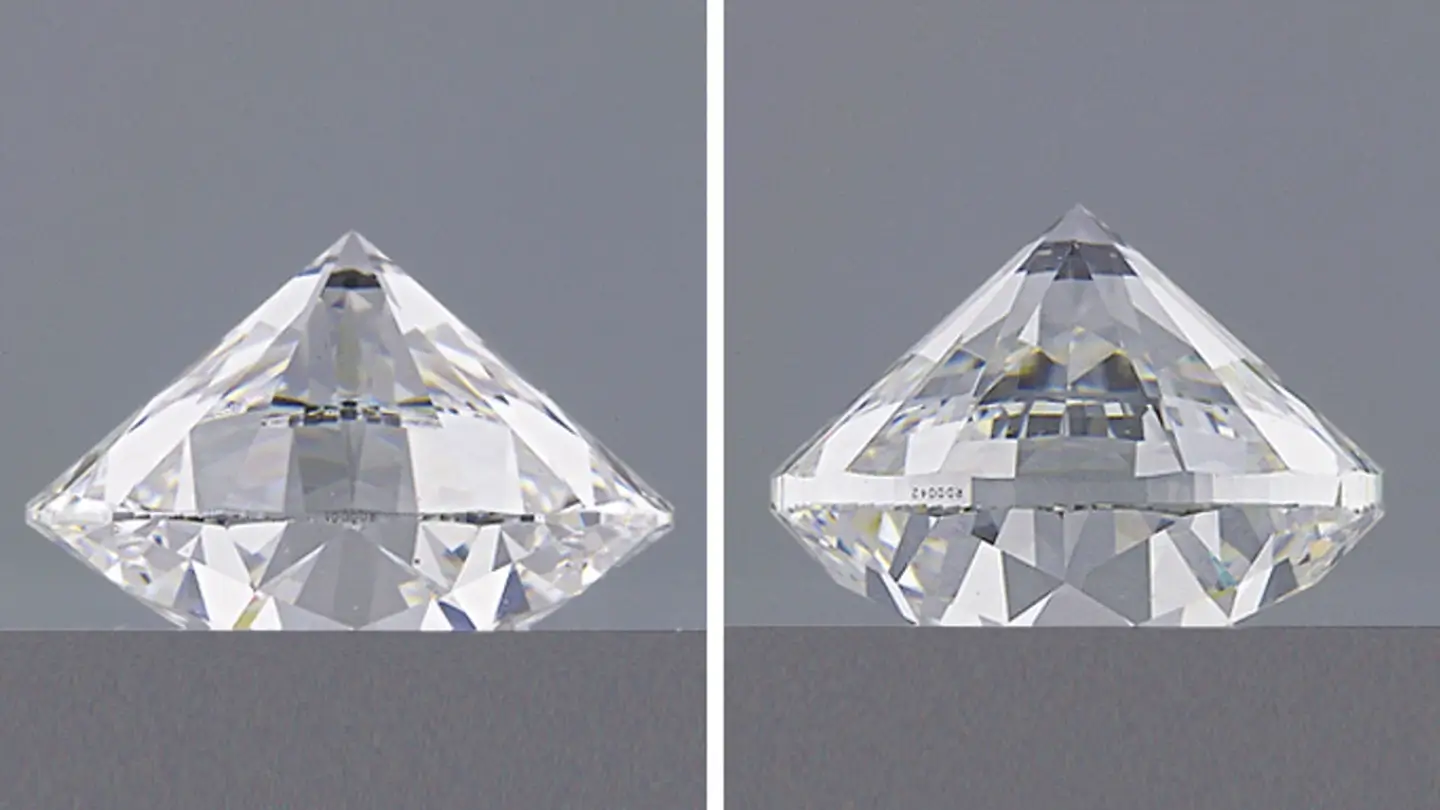
If the quotes change several things at once, write those differences down. A lower number doesn't prove overpricing. Three well matched diamonds will teach you more than fifty search results that happen to share a few grades.
A worked quote
The cheaper diamond can make the more expensive ring.
Let's use made up numbers. These aren't current offers or client results. For this example, assume the diamonds compare closely enough that we're checking the order total.
| Line item | Quote A | Quote B |
|---|---|---|
| Loose diamond | $5,900 | $6,100 |
| Selected setting | $1,500 | $1,100 |
| Shipping and setting work | $150 | $100 |
| Subtotal | $7,550 | $7,300 |
Quote A saves you $200 on the diamond and costs you $250 more for the whole order. Before you choose B, ask what A's setting and services add. If you don't want the difference, why pay for it?
Now change the scenario. Suppose A includes a heavier setting with stronger construction and a service you expect to use. That is a different comparison. Ask the seller to explain the line items instead of comparing only the headline diamond number.
When a premium has a job
Pay for a difference you can name.
Pay for something you can see or use. Better documented light performance, more visible size, a setting you prefer, or an inspection you need can justify extra money. A clarity upgrade you can't see doesn't automatically deserve your budget.
For a natural round, have Rob check the cut evidence before treating two Excellent grades as equal. Our comparison of two Excellent cuts explains the distinction. For an oval or pear, ask whether the center stays dark through a slow tilt and whether the stone stays crisp in ordinary light.
One grade. Three different looks.
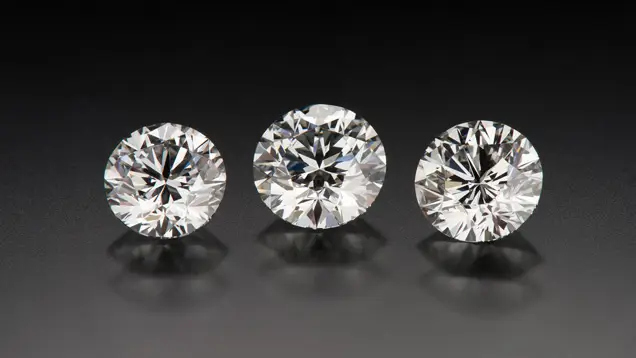
These 0.76, 0.82, and 0.74 carat round brilliants all earned GIA Very Good cut grades. They still look different face up. A grade narrows the choice. Look at the actual stone before paying a premium.
Photo: Kevin Schumacher/GIA. See GIA's cut research.
If two listings appear to describe the same physical diamond, match the GIA number and measurements. The virtual inventory guide explains why one stone can appear at different prices. The inspection, payment, and return terms can still differ.
Ignore the wrong anchors
An appraisal is not proof of a bargain.
A crossed out price is a number the seller chose to show you. It isn't another offer. An insurance replacement figure answers a different question from what a comparable loose diamond costs today.
GIA explains that its grading reports do not state appraisal values. Use the report to understand the stone. Use current comparable offers and an inspection to judge the purchase.
Get a useful answer
Send the quote, not just the budget.
- Save the listing, report, video, and date of each offer.
- Ask for the finished ring total using your actual payment method.
- Write down the quality or service differences between candidates.
- Confirm return eligibility for the complete order before approving custom work.
Save candidates from Blue Nile and Ritani with their full quotes. Compare the same type of stone and the whole order. Neither name promises you the lowest price every time.
Found a lower offer? Our price match request guide shows you what to send. Still wondering whether the first price makes sense? Bring both quotes to your free consultation. Rob or I can help you decide what the extra money buys.
Buyer questions
Your questions, answered
Can you tell whether a diamond is overpriced from its report?
Not from the report alone. Send the price, actual video, competing offers, and full ring quote. Then we have something useful to compare.
Does a lower price per carat prove better value?
No. A stone can cost less per carat and hide more weight below the girdle, have haze, or show an awkward inclusion. Check what you're actually buying.
Is a large appraisal value proof that I got a deal?
No. An insurance replacement value isn't a competing sale price. Look at current offers for diamonds that really compare with yours.
What should I send for a price second opinion?
Send the listing, full GIA report for a natural diamond, video, asking price, complete setting quote, and the competing offers you found.