Start with the clock
Delivery is the start of your inspection, not always day one of returns.
Check the ring before you put it away for the proposal. Is it the diamond you ordered? Is it in the condition you agreed? Does the ring fit what you bought? Some sellers count the return period from shipment or availability, so the clock can already be running when you open the box.
Find your saved order terms and write down the last authorized ship back date. Our retailer return policy comparison explains the different starting points. The seller's terms control your deadline, not this checklist.
Want an independent inspection? Try to book it before delivery. You can keep the proposal a surprise without waiting a month to check what arrived.
Get eyes on the actual ring.
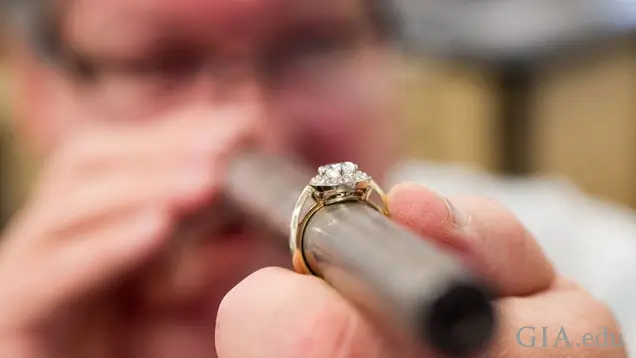
A GIA instructor checks a ring's size and shape. Check the ring you received while you still have time to raise a concern with the seller. The written return terms set your deadline.
Photo: Kevin Schumacher/GIA.
A useful order
Check identity before judging the sparkle.
| Step | What to check | What to record |
|---|---|---|
| 1 · Receive | Packaging condition, correct items, and supplied documents. | Delivery date, order reference, and any visible damage. |
| 2 · Match | Invoice, listing, report number, shape, and measurements. | Copies of the order and the original grading report. |
| 3 · Inspect | Actual appearance, visible inclusions, and any condition concerns. | Clear photographs, questions, and professional findings. |
| 4 · Check the ring | Setting details, visible workmanship, fit, and comfort. | Anything inconsistent with the agreed specification. |
| 5 · Decide | Keep, request an explanation, or follow the authorized return route. | Written seller response and any return authorization. |
Keep the box, protective packaging, tags, and paperwork until you've decided. See an obvious shipping problem? Follow the seller's reporting instructions right away. Photos and an unboxing video can record what you saw. They don't change the purchase terms.
Report matching
A lookup checks the record. An inspector checks the stone.
For a natural diamond, start with GIA. Retrieve the record through GIA Report Check and compare it with the supplied report and order. Match shape, carat weight, measurements, color, clarity, fluorescence, and identifying details as far as the available evidence allows.
An inscription is a clue. It isn't the whole identity check. A setting can also block part of the view and limit measurements. Tell the inspector what you need checked and ask what the mounting prevents them from confirming.
Read the mark, then check the stone.
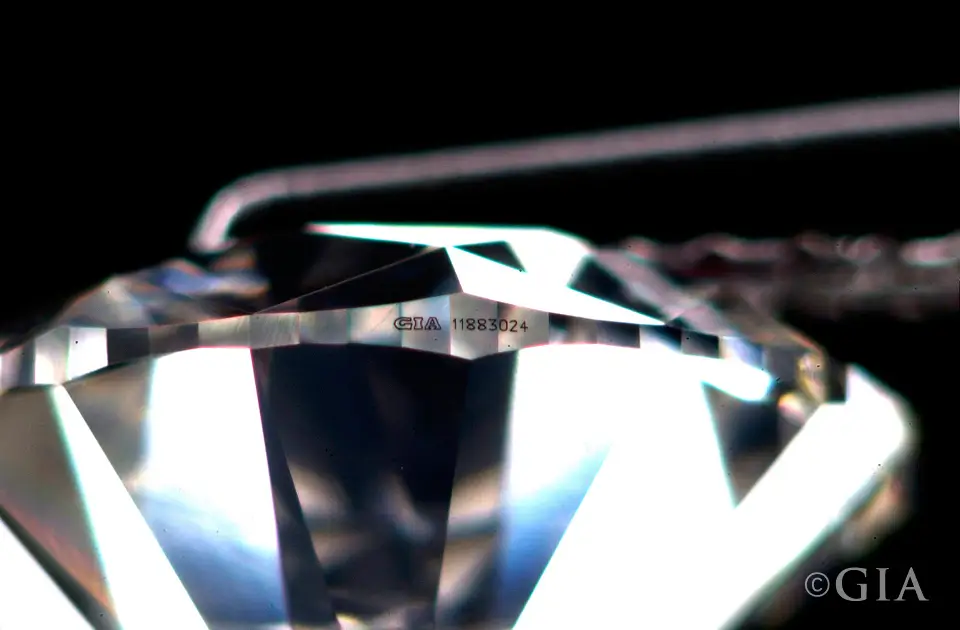
GIA's closeup shows a laser inscription on the diamond's girdle. Match that number to the report, then have the actual stone checked against its details. A setting can hide part of the evidence.
Photo: Mitch Moore/GIA.
GIA's online buying guidance recommends having an independent appraiser check the diamond against the description and paperwork. Ask what stone arrived and what condition it's in. A large insurance value doesn't answer either question. Our published laboratory case studies show why matching the report matters.
Look in useful light
Give the stone ordinary conditions, too.
Try ordinary room light and diffuse daylight away from direct sun. Add a modest spotlight too. Keep the diamond clean and handle it carefully. It needs to look good where you'll wear it, not just flash under one bright light.
Look from the top and other angles. If you see a mark, ask what it is. It could be an inclusion, dirt, a reflection, or a surface feature. Don't diagnose damage from a giant phone photo. Have a qualified inspector check it.
Ask about any bruise, chip, cavity, knot, etched channel, or indented natural. For an oval or pear, tilt the stone slowly and watch whether the center and ends brighten. Check for haze separately from the color grade.
The complete ring
Check what the setting was supposed to deliver.
- Compare metal, design, side stones, and visible dimensions with the written order.
- Check for snagging, uncomfortable edges, obvious unevenness, or a loose stone sensation.
- Ask a professional to assess prong contact and stone security instead of testing them yourself.
- Try the fit and intended wedding band combination without altering the ring.
Don't bend prongs, scratch test the metal, or try to remove the stone. If fit is the only problem, ask how a resize affects your right to return the ring before approving it. A free service isn't an extension of the refund window.
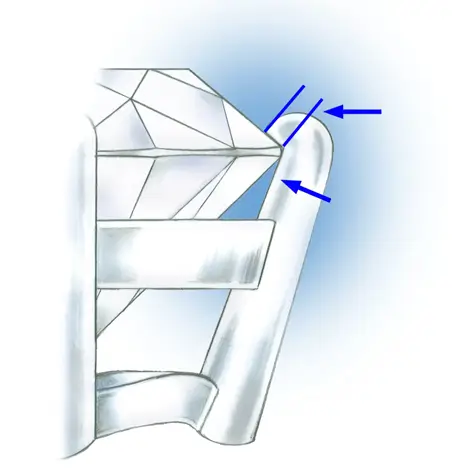
Ask the jeweler to check the seat.
Missing bearing
Overcut prong
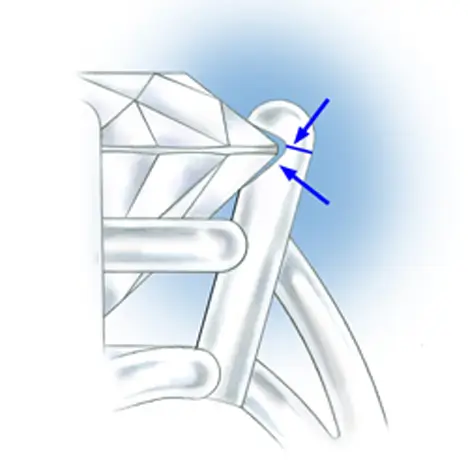
GIA's examples show missing support and an overcut prong with a gap. A ring can sparkle and still need a setting check. Have the jeweler inspect the contact and security. Don't bend the prongs yourself.
Illustrations: GIA, quality assurance benchmarks for avoiding stone loss.
If you bought a loose diamond, finish the agreed inspection before commissioning custom work. Ask the setting jeweler to document the stone’s condition on receipt and clarify responsibility for the setting process.
Make the decision
Write down the concern, not just “it looks wrong.”
Here's a made up example. The ring arrives on Monday. You like it, but the report number supplied with the order doesn't match the invoice. Ask for a written explanation and have the stone matched. Don't engrave it on Tuesday. If the seller can't resolve the mismatch, follow the authorized return process before the deadline.
Tell the seller which order you're asking about, what doesn't match, and what answer you need. Include photos or inspection findings. Keep it factual. Returning it? Get the approved instructions, include the required documents, and use the insured shipping method the seller specifies.
Before you buy, compare the written quotes and inspection terms from Whiteflash and Blue Nile. Ask about the exact ring. A general service page doesn't replace the terms on your order.
Bring the listing, report, invoice, and your question to your free consultation. Rob or I can help you work out what to ask next. Someone still needs to check the actual ring to confirm its identity and stone security.
Buyer questions
Your questions, answered
Should I inspect the ring before the proposal?
Yes. Finish the identity, condition, and workmanship checks while you still have time under the return policy. Keep the surprise without postponing the inspection.
Can I match the diamond just by reading the inscription?
Treat it as one clue. Have the actual stone checked against the report and ask about any limits caused by the mounting.
Should I resize before deciding whether to keep it?
I'd settle that before approving work. Ask the seller how a resize affects your right to return the ring. Don't assume you can change it and decide later.
Can a remote review confirm that the setting is secure?
No. We can spot questions in the photographs. A qualified professional needs the actual ring to check whether the stone is secure.