GIA vs IGI for Lab Grown Grading
Do not buy the report. Buy the diamond that proves itself.
By Rob Cornfield, Co-Founder of YourDiamondGuys.com. 35+ years of experience in the global diamond trade. Specialist in diamond cut and light performance.
GIA vs IGI lab grown grading matters, but the lab name does not make a weak diamond strong.
That is the part buyers miss.
For natural diamonds, I start with GIA. For lab grown diamonds, IGI appears often in real inventory, and GIA also grades lab grown stones. Either way, the report starts the review. It does not end it.
The Fast Buyer Answer
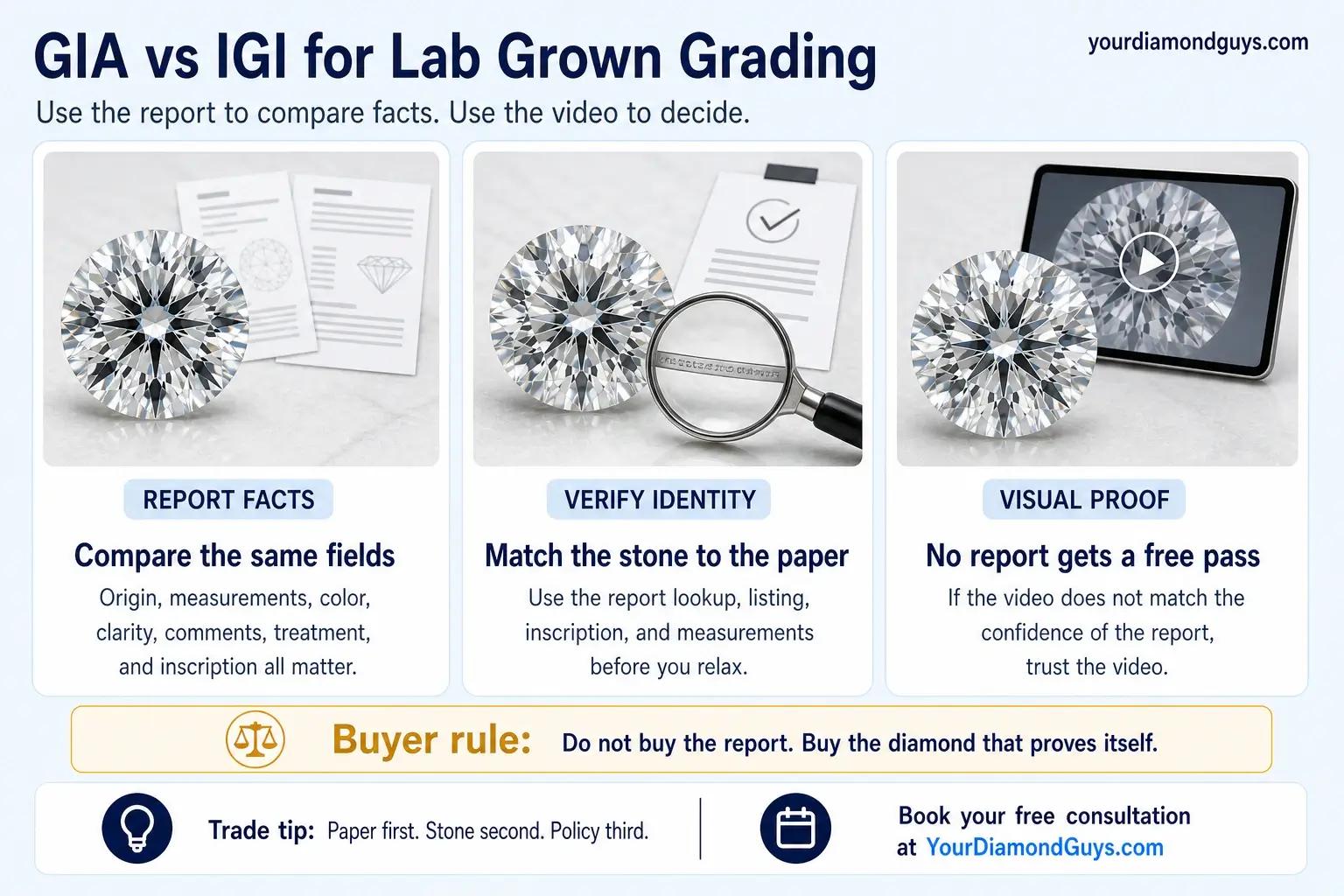
Use GIA and IGI reports to compare facts.
Then compare the actual stones.
The lab report should help you confirm origin, identity, measurements, grades, comments, treatment, and inscription. The video should prove whether the diamond looks good.
If the video does not match the confidence of the report, trust the video.
Why IGI Shows Up So Often
IGI became common in lab grown diamond inventory because the lab grown market grew fast, and sellers needed grading documents that buyers could understand.
That does not mean every IGI graded stone is good.
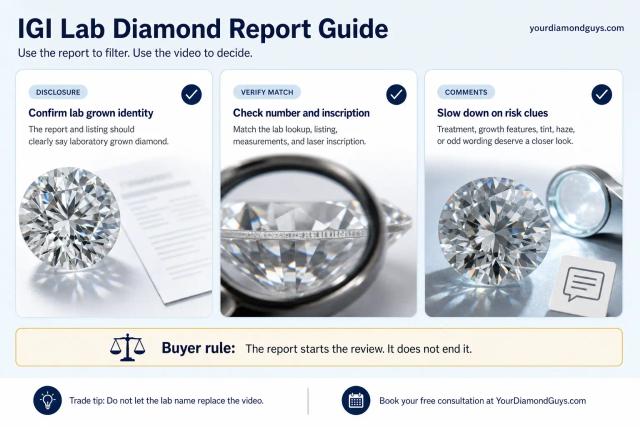
It means the report is common enough that buyers need to know how to read it. The IGI lab diamond report guide is the practical next step.
Where GIA Fits
GIA is the standard I start with for natural diamonds.
For lab grown diamonds, a GIA report can give buyers confidence in terminology and grading structure, but I still want the same proof I want with IGI.
Report number. Inscription. Video. Tint check. Transparency check. Cut check.
No report gets a free pass.
How To Compare Reports Fairly
| Report Check | Why It Matters | Buyer Move |
|---|---|---|
| Origin wording | Confirms lab grown identity | Make sure listing and report agree |
| Measurements | Shows spread and outline | Compare face up size |
| Color grade | Starts the color judgment | Check actual body color in video |
| Clarity grade | Starts inclusion review | Check location and visibility |
| Comments | Adds risk clues | Slow down on treatment or odd wording |
| Inscription | Confirms identity | Match it after delivery |
The table is simple because the decision should be simple.
Paper first.
Stone second.
Policy third.
What Not To Assume
Do not assume one lab name fixes tint.
Do not assume one lab name fixes haze.
Do not assume one lab name fixes poor cut.
I have rejected stones with comfortable paperwork because the actual diamond did not look right. That is normal trade work. The report saves time, but the diamond still has to stand up under your eyes.
Natural Diamond Distinction
This is where buyers get crossed up.
For natural diamonds, start with GIA. Do not treat IGI or AGS as equal alternatives for natural diamond buying decisions.
For lab grown diamonds, the market has a different report mix, and IGI is common. That is fine as long as you keep the rule straight.
Natural diamond decision, GIA first.
Lab grown decision, report plus visual proof.
Verification Matters More Than The Logo
A report that cannot be verified is a problem.
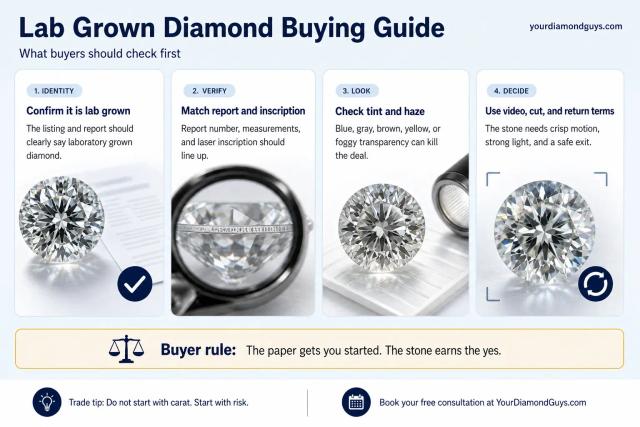
Use the report lookup. Save the listing. Match the inscription after delivery. If the diamond is expensive, have a jeweler or appraiser confirm the stone.
The laser inscription verification steps keep the process clean.
My Buyer Recommendation
Do not buy the report.
Buy the diamond that has the right report, the right look, the right price, and the right protection.
If two stones look similar on paper, I choose the one with cleaner video, better transparency, stronger cut, and clearer return terms.
That is how I would spend my own money.
What To Ask Before Buying
- Is the report from GIA or IGI?
- Does the report clearly say laboratory grown diamond?
- Can I verify the report number?
- Does the inscription match?
- Does the video support the grade?
- Are there treatment, tint, or haze concerns?
Reach out to Rob or me at YourDiamondGuys.com if you want help comparing two reports.
Where I Would Compare Grading Reports
Use these sites as comparison tools, not automatic recommendations. For live listing comparison, I would check similar lab diamonds on Ritani and Blue Nile, then judge the report, video, tint, and return terms before the price gets the final vote.
Why We Reject 90% of GIA Diamonds: Our Final Quality Check
Questions? Reach out directly for a free consultation, or drop them in the Diamond Buyers Academy community — Rob and I answer personally.
Questions Buyers Ask Us
Related Lab Grown Diamond Guides
Keep the full buying path close. These are the next checks that usually affect this decision.
*Some links on our site may earn us a small commission at NO EXTRA cost to you, helping us keep our content free*