How Lab Grown Diamonds Are Made
Use growth method as a map, not a pass or fail stamp.
By Josh Allen, Co-Founder of YourDiamondGuys.com. Fifth generation diamantaire with 25 years of experience in the global diamond trade. Former supplier to Tiffany & Co., Cartier, and Harry Winston.
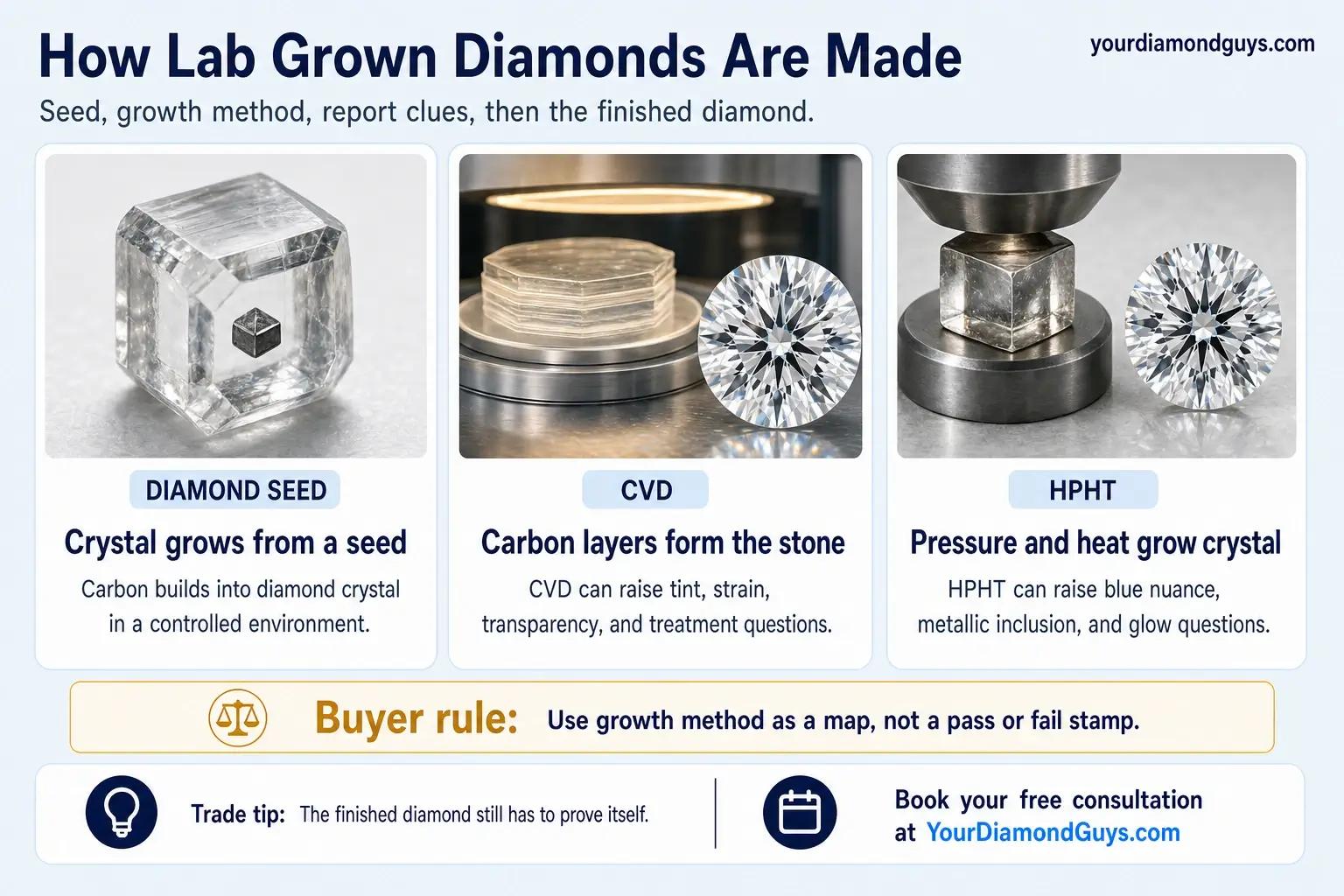
Lab grown diamonds are made by growing diamond crystal from a tiny diamond seed in a controlled environment, usually through CVD or HPHT growth.
That is enough science for most buyers.
You do not need to know how to run the machine. You need to know which clues from the growth process can show up in the report, video, color, clarity, and price.
That is the useful part.
The Short Version
A lab grown diamond starts with a diamond seed. The lab creates conditions that allow carbon to build into diamond crystal around that seed.
Two major methods dominate the conversation.
CVD means chemical vapor deposition.
HPHT means high pressure high temperature.
Both can produce beautiful diamonds. Both can produce stones I would reject. The growth method gives you a clue, not a final verdict.
Why Buyers Should Care
Growth method can connect to visual traits.
CVD stones can show brown or gray tint, strain, or post growth treatment history. HPHT stones can show blue nuance, metallic inclusions, or phosphorescence.
That does not mean every CVD or HPHT diamond has those problems.
It means you know where to look.
If the method comparison is your main question, read CVD vs HPHT lab diamonds.
CVD In Buyer Language
CVD grows diamond in a chamber where carbon rich gas helps crystal form on the seed.
The buyer move is simple.
Check for brown or gray tint, strain clues, transparency issues, and treatment notes on the report. Then watch the video under clean lighting.
I have seen CVD stones with excellent numbers that looked a little sleepy. The paper did not lie. It just did not tell the whole story.
HPHT In Buyer Language
HPHT uses pressure and heat to grow diamond in conditions that mimic part of the natural formation story.
The buyer move is different.
Check for blue nuance, metallic inclusions, fluorescence, phosphorescence, and report comments. HPHT diamonds can look very bright and clean, but the wrong blue cast can make the stone look odd in a white setting.
That is a visual decision, not a vocabulary test.
Growth Method Is Not A Quality Grade
Do not buy CVD because someone told you CVD is better.
Do not buy HPHT because someone told you HPHT is safer.
Buy the individual diamond that has clean proof.
| Growth Detail | What It Can Affect | What To Check |
|---|---|---|
| CVD | Brown tint, gray tint, strain | White background video and report comments |
| HPHT | Blue nuance, metallic inclusions, glow | Side view, fluorescence, and clarity plot |
| Post growth processing | Color appearance | Treatment language on the report |
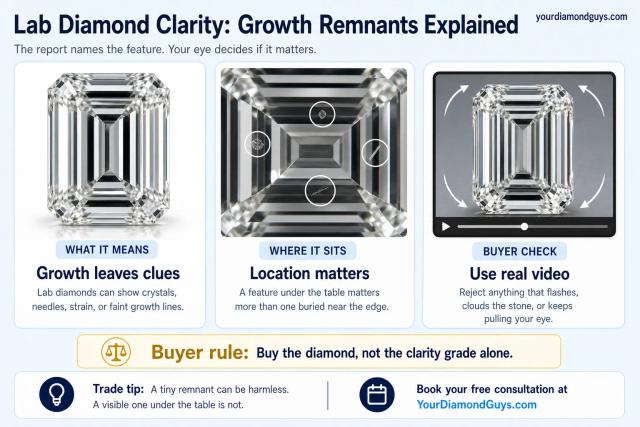
| Growth remnants | Clarity and transparency | Magnified video and comments |
Post Growth Treatment Matters
Some lab diamonds receive post growth processing to improve color or appearance. That does not automatically make the stone bad.
Hidden or poorly explained treatment is the problem.
Look for treatment language on the report and compare the video against the grade. The post growth treatment guide explains when to slow down.
The Report And Video Work Together
The report tells you how the lab describes the stone.
The video tells you whether the stone looks good.
You need both.
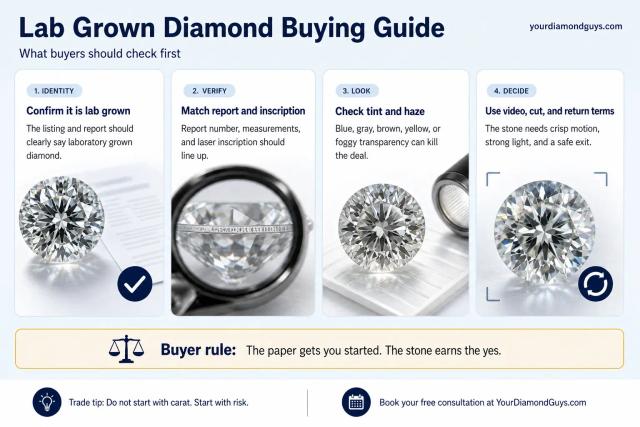
For lab grown diamonds, I want clear disclosure, a verifiable report, strong visuals, neutral body color, crisp facet edges, and a return policy that gives you time to inspect the stone after delivery.
My Buyer Recommendation
Use growth method as a map.
Do not use it as a pass or fail stamp.
If the stone looks neutral, crisp, transparent, and well cut, the method becomes background information. If the stone shows tint, haze, glow, or strange inclusions, the method tells you what question to ask next.
What To Ask Before Buying
- Is the diamond CVD or HPHT?
- Does the report disclose growth method or treatment?
- Does the video show brown, gray, blue, or yellow tint?
- Do the facets look crisp?
- Are there growth remnants or metallic inclusions?
- Can I return the stone after an in person inspection?
Reach out to Rob or me at YourDiamondGuys.com if the method language feels confusing.
Where I Would Compare Growth Method Clues
Use these sites as comparison tools, not automatic recommendations. For live listing comparison, I would check similar lab diamonds on Ritani and Blue Nile, then judge the report, video, tint, and return terms before the price gets the final vote.
Natural vs Lab Grown Diamonds
Questions? Reach out directly for a free consultation, or drop them in the Diamond Buyers Academy community — Rob and I answer personally.
Questions Buyers Ask Us
Related Lab Grown Diamond Guides
Keep the full buying path close. These are the next checks that usually affect this decision.
*Some links on our site may earn us a small commission at NO EXTRA cost to you, helping us keep our content free*