Clarity vs Carat: How to Buy Bigger Safely
By Josh Allen, Co-Founder of YourDiamondGuys.com. Fifth generation diamantaire with 30+ years in the global diamond trade. Former supplier to Tiffany & Co., Cartier, and Harry Winston.
You can trade clarity for carat safely only when the lower clarity diamond is eye clean, structurally safe, and priced for the tradeoff. Bigger is not better if the clarity problem becomes the first thing you see.
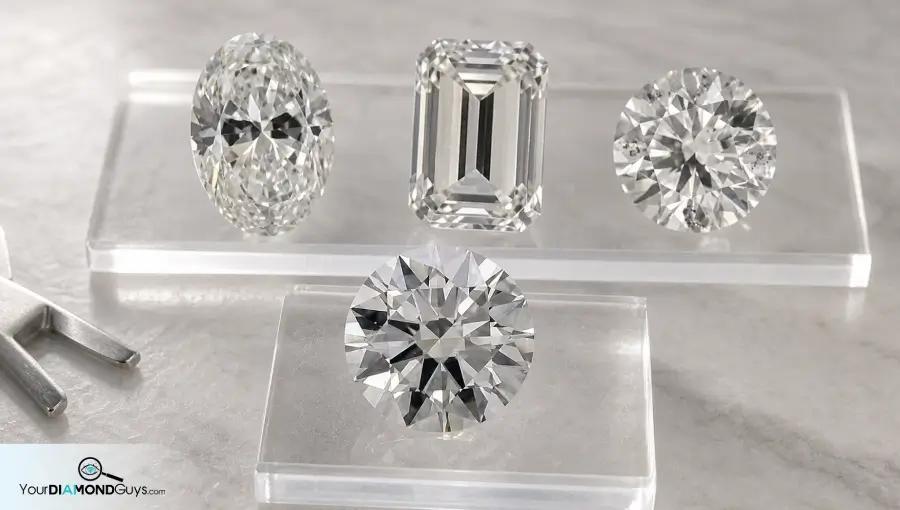
Size makes inclusions easier to notice. A mark that hides in a one carat round can show in a two carat oval.
The GIA report starts the sort. The video decides whether the size upgrade is worth the clarity drop.
Trade desk rule: buy bigger only when the bigger diamond still looks clean and calm.
Size Makes Inclusions Easier To See
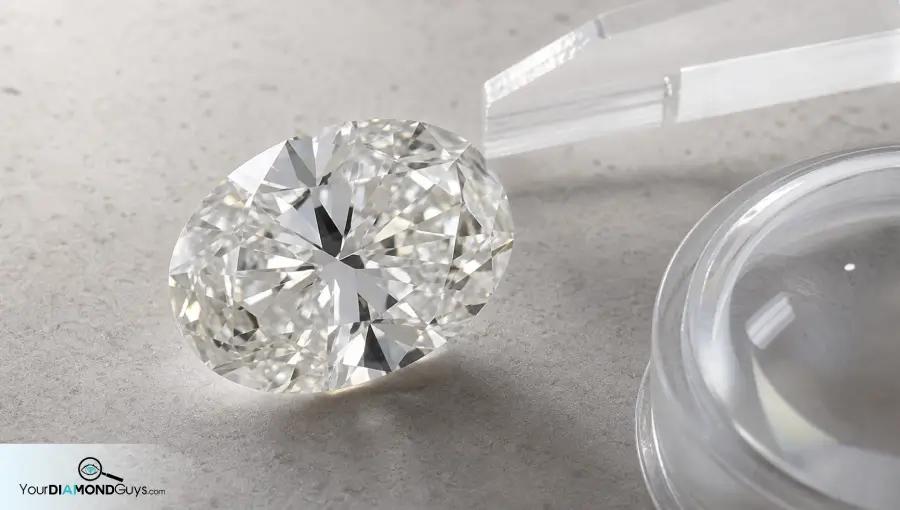
As carat weight goes up, the face up window gets larger. That gives inclusions more room to show, especially in elongated shapes and step cuts.
Use eye clean standards again when you cross into a larger size. Do not assume yesterday's grade still works.
Where SI1 Still Works
| Size And Shape | Lower Clarity Chance | Buyer Move |
|---|---|---|
| Under 1.25 ct round | Clean SI1 can work | Prioritize cut |
| 1.50 to 2.00 ct oval | VS2 safer | Check center marks |
| Large cushion or radiant | Depends on pattern | Watch for busy look |
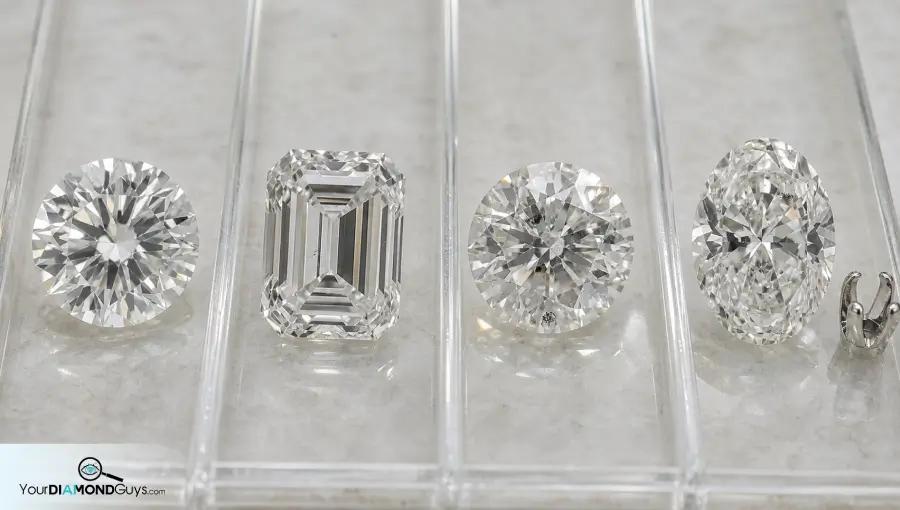
| Emerald or Asscher over 1.50 ct | Move stricter | Start VS1 or clean VS2 |
A lower grade works when the inclusion stays out of the buyer's eye. It fails when the size upgrade magnifies the tradeoff.
When Bigger Gets Too Expensive To Fix
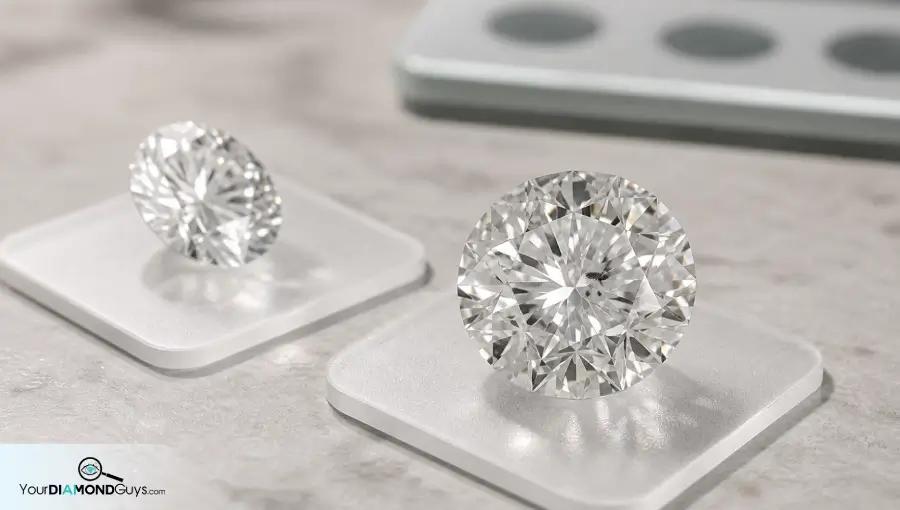
Some size jumps force the clarity budget up too. If every lower clarity candidate has a visible mark, the bigger size is not actually cheaper.
Use the price per carat logic with the video, not instead of it.
Carat And Clarity Decision Matrix
- Choose bigger when the diamond stays eye clean and safe.
- Choose higher clarity when the bigger stone exposes the inclusion.
- Choose better cut when both clarity options are clean.
- Walk away when size, haze, and visible marks show up together.
Budget Links For Size Tradeoffs
- Use clarity vs cut when sparkle competes with grade.
- Use inclusions by shape before going bigger in a fancy shape.
- Use busy inclusions when a larger stone looks messy.
Compare Face Up Size And Video
Use Ritani and Blue Nile to compare actual face up spread, not just carat weight. Then watch the inclusion at normal size and zoom.
If the larger stone makes you stare at the flaw, it is not the upgrade.
Questions To Ask When Size Competes With Clarity
- Does the larger diamond make the inclusion easier to see?
- Is the face up size actually bigger, or only the carat number?
- Does the lower clarity stone stay calm in video?
- Would a slightly smaller, cleaner diamond look better on the hand?
Color or Clarity? Cut or Size? Round or Oval?
Questions? Reach out directly for a free consultation, or drop them in the Diamond Buyers Academy community — Rob and Josh answer personally.
Clarity Vs Carat FAQs
*Some links on our site may earn us a small commission at NO EXTRA cost to you, helping us keep our content free*