Blue Nuance and Color Tints in Lab Diamonds
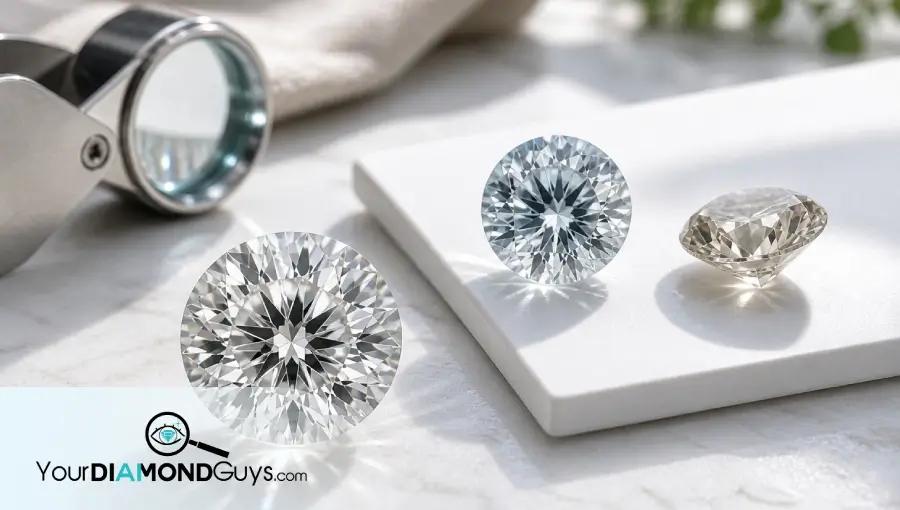
The letter grade starts the conversation. Body color decides the buy.
By Rob Cornfield, Co-Founder of YourDiamondGuys.com. 35+ years of experience in the global diamond trade. Specialist in diamond cut and light performance.
Blue nuance and color tint in lab diamonds can make a high color grade look wrong in real life.
That catches buyers.
The report says F.
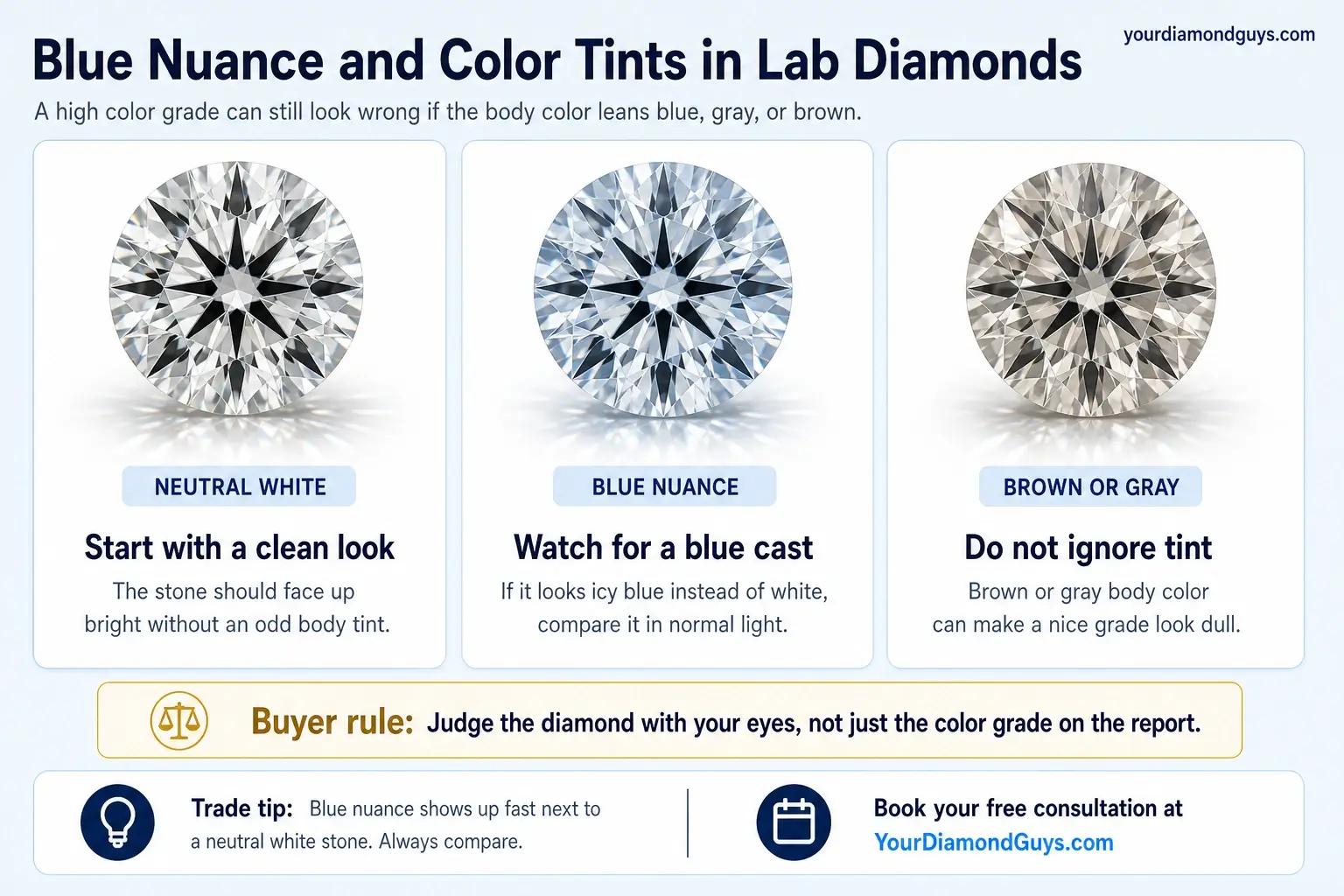
The diamond still looks blue, gray, brown, or yellow because the letter grade does not always tell the whole body color story.
The Fast Buyer Answer
Avoid lab diamonds with visible tint unless the look is intentional and the price reflects it.
Blue nuance usually gets discussed with HPHT stones. Brown or gray tint often gets discussed with CVD stones. That is useful context, but the individual diamond matters more than the method.
Read CVD vs HPHT if the method is unclear.
What Blue Nuance Looks Like
Blue nuance can make a lab diamond look icy or steely instead of neutral white.
Some buyers like that look.
Most buyers do not realize they are buying it until the ring is on the hand.
The problem gets louder in white metal, larger stones, step cuts, and clean viewing environments. Jewelry store lighting can make almost anything look exciting for a few minutes. Normal light tells the truth.
Gray And Brown Tint
Gray tint can make a diamond look flat or cold.
Brown tint can make it look warm in a way the color grade does not prepare you for.
Neither one is automatically horrible, but both should affect price and buyer expectations. If you wanted a clean white look, do not talk yourself into a tinted stone because the carat size looks tempting.
Shape Changes Visibility
| Shape Type | Tint Risk |
|---|---|
| Emerald and Asscher | Step facets show body color quickly |
| Oval, pear, marquise | Ends and sides can show warmth or blue cast |
| Radiant and cushion | Crushed facet patterns can hide or scatter tint |
| Round brilliant | Strong cut can mask color better, but tint still matters |
This is why the same color grade can feel different across shapes.
The broader diamond color guide helps with natural diamond color language, but lab grown body color needs this extra check.
How To Check Tint Online
Ask for video on a white background.
Look face up first. Then check the side view. Then compare the stone against another lab diamond with the same stated color grade.
If one stone looks clean and the other looks blue or gray, you have your answer.
The video and photo inspection checklist gives you the full order.
Do Not Confuse Tint With Fluorescence
Tint is body color.
Fluorescence and phosphorescence are light reactions.
A diamond can have both conversations, but do not mix them. If the report mentions glow, read the fluorescence and phosphorescence guide. If the stone looks colored in normal light, stay focused on body color.
Trade Insider Moment
In the trade, a diamond with a clean looking color grade but a strange body color gets talked about differently.
The paperwork brings it into the room.
The tint pushes it back out.
Buyers see the letter. Dealers see the stone.
My Buyer Recommendation
For most engagement ring buyers, choose a lab diamond that looks neutral in real lighting.
Do not pay a clean white price for a stone with visible blue, gray, or brown tint. If you like the tint, fine. Buy it knowingly and price it correctly.
Mistakes I Would Avoid
- Do not judge color from one studio photo.
- Do not ignore side view.
- Do not assume high color grade means neutral body color.
- Do not accept visible tint without a price reason.
- Do not let size distract you from the look.
What To Ask Before Buying
- Does the stone show blue nuance?
- Does the stone look gray, brown, or yellow?
- Can I see it on a white background?
- Can I see a side view?
- Can I compare it against another stone with the same color grade?
- Does the setting metal make the tint more obvious?
Reach out to Rob or me at YourDiamondGuys.com if the color looks a little strange and you want a second opinion.
Where I Would Compare Color Tints
Use these sites as comparison tools, not automatic recommendations. For live listing comparison, I would check similar lab diamonds on Ritani and Blue Nile, then judge the report, video, tint, and return terms before the price gets the final vote.
Lab-Grown vs Natural Diamonds: Why the Price Gap?
Questions? Reach out directly for a free consultation, or drop them in the Diamond Buyers Academy community — Rob and Josh answer personally.
Questions Buyers Ask Us
Related Lab Grown Diamond Guides
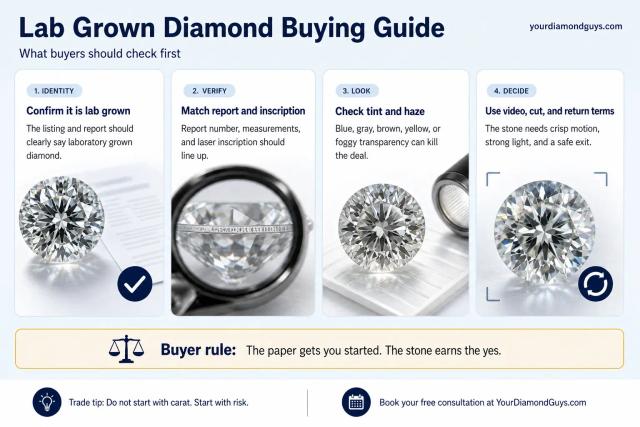
Keep the full buying path close. These are the next checks that usually affect this decision.
*Some links on our site may earn us a small commission at NO EXTRA cost to you, helping us keep our content free*