Lab Diamond Clarity: Growth Remnants Explained
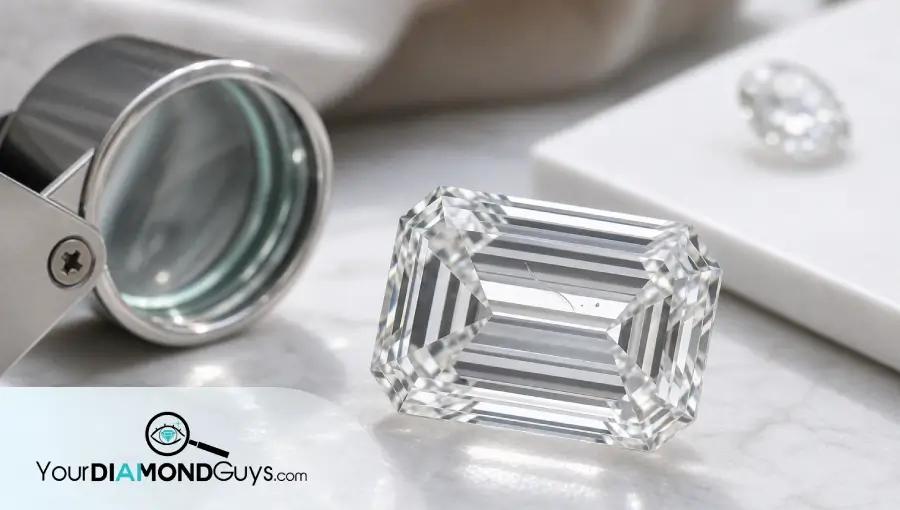
The grade opens the parcel. The stone decides whether it stays on the desk.
By Rob Cornfield, Co-Founder of YourDiamondGuys.com. 35+ years of experience in the global diamond trade. Specialist in diamond cut and light performance.
Lab diamond clarity still needs inspection because lab grown does not mean automatically clean looking.
That myth costs buyers.
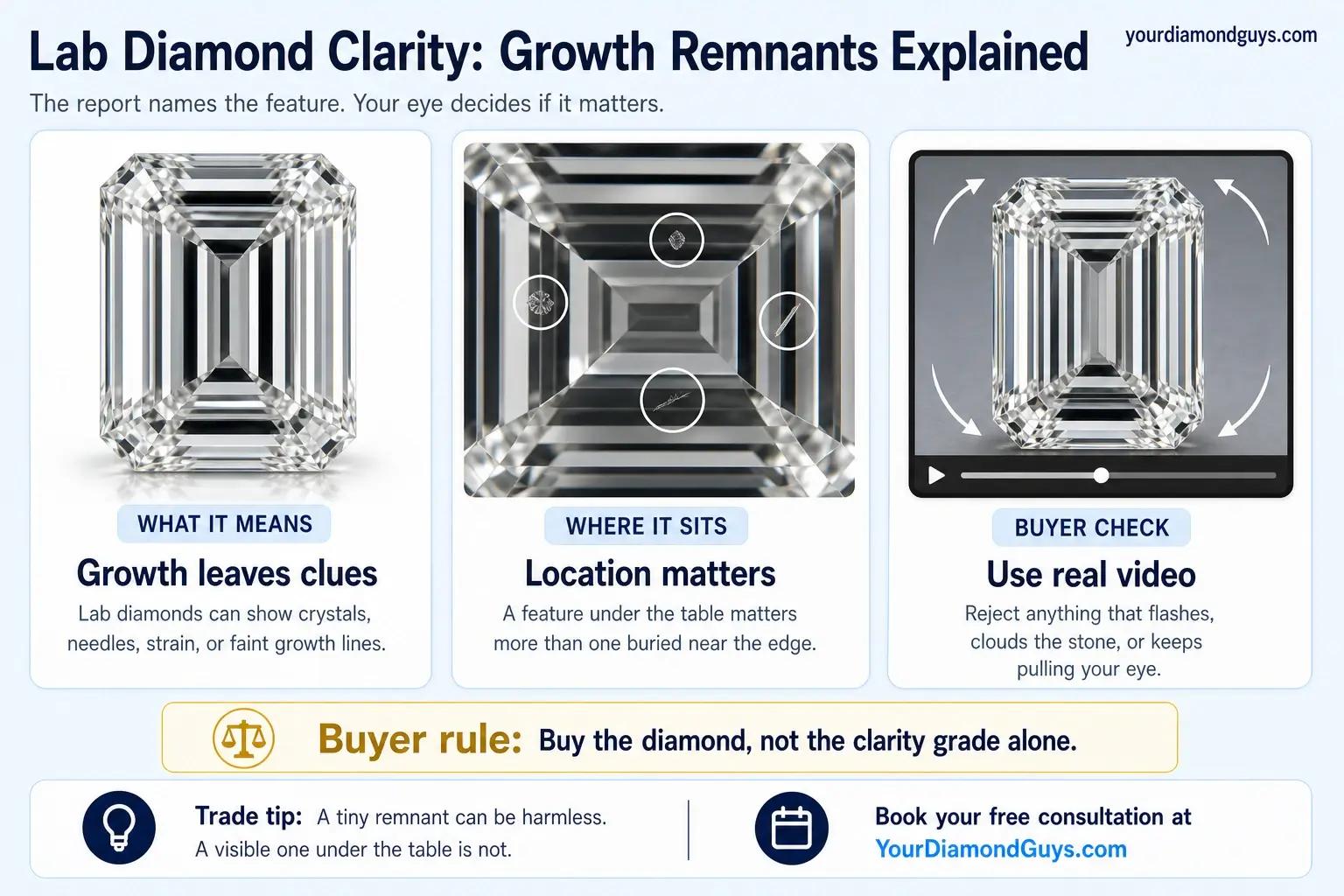
The clarity grade gives you a starting point. Growth remnants, strain, metallic inclusions, clouds, pinpoints, and transparency tell you whether the actual stone looks good.
What Growth Remnants Mean
Growth remnants are internal features tied to how the diamond grew in the lab.
They are not automatically a disaster.
Some are tiny and harmless to the eye. Some distract from the look. Some connect to transparency concerns.
I care less about the name and more about what the feature does to the diamond.
The Lab Clarity Features I Check
| Feature | Buyer Concern | What To Do |
|---|---|---|
| Growth remnants | Visibility or texture | Check magnified video |
| Strain | Transparency and odd appearance | Look for hazy or wavy visual behavior |
| Metallic inclusions | HPHT clue and visibility risk | Check location and size |
| Clouds | Haze and weak transparency | Compare against a crisp stone |
| Pinpoints | Usually minor unless grouped | Check whether they affect brightness |
The clarity grade does not tell you the whole personality of the stone.
The video does.
Visibility vs Durability
Most lab clarity concerns are visual. They affect beauty more than durability.
Still, do not ignore surface reaching damage or serious clarity problems. If you see a bruise, chip, cavity, knot, etched channel, or indented natural in a diamond conversation, slow down and get expert review.
For broader clarity education, use the diamond clarity guide.
Shape Makes Clarity Louder
Step cuts show clarity faster.
Emerald and Asscher cuts have open, quiet facets. Inclusions and haze have fewer places to hide.
Radiants and cushions can hide smaller inclusions better, but they can also hide weak transparency inside busy facet patterns. Ovals and pears need a check through the center and tips.
This is why I never approve clarity from the grade alone.
Report Comments Matter
Read the comments.
If the report mentions growth remnants, treatment, clouds, or features not shown clearly in the listing, ask for a better video.
The IGI lab diamond report guide shows how to use comments without getting lost in grading language.
Growth Method Gives Clues
CVD stones can raise strain and tint questions. HPHT stones can raise metallic inclusion and blue nuance questions.
That does not make either method bad.
It tells you where to look.
Use CVD vs HPHT lab diamonds when the growth method is part of the clarity story.
Haze Is The Line I Do Not Like Crossing
Visible inclusions can sometimes be managed by shape, setting, and location.
Haze is different.
If the whole stone looks foggy, milky, or sleepy, I get very cautious. The report grade can look fine while the diamond lacks crisp transparency.
The hazy lab diamond guide focuses on that specific rejection call.
Trade Insider Moment
In sorting, we do not treat all VS2 stones the same.
One VS2 can look clean and bright. Another can have the wrong feature in the wrong place. The grade gets the parcel opened. The stone decides whether it stays on the desk.
That is clarity in real life.
My Buyer Recommendation
Buy clarity that looks clean, not clarity that only reads clean.
For lab grown diamonds, I want crisp facet edges, no distracting center inclusion, no ugly growth feature, no hazy transparency, and no report comment that the seller refuses to explain.
What To Ask Before Buying
- What clarity features are listed on the report?
- Are growth remnants visible in video?
- Are inclusions under the table or near the edge?
- Does the stone look crisp or foggy?
- Does the shape make clarity easier to see?
- Can I compare it against a cleaner looking stone?
Book your free consultation if you want help deciding whether a clarity feature matters.
Where I Would Compare Clarity Proof
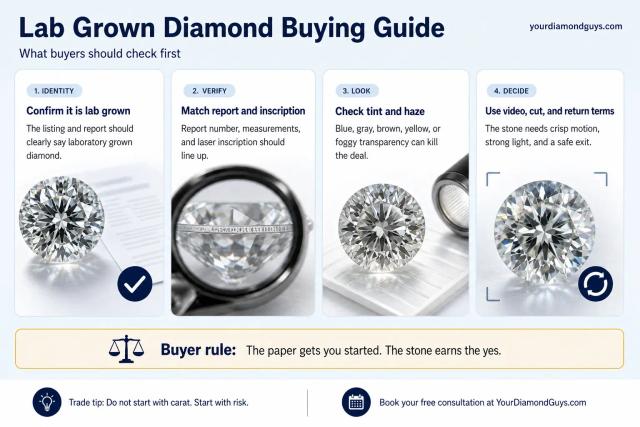
Use these sites as comparison tools, not automatic recommendations. For live listing comparison, I would check similar lab diamonds on Ritani and Blue Nile, then judge the report, video, tint, and return terms before the price gets the final vote.
Ready to Buy the Perfect Diamond?
Questions? Reach out directly for a free consultation, or drop them in the Diamond Buyers Academy community — Rob and Josh answer personally.
Questions Buyers Ask Us
Related Lab Grown Diamond Guides
Keep the full buying path close. These are the next checks that usually affect this decision.
*Some links on our site may earn us a small commission at NO EXTRA cost to you, helping us keep our content free*