Pendants and Necklaces: Best Diamond Size
By Josh Allen, Co-Founder of YourDiamondGuys.com. Fifth generation diamantaire with 30+ years in the global diamond trade. Former supplier to Tiffany & Co., Cartier, and Harry Winston.
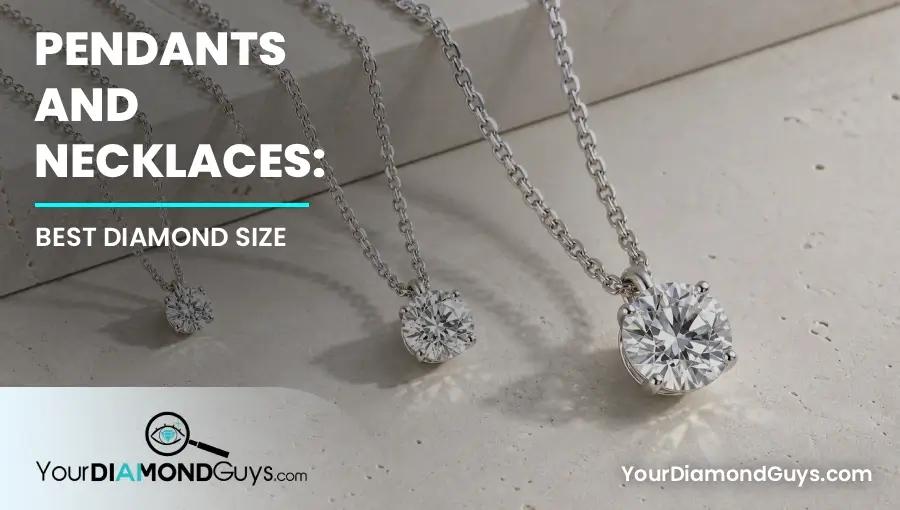
Here is the pendant rule, necklace diamonds are seen from farther away, so millimeters and brightness matter more than tiny grade details.
A pendant is not judged like an engagement ring.
People see it from conversation distance.
That means size, sparkle, chain proportion, and setting style carry the look.
For natural diamonds, I start with GIA because the report gives you the carat weight, measurements, and first facts worth checking before you compare stones.
When I help with pendants, I care less about microscopic clarity and more about whether the stone has life from a few feet away.
How This Fits Your Buying Decision
This is the necklace size layer inside the diamond carat size and finger coverage guide. Pendants are judged from conversation distance, not ring-viewing distance.
Best Pendant Size Ranges
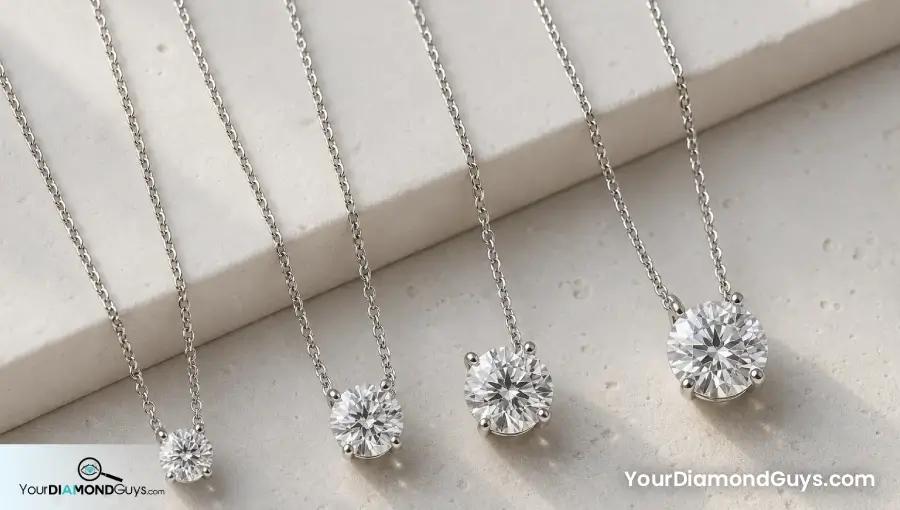
The right size depends on the wearer, neckline, chain, and whether the pendant is daily or statement jewelry.
| Pendant Size | Typical Look | Best Use |
|---|---|---|
| 0.25 to 0.40 carat | Subtle sparkle | Minimal daily wear |
| 0.50 carat | Noticeable but easy | Everyday pendant |
| 0.75 to 1.00 carat | Strong presence | Daily or dressy |
| 1.25 to 2.00 carat | Bold center | Statement look |
| 2.00 carat and up | Very noticeable | Needs strong chain and setting |
Viewing Distance Changes The Priority
People do not inspect a pendant from 8 inches like an engagement ring. They see it from across a table or in passing.
That is why brightness and outline matter. A lively 0.75 can read better than a dull 1.00.
Chain Thickness Matters
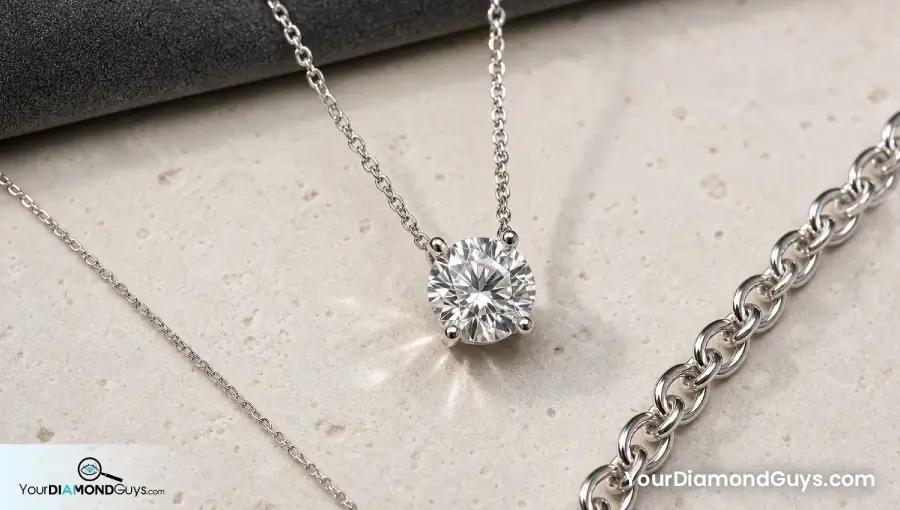
A tiny chain can make a larger diamond look unsupported. A heavy chain can overpower a smaller stone.
The pendant and chain should look like they belong together.
Bezel vs Prong Pendant Settings
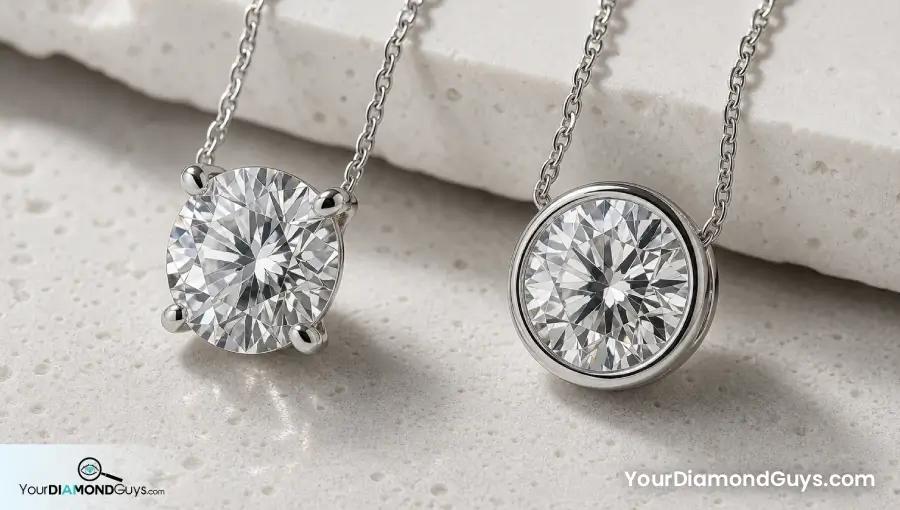
A prong pendant shows more diamond and can feel lighter. A bezel pendant adds outline and protection.
A thin bezel can make the pendant read slightly larger. A heavy bezel can make it look more metal forward.
Shape Choices For Pendants
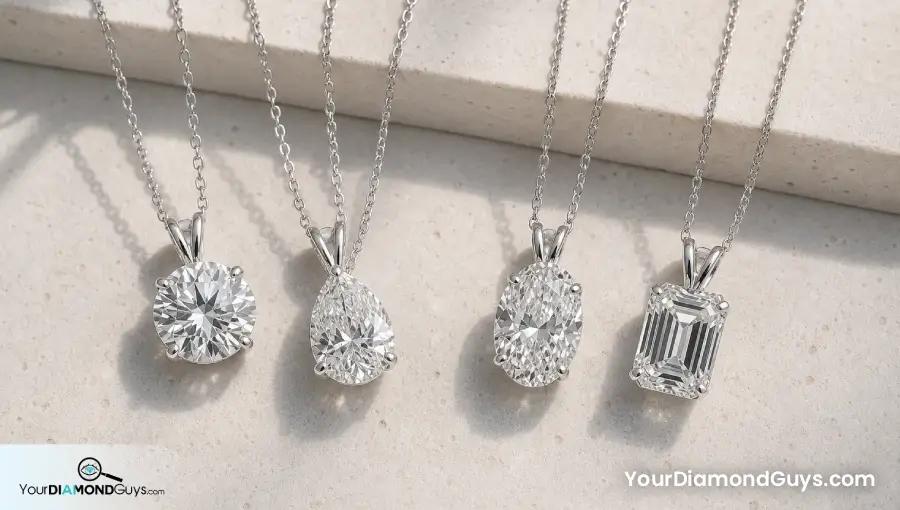
Round is classic. Pear adds direction and length. Oval feels soft and modern. Emerald can look elegant when the transparency is strong.
Use the shapes that look biggest guide if you want more visible size.
The Pendant Shortlist
I would shortlist pendants by viewing distance. A pendant has to show up from a few feet away, so brightness, outline, and chain proportion matter more than tiny clarity differences.
Then I check the setting. A pendant that flips, tilts, or hangs awkwardly will annoy the wearer no matter how good the diamond looks on paper. Size only works when the piece hangs right.
Chain length belongs in the size conversation too. A small diamond on a short chain can feel intentional and delicate. The same diamond on a longer chain can disappear. A larger diamond needs enough chain presence to look supported.
I also check whether the pendant has enough movement to feel natural without constantly turning over. A beautiful diamond loses impact when the back keeps facing out.
For buyers comparing gifts, the diamond stud size guide is the closest sibling page. Studs are judged per ear. Pendants are judged from conversation distance.
When the pendant is part of a jewelry set, I use the matching pairs guide to keep size, color, and brightness from feeling random.
A Pendant Size Example
A buyer compares a 0.75 carat bright round pendant with a 1.00 carat duller stone. From conversation distance, the brighter diamond can look better.
That surprises people because the bigger number feels safer.
Pendants reward light and proportion.
Pendant Size Mistakes I Would Avoid
- Do not buy pendant size only by carat.
- Do not pair a large diamond with a weak chain.
- Do not overspend on clarity nobody can see at pendant distance.
- Do not choose a setting that flips constantly.
- Do not forget chain length and neckline.
Questions To Ask About Pendants
- Will this be daily wear or statement jewelry?
- What is the diamond's millimeter size?
- Does the diamond look bright from normal distance?
- Does the chain thickness match the pendant?
- Will the setting sit straight and feel comfortable?
Where To Compare Pendant Options
Use live listings as comparison tools, not automatic recommendations. I would compare similar stones on Blue Nile and Brilliant Earth, then judge each diamond by the diamond size, brightness, setting, chain proportion, and price. If the stone does not earn it, the link does not save it.
My Buyer Recommendation
For pendants, I would rather buy a bright diamond in a balanced size than chase a bigger dull stone.
The pendant has to look alive from real viewing distance.
Reach out to Rob or me at YourDiamondGuys.com, or book your free consultation. We will look at the actual stone with you. No sales pitch.
Why Every Wardrobe Needs a Diamond Pendant!
Questions? Reach out directly for a free consultation, or drop them in the Diamond Buyers Academy community — Rob and Josh answer personally.
Questions Buyers Ask Us
More Diamond Size Guides Worth Reading
These are the guides I would read next if you are still comparing size, shape, setting style, or value.
Diamond Stud Size Guide
Compare total carat weight, per-ear size, and matched-pair comfort.
Carat vs Millimeters
Separate the weight on paper from the size your eye actually sees.
Shapes That Look Biggest
Compare which outlines give more coverage per carat and where they trade off.
Prongs, Bezels, and Size Illusions
Balance visible diamond edge, metal weight, protection, and setting height.
Matching Pairs MM Tolerance
Match millimeters, brightness, color, and outline before the pair gets set.
*Some links on our site may earn us a small commission at NO EXTRA cost to you, helping us keep our content free*