Best Diamond Shapes That Look Biggest
By Rob Cornfield, Co-Founder of YourDiamondGuys.com. 30+ years in the global diamond trade. Specialist in diamond cut and light performance.
Here is the honest ranking, the shapes that look biggest usually stretch across the finger, but spread only helps when the cut still looks alive.
Marquise, pear, and oval usually win the size game. Round usually wins the balanced beauty game. Cushion and emerald need closer inspection because their weight can disappear into depth, corners, or facet style.
For natural diamonds, I start with GIA because the report gives you the carat weight, measurements, and first facts worth checking before you compare stones.
In the trade, we do not say a shape is bigger because it has a prettier name. We check length, width, depth, outline, light return, and whether the shape looks good on a hand.
How This Fits Your Buying Decision
This is the shape comparison layer inside the diamond carat size and finger coverage guide. It helps you decide whether more coverage is worth the shape tradeoff.
The Looks Bigger Ranking
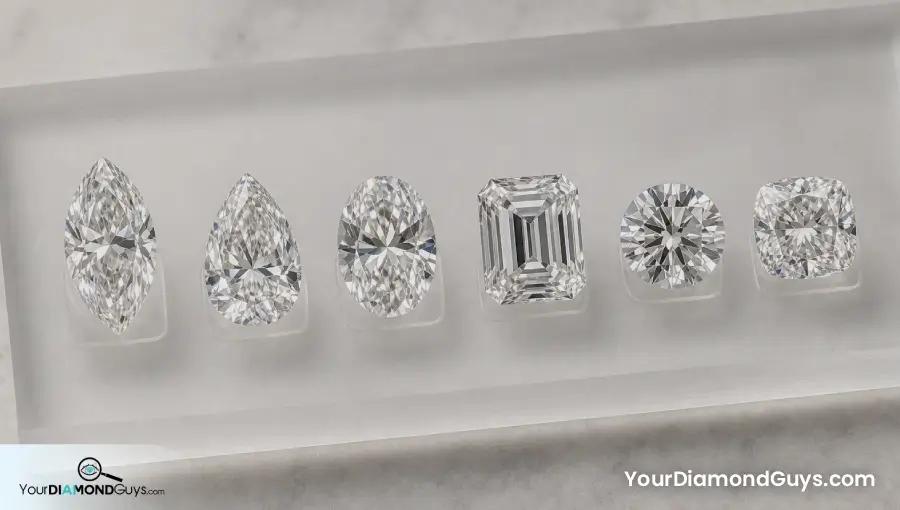
This ranking is about typical face up coverage per carat, not overall beauty. Your eye still has to like the shape.
| Rank | Shape | Why It Looks Big | Main Caution |
|---|---|---|---|
| 1 | Marquise | Long outline covers a lot of finger | Bow tie and overly skinny ratio |
| 2 | Pear | Length plus pointed tip adds presence | Tip protection and uneven shoulders |
| 3 | Oval | Elongated outline reads larger than round | Bow tie and shallow watery look |
| 4 | Emerald | Long step cut can look elegant and large | Clarity and windowing show fast |
| 5 | Radiant | Rectangular outline gives good spread | Depth and mushy centers |
| 6 | Round | Balanced size and strong brightness | Less finger coverage than elongated shapes |
| 7 | Cushion | Can look soft and pretty | Often faces up smaller for weight |
Why Long Shapes Win Coverage
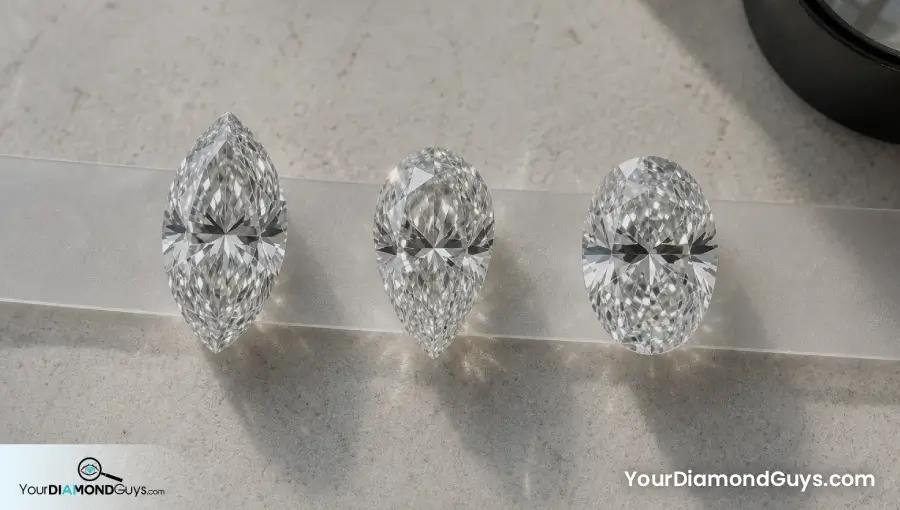
Long shapes spread weight across length. The eye reads that as presence, especially on the finger.
That is why oval, pear, and marquise ratio matters. Too short can look stubby. Too long can look thin or fragile.
Why Round Still Competes
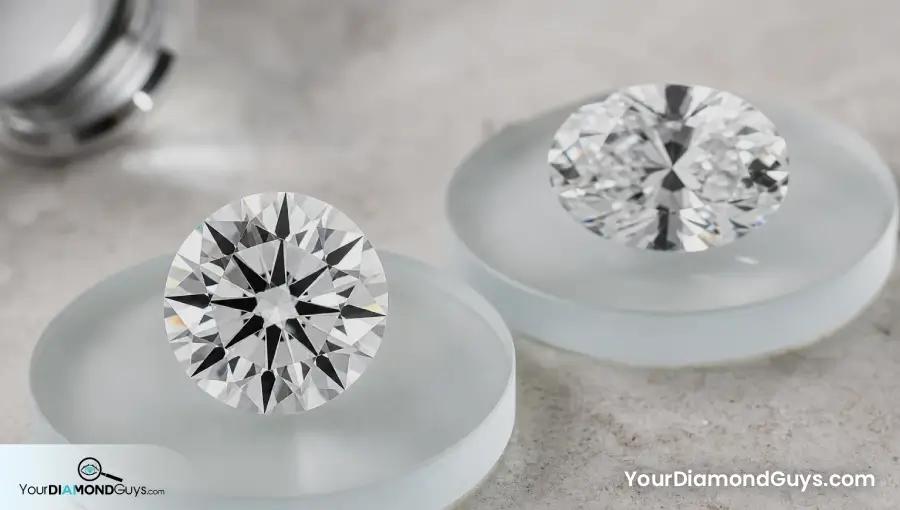
A well cut round can look larger than its measurements because brightness helps the outline pop.
Do not punish a round for not being elongated. If sparkle is the priority, a strong round can beat a bigger looking weak oval.
Where Buyers Get Fooled
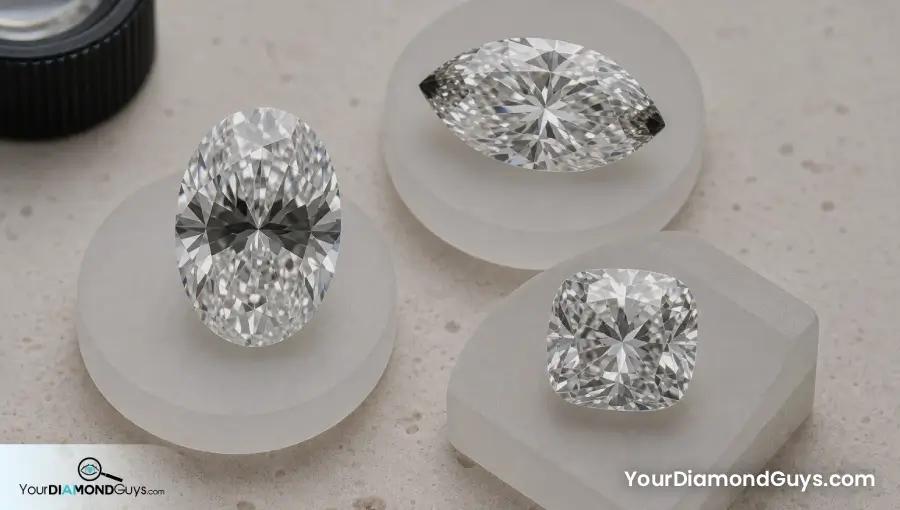
The most common mistake is picking the shape that looks biggest in a filtered search and ignoring the shape problems.
A big marquise with a black bow tie is not a win. A large oval with weak ends is not a win. A cushion with heavy depth can look smaller than expected.
Setting Style Changes The Ranking
A halo can make a round look larger. A thin band can make an oval look longer. A thick bezel can shrink the center visually.
That is why shape, band width, and prong or bezel style belong in the same decision.
The Shape Shortlist
When a buyer tells me they want the biggest look, I do not start by pushing the biggest carat. I start with shape. Marquise, pear, and oval give the most coverage, then I check whether the outline still looks elegant and whether the center stays alive.
The shortlist should include at least one shape that gives coverage and one shape that gives classic balance. That comparison usually clarifies the buyer's taste fast. Some people think they want the largest look until they see a lively round next to a long oval. The eye decides.
I also keep shape specific guides close. A buyer looking at soft outlines should read the cushion cut size guide, while a buyer who likes step cuts should read the emerald cut size guide before judging size.
A Real Looks Bigger Example
A 1.50 carat oval can look much longer than a 1.50 carat round. That does not automatically make it better.
If the oval has a heavy bow tie and dull ends, the round can look more expensive and more alive.
I would compare them on a hand, in normal light, with the actual videos open. That is where the answer shows up.
Shape Mistakes I Would Avoid
- Do not choose a shape only because it looks big.
- Do not ignore bow tie in ovals, pears, and marquise.
- Do not choose an emerald cut without checking clarity and transparency.
- Do not assume cushion cuts all face up the same.
- Do not forget that a bright stone often looks bigger than a dull one.
Questions To Ask Before You Pick A Shape
- Which shape looks best on the hand?
- What are the exact length and width measurements?
- Does the shape have bow tie, windowing, or weak ends?
- Does the setting make the center look balanced?
- Am I paying for visible size or just carat weight?
Where To Compare Shape Coverage
Use live listings as comparison tools, not automatic recommendations. I would compare similar stones on Ritani and Brilliant Earth, then judge each diamond by the shape outline, measurements, video, setting style, and price. If the stone does not earn it, the link does not save it.
My Buyer Recommendation
Pick the shape that gives you the look you want without sacrificing life.
When buyers want the biggest look, I start with oval, pear, and marquise, then I make the stone prove itself on video.
Reach out to Rob or me at YourDiamondGuys.com, or book your free consultation. We will look at the actual stone with you. No sales pitch.
Exploring Diamond Shapes
Questions? Reach out directly for a free consultation, or drop them in the Diamond Buyers Academy community — Rob and Josh answer personally.
Questions Buyers Ask Us
More Diamond Size Guides Worth Reading
These are the guides I would read next if you are still comparing size, shape, setting style, or value.
MM to Carat Size Chart
Check normal measurement ranges by shape before judging one listing.
Elongated Shape Ratio Coverage
Judge oval, pear, and marquise length before the outline gets too stretched.
Round vs Oval Size
Compare classic brightness against longer finger coverage and bow tie risk.
Cushion Cut Size Guide
Sort chunky and crushed-ice cushions by spread, depth, and center texture.
Halo vs Solitaire Size
See when a setting adds visual spread and when it just adds maintenance.
*Some links on our site may earn us a small commission at NO EXTRA cost to you, helping us keep our content free*