Carat vs Millimeters: The Real Size Difference
By Josh Allen, Co-Founder of YourDiamondGuys.com. Fifth generation diamantaire with 30+ years in the global diamond trade. Former supplier to Tiffany & Co., Cartier, and Harry Winston.
Carat is weight.
Millimeters are size.
That one difference saves buyers from a lot of bad diamond decisions, because two diamonds can weigh the same on paper and still look different on the hand.
The clean buyer rule is simple: use carat to understand weight and price, then use millimeter measurements to judge how big the diamond actually looks from the top.
For natural diamonds, I start with GIA because GIA defines carat as a weight measurement and gives you the first facts worth checking before you compare stones.
How This Fits Your Buying Decision
This is the starting page inside the diamond carat size and finger coverage guide. It gives you the weight versus size rule before the rest of the cluster gets into shape, depth, setting, and hand coverage.
The Fast Answer
A diamond's carat tells you how much it weighs. Its millimeter measurements tell you how much space it covers when you look at it face up.
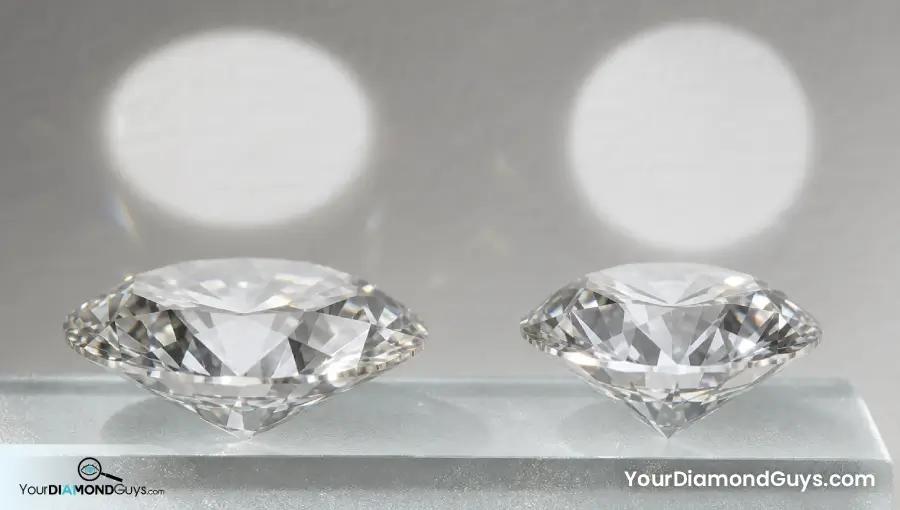
That is why a 1.00 carat round diamond can look normal at about 6.4 to 6.5 millimeters, while another 1.00 carat round can look smaller because the weight sits in extra depth, a thick girdle, or awkward proportions.
Same weight.
Different look.
The mistake is shopping by carat first and treating the millimeter line like a technical detail. The trade does the opposite. We look at weight, spread, depth, shape, and cut together.
What Carat Actually Measures
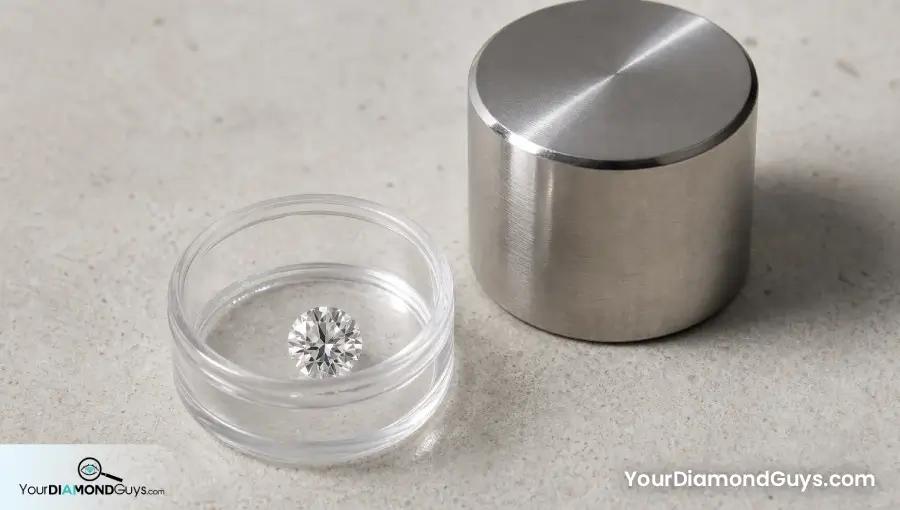
Carat measures diamond weight, not diameter, width, length, height, sparkle, finger coverage, or value by itself.
One metric carat equals 200 milligrams. A 0.50 carat diamond weighs half of that. A 1.50 carat diamond weighs one and a half carats. That part is clean.
The trap starts when people use carat as a nickname for size.
I hear it all the time. Someone says, "I want a one carat look." What they usually mean is, "I want the diamond to look big enough on the finger." Those are not the same question.
A one carat round, oval, cushion, emerald, pear, and marquise will not cover the finger the same way. Even within one shape, two stones with the same carat can have different face up size.
That is why you need the millimeters.
What Millimeters Actually Tell You
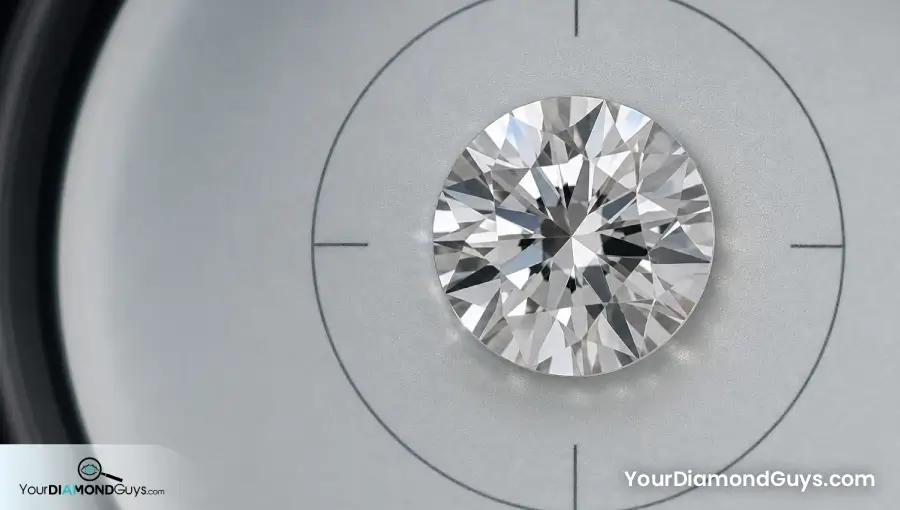
Millimeters tell you the diamond's physical measurements. On a GIA report, round diamonds list minimum diameter, maximum diameter, and depth. Fancy shapes list length, width, and depth.
For a round diamond, the diameter matters most for face up size. For an oval, pear, marquise, emerald, radiant, cushion, or princess cut, length and width tell you the visible footprint.
Here is the part buyers miss.
Depth is not the part you see first.
You see the top outline. The weight hidden underneath can raise the carat number without making the diamond look larger from the top. That is the classic hidden weight problem.
If two diamonds both weigh 1.00 carat, but one faces up at 6.5 millimeters and another faces up at 6.2 millimeters, the 6.5 millimeter stone usually looks larger. The carat weight did not tell you that. The measurements did.
Why Two Same Carat Diamonds Look Different
The buyer sees "1.00 carat" and expects one visual size.
The diamond trade sees a list of details that decide the actual look.
These are the big ones:
- Shape, because outlines cover the finger differently.
- Depth percentage, because deep stones carry weight below the surface.
- Table size, because it changes the visible top and light return.
- Girdle thickness, because extra girdle can hold weight without adding beauty.
- Length to width ratio, because elongated shapes stretch coverage.
- Cut quality, because a brighter diamond often looks larger than a dull one.
- Setting style, because halos, prongs, bezels, and band width change perceived size.
This is why a round vs oval size comparison gets interesting fast. Ovals often look larger by length at the same carat, but a bad oval can show a heavy bow tie, weak ends, or a shallow watery look.
Size without beauty is not a win.
Typical Round Diamond Millimeter Sizes
Use this as a shopping reference, not a promise. Real measurements move with cut, depth, and make.
| Carat Weight | Normal Round Face Up Range | What To Watch |
|---|---|---|
| 0.50 carat | About 5.0 to 5.2 mm | Small differences show less, cut still matters |
| 0.75 carat | About 5.8 to 6.0 mm | Strong value zone for balanced budgets |
| 0.90 carat | About 6.2 to 6.3 mm | Often close to the 1.00 carat look for less money |
| 1.00 carat | About 6.4 to 6.5 mm | Check depth so you do not buy hidden weight |
| 1.25 carat | About 6.8 to 7.0 mm | Spread should move up, not stall |
| 1.50 carat | About 7.3 to 7.4 mm | Cut quality starts showing more clearly |
| 2.00 carat | About 8.0 to 8.2 mm | Be strict on cut, clarity visibility, and spread |
The numbers get you close. They do not make the decision.
A 1.00 carat round at 6.50 millimeters with poor light return is not automatically better than a 6.40 millimeter stone with stronger cut. I would rather give up a tiny measurement difference than buy a dead diamond.
The Best Round Diamond Size Check
For a natural round brilliant, use the GIA report as the first filter, then check the actual video.
I like this range when the rest of the stone supports it:
| Cut Detail | Buyer Friendly Target |
|---|---|
| Table | 56 to 58 percent |
| Depth | 60 to 62.4 percent |
| Crown angle | 34 to 35 degrees |
| Pavilion angle | 40.6 to 41 degrees |
| Polish | Excellent |
| Symmetry | Excellent |
| Fluorescence | None to faint |
Those numbers do not guarantee a beautiful stone.
They narrow the field.
The final call still comes from the actual diamond video, light performance, and how the stone looks next to similar options.
How To Compare Two Diamonds Side By Side
Compare the measurements before you compare the price.
Here is the buyer process I use:
- Match the shape first.
- Compare carat weight.
- Compare length and width, or round diameter.
- Check depth percentage.
- Check table, crown, pavilion, girdle, polish, and symmetry when available.
- Watch the actual video in normal lighting.
- Compare price only after the stones pass the size and cut check.
That order matters.
Price looks tempting when the carat number is bigger. A deep 1.20 carat diamond can look like a better deal until you realize it faces up like a smaller stone and gives you weaker sparkle.
That is not value. That is weight you paid for but do not enjoy.
Shape Changes The Whole Size Conversation
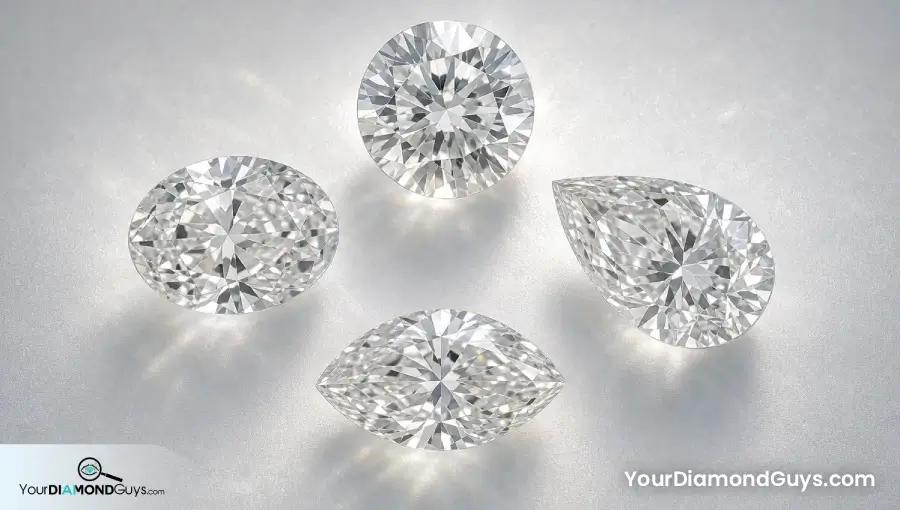
Different shapes distribute weight differently.
Elongated shapes like oval, pear, and marquise usually give more finger coverage per carat because they stretch across the finger. Emerald cuts can look elegant and long, but they can face up smaller when depth, corners, and proportions hold weight in the wrong places. Cushions vary wildly because some are chunky, some are crushed ice, and some carry extra depth.
That is why the diamond size chart by shape matters more than a generic carat chart.
Use shape specific expectations:
| Shape | Why Same Carat Looks Different | Buyer Move |
|---|---|---|
| Round | Balanced spread and brightness when well cut | Do not chase diameter if cut gets weak |
| Oval | Longer outline gives more finger coverage | Check bow tie, shoulder shape, and ratio |
| Pear | Length adds presence and direction | Check tip protection and symmetry |
| Marquise | Usually strong coverage per carat | Check bow tie and overly skinny ratios |
| Emerald | Large table and step facets show clarity more | Keep transparency and proportion strict |
| Cushion | Spread changes a lot by facet style and depth | Compare actual mm, not just carat |
| Radiant | Can look lively, but depth varies | Watch for hidden weight and mushy centers |
This is where buyers get tripped up online. A filter says 1.50 carat. The eye sees shape, outline, and brightness.
The eye wins.
Magic Sizes Are A Real Pricing Trap
The industry loves milestone carat weights.
1.00 carat. 1.50 carat. 2.00 carat.
Those numbers feel clean, and sellers know buyers search for them. The price often jumps around those marks even when the visual difference is tiny.
A well chosen 0.90 or 0.95 carat diamond can look almost identical to a 1.00 carat diamond once set. A 1.90 carat stone can get you very close to a 2.00 carat look without paying for the psychological milestone.
That is the whole point of magic sizes. You are not trying to trick anyone. You are trying to spend money where the eye can see it.
Finger Coverage Matters More Than Bragging Rights
A diamond does not live on a spreadsheet.
It lives on a hand.
A 1.50 carat oval can look big on a size 4.5 finger and balanced on a size 7 finger. A 2.00 carat round can look perfect on one hand and too tall or impractical on another.
Ring size, finger length, band width, prong style, and setting height all change the visual result.
That is why best diamond size by ring size is a better buyer question than "What carat should I buy?"
The right question is: what millimeter footprint looks balanced on this hand, in this setting, for this lifestyle?
The Real Buyer Example
Say you are comparing two natural round diamonds.
Diamond A is 1.00 carat, G color, VS2, and measures 6.18 by 6.22 millimeters. It is deep. The price looks good because the seller knows the carat number will catch your eye.
Diamond B is 0.93 carat, G color, VS2, and measures 6.24 by 6.28 millimeters. The cut is tighter, the depth is cleaner, and the video looks brighter.
Most buyers would click Diamond A first.
I would slow down and study Diamond B.
Inside the trade, we see this all the time. The stone with the bigger carat number is not always the stone with the bigger look. A cutter can leave weight in the belly because it protects the carat price. The buyer pays for weight. The eye sees millimeters and light.
That is the insider moment.
Mistakes That Make Diamonds Look Smaller
Do not buy carat weight before checking measurements.
Do not ignore depth percentage.
Do not assume every 1.00 carat diamond faces up the same.
Do not treat elongated shapes as automatically better. Bad ratios and bow ties still matter.
Do not buy a larger carat with weak cut when a slightly smaller diamond looks brighter and cleaner.
Do not forget the setting. A thick bezel, heavy prongs, or wide band can change how the center stone reads.
Questions To Ask Before You Buy
- What are the exact millimeter measurements?
- Does the diamond face up normally for its carat weight?
- Is the weight sitting in depth, girdle, or visible spread?
- How does the stone compare to the depth percentage guide for its shape?
- Does the diamond look bright in video, or just big on paper?
- Would a slightly under milestone size give the same look for better value?
- Does the setting help the center stone look balanced on the hand?
Compare Listings Without Letting The Link Decide
Use live listings as comparison tools, not automatic recommendations. I would compare similar stones on Ritani and Blue Nile, then judge each diamond by the GIA report, actual millimeters, depth, cut, video, and price. If the stone hides weight, the link does not save it.
My Buyer Recommendation
Pick the diamond that looks bigger and better, not the diamond with the loudest carat number.
That usually means checking three things in this order:
- Does the millimeter size match the carat weight?
- Does the cut make the diamond bright?
- Does the price make sense for the actual stone?
When those three line up, you have a diamond worth considering.
Reach out to Rob or me at YourDiamondGuys.com, or book your free consultation. We will look at the actual stone with you. No sales pitch.
You Need to Hear This Before Buying a Diamond Carat Size is Not Actually What You Think Is
Questions? Reach out directly for a free consultation, or drop them in the Diamond Buyers Academy community — Rob and Josh answer personally.
Questions Buyers Ask Us
More Diamond Size Guides Worth Reading
These are the guides I would read next if you are still comparing size, shape, setting style, or value.
MM to Carat Size Chart
Check normal measurement ranges by shape before judging one listing.
Face Up Spread and Hidden Weight
Find deep stones that carry weight where the eye cannot use it.
Depth Percentage and Size
Use depth as the quick check when carat weight looks better than spread.
Shapes That Look Biggest
Compare which outlines give more coverage per carat and where they trade off.
Magic Sizes and Price Jumps
Compare milestone weights against just-under stones before paying for the number.
*Some links on our site may earn us a small commission at NO EXTRA cost to you, helping us keep our content free*