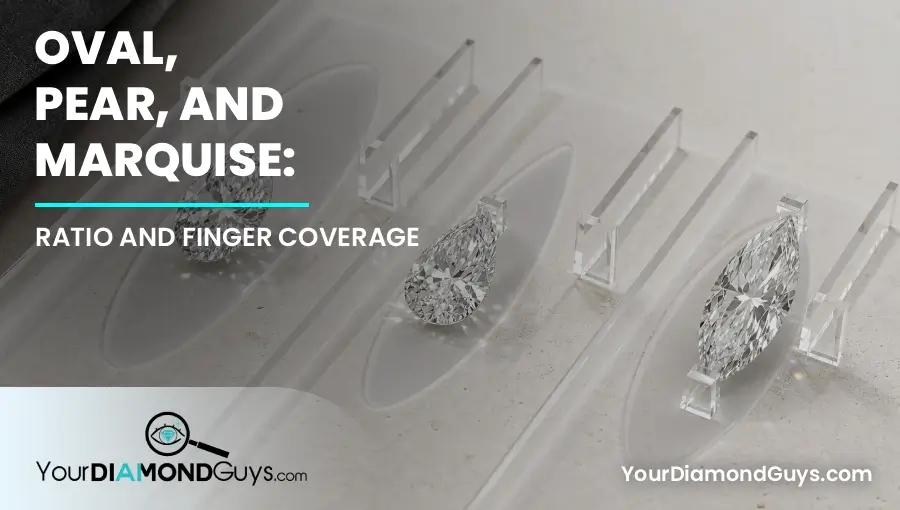
Oval, Pear, and Marquise: Ratio and Finger Coverage
By Rob Cornfield, Co-Founder of YourDiamondGuys.com. 30+ years in the global diamond trade. Specialist in diamond cut and light performance.
Here is the ratio truth, elongated diamonds look bigger because length gives coverage, but the wrong ratio can look awkward fast.
Length adds presence.
Width adds balance.
The ratio decides whether an oval, pear, or marquise looks elegant, stubby, skinny, or stretched.
For natural diamonds, I start with GIA because the report gives you the carat weight, measurements, and first facts worth checking before you compare stones.
Dealers do not judge elongated stones by carat alone. We read the outline first because the outline tells you whether the diamond will flatter a hand or fight it.
How This Fits Your Buying Decision
This is the ratio layer inside the diamond carat size and finger coverage guide. It explains why longer shapes can look bigger without always looking better.
What Length To Width Ratio Means
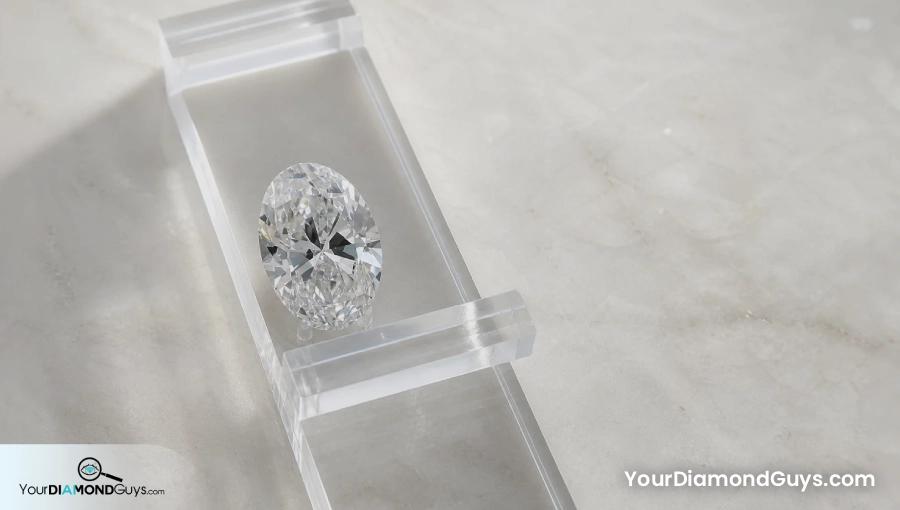
The ratio compares the diamond's length to its width. A 9 by 6 millimeter oval has a 1.50 ratio because the length is one and a half times the width.
Higher ratios look longer. Lower ratios look wider or softer. Neither is automatically better.
Buyer Friendly Ratio Ranges
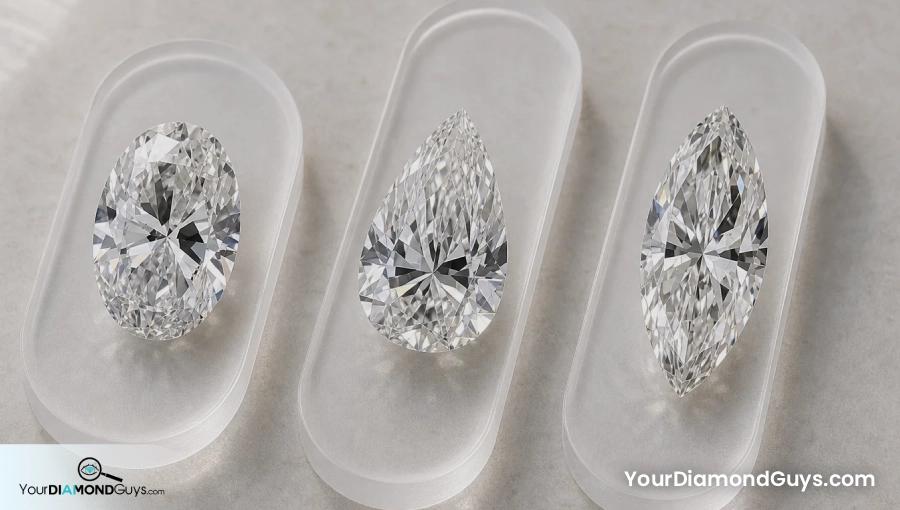
Use these ranges as starting points, then trust the outline and video.
| Shape | Common Ratio Range | Visual Effect |
|---|---|---|
| Oval | 1.35 to 1.50 | Balanced to elegant length |
| Pear | 1.45 to 1.75 | Soft teardrop to dramatic length |
| Marquise | 1.75 to 2.20 | Long finger coverage |
How Ratio Changes Finger Coverage
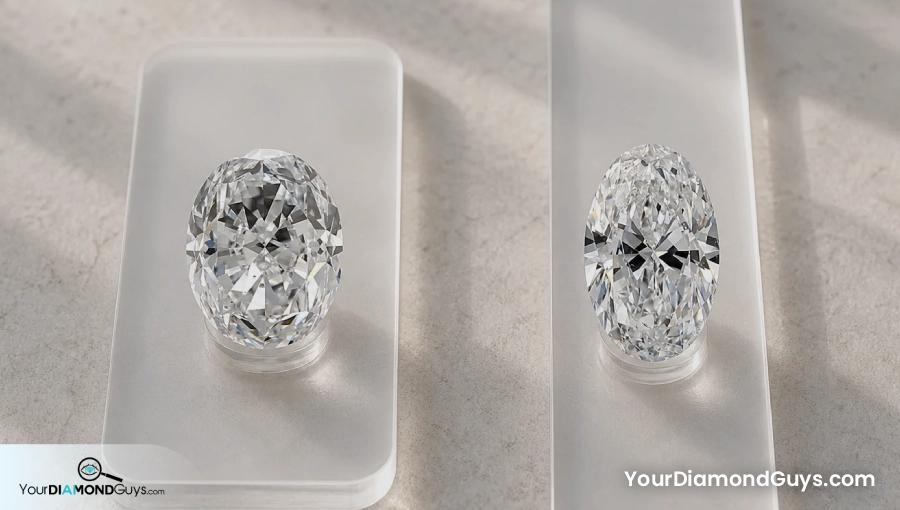
A longer ratio usually gives more up and down coverage on the finger. That can make the diamond feel larger than the carat weight.
Shorter ratios can feel fuller and softer. They work well when the buyer wants presence without a skinny outline.
Bow Tie Still Matters
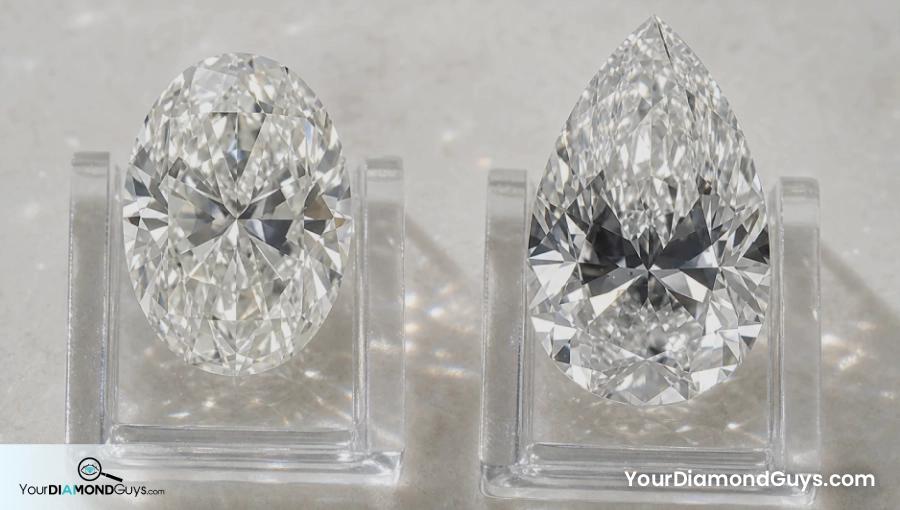
Elongated brilliant shapes often show bow tie, a dark band across the center. A little contrast is normal. A heavy black bow tie is a problem.
The bigger the face up spread, the more I want to see the actual video before I get excited.
Hand Shape Changes The Best Ratio
Shorter fingers often look good with gentle elongation. Longer fingers can carry more dramatic ratios.
The best size by ring size guide helps, but a hand photo or try on reference makes the choice easier.
The Ratio Shortlist
I would shortlist elongated diamonds by outline before I fall in love with the ratio. Numbers help, but shoulders, tips, belly, and symmetry decide whether the stone looks graceful. A good oval should not look like an egg. A pear should not look lopsided. A marquise should not look like a sliver.
The best ratio is the one that flatters the hand and keeps the stone lively. I like comparing two or three ratios in the same shape because the buyer usually reacts quickly. The right one feels obvious when the hand and diamond work together.
I also check the setting before calling the ratio finished. A long diamond in a tall or bulky setting can feel more dramatic than expected, while the same stone on a low thin band can look elegant and easy.
A Ratio Example In The Real World
A 1.50 carat oval at 1.30 ratio can look soft and wide. A 1.50 carat oval at 1.55 can look longer and larger.
The longer one wins coverage, but only if the shoulders look graceful and the bow tie stays controlled.
I would not trade a balanced outline for a skinny look just to chase length.
Ratio Mistakes I Would Avoid
- Do not pick the longest stone just because it covers more finger.
- Do not ignore bow tie in the center.
- Do not choose a pear without checking shoulder symmetry.
- Do not choose a marquise with fragile looking tips.
- Do not forget setting height and prong protection.
Questions To Ask About Ratio
- What is the exact length and width?
- What is the length to width ratio?
- Does the shape look balanced on the hand?
- Is the bow tie controlled in normal lighting?
- Does the setting protect points and tips?
Where To Compare Elongated Shapes
Use live listings as comparison tools, not automatic recommendations. I would compare similar stones on Ritani and Blue Nile, then judge each diamond by the length, width, ratio, bow tie, video, and setting style. If the stone does not earn it, the link does not save it.
My Buyer Recommendation
Choose ratio by look, not math alone.
The best elongated diamond gives you coverage, balance, and a lively center without making the shape look forced.
Reach out to Rob or me at YourDiamondGuys.com, or book your free consultation. We will look at the actual stone with you. No sales pitch.
Exploring Diamond Shapes
Questions? Reach out directly for a free consultation, or drop them in the Diamond Buyers Academy community — Rob and Josh answer personally.
Questions Buyers Ask Us
More Diamond Size Guides Worth Reading
These are the guides I would read next if you are still comparing size, shape, setting style, or value.
Shapes That Look Biggest
Compare which outlines give more coverage per carat and where they trade off.
Round vs Oval Size
Compare classic brightness against longer finger coverage and bow tie risk.
Best Size by Ring Size
Translate carat and millimeters into real finger coverage on the hand.
Prongs, Bezels, and Size Illusions
Balance visible diamond edge, metal weight, protection, and setting height.
Active Lifestyle Size Guide
Choose a size and setting that still works for daily wear.
*Some links on our site may earn us a small commission at NO EXTRA cost to you, helping us keep our content free*