Round vs Oval Size Comparison: Same Carat
By Rob Cornfield, Co-Founder of YourDiamondGuys.com. 30+ years in the global diamond trade. Specialist in diamond cut and light performance.
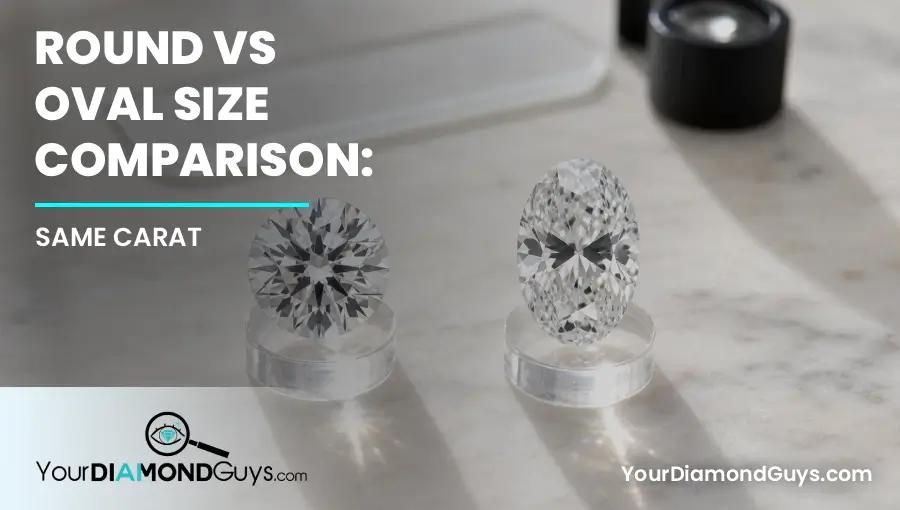
Here is the size answer, an oval usually looks larger than a round at the same carat because it spreads weight across length.
That does not make oval better.
It makes oval longer.
The smarter comparison is coverage, brightness, bow tie, symmetry, and price, not just which outline looks bigger.
For natural diamonds, I start with GIA because the report gives you the carat weight, measurements, and first facts worth checking before you compare stones.
I have seen buyers fall in love with the oval size on a search page and then hate the dark bow tie in real life. The extra length has to come with a good center.
How This Fits Your Buying Decision
This is the round versus oval comparison inside the diamond carat size and finger coverage guide. It helps buyers separate classic brightness from longer finger coverage.
Why Oval Looks Bigger
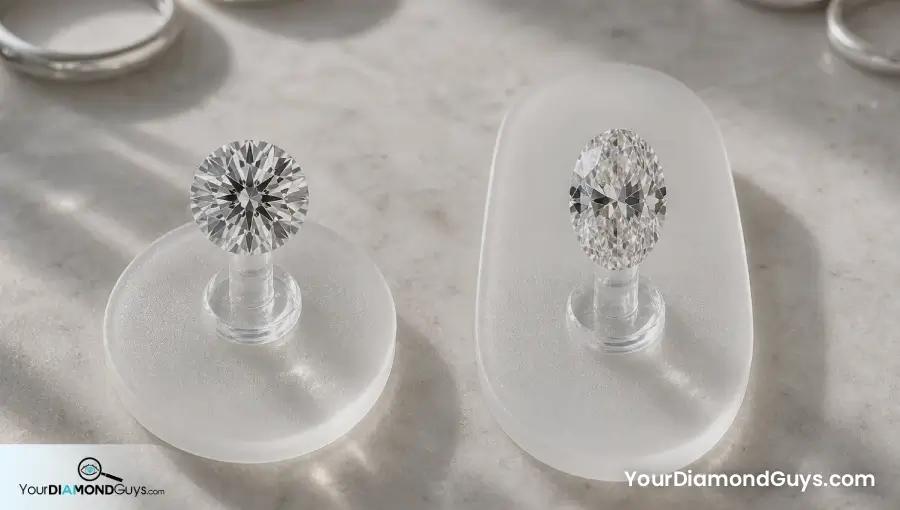
Oval diamonds stretch weight across length. A 1.50 carat oval can cover more finger than a 1.50 carat round even when the round has excellent cut.
The round gives you a compact outline. The oval gives you a longer outline. Your hand and style decide which one feels right.
| Same Carat | Round Typical Size | Oval Typical Size | What You See |
|---|---|---|---|
| 1.00 carat | About 6.4 to 6.5 mm | About 7.5 x 5.5 mm | Oval looks longer |
| 1.50 carat | About 7.3 to 7.4 mm | About 9 x 6.5 mm | Oval gives more finger coverage |
| 2.00 carat | About 8.0 to 8.2 mm | About 10 x 7 mm | Oval looks dramatic |
Why Round Still Wins For Some Buyers
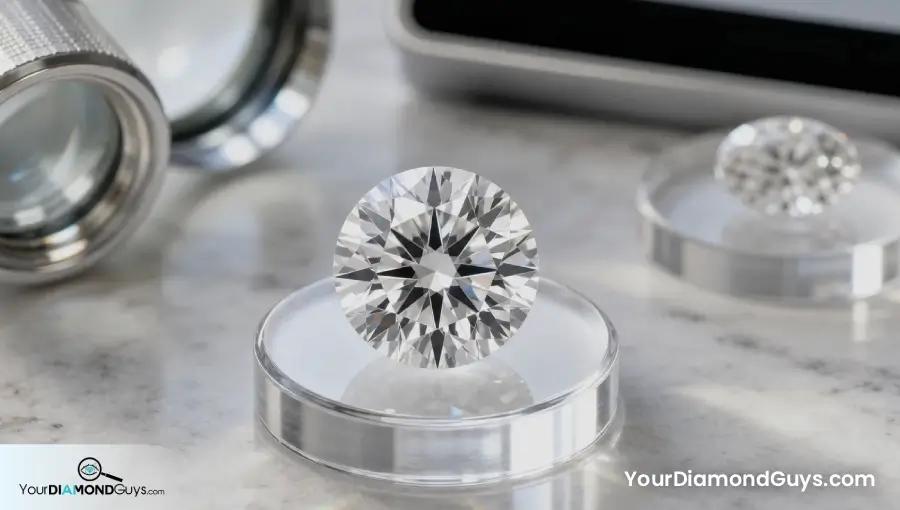
A strong round brilliant gives predictable brightness, fire, and symmetry. It is easier to screen by numbers than an oval.
For rounds, table 56 to 58 percent, depth 60 to 62.4 percent, crown angle 34 to 35 degrees, pavilion angle 40.6 to 41 degrees, Excellent polish and symmetry, and none to faint fluorescence keep the search cleaner.
The Oval Bow Tie Check
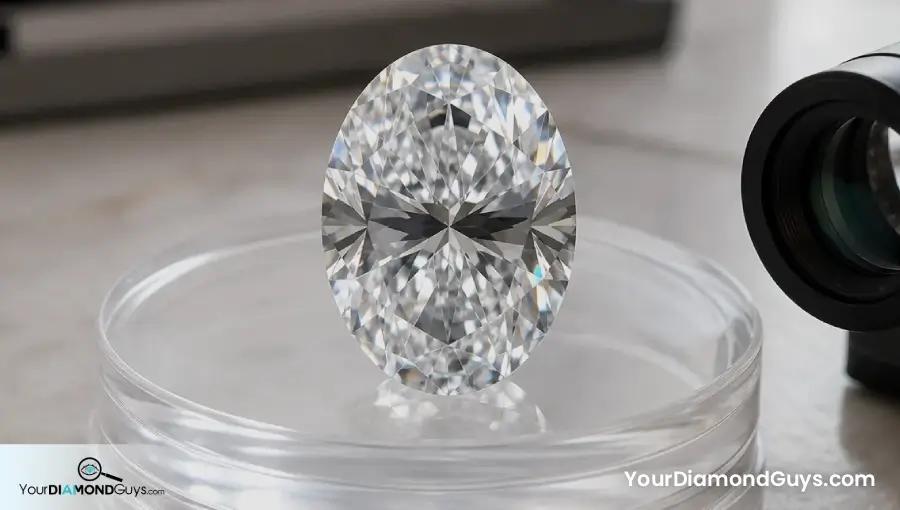
Bow tie is the oval issue buyers have to respect. A soft shadow can be normal. A heavy black band across the center is not something I would explain away.
Watch the video slowly. If the center keeps going dark, keep looking.
Price And Value Tradeoff
Ovals often give more visible size for the money. Rounds often command stronger pricing because demand is high and well cut rounds waste more rough.
The value call depends on the individual diamond. A weak oval is not a bargain just because it looks long.
Which One Looks Better On The Hand
Ovals elongate the finger. Rounds look classic and balanced. A thin band can make either center stone look larger, while a thick band can make both feel smaller.
Use the band width guide before you lock the setting.
The Round vs Oval Shortlist
I would shortlist a round and an oval only after deciding what the buyer wants more, classic sparkle or longer coverage. That sounds simple, but it stops a lot of wasted searching. A round and an oval are not just different outlines. They solve different visual problems.
The round has to prove cut quality. The oval has to prove bow tie control, outline, and brightness across the ends. Once each stone passes its own test, then the hand decides which one feels better.
When the oval is still in the running, I send the buyer back to the elongated shapes ratio guide and a real life size photo check. The ratio and the hand photo tell you whether the longer outline actually works.
A Round vs Oval Buying Example
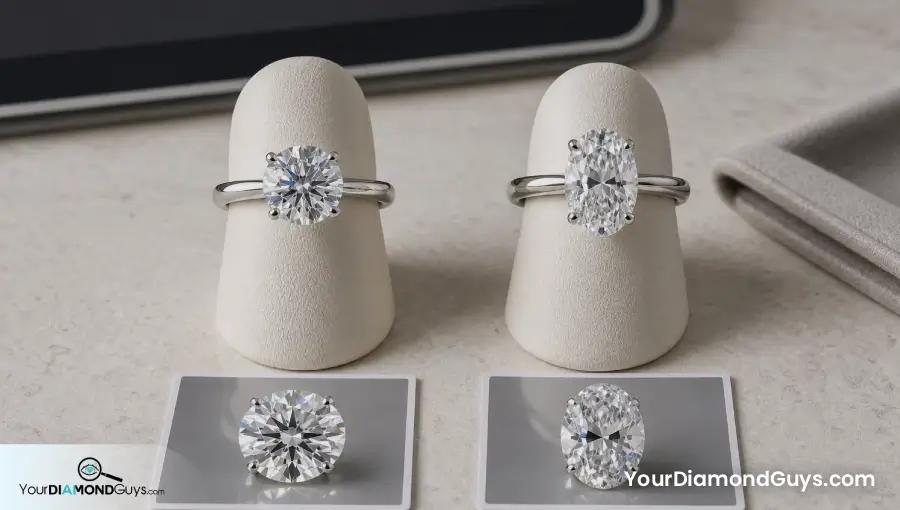
A buyer compares a 1.50 carat round and a 1.50 carat oval. The oval covers more finger. The round looks brighter in the video.
There is no universal winner.
If the buyer wants maximum coverage, I study the oval harder. If the buyer wants clean sparkle and simple screening, I lean round.
Round vs Oval Mistakes I Would Avoid
- Do not assume oval is better because it looks larger.
- Do not ignore bow tie.
- Do not compare round diameter to oval length as if they mean the same thing.
- Do not buy a round with weak cut just because round feels safe.
- Do not forget that setting width changes the final look.
Questions To Ask Before Choosing
- Do I want classic brightness or more finger coverage?
- Does the oval bow tie bother me?
- Does the round have strong cut numbers and video?
- Which shape looks better on the hand?
- Does the price match the actual beauty and spread?
Where To Compare Round And Oval
Use live listings as comparison tools, not automatic recommendations. I would compare similar stones on Ritani and Brilliant Earth, then judge each diamond by the shape, measurements, bow tie, cut proof, video, and price. If the stone does not earn it, the link does not save it.
My Buyer Recommendation
Choose oval when finger coverage is the priority and the bow tie is controlled.
Choose round when you want the most predictable sparkle and a classic outline. Either way, the actual stone has to prove itself.
Reach out to Rob or me at YourDiamondGuys.com, or book your free consultation. We will look at the actual stone with you. No sales pitch.
The Oval Diamond "Sweet Spot"
Questions? Reach out directly for a free consultation, or drop them in the Diamond Buyers Academy community — Rob and Josh answer personally.
Questions Buyers Ask Us
More Diamond Size Guides Worth Reading
These are the guides I would read next if you are still comparing size, shape, setting style, or value.
Carat vs Millimeters
Separate the weight on paper from the size your eye actually sees.
Elongated Shape Ratio Coverage
Judge oval, pear, and marquise length before the outline gets too stretched.
Shapes That Look Biggest
Compare which outlines give more coverage per carat and where they trade off.
Band Width and Proportion
Use band width to control how large the same center stone reads.
Real Life Size Photos
Use photo references without letting camera distance trick the decision.
*Some links on our site may earn us a small commission at NO EXTRA cost to you, helping us keep our content free*