Emerald Cut Size Guide: Why It Can Look Smaller
By Rob Cornfield, Co-Founder of YourDiamondGuys.com. 30+ years in the global diamond trade. Specialist in diamond cut and light performance.
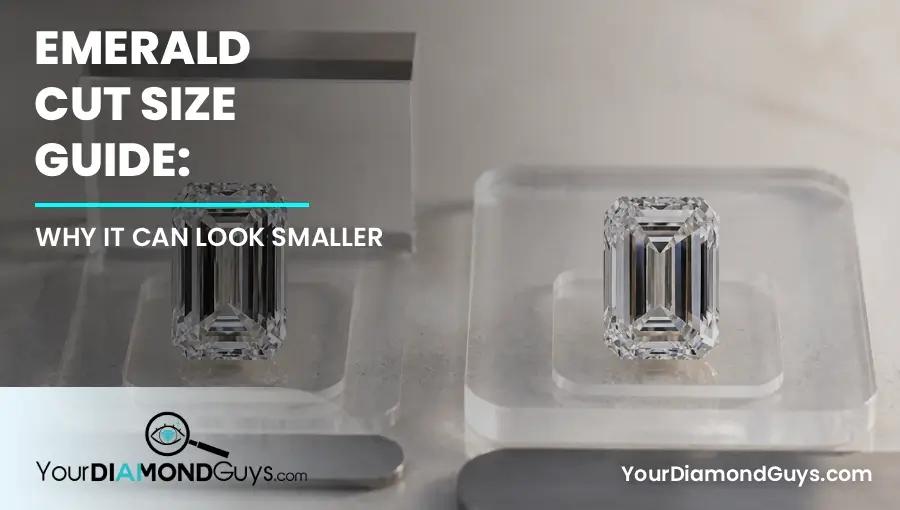
Here is the emerald cut warning, a bigger carat emerald can still look small if depth, corners, and step cut proportions hold the weight.
Emerald cuts are elegant.
They are also unforgiving.
You cannot buy them like rounds because the open step facets show size, clarity, windowing, and body color fast.
For natural diamonds, I start with GIA because the report gives you the carat weight, measurements, and first facts worth checking before you compare stones.
When I source emerald cuts, I look at transparency before I let the size impress me. A large sleepy emerald is just a large problem.
How This Fits Your Buying Decision
This is the step cut size check inside the diamond carat size and finger coverage guide. Emerald cuts need extra attention because spread, clarity, and transparency all show fast.
Why Emerald Cuts Can Face Up Smaller
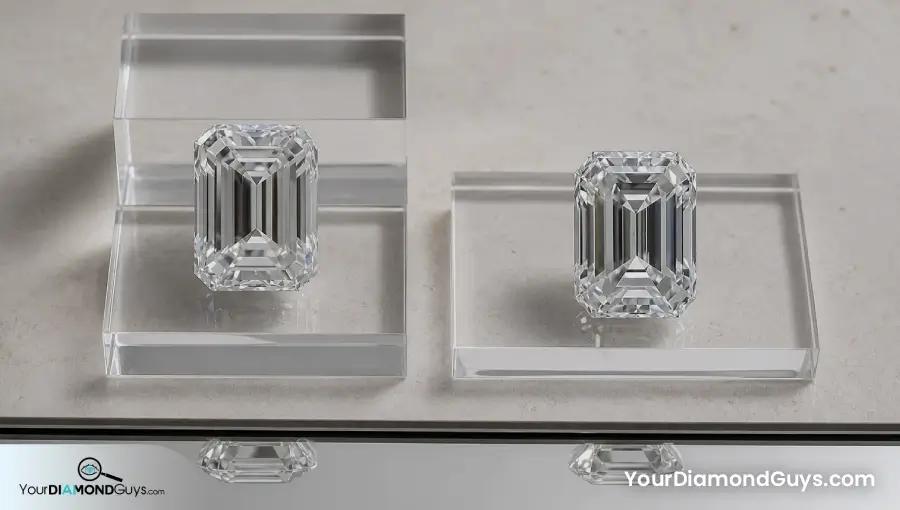
Emerald cuts have cropped corners and step facets. The shape can hold weight in depth and corners without giving you the same spread you expect from the carat number.
That is why length and width matter more than the carat label.
Emerald Cut Size Reference
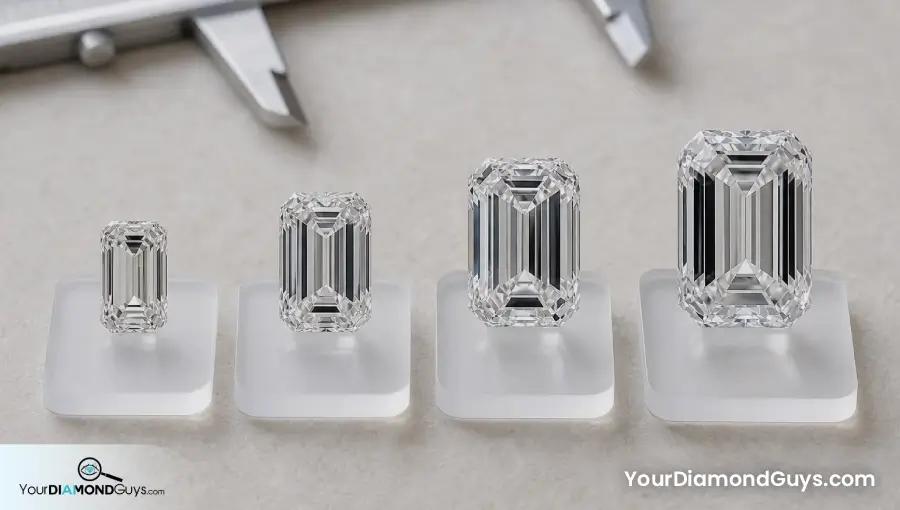
Use these as normal shopping ranges, then judge the actual diamond.
| Carat | Typical Emerald Face Up | Buyer Note |
|---|---|---|
| 1.00 | About 7 x 5 mm | Ratio changes the look a lot |
| 1.50 | About 8 x 6 mm | Check depth and transparency hard |
| 2.00 | About 8.5 to 9 x 6.5 mm | Clarity visibility increases |
| 3.00 | About 10 x 7 mm | Every issue becomes easier to see |
Do Not Trade Transparency For Size
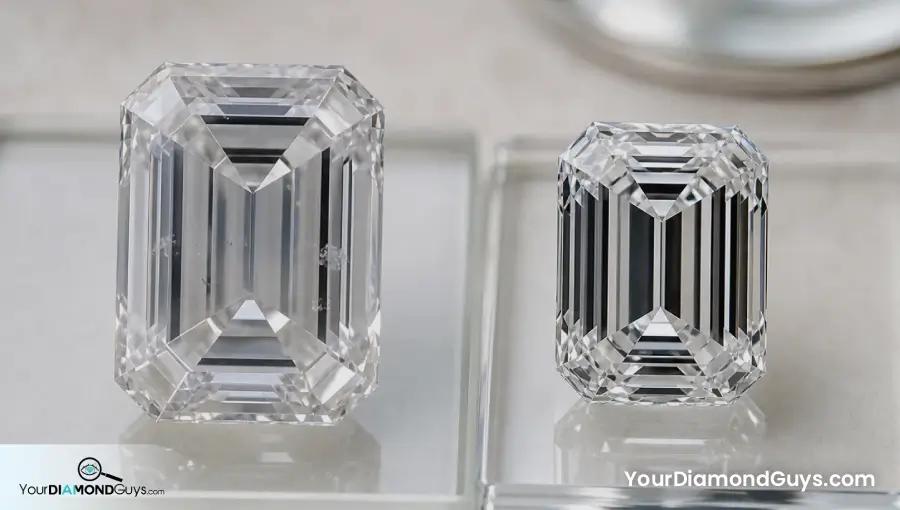
Emerald cuts do not hide problems well. Windowing, haze, and visible inclusions show faster because the facets act like broad mirrors.
If you chase a bigger footprint and give up transparency, the diamond can look glassy instead of crisp.
The Ratio Question
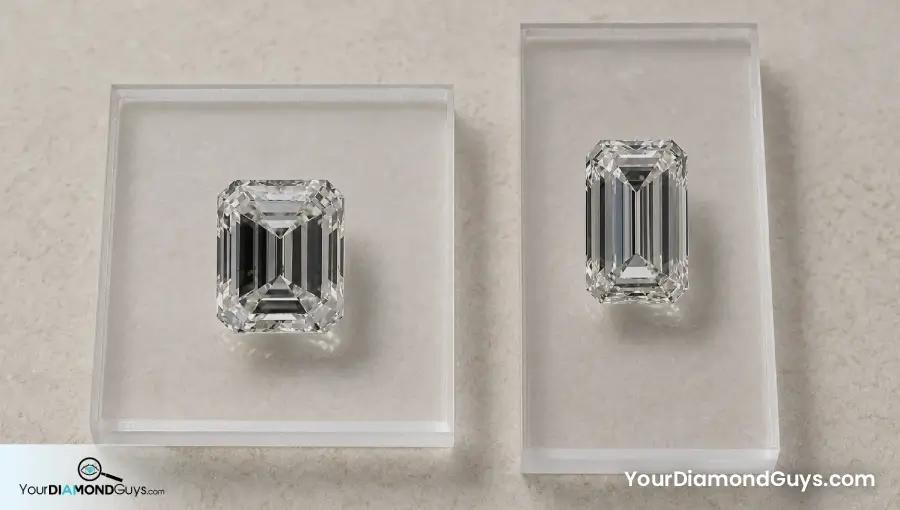
A shorter emerald can look strong and architectural. A longer emerald can lengthen the finger. I like the ratio when the outline looks balanced, not because a number says so.
Many buyers like a range around 1.30 to 1.50, but the corners, steps, and hand shape matter.
Setting Choices That Help
Emerald cuts often look larger with a thin band, clean prongs, and a setting that lets the rectangular outline breathe.
A heavy bezel can look stylish, but it can reduce the visible center. Use the prongs and bezels guide before you commit.
The Emerald Cut Shortlist
I would shortlist emerald cuts more slowly than most shapes. First I check length, width, and depth. Then I look for transparency, clean steps, and a center that does not window out. The stone has to look crisp before I care how large the carat number sounds.
This is one of the easiest shapes to overbuy on paper. A big emerald with haze or windowing will not look expensive in real life. A slightly smaller stone with clean steps and better spread often looks more refined.
An Emerald Cut Example
A 2.00 carat emerald looks tempting until you see it measures like a smaller stone and has a window through the center.
A 1.80 carat emerald with cleaner spread, better transparency, and a crisp step pattern can look more expensive.
This is where carat weight fools people. Emerald cuts punish shortcuts.
Emerald Cut Size Mistakes I Would Avoid
- Do not buy emerald cut size without checking transparency.
- Do not accept visible windowing because the carat is bigger.
- Do not ignore clarity in an open step cut.
- Do not compare emerald length to round diameter.
- Do not hide a weak outline under a heavy setting.
Questions To Ask About Emerald Cut Size
- What are the length, width, and depth measurements?
- Does the diamond face up normally for its weight?
- Can I see through the center too easily?
- Are inclusions visible without magnification?
- Does the ratio flatter the hand?
Where To Compare Emerald Cuts
Use live listings as comparison tools, not automatic recommendations. I would compare similar stones on Blue Nile and Brilliant Earth, then judge each diamond by the length, width, depth, transparency, video, and setting style. If the stone does not earn it, the link does not save it.
My Buyer Recommendation
Buy the emerald cut that looks clean, crisp, and balanced before you chase carat.
A slightly smaller emerald with better transparency beats a larger one that looks watery or sleepy.
Reach out to Rob or me at YourDiamondGuys.com, or book your free consultation. We will look at the actual stone with you. No sales pitch.
Why Emerald Cut Diamonds Exude Timeless Elegance
Questions? Reach out directly for a free consultation, or drop them in the Diamond Buyers Academy community — Rob and Josh answer personally.
Questions Buyers Ask Us
More Diamond Size Guides Worth Reading
These are the guides I would read next if you are still comparing size, shape, setting style, or value.
Carat vs Millimeters
Separate the weight on paper from the size your eye actually sees.
Depth Percentage and Size
Use depth as the quick check when carat weight looks better than spread.
Band Width and Proportion
Use band width to control how large the same center stone reads.
Prongs, Bezels, and Size Illusions
Balance visible diamond edge, metal weight, protection, and setting height.
Real Life Size Photos
Use photo references without letting camera distance trick the decision.
*Some links on our site may earn us a small commission at NO EXTRA cost to you, helping us keep our content free*