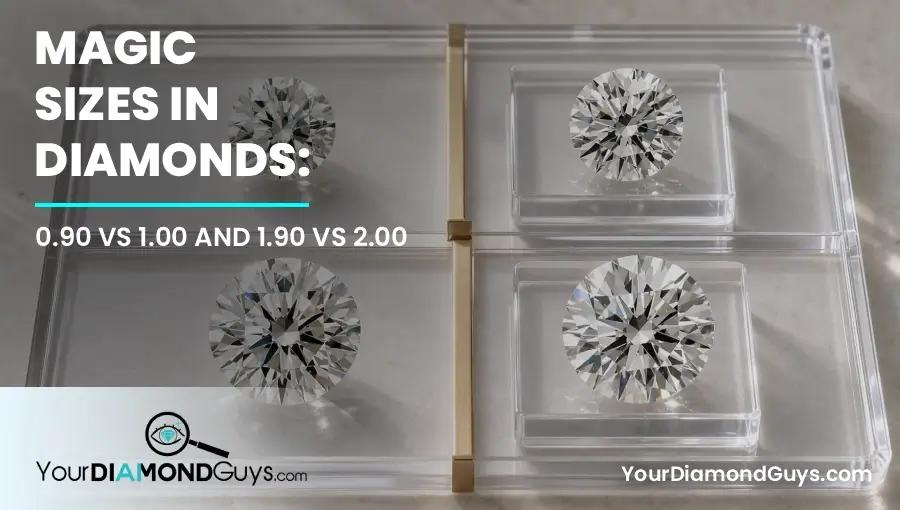
Magic Sizes In Diamonds: 0.90 vs 1.00 and 1.90 vs 2.00
By Josh Allen, Co-Founder of YourDiamondGuys.com. Fifth generation diamantaire with 30+ years in the global diamond trade. Former supplier to Tiffany & Co., Cartier, and Harry Winston.
Here is the price trap, magic sizes make buyers pay extra for a number that the eye often cannot see.
1.00 carat feels different from 0.95.
2.00 carats feels different from 1.90.
The ring often does not look much different, but the price can move because the market loves milestone numbers.
For natural diamonds, I start with GIA because the report gives you the carat weight, measurements, and first facts worth checking before you compare stones.
The trade has lived around these thresholds forever. A cutter knows a stone that finishes at 1.00 carat is easier to sell than one that finishes at 0.99, even when the visual difference is tiny.
How This Fits Your Buying Decision
This is the milestone pricing layer inside the diamond carat size and finger coverage guide. It helps buyers compare the number they want against the size the eye sees.
What Magic Sizes Are
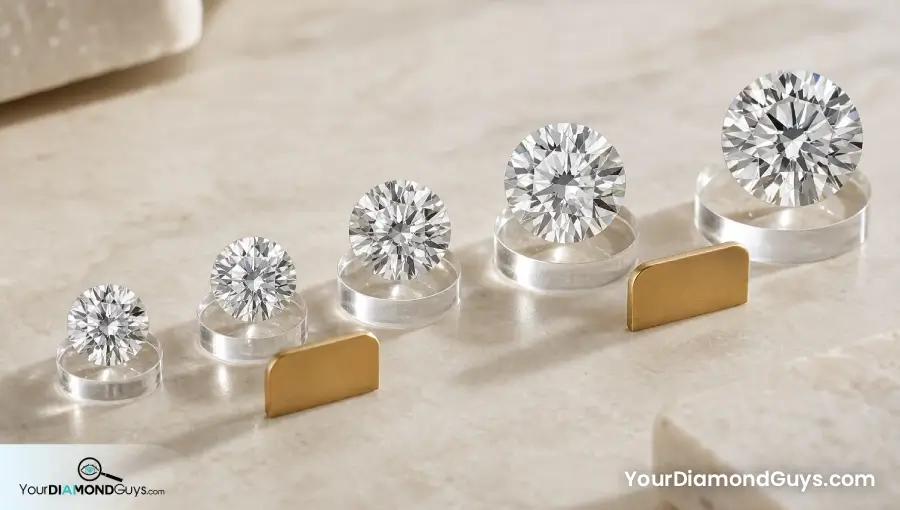
Magic sizes are popular carat marks buyers search for. The big ones are 0.50, 0.75, 1.00, 1.50, 2.00, 3.00, and beyond.
Demand clusters around those marks, so pricing can jump more than the visual size does.
Why Just Under Can Be Smart
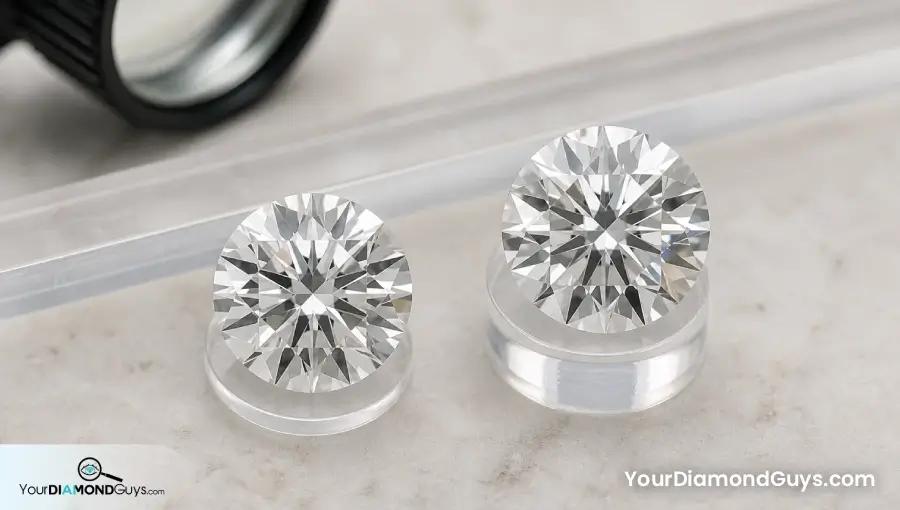
A well chosen 0.90 to 0.99 carat diamond can look very close to a 1.00 carat diamond once set.
The same idea works around 1.50 and 2.00 carats. The eye sees millimeters, not the psychological milestone.
| Milestone | Smart Under Size | Why It Works |
|---|---|---|
| 1.00 carat | 0.90 to 0.99 | Often similar face up look |
| 1.50 carat | 1.40 to 1.49 | Can free budget for cut or setting |
| 2.00 carat | 1.80 to 1.99 | Often close in visual presence |
| 3.00 carat | 2.70 to 2.99 | Needs strict spread and video checks |
Do Not Buy Under Size Blindly
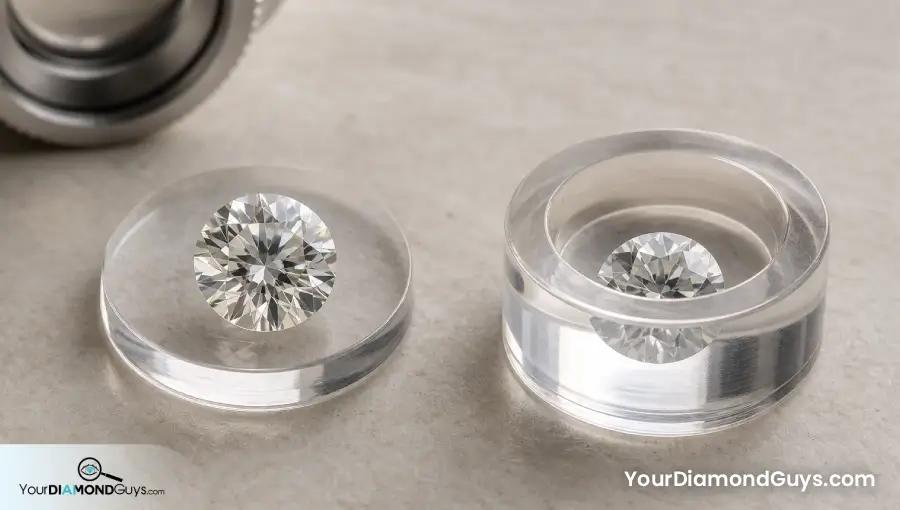
Just under only works when the millimeters are strong. A deep 0.95 carat stone can still look small.
Use carat vs millimeters and face up spread before you celebrate the price.
Where To Spend The Savings
I would usually put the savings into cut, better spread, a cleaner looking inclusion pattern, or a setting that supports the center stone.
Spending less only matters if the final diamond looks better for the money.
When The Full Milestone Makes Sense
Sometimes the milestone matters emotionally. If the buyer truly wants a 2.00 carat diamond and the budget supports a good one, that is fine.
Just do not buy a weak 2.00 because the number feels better than a stronger 1.90.
The Milestone Shortlist
I would always shortlist the milestone and the just under sizes together. Look at 1.00 next to 0.94. Look at 2.00 next to 1.90. Do not decide until the millimeters, cut, and videos are open side by side.
The smart move is not automatically buying smaller. The smart move is refusing to pay for a milestone unless the visual result earns the extra money. Sometimes it does. A lot of the time, the just under stone wins.
This is also where the best size by ring size guide helps. A just under stone can disappear as a compromise when the finger coverage already looks right.
A Magic Size Example
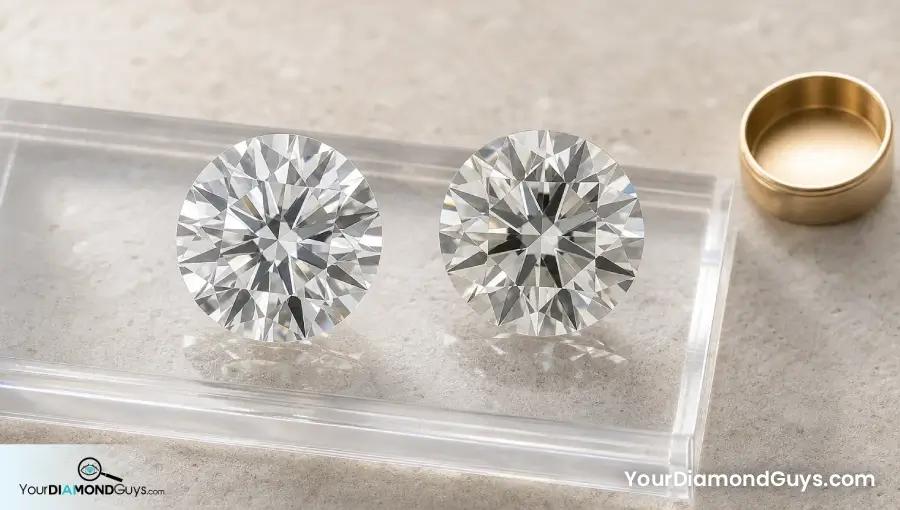
A buyer compares a 1.00 carat round and a 0.94 carat round. The 1.00 measures 6.32 millimeters. The 0.94 measures 6.30 millimeters and looks brighter.
On the hand, the size difference is tiny.
I would rather own the better cut 0.94 and use the savings where the eye notices it.
Magic Size Mistakes I Would Avoid
- Do not buy a milestone number with poor spread.
- Do not reject 0.90 to 0.99 carat diamonds without checking millimeters.
- Do not let a filter make the decision for you.
- Do not spend all the budget on carat and starve the cut.
- Do not assume every just under diamond is a deal.
Questions To Ask About Magic Sizes
- What does the milestone cost compared with just under?
- Are the millimeters actually different enough to see?
- Does the smaller stone have better cut or spread?
- Will the setting make the size difference disappear?
- Am I buying the diamond or buying the number?
Where To Compare Magic Size Pricing
Use live listings as comparison tools, not automatic recommendations. I would compare similar stones on Ritani and Blue Nile, then judge each diamond by the carat threshold, measurements, cut, video, and price per stone. If the stone does not earn it, the link does not save it.
My Buyer Recommendation
Always compare just under the milestone before you buy.
If the visual size is close and the smaller stone is better, take the smarter diamond and let the number go.
Reach out to Rob or me at YourDiamondGuys.com, or book your free consultation. We will look at the actual stone with you. No sales pitch.
You Need To Hear This Before Buying a Diamond Carat Size Is Not Actually What You Think Is
Questions? Reach out directly for a free consultation, or drop them in the Diamond Buyers Academy community — Rob and Josh answer personally.
Questions Buyers Ask Us
More Diamond Size Guides Worth Reading
These are the guides I would read next if you are still comparing size, shape, setting style, or value.
Carat vs Millimeters
Separate the weight on paper from the size your eye actually sees.
Face Up Spread and Hidden Weight
Find deep stones that carry weight where the eye cannot use it.
Depth Percentage and Size
Use depth as the quick check when carat weight looks better than spread.
MM to Carat Size Chart
Check normal measurement ranges by shape before judging one listing.
Best Size by Ring Size
Translate carat and millimeters into real finger coverage on the hand.
*Some links on our site may earn us a small commission at NO EXTRA cost to you, helping us keep our content free*