Diamond Size Chart by Shape: MM to Carat
By Josh Allen, Co-Founder of YourDiamondGuys.com. Fifth generation diamantaire with 30+ years in the global diamond trade. Former supplier to Tiffany & Co., Cartier, and Harry Winston.
Here is the chart rule, diamond size charts get you close, but the actual millimeter measurements on the report decide how big the diamond looks.
Carat weight gives you the category. Millimeters give you the footprint. That is why two diamonds with the same carat weight can look different once they hit the hand.
For natural diamonds, I start with GIA because the report gives you the carat weight, measurements, and first facts worth checking before you compare stones.
Inside the trade, we never buy a stone from a chart alone. We use the chart to spot weird measurements, then we look at depth, shape, video, and price.
How This Fits Your Buying Decision
Use this page as the chart layer inside the diamond carat size and finger coverage guide. It gives the normal measurement ranges before the individual stone has to prove itself.
How To Use This Chart
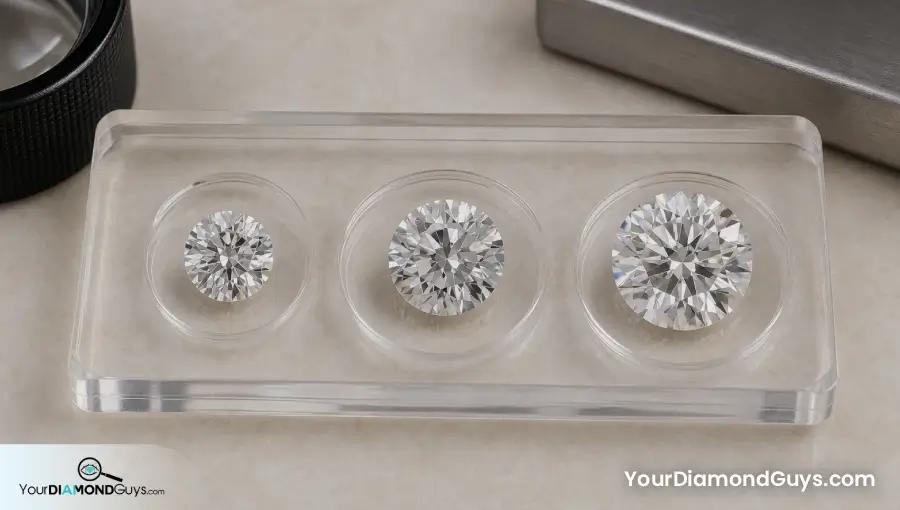
Use the chart as a normal range check. A diamond outside the range is not automatically bad, but it deserves a closer look.
A stone that faces up smaller than the range often hides weight in the body. A stone that faces up larger than the range needs a cut and durability check, because shallow stones can look watery or weak.
Round Diamond MM To Carat Reference
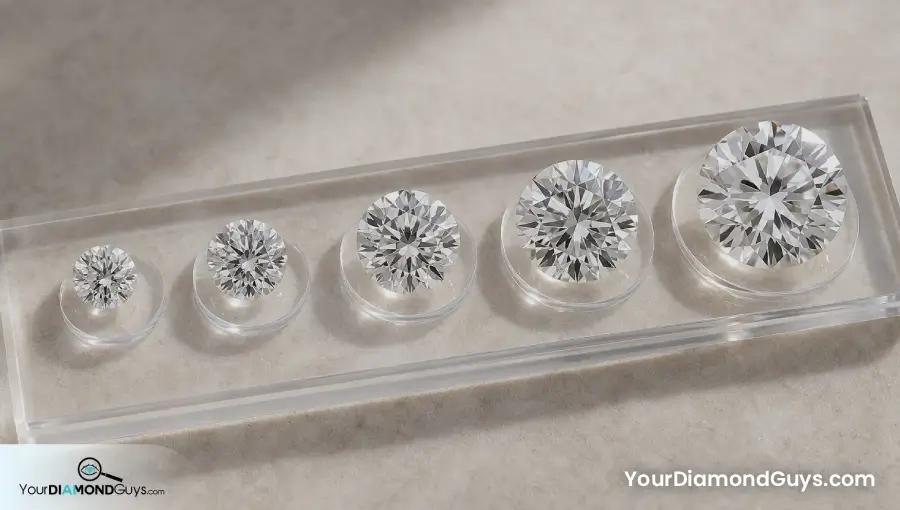
Round diamonds are the easiest place to learn the difference between weight and spread because the diameter gives you a clean comparison.
| Carat | Typical Round Diameter | Buyer Note |
|---|---|---|
| 0.50 | About 5.0 to 5.2 mm | Good daily size when cut is bright |
| 0.75 | About 5.8 to 6.0 mm | Strong value zone before bigger price jumps |
| 0.90 | About 6.2 to 6.3 mm | Often close to the 1 carat look |
| 1.00 | About 6.4 to 6.5 mm | Check depth and girdle before price |
| 1.50 | About 7.3 to 7.4 mm | Cut quality becomes easier to see |
| 2.00 | About 8.0 to 8.2 mm | Be stricter on spread and performance |
Fancy Shape MM To Carat Reference
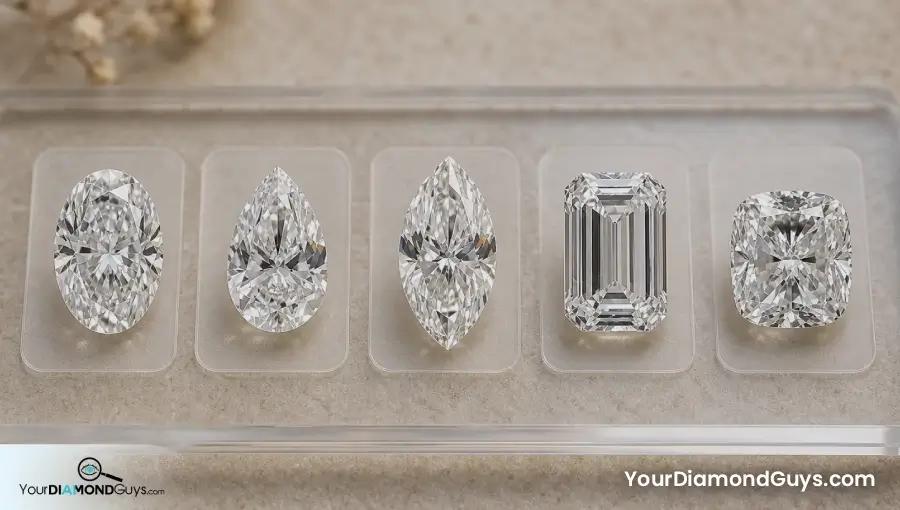
Fancy shapes need length and width, not just one diameter. That is why an oval, emerald, pear, cushion, radiant, and marquise can feel totally different at the same weight.
| Shape | 1 Carat Typical Face Up | Why It Varies |
|---|---|---|
| Oval | About 7.5 x 5.5 mm | Ratio and bow tie control the look |
| Pear | About 8.5 x 5.5 mm | Length adds coverage, tip needs protection |
| Marquise | About 10 x 5 mm | Huge coverage when ratio is balanced |
| Emerald | About 7 x 5 mm | Depth and corners can hold weight |
| Cushion | About 6 x 5.8 mm | Facet style and depth change spread |
| Radiant | About 6.5 x 5.5 mm | Depth and outline change the footprint |
Why Ranges Beat Exact Numbers
Diamond cutting is not a factory stamp. A cutter makes choices about weight, beauty, symmetry, yield, and price.
That is why you want a range. The range tells you what normal looks like, then the video tells you whether the stone deserves your money.
How This Fits The Carat Size Cluster
Use this chart after reading the carat vs millimeters guide and before you judge hidden weight.
The chart gives you the map. The individual stone still has to pass the cut check.
The Shortlist Test I Would Use
After the chart narrows the search, I would shortlist only diamonds that sit close to the expected range and still look bright in video. A diamond that measures large but looks flat is not a win. A diamond that measures small needs a clear reason and a better price.
This is where a lot of online buying goes sideways. Buyers sort by carat, then price, then maybe glance at measurements. I would flip that. Shape first, measurements second, cut and video third, price last. That order keeps you from rewarding a stone that only looks good inside a filter.
For shape specific checks, keep the emerald cut size guide and cushion cut size guide open beside the chart. Those two shapes are where weight hiding and spread confusion show up fast.
A Real Chart Example
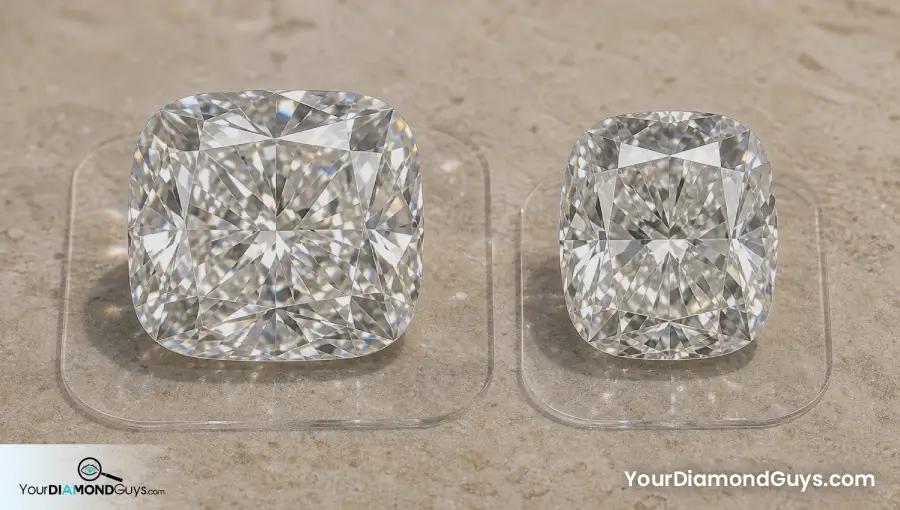
Say you compare two 1.00 carat cushions. One measures 6.4 by 6.2 millimeters. The other measures 5.8 by 5.7 millimeters.
Most buyers see the same carat weight and expect the same size. I see a spread difference that deserves an explanation.
The smaller stone could be deep, thick girdled, or cut for weight retention. That does not make it wrong, but it has to be priced like the stone it is.
Chart Mistakes I Would Skip
- Do not treat chart numbers as guarantees.
- Do not compare round diameter against fancy shape length.
- Do not ignore depth when the millimeters look small.
- Do not chase the largest spread if the diamond looks flat.
- Do not forget that finger size and setting style change the final look.
Questions To Ask Before You Buy
- What are the exact length, width, and depth measurements?
- Does the diamond face up normally for its shape and carat?
- Is the stone deep, shallow, or within a healthy range?
- Does the video show strong brightness across the whole face?
- Does the price reflect the actual spread?
Where To Compare Chart Ranges
Use live listings as comparison tools, not automatic recommendations. I would compare similar stones on Blue Nile and Brilliant Earth, then judge each diamond by the shape, carat weight, measurements, depth, video, and price. If the stone does not earn it, the link does not save it.
My Buyer Recommendation
Use the chart to catch problems, not to pick the diamond.
The best buy is the stone that gives you healthy spread, strong light, a clean enough look, and the right price for the actual diamond.
Reach out to Rob or me at YourDiamondGuys.com, or book your free consultation. We will look at the actual stone with you. No sales pitch.
Diamond Size vs. Carat Weight: What Really Matters?
Questions? Reach out directly for a free consultation, or drop them in the Diamond Buyers Academy community — Rob and Josh answer personally.
Questions Buyers Ask Us
More Diamond Size Guides Worth Reading
These are the guides I would read next if you are still comparing size, shape, setting style, or value.
Carat vs Millimeters
Separate the weight on paper from the size your eye actually sees.
Face Up Spread and Hidden Weight
Find deep stones that carry weight where the eye cannot use it.
Depth Percentage and Size
Use depth as the quick check when carat weight looks better than spread.
Elongated Shape Ratio Coverage
Judge oval, pear, and marquise length before the outline gets too stretched.
Best Size by Ring Size
Translate carat and millimeters into real finger coverage on the hand.
*Some links on our site may earn us a small commission at NO EXTRA cost to you, helping us keep our content free*