Face Up Spread: How To Avoid Hidden Weight
By Rob Cornfield, Co-Founder of YourDiamondGuys.com. 30+ years in the global diamond trade. Specialist in diamond cut and light performance.
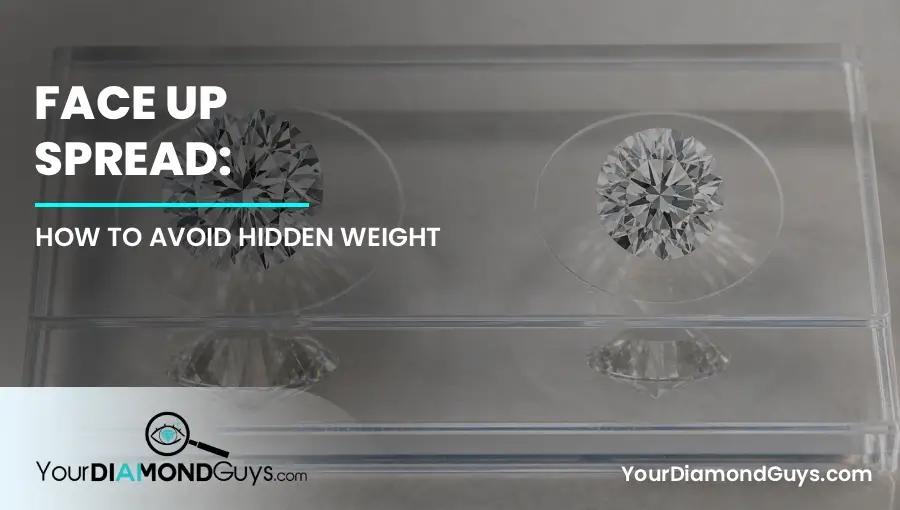
Here is the weight trap, face up spread tells you whether the diamond shows its carat weight or hides it underneath the table.
Carat weight sounds objective. Spread shows the truth. A diamond can weigh more and still look smaller because the weight sits in the depth, pavilion, girdle, or shape outline.
For natural diamonds, I start with GIA because the report gives you the carat weight, measurements, and first facts worth checking before you compare stones.
I have rejected plenty of stones that looked impressive by weight and disappointing by spread. The cutter saved the carat number. The buyer would have paid for weight the eye never sees.
How This Fits Your Buying Decision
This is the hidden weight check inside the diamond carat size and finger coverage guide. Read it when the carat weight looks strong but the millimeters look small.
What Face Up Spread Means
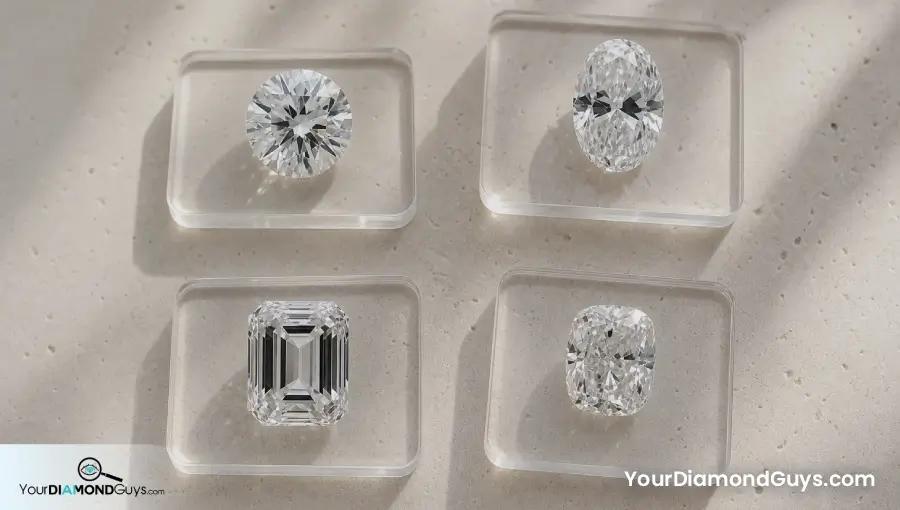
Face up spread is the visible footprint of the diamond from the top. For rounds, it comes mostly from diameter. For fancy shapes, it comes from length and width.
The report gives you the measurements. Your job is to compare those measurements against normal ranges for the shape and carat weight.
Where Hidden Weight Sits
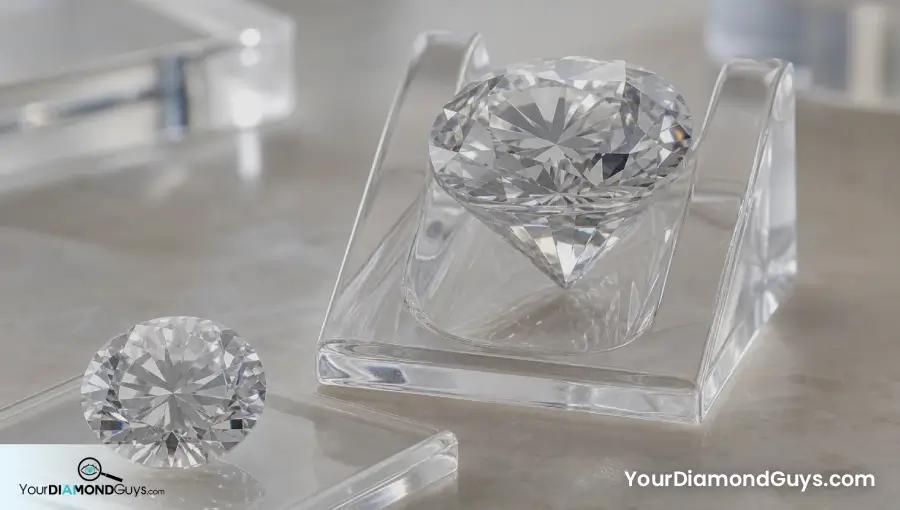
Hidden weight usually sits where the eye does not enjoy it. It can sit in excess depth, a heavy pavilion, a thick girdle, bulky corners, or a bottom heavy fancy shape.
That weight can push the stone over a pricing threshold without giving you more visible size.
| Hidden Weight Area | What It Does | Buyer Move |
|---|---|---|
| Extra depth | Makes the stone face up smaller | Compare depth percentage and video |
| Thick girdle | Adds weight around the edge | Check girdle description |
| Heavy pavilion | Can weaken light return | Study cut and brightness |
| Bulky corners | Common in cushions and radiants | Compare length and width |
| Odd ratio | Changes coverage and balance | Use shape specific expectations |
The Depth Warning
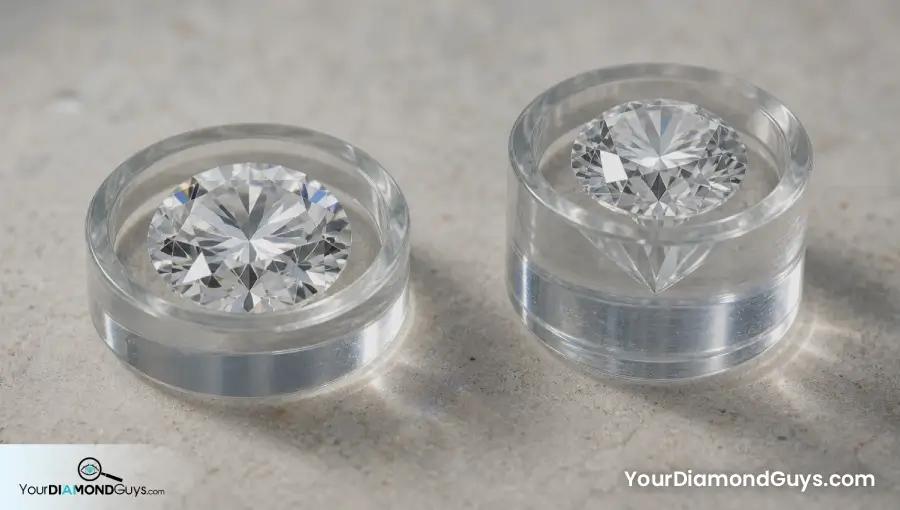
Depth is the first place I look when a diamond looks small for its weight.
For round brilliants, a depth of 60 to 62.4 percent keeps the search clean when the other numbers support it. Go outside that range and the stone needs stronger proof.
Fancy shapes do not use one universal target, but the logic stays the same. Weight below the face has to earn its keep.
Spread Is Not The Same As Beauty
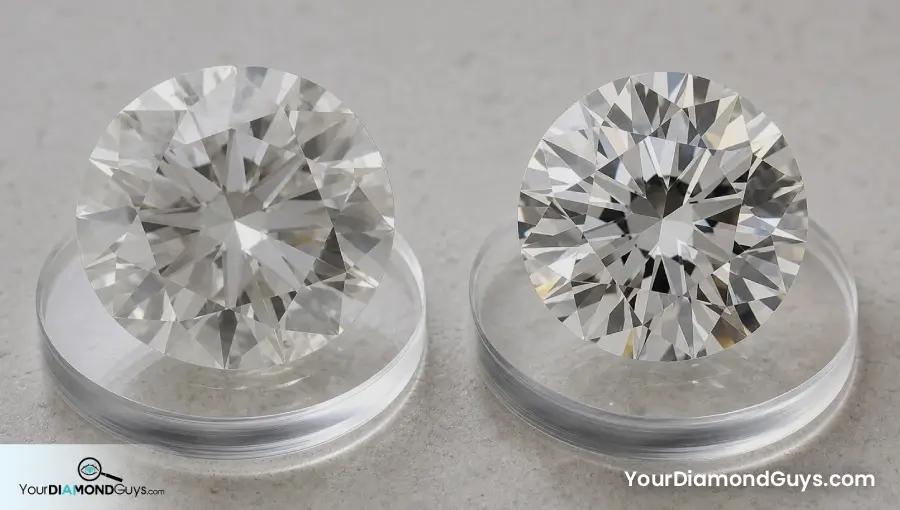
A wide diamond can still be weak. Shallow stones can leak light, look watery, or lose contrast.
That is why spread and cut have to travel together. You want a diamond that faces up correctly and performs well in normal lighting.
How To Use This With The Size Chart
Start with the diamond size chart by shape. Then compare the exact measurements against the chart and check depth percentage.
If the stone is small for its weight, ask why before you compare price.
The Spread Scorecard
Before I approve a diamond with possible hidden weight, I want the spread story to make sense. The millimeters should be reasonable for the carat. The depth should not explain away too much lost size. The girdle should not look like a storage place for extra weight.
Then I compare the video against the report. A stone can face up correctly and still look weak. A stone can sit a little outside a range and still be beautiful. The scorecard is not a machine decision. It is a way to make sure the carat weight, spread, cut, and price all tell the same story.
A Hidden Weight Example
Two round diamonds both weigh 1.20 carats. One faces up around 6.9 millimeters. The other faces up around 6.6 millimeters.
The smaller looking one can still carry the same weight. It just carries it where your eye does not see it.
That stone needs a price adjustment, a cut explanation, or a pass.
Hidden Weight Mistakes I Would Avoid
- Do not assume bigger carat means bigger look.
- Do not ignore a small diameter on a round diamond.
- Do not ignore length and width on fancy shapes.
- Do not accept a deep discount until you know why it exists.
- Do not buy spread alone if light return looks weak.
Questions To Ask Before You Buy
- Does this diamond face up normally for its carat weight?
- What is the depth percentage?
- Is the girdle thick enough to hold extra weight?
- Does the video show dark or watery areas?
- Is the price adjusted for the smaller visual footprint?
Where To Compare Spread Proof
Use proof heavy sellers as comparison libraries, not automatic recommendations. I would compare cut evidence on Whiteflash and Brian Gavin Diamonds, then decide whether the actual diamond earns the premium. The proof matters more than the name.
My Buyer Recommendation
Do not pay full visual size money for hidden weight.
A diamond should earn its carat weight with healthy spread, solid cut, and a price that matches what you actually see.
Reach out to Rob or me at YourDiamondGuys.com, or book your free consultation. We will look at the actual stone with you. No sales pitch.
How Much Should I Spend On Diamonds
Questions? Reach out directly for a free consultation, or drop them in the Diamond Buyers Academy community — Rob and Josh answer personally.
Questions Buyers Ask Us
More Diamond Size Guides Worth Reading
These are the guides I would read next if you are still comparing size, shape, setting style, or value.
Carat vs Millimeters
Separate the weight on paper from the size your eye actually sees.
MM to Carat Size Chart
Check normal measurement ranges by shape before judging one listing.
Depth Percentage and Size
Use depth as the quick check when carat weight looks better than spread.
Round vs Oval Size
Compare classic brightness against longer finger coverage and bow tie risk.
Magic Sizes and Price Jumps
Compare milestone weights against just-under stones before paying for the number.
*Some links on our site may earn us a small commission at NO EXTRA cost to you, helping us keep our content free*