Black vs White Diamond Inclusions: What Buyers Notice

By Josh Allen, Co-Founder of YourDiamondGuys.com. Fifth generation diamantaire with 30+ years in the global diamond trade. Former supplier to Tiffany & Co., Cartier, and Harry Winston.
Black inclusions usually show faster than white inclusions. That does not mean every white mark is safe, but contrast is a big part of the clarity decision.
A black crystal under the table is one of the first things I look for. It pulls the eye because it fights the diamond's brightness.
The GIA plot names the inclusion type. The video tells you the color, contrast, and reflection pattern.
Trade desk rule: black in the center gets priced like a real problem, not like a tiny technical note.
Black Inclusions Pull The Eye First
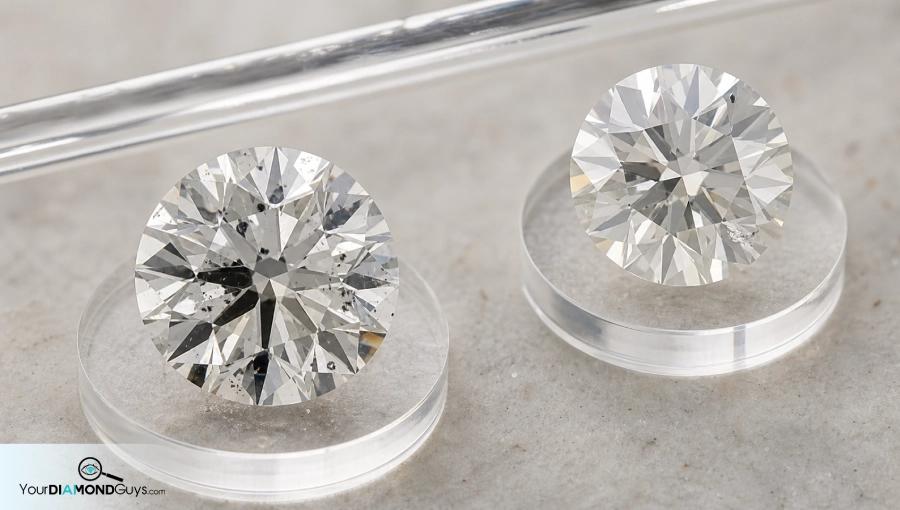
Black crystals, dark needles, and dark reflected marks get noticed quickly, especially under the table. Read the crystal guide when the plot lists a crystal.
If the black mark flashes every time the stone turns, it is not a hidden inclusion. It is part of the look.
White Marks Can Still Break Transparency
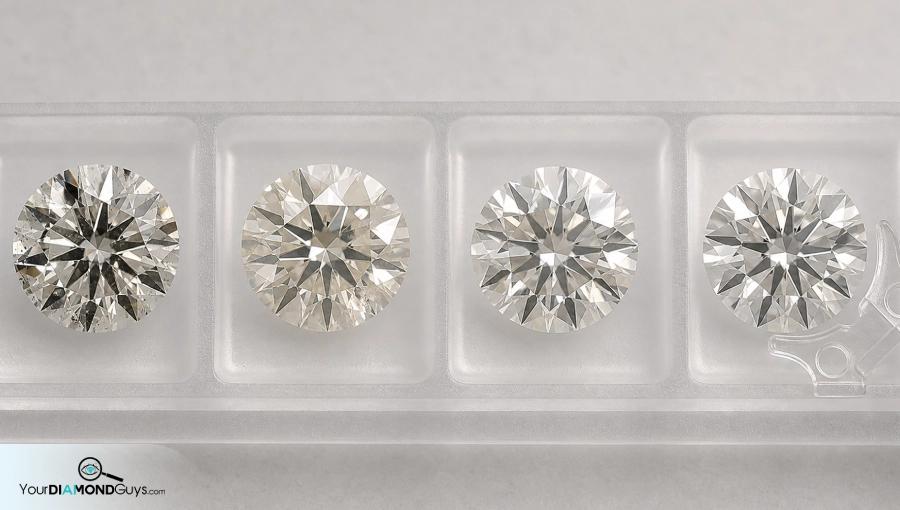
White feathers and clouds can stay quiet, or they can make the diamond look hazy. A white mark is not automatically good. Use cloud and haze checks when transparency looks weak.
| Inclusion Look | Usual Risk | Buyer Move |
|---|---|---|
| Tiny white edge mark | Low visibility | Check durability |
| Black table crystal | High distraction | Usually move on |
| White cloud patch | Transparency risk | Compare normal lighting |
| Black reflected mark | Repeated distraction | Rotate video slowly |
Color, Size, And Location Work Together
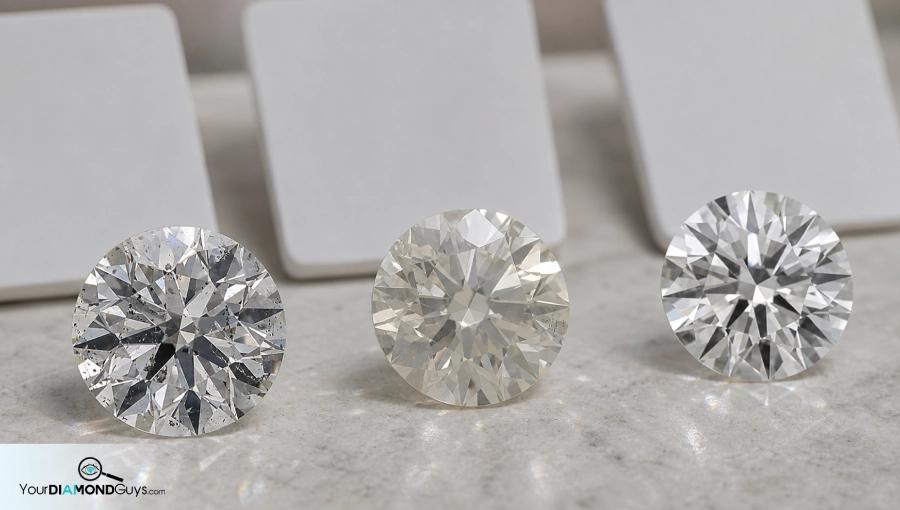
A small black mark near the edge can be fine. A larger white feather reaching the surface can be serious. Color matters, but location and durability finish the decision.
Do not let the phrase white inclusion make you lazy. Ask whether it reaches the surface, affects transparency, or sits where the eye lands first.
When Reflections Multiply The Problem
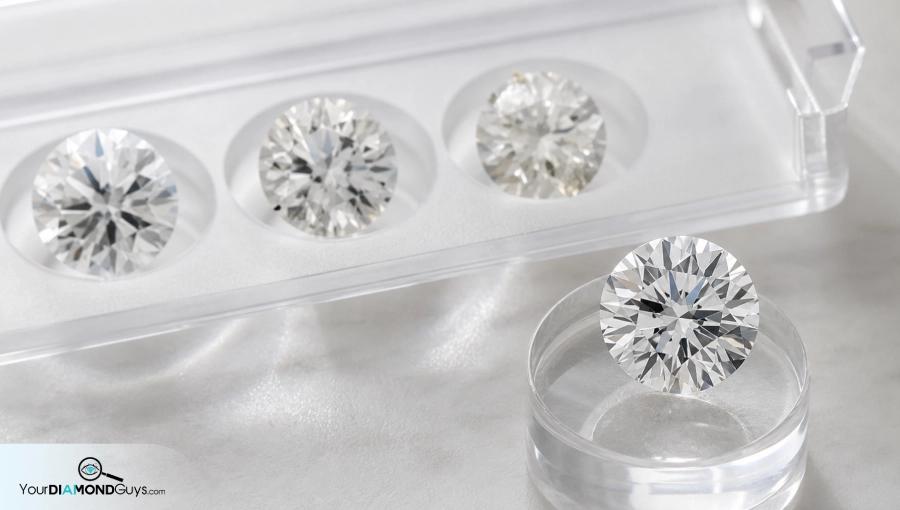
One black inclusion can reflect around the pavilion and look like several. The plot helps you avoid panic, but the face up view still matters. If the repeated reflection is obvious, price has to respect it.
This is common in videos where the diamond turns slowly and the same mark flashes in multiple facets.
Contrast Links To Check Next
- Use eye clean diamonds to judge normal viewing.
- Use feather inclusions when the white mark looks like a crack line.
- Use busy inclusions when multiple marks compete with sparkle.
Compare Under The Same Lighting
Use videos on Brilliant Earth and Blue Nile only when lighting and angle are comparable. A black inclusion can disappear in flattering light and show up immediately in a normal view.
If the seller gives you only one polished angle, ask for more or move on.
Questions To Ask About Contrast
- Is the inclusion black, white, transparent, or reflective?
- Does the mark sit under the table or near the edge?
- Does it flash dark as the diamond turns?
- Is the lower price enough to compensate for the contrast?
Black vs. White Inclusions: Why Your Diamond Clarity Doesn't Tell the Whole Story
Questions? Reach out directly for a free consultation, or drop them in the Diamond Buyers Academy community — Rob and Josh answer personally.
Black And White Inclusion FAQs
*Some links on our site may earn us a small commission at NO EXTRA cost to you, helping us keep our content free*