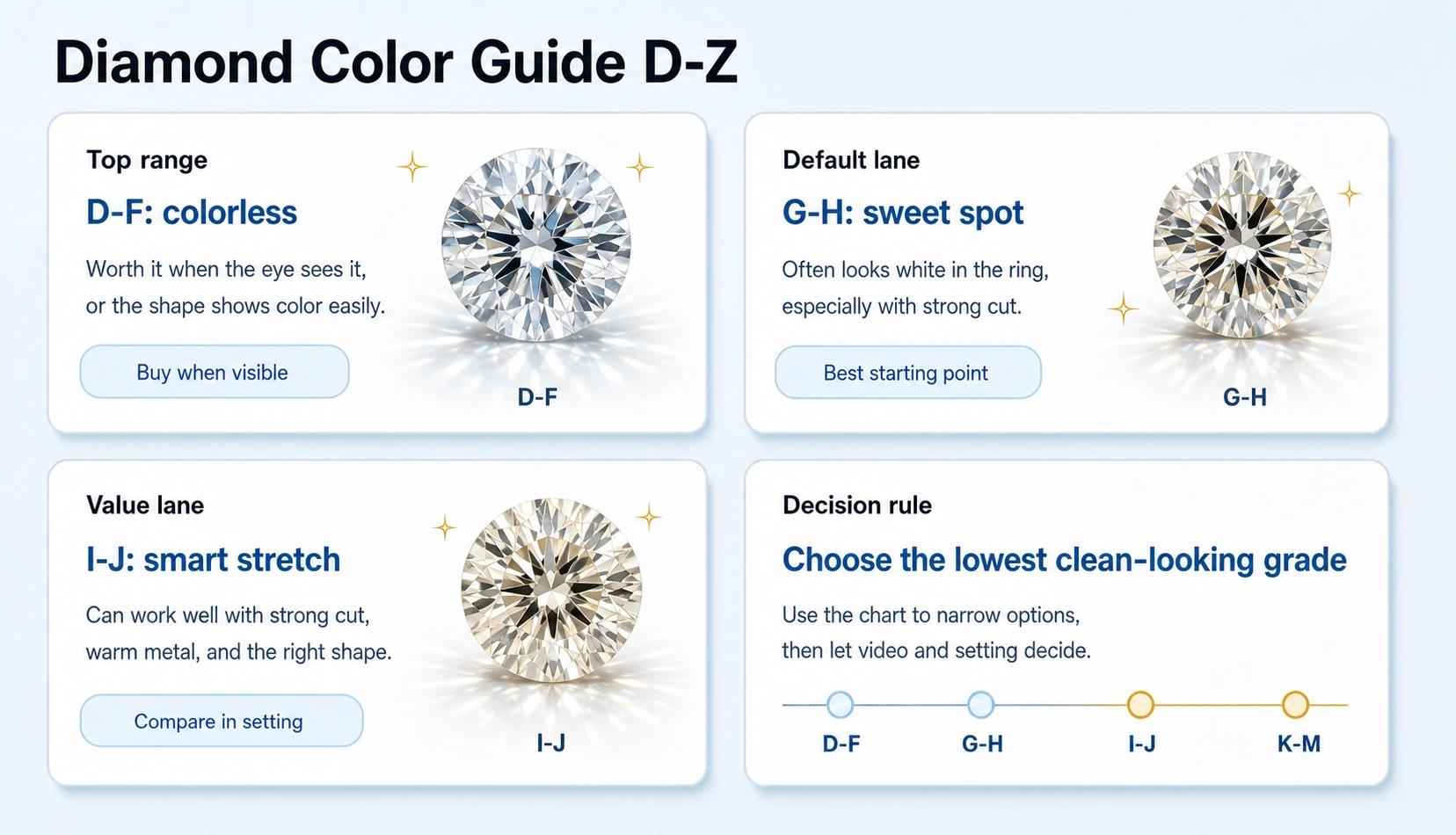
Diamond Color Guide
Start with the full D to Z scale, then learn where buyers usually get the best value.
Free expert guidance by email or video chat.
No pressure, No sales pitch. Just honest help from diamond experts.
By Josh Allen, Co-Founder — YourDiamondGuys.com Josh has over 30 years of experience in the global diamond trade, sourcing from Mumbai, Tel Aviv, and Antwerp, and has supplied diamonds to Tiffany, Cartier, Harry Winston, and more.
Start here, diamond color is not about chasing D, it is about finding the lowest grade that still looks white enough in the actual diamond.
Most buyers overpay for color because the letter feels safe. I get it. Nobody wants a yellow looking diamond. But the real question is simpler, does the stone look good in the shape, setting, lighting, and size you are actually buying?
GIA explains the diamond color scale from D to Z. Use that scale as the map, then let the actual video and finished ring decide how strict you need to be.
Inside the trade, color is not judged in a vacuum. A G round in white gold can look clean and bright. A J emerald cut in a high white setting can show warmth fast. Same letter scale. Different buying decision.
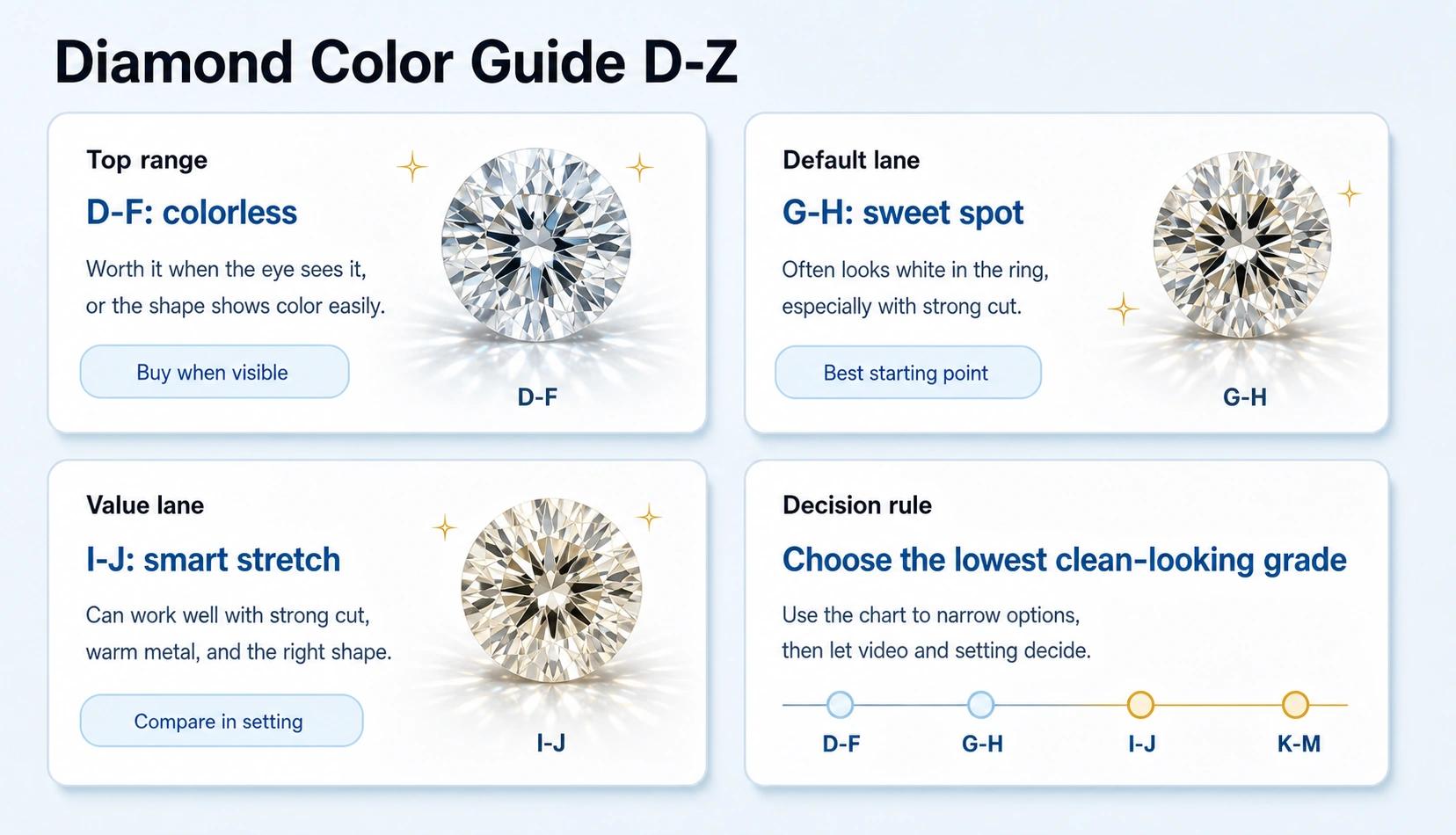
Pick the guide that matches the decision in front of you. Color only makes sense when you connect the grade to shape, setting metal, cut, lighting, and your own eye.
Start with the full D to Z scale, then learn where buyers usually get the best value.
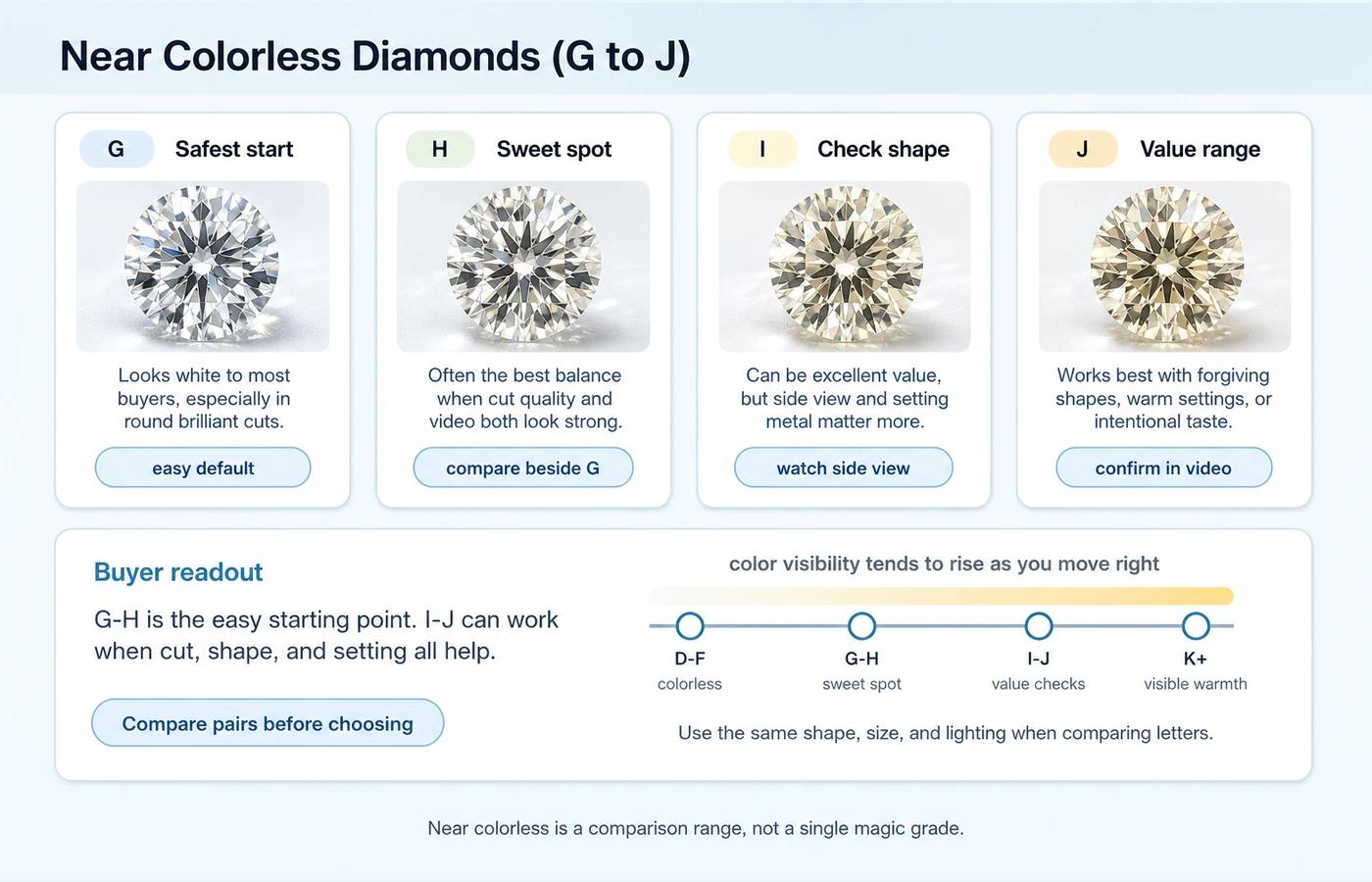
The value zone for many buyers, especially when cut and setting help the stone face up white.
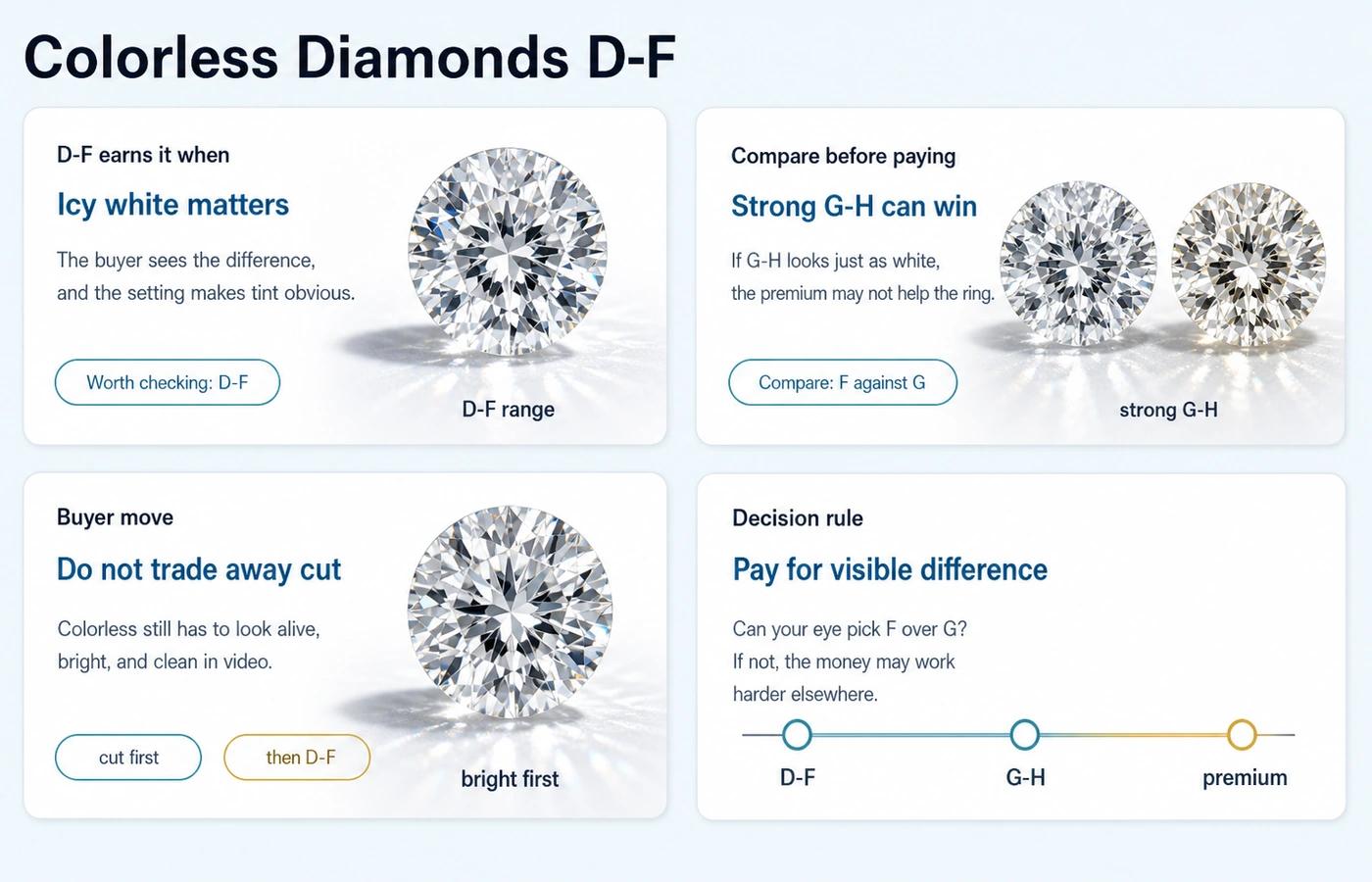
Worth it when the premium is visible, the buyer is color sensitive, or the shape exposes tint.
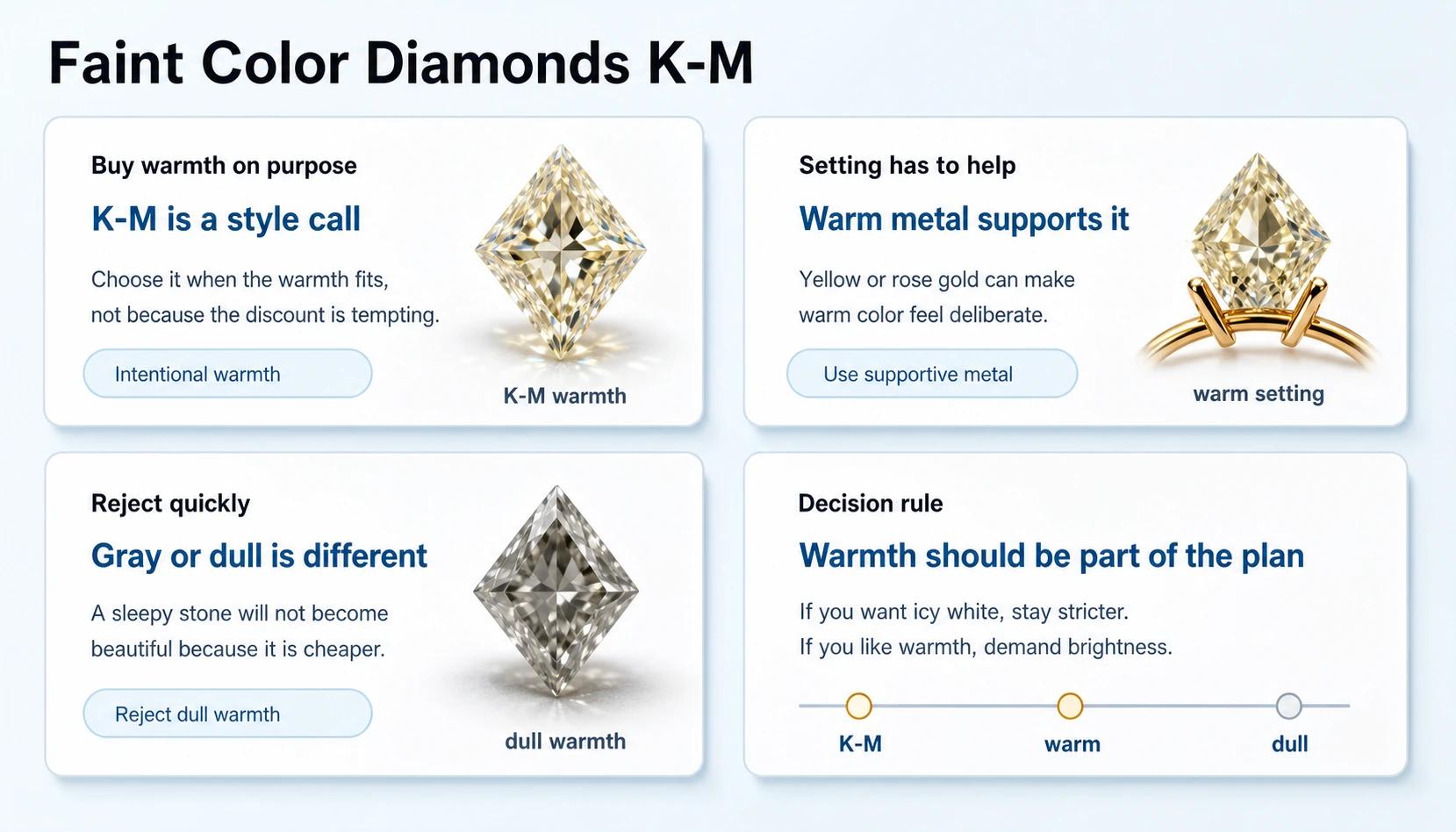
Can be smart in the right setting, but only when the warmth looks intentional.
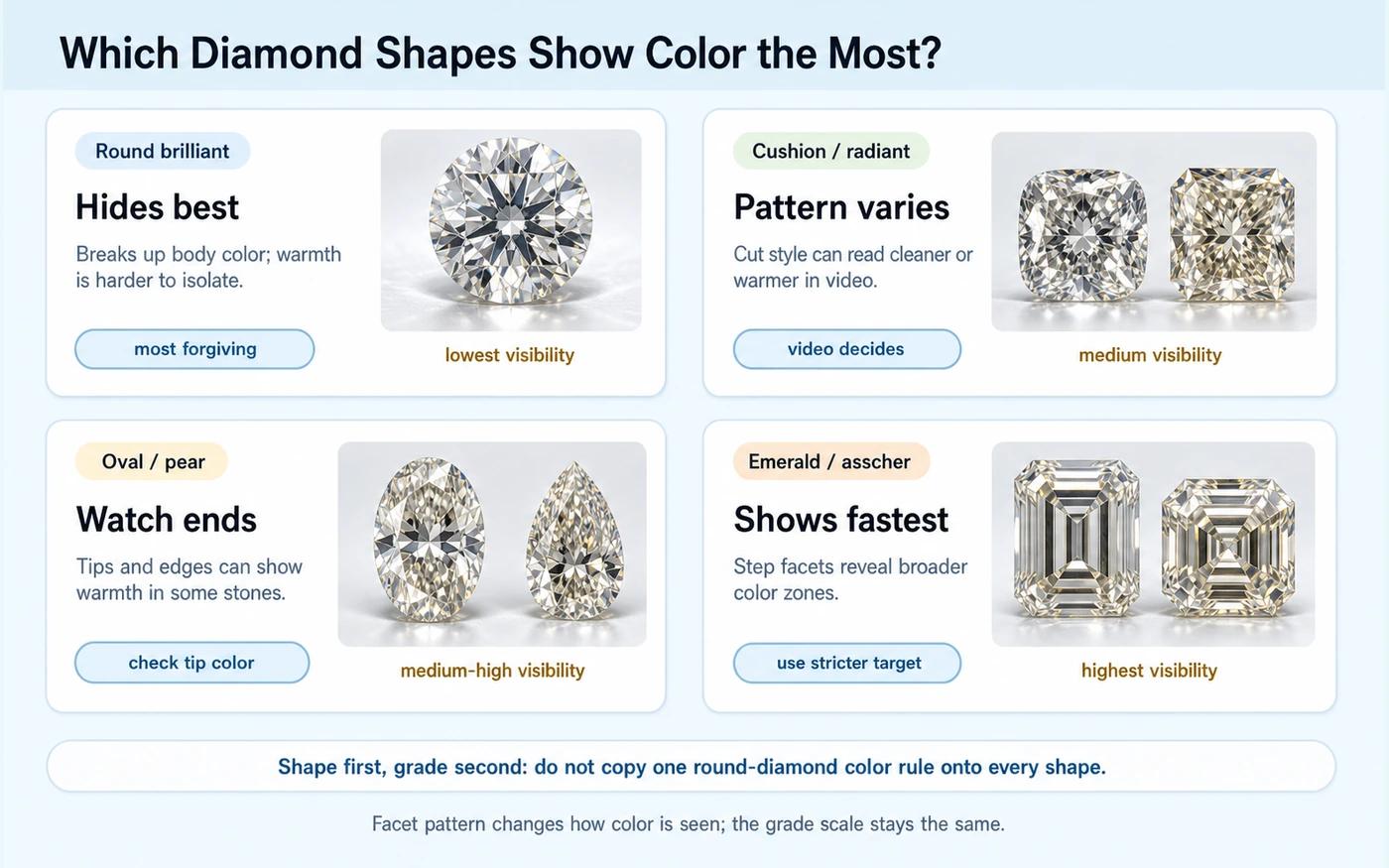
Rounds hide warmth better. Step cuts and larger stones make the color call stricter.
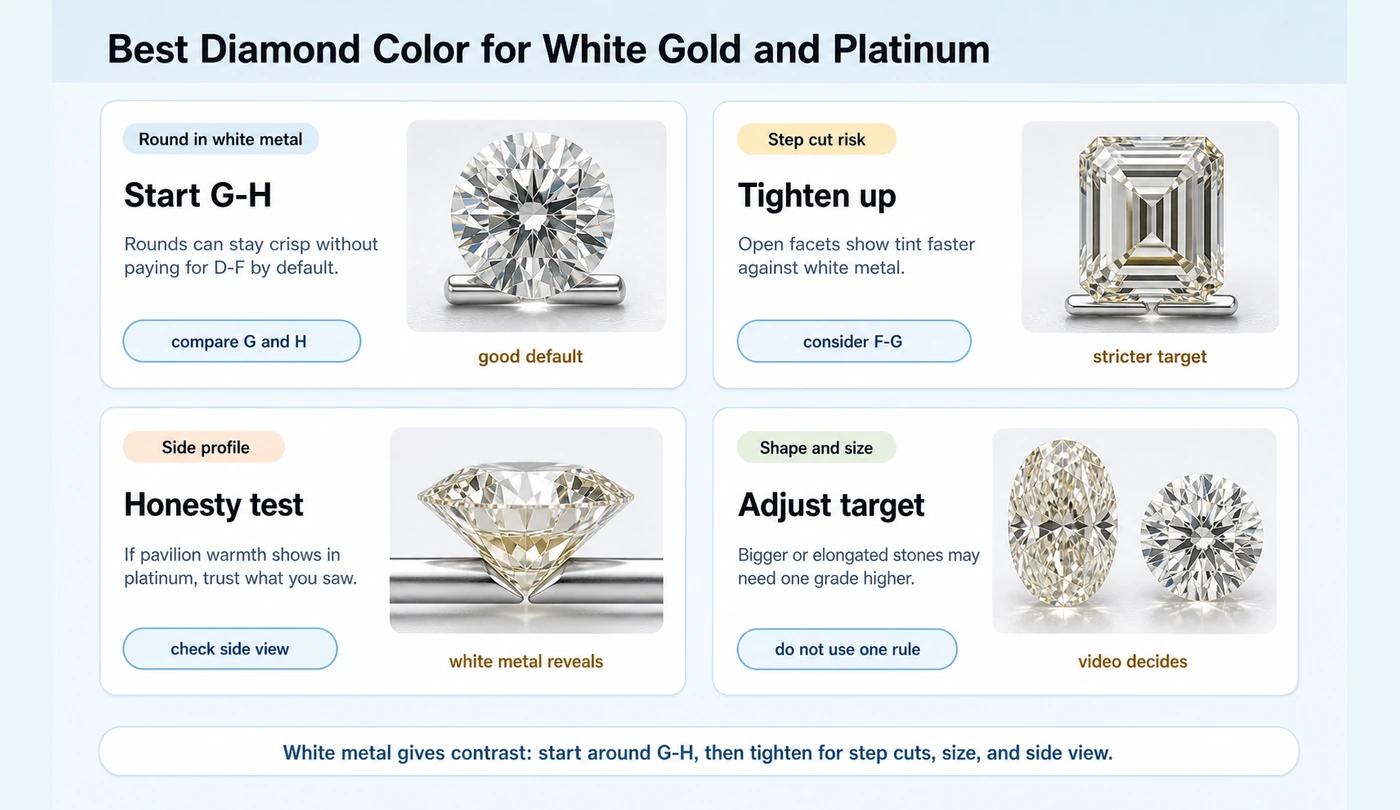
White metal gives less room for warmth, especially from the side view.
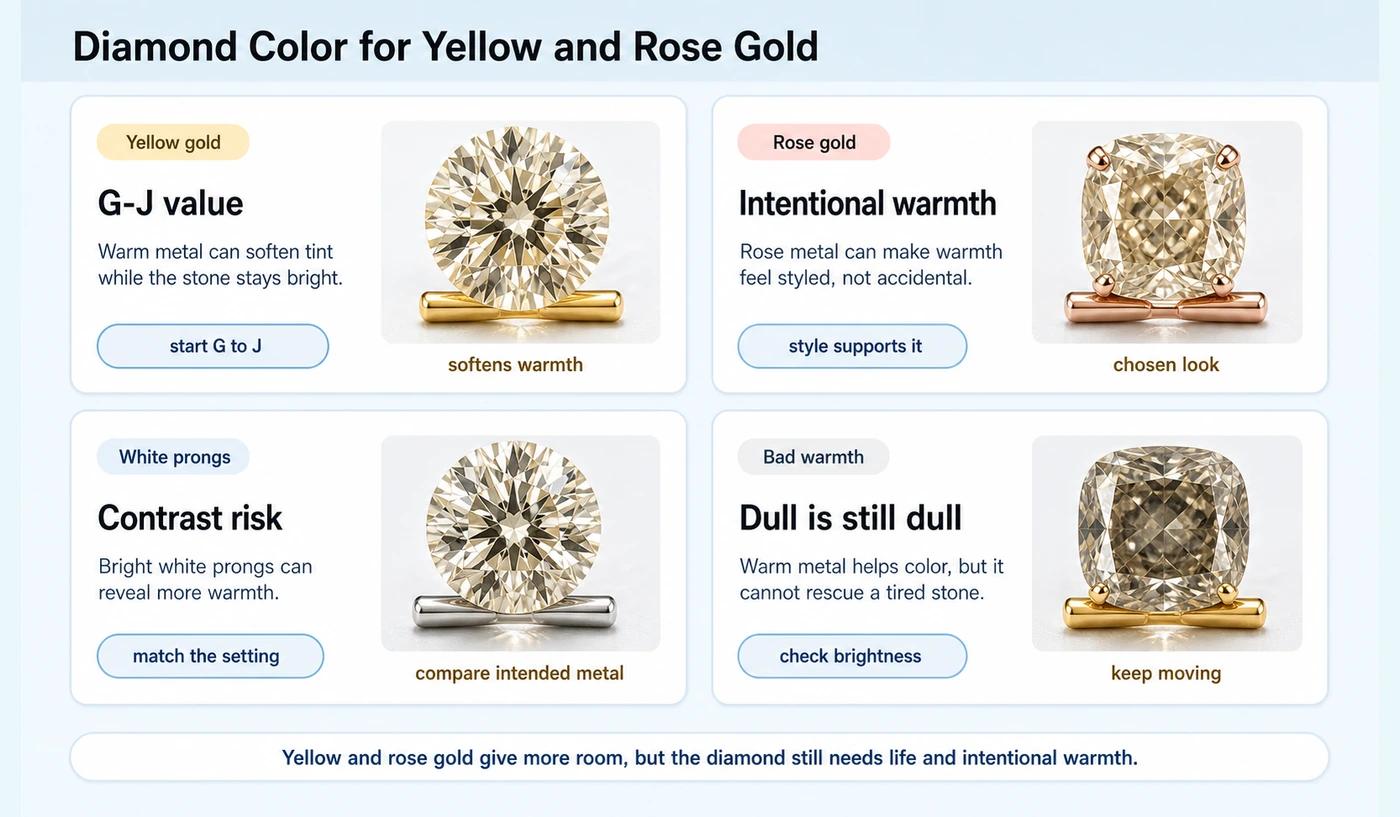
Warm metal can make lower color grades look softer and more natural.
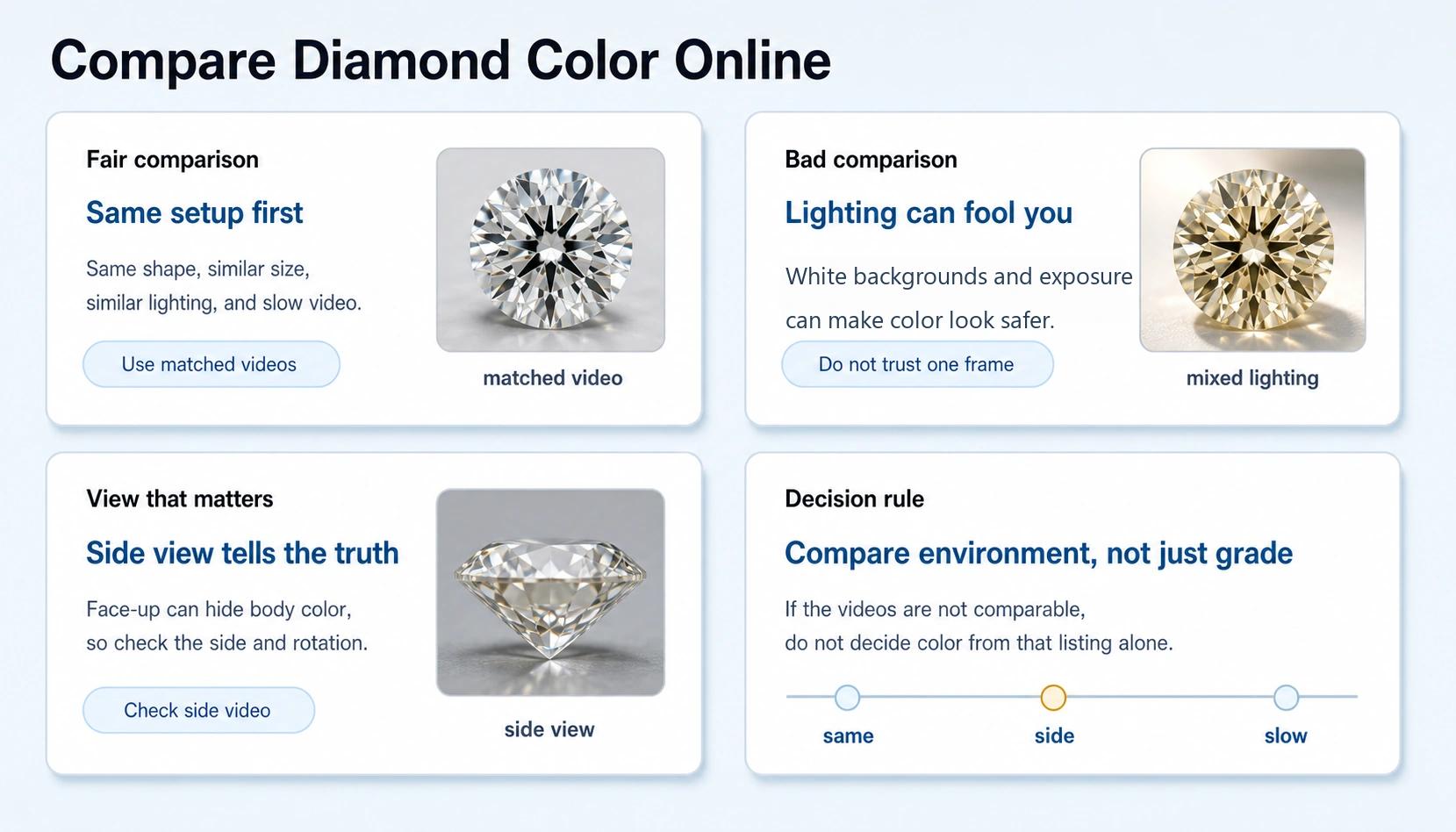
Use video, side view, lighting, and comparison stones before trusting a listing photo.
Start around G to H for many natural diamonds, then move up or down after you see the actual stone. Go stricter for emerald cuts, Asscher cuts, larger stones, white metal, and buyers who notice warmth immediately.
Go warmer only when the look is intentional, the setting supports it, and the price makes sense. Warmth can be beautiful. Accidental warmth is different.
White metal makes warmth easier to spot.
Warm metal gives lower color grades more room.
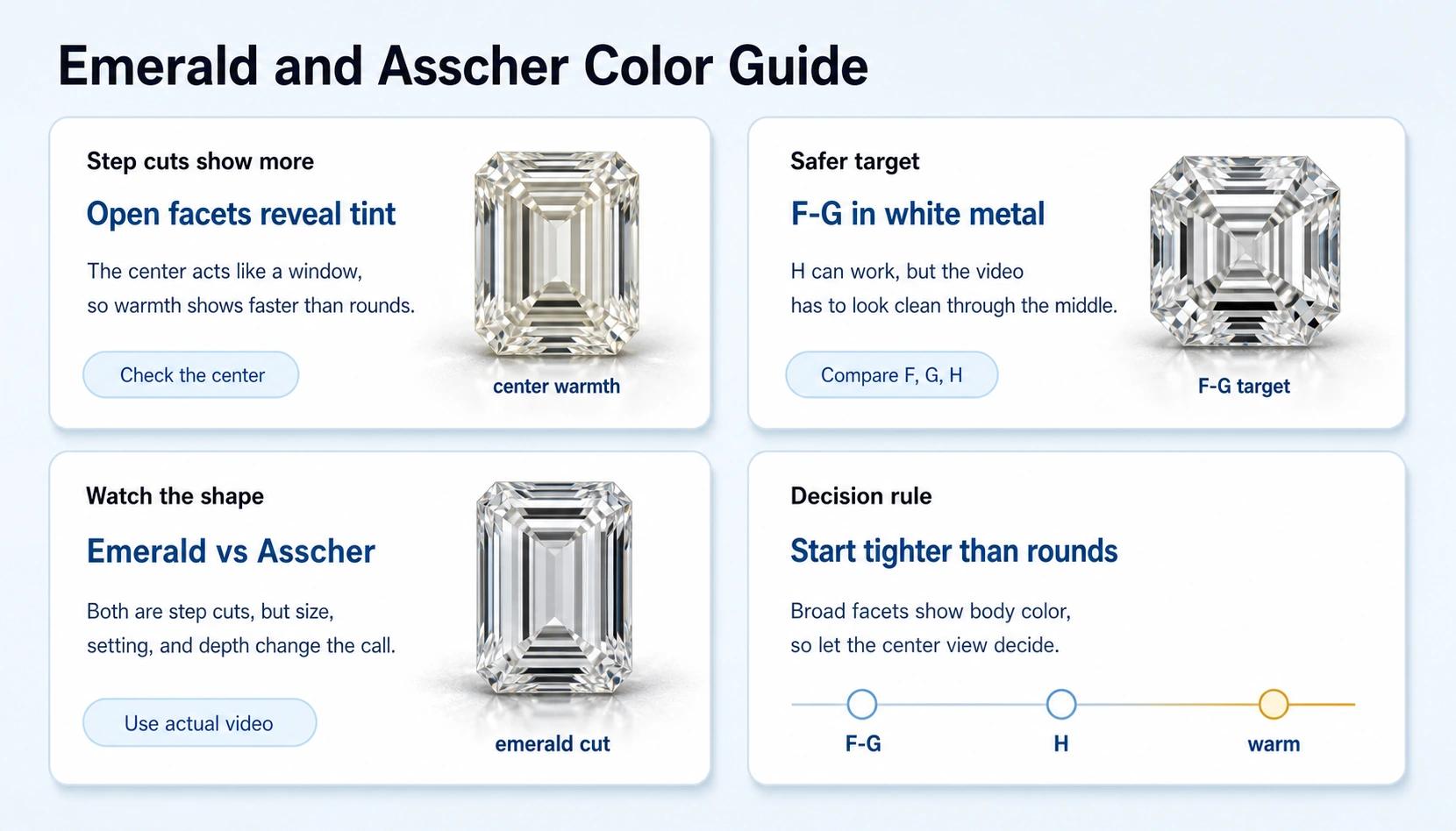
Step cuts show body color faster than rounds.
The expensive mistake is buying a letter your eye cannot see. The other mistake is going too warm because the discount looks tempting.
Color should feel settled once the ring is real. You should not keep checking it in every room because something feels off.
| Buyer Question | Why It Matters | Where To Go Next |
|---|---|---|
| Does it face up white | Top view is what people see most | Face up vs side view |
| Does the side view show warmth | Open settings expose color | White gold and platinum |
| Does shape expose tint | Step cuts show more body color | Emerald and Asscher color |
| Does cut help brightness | Strong cut can make a stone look whiter | Color vs cut |
| Does lighting change the look | Store lighting can flatter color | Diamond color lighting |
These are the pages I would open when the first color range still leaves a real buying question.
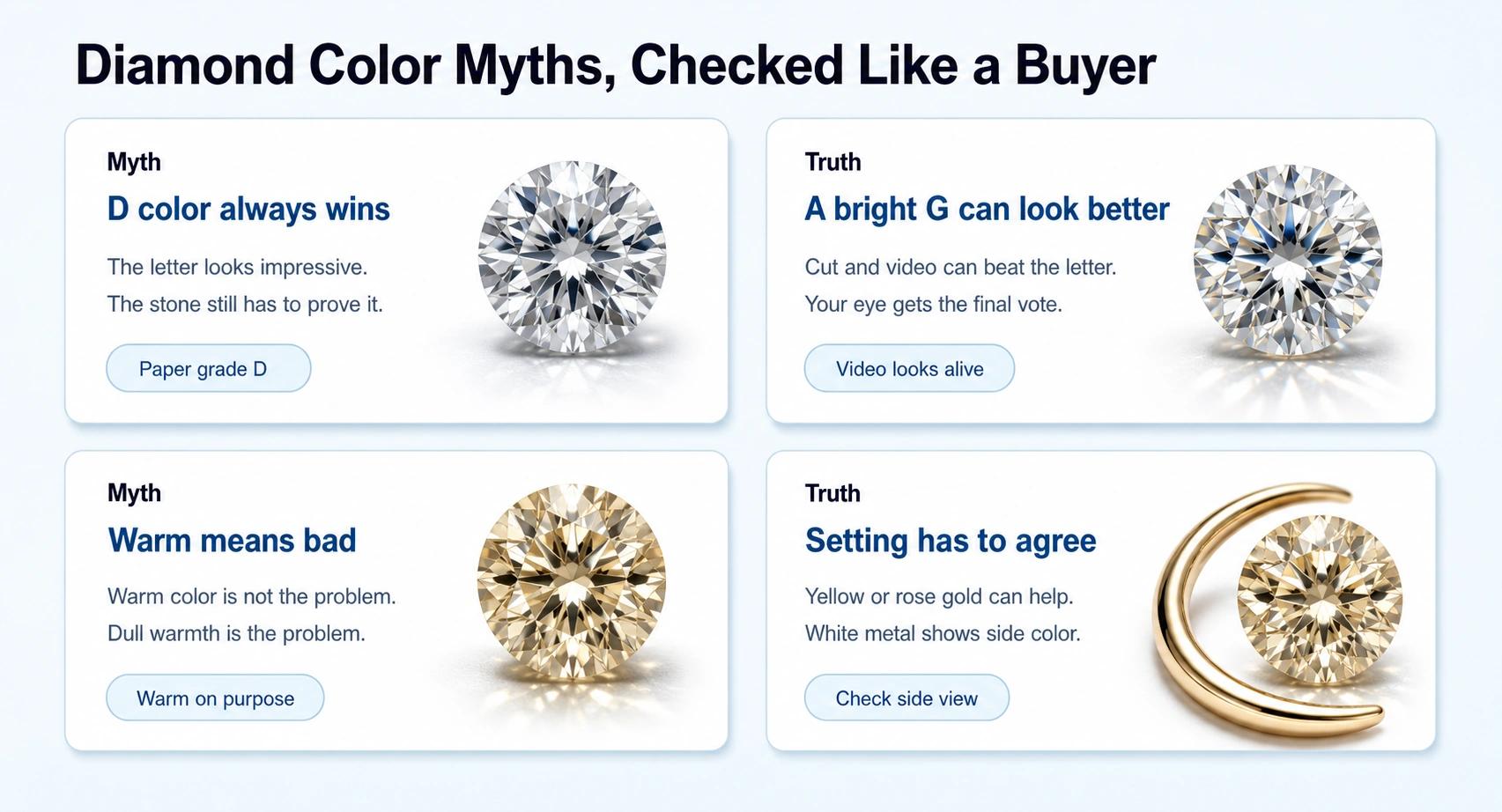
Skip the icy white marketing and learn which color claims actually change the finished ring.
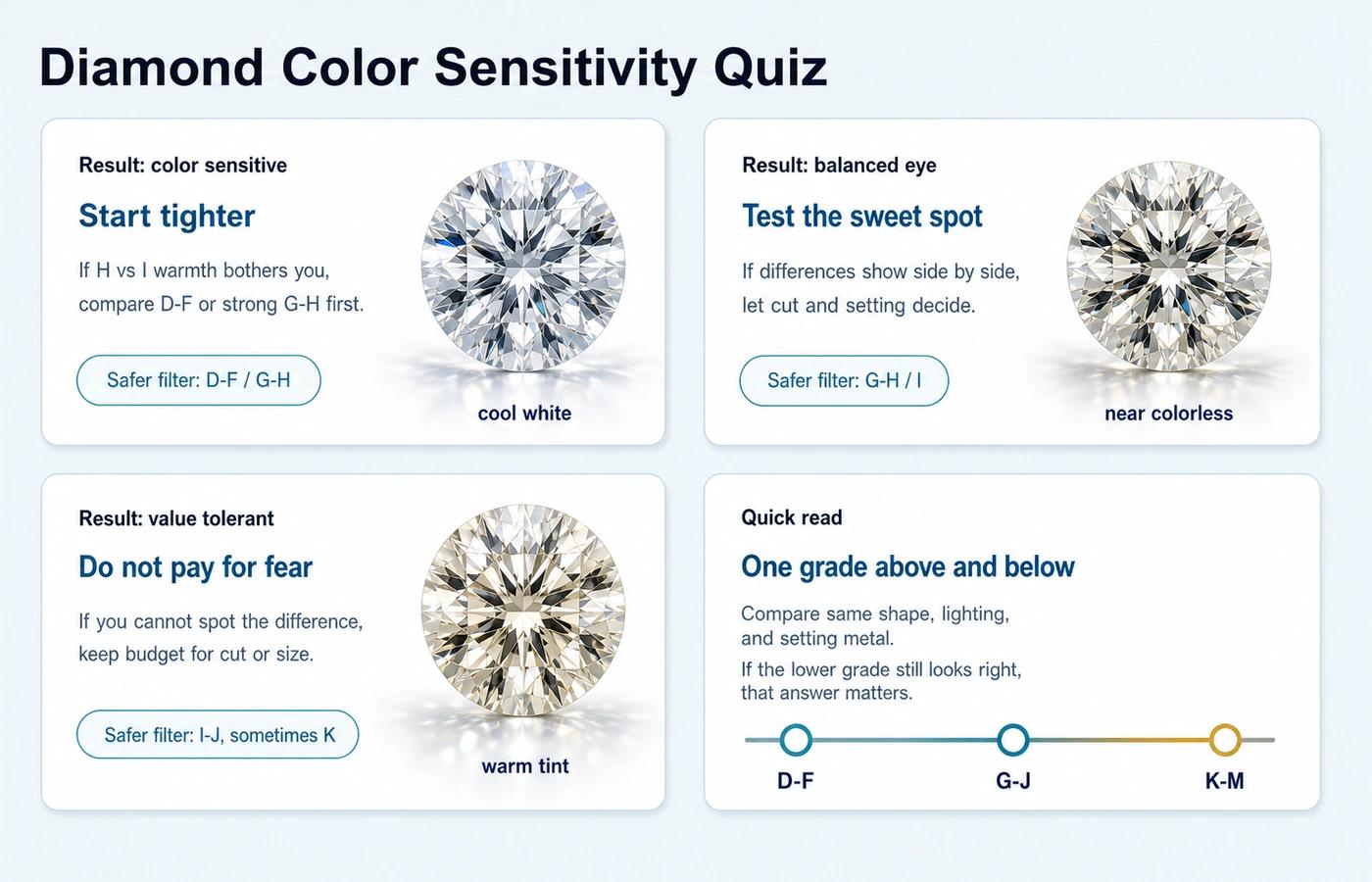
Find out whether your eye needs a stricter color target or has room to save money.
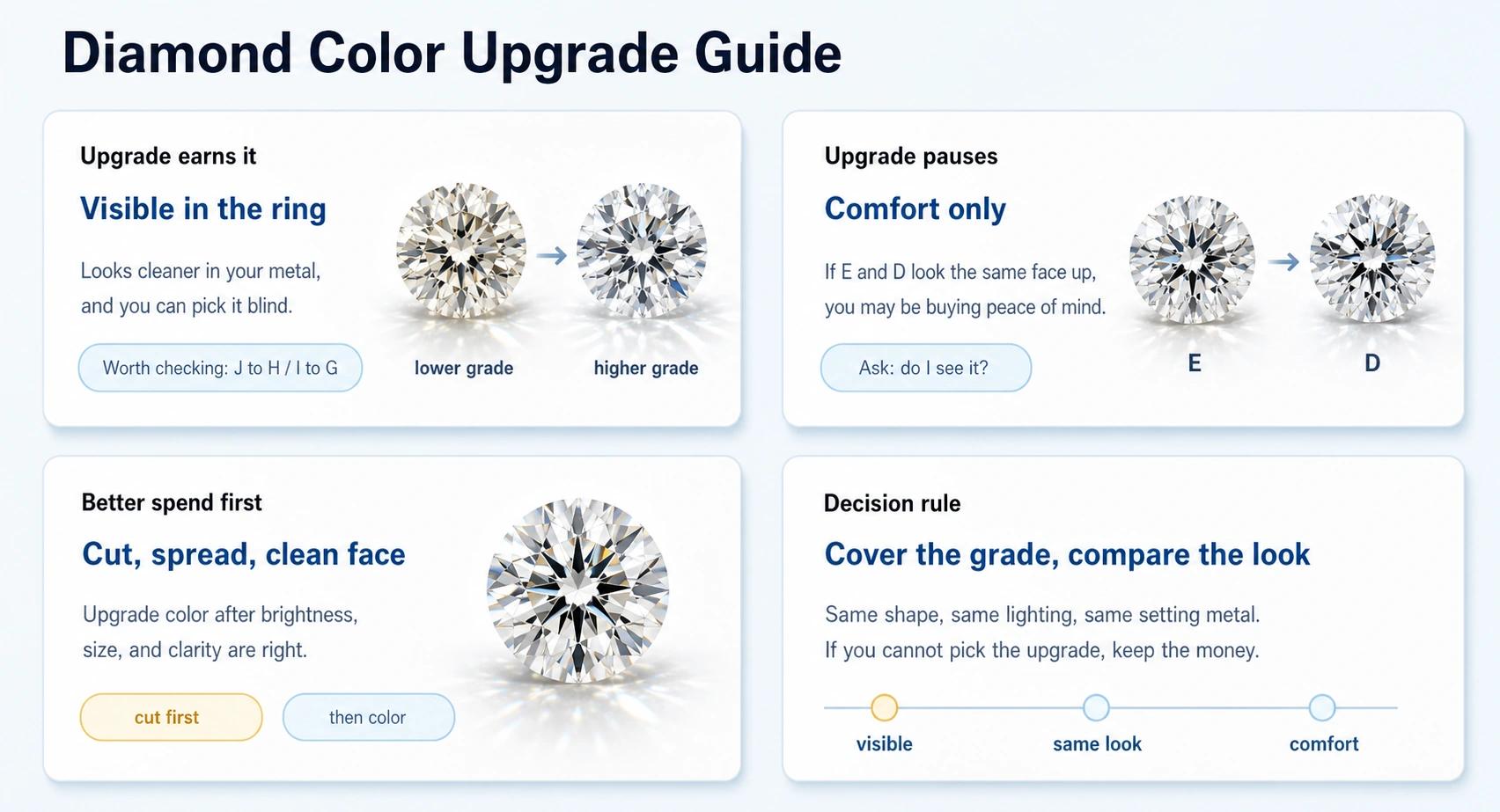
Use the upgrade ladder before paying more for a color jump your eye cannot see.
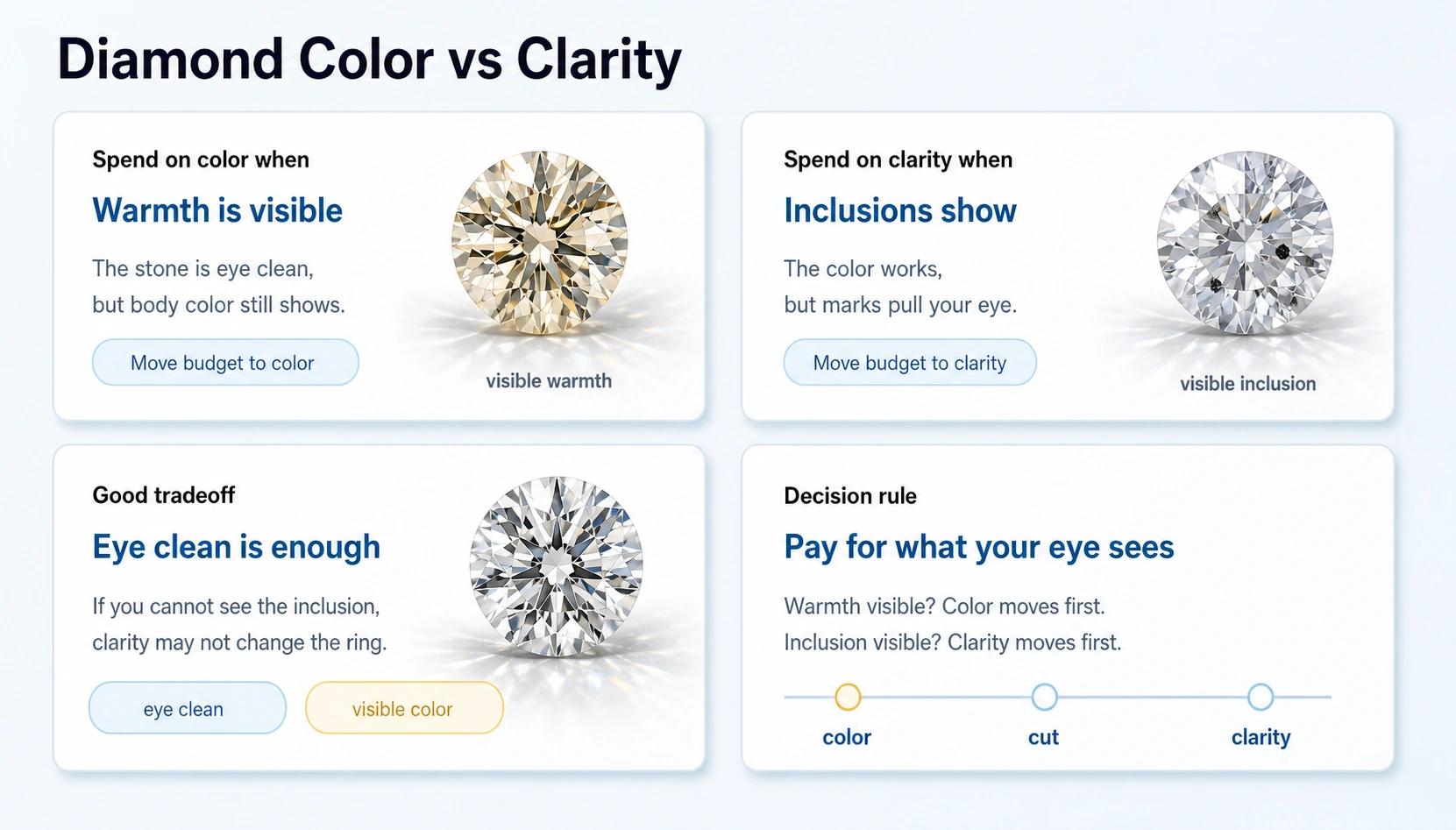
Decide whether color or clarity deserves the money once the stone looks clean enough.
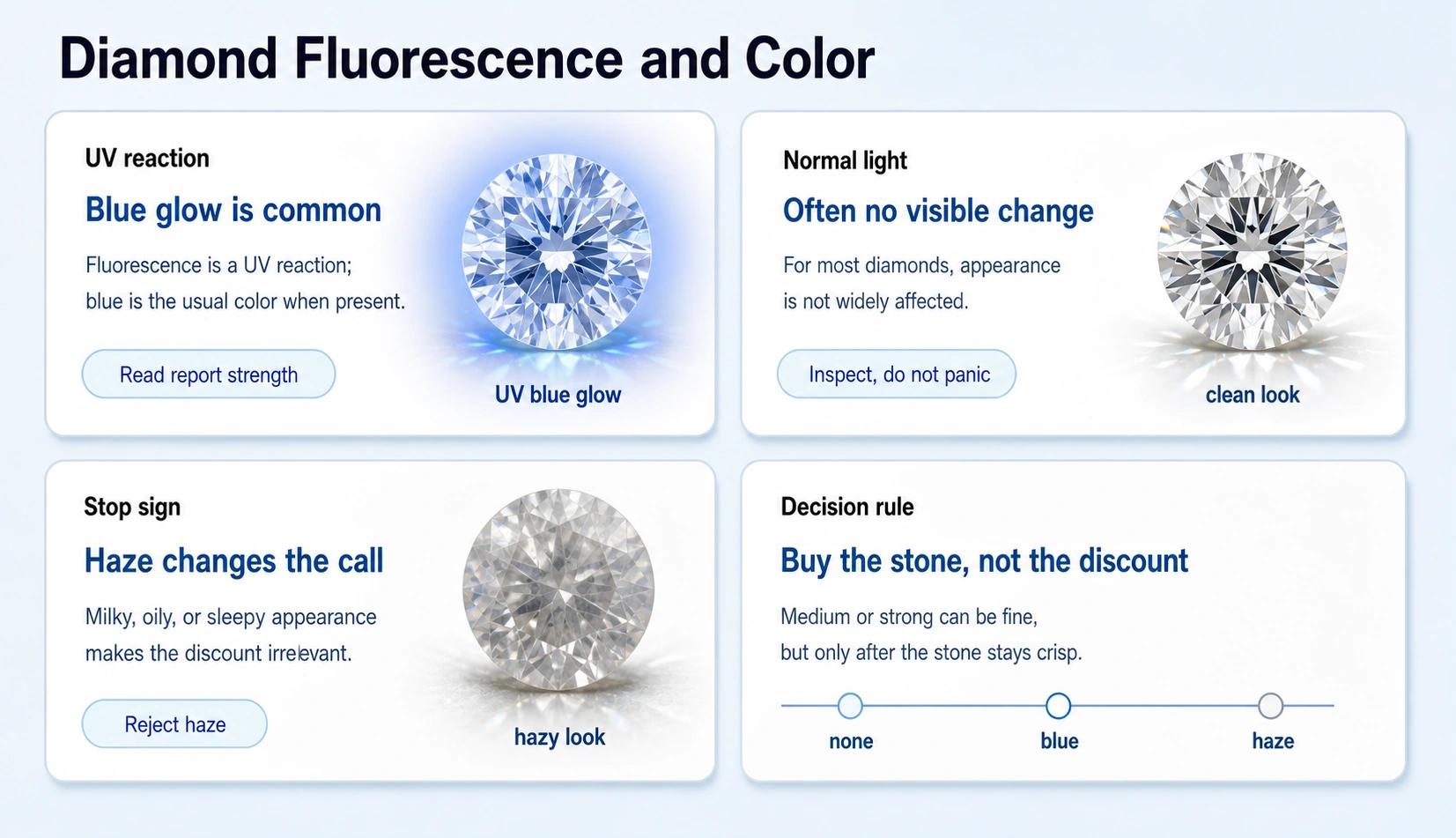
Check when fluorescence helps the value and when haze turns the discount into a problem.
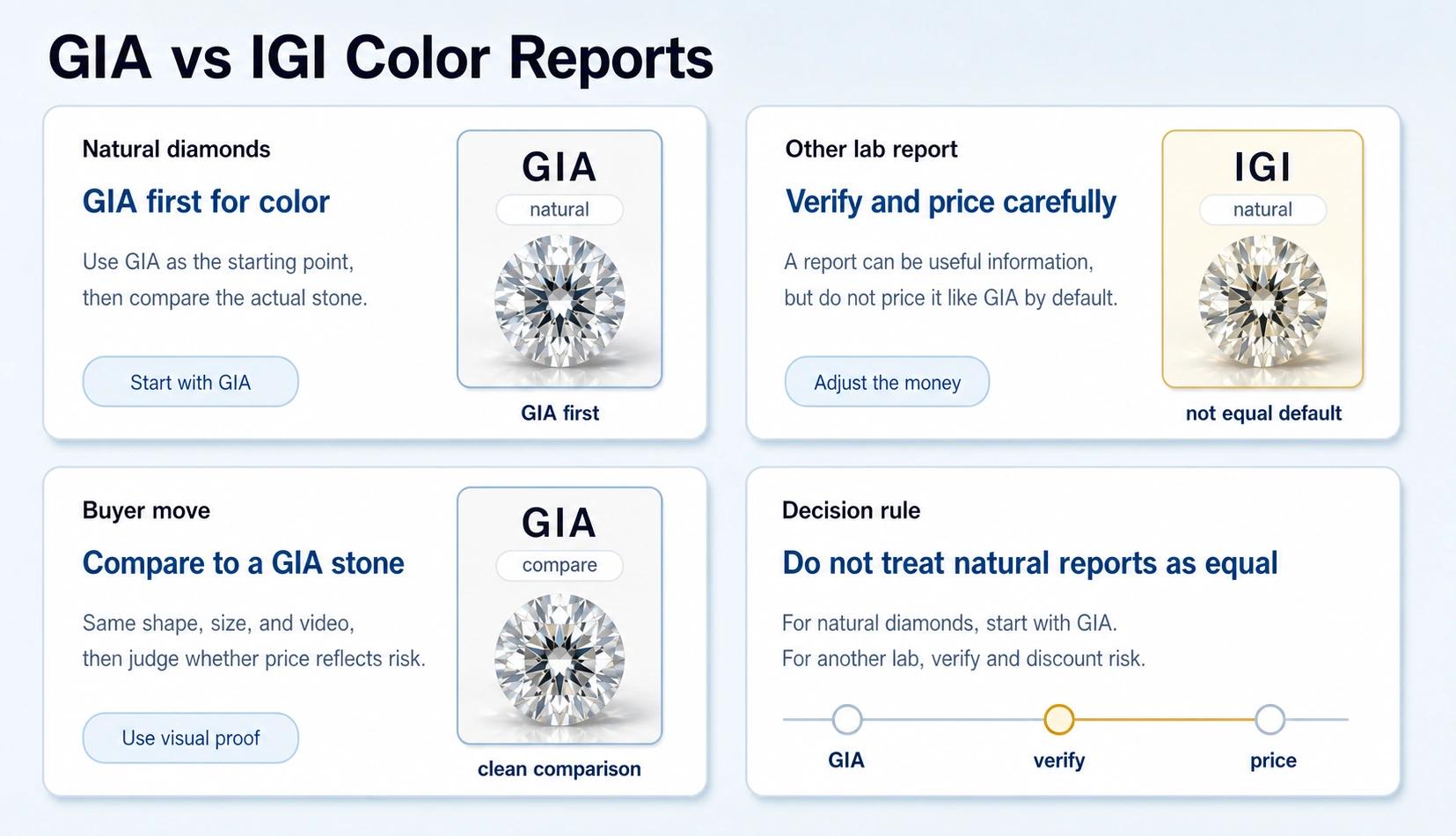
For natural diamonds, use the lab report as a confidence check before comparing price.
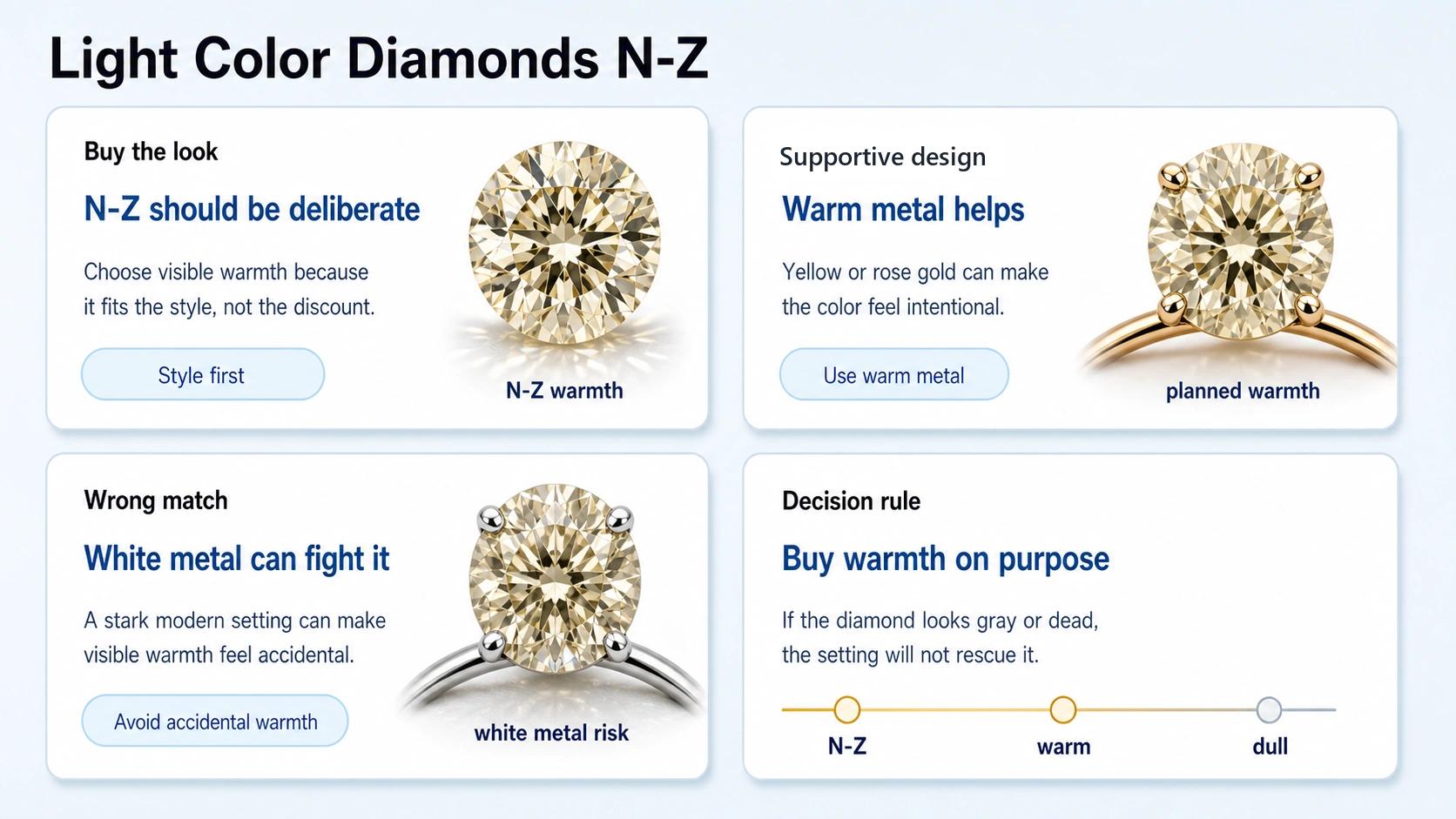
Use this when visible warmth is part of the style, not an accident you missed online.
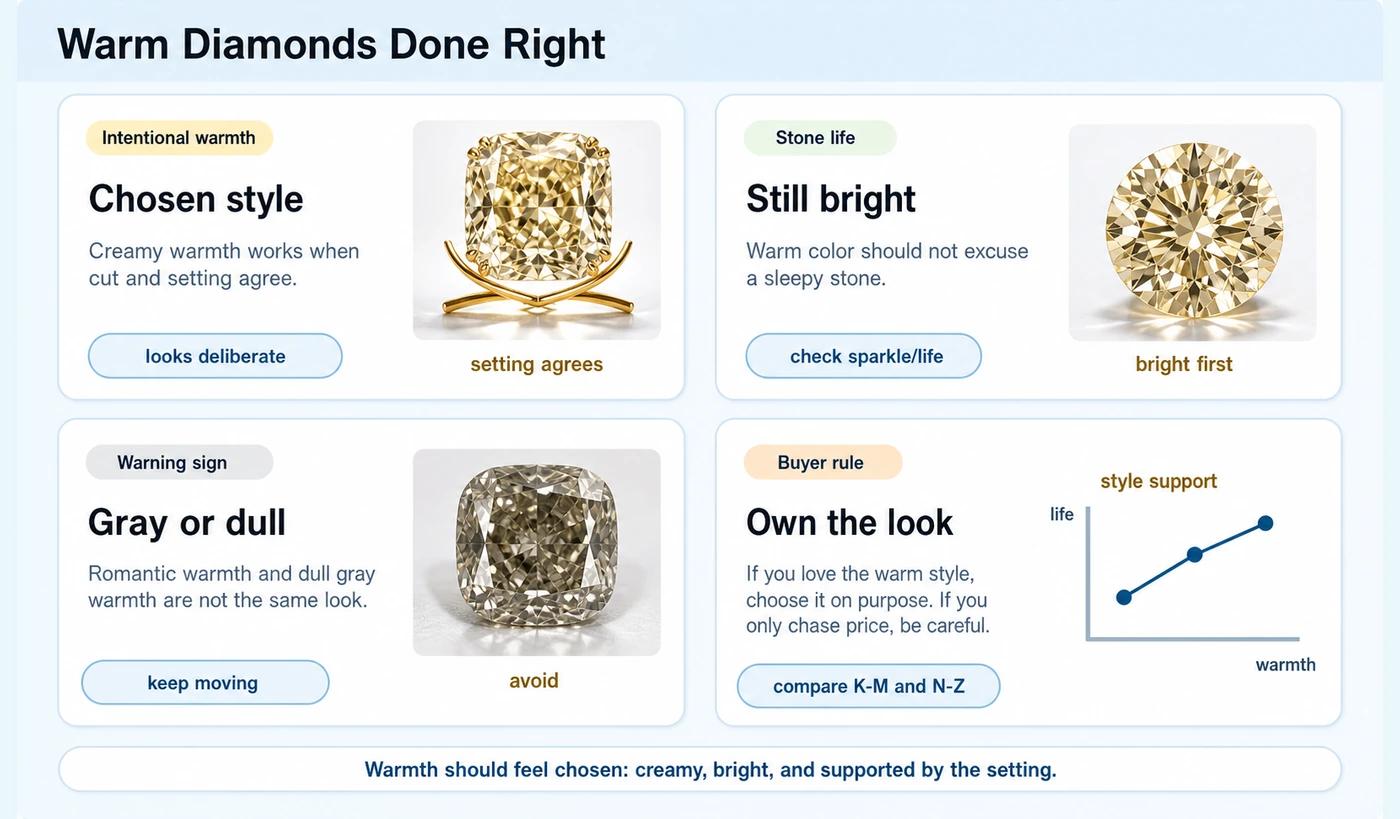
Learn when warmth looks creamy and intentional, and when the stone just looks tired.
A buyer starts with F color because they do not want any warmth. Then we compare a strong H round in the same setting. The H looks white, the cut is better, and the price leaves room for size. I am not telling that buyer to pay for F just because the letter sounds cleaner.
Use these sites as comparison tools, not automatic recommendations. I would compare real videos on Brilliant Earth and Blue Nile, then judge each diamond by color, cut, shape, setting, video, and price. The diamond still has to earn it.
Watch the video below to learn a smarter way to buy and compare diamonds, avoid common mistakes, and choose the right stone with more confidence.
Questions? Reach out directly for a free consultation, or drop them in the Diamond Buyers Academy community — Rob and I answer personally.
Most buyers should start around G to H, then adjust after seeing the shape, size, setting metal, and actual video.
No. D color is beautiful, but it is not always the smartest spend. If a G or H looks just as white in the finished ring, I would rather use the money somewhere visible.
Yes. A well cut round in the near colorless range can face up very white, especially in the right setting.
Emerald and Asscher cuts show color faster because the facets are broad and open. Rounds hide warmth better.
Yes. White gold and platinum make warmth easier to notice. Yellow gold and rose gold give you more room.
*Some links on our site may earn us a small commission at NO EXTRA cost to you, helping us keep our content free*