GIA vs. IGI vs. GCAL vs. AGS
Choose the lab report that fits the diamond you are actually buying.
By Rob Cornfield, Co-Founder of YourDiamondGuys.com. Cofounder and diamond sourcing specialist focused on cut quality, light performance, and trade value.
For a natural diamond, start with GIA. That is the clean answer.
For a lab grown diamond, IGI remains common and detailed, while GIA now uses Premium and Standard assessments for colorless stones. If you want documented light performance, GCAL 8X adds eight cut categories, and AGS’s light performance system now lives through GIA’s supplemental AGS Ideal report.
Inside the trade, we do not treat laboratories like rivals in a sports league. We treat them as different grading standards that require different pricing adjustments. The mistake is assuming a grade from one laboratory buys the exact same visual quality as the same grade from another.
Review the issuing lab’s official service details for GIA natural diamond reports, IGI lab grown reports, GCAL 8X cut grading, and the AGS Laboratories status and AGS Ideal report.
Which diamond grading lab is best for buyers?
Choose GIA for natural diamonds, IGI for familiar lab grown 4Cs detail, GCAL 8X when documented cut performance matters, and treat original AGS reports as respected legacy documents.
A diamond grading report is an opinion and identification record. The buyer still needs to match the paperwork to the actual stone, check proportions, and inspect the diamond in motion before paying.
How do the four labs compare at a glance?
GIA gives the strongest common market reference for natural diamonds. IGI has deep market use for lab grown diamonds and often reports familiar color and clarity grades. GCAL 8X adds cut, light performance, and optical symmetry evidence. AGS built a science-driven light performance system that now lives through GIA’s supplemental AGS Ideal report.
| Lab or system | Best buyer use | Main strength | Main caution |
|---|---|---|---|
| GIA | Natural diamonds | Market trust and consistent common language | Report still does not prove beauty |
| IGI | Lab grown diamonds | Detailed familiar grading and broad availability | Read growth and treatment comments carefully |
| GCAL 8X | Cut focused natural or lab grown shopping | Eight cut categories and documented performance | Do not pay any premium without comparing the stone |
| Original AGS report | Legacy premium cut diamond | Light performance approach and ASET heritage | AGS Laboratories no longer accepts grading submissions |
| AGS Ideal by GIA | Current supplemental cut evidence | Brightness, fire, contrast, and eligible fancy shapes | It supplements a GIA report rather than replacing it |
Why is GIA the starting point for natural diamonds?
Open GIA’s natural diamond report sample to see the fields this comparison uses as a starting point.
GIA created the color and clarity language that anchors the modern natural diamond market. Most bourses, suppliers, and retail buyers use GIA as the baseline for pricing and inventory comparisons.
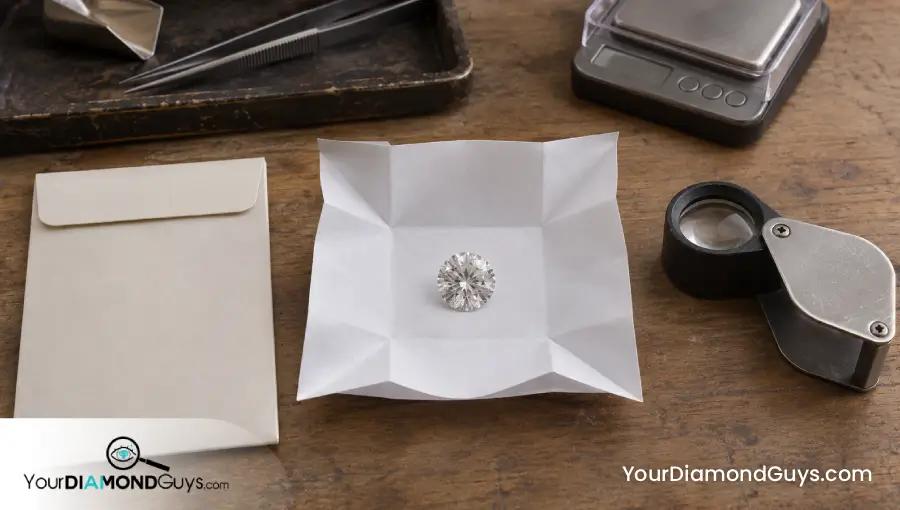
Round diamond on folded gem paper beside a report envelope and loupe.
Starting with GIA avoids the grade translation problem. If you look at a non-GIA natural stone with printed G VS2 grades, you still need to ask whether the stone would achieve G VS2 under GIA standards before deciding whether the price is a bargain.
For lab grown diamonds, GIA uses a different structure. Its current assessments for colorless to near-colorless lab diamonds report Premium or Standard rather than the full D through Z letter grades. The natural versus lab report guide breaks down that difference.
Where does IGI make the most sense?
IGI makes the most sense in the lab grown market, where its reports are common, searchable, and familiar to large inventories. Buyers can compare carat, color, clarity, measurements, finish, fluorescence, and comments in a format they understand.
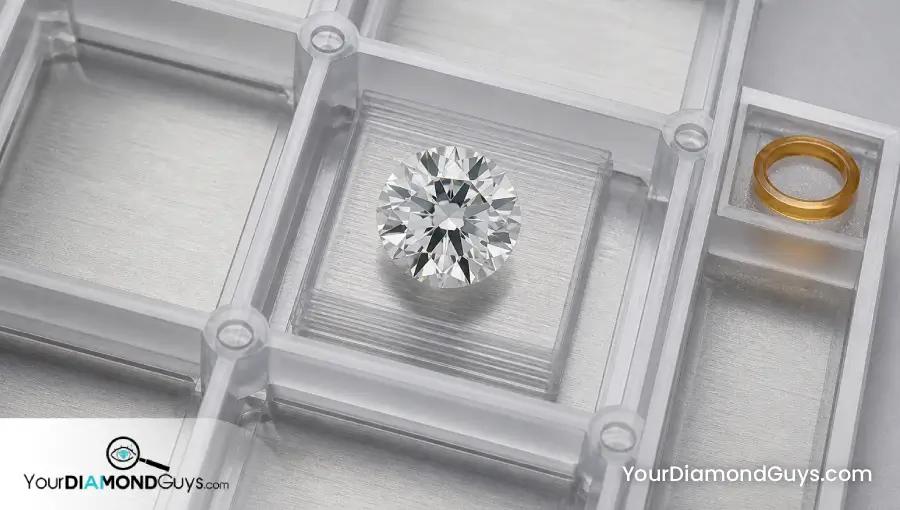
Lab grown round diamond in an inventory cassette above a seed plate and visible growth layers beside a treatment cue.
IGI also discloses growth method (CVD or HPHT) and reports whether post-growth treatments were detected. For a buyer sorting through online inventory, those disclosures are practical and accessible.
For natural diamonds, IGI reports exist widely in retail stores, particularly in finished jewelry. Because trade pricing standards favor GIA for loose natural diamonds, an IGI natural diamond should carry a price that reflects its grading baseline.
When is GCAL 8x worth a closer look?
GCAL 8X is useful when a buyer wants more than a basic Excellent label. The system requires Excellent results across polish, external symmetry, proportions, optical brilliance, fire, scintillation, optical symmetry, and Hearts and Arrows.
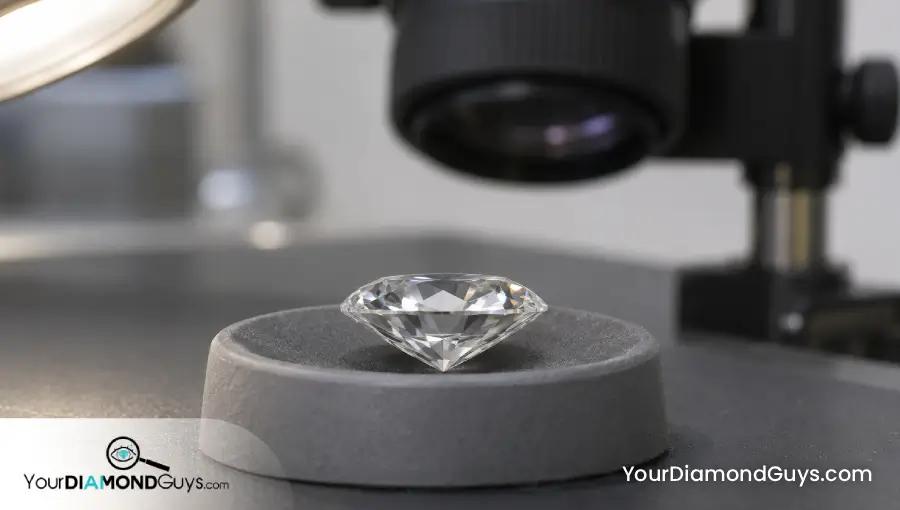
Oval diamond in a cradle with a macro camera in the background.
Most labs give an overall cut grade only to round brilliants. GCAL grades optical performance across eligible fancy shapes as well, including ovals, cushions, and princess cuts.
The report includes actual optical images and a gemprint record. Use the GCAL guarantee and 8X guide to decide whether the extra documentation justifies any price difference in the stone you are reviewing.
What happened to AGS laboratories?
AGS Laboratories closed in 2022 after 27 years. GIA acquired its technology and intellectual property, and the teams combined research efforts.
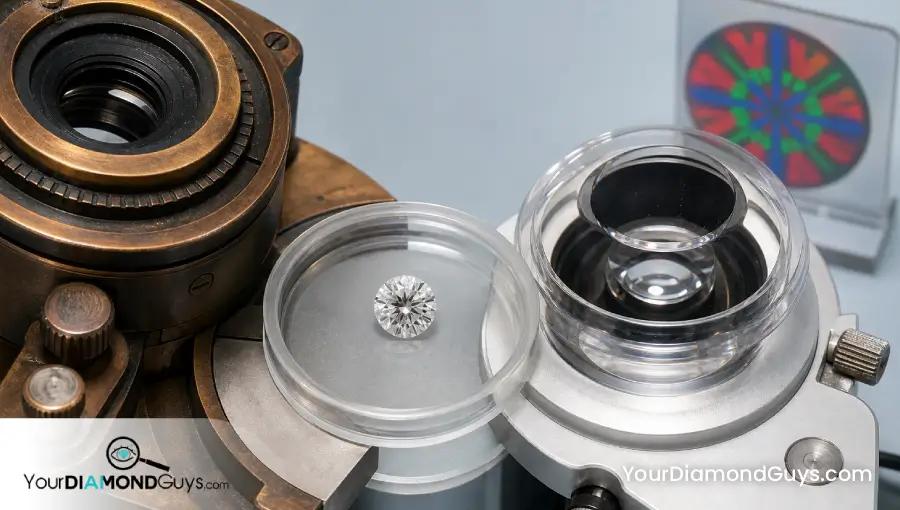
Round diamond shared by a worn legacy light viewer and a modern supplemental optical instrument with a separate light map.
The original AGS light performance cut grading system (with its 0 to 10 scale where 0 is Ideal) set high standards for light return, contrast, and brightness. Those older documents still circulate with secondhand or estate stones.
Today, GIA offers an AGS Ideal Report as a digital add-on to a standard GIA grading report. It evaluates brightness, fire, contrast, and light leakage for rounds and select fancy shapes. The AGS cut system guide covers how to read both legacy and current formats.
How should lab choice change a shortlist?
For natural diamonds, keep GIA candidates in the main comparison. A non-GIA stone can enter only after the price accounts for regrading risk.
For lab grown diamonds, compare report format and actual proof. An IGI report can give precise shopping data. A GCAL 8X certificate can narrow cut risk. A current GIA assessment uses a broader Premium or Standard label. Focus on whether the stone proves its sparkle in video.
A fair four lab comparison in practice
Stone A is a 1.50 carat natural round with a GIA G VS2 Excellent report. Stone B is listed as the same grades on another lab report and costs less. I do not treat them as matched stones. Stone B needs a current GIA result or a price that protects the buyer if the grades change.
Stone C is a 2.00 carat lab grown round with IGI D VS1 grades and clean video. Stone D is a 2.00 carat lab grown round with a GCAL 8X certificate at a 7 percent premium. The decision is not about lab prestige. It is about whether the GCAL cut evidence and actual light performance earn the premium.
Lab comparison traps that distort value
- Calling all laboratory grades interchangeable.
- Using IGI as an equal natural diamond alternative to GIA.
- Assuming current GIA lab grown reports still use natural diamond grades.
- Treating GCAL 8X as permission to skip video.
- Thinking AGS Laboratories still grades new submissions.
- Comparing Excellent cut across labs without checking proportions.
Proof to request before you trust the lab
- Is this diamond natural or laboratory grown?
- What date and report format am I looking at?
- Can I verify the report on the issuing lab’s website?
- Does the stone carry a matching inscription?
- What cut or light performance evidence sits beyond the headline grade?
- How does the price account for the lab’s trade reputation?
My bottom line on lab choice
Natural diamond, GIA first. Lab grown diamond, IGI can be perfectly useful when the report, inscription, and visual proof agree. GCAL 8X is worth considering when cut precision is the goal.
An old AGS report deserves respect, not blind trust. Verify identity, inspect the current condition, and understand that a fresh buyer or insurer can still ask for a current GIA assessment.
GIA vs. Other Labs: Why Grading Consistency Changes Your Diamond’s Value
Questions? Reach out directly for a free consultation, or drop them in the Diamond Buyers Academy community — Rob and Josh answer personally.
What do buyers ask about GIA, IGI, GCAL, and AGS?
← Browse all diamond grading guides
Want another set of eyes on the diamond?
Send the listing, grading report, price, and any video you have. We can look at the lab report, measurements, video, and price to make sure the evidence supports the price.
*Some links on our site may earn us a small commission at NO EXTRA cost to you, helping us keep our content free*