What Certified Diamond Really Means
Match the report to the diamond before you compare value.
By Josh Allen, Co-Founder of YourDiamondGuys.com. Fifth generation diamantaire with 30+ years in the global diamond trade. Former supplier to Tiffany & Co., Cartier, and Harry Winston.
A certified diamond is not certified as beautiful, fairly priced, or worth buying. What sellers call a certificate is usually an independent grading report. It records the lab’s opinion of the diamond’s identity and quality on the date it was examined.
That paper matters. The lab name matters even more. But neither one replaces the actual stone.
GIA says this plainly: GIA does not certify or appraise diamonds. It issues reports with technical information about dimensions, quality, and identifying characteristics.
What does certified diamond mean?
A certified diamond has an independent laboratory report that records identity, carat, color, clarity, measurements, finish, and other findings. It is a quality opinion, not a beauty guarantee or price appraisal.
For a natural diamond, start with GIA. That gives you a consistent market language and a report buyers, dealers, appraisers, and insurers recognize.
Then read the document in the right order. The quick grading report guide shows which fields deserve attention before the big color and clarity grades pull you off course. Use the report number verification guide to prove the lab record, listing, inscription, and physical diamond agree.
What does a diamond grading report actually confirm?
Open GIA’s sample Diamond Grading Report to locate the measurements, grades, and clarity plot.
The report confirms what the laboratory examined. It identifies whether the submitted item is a natural diamond, a lab grown diamond, or another material. It records carat weight, color, clarity, measurements, polish, symmetry, fluorescence, inscriptions, and report comments when those fields apply.
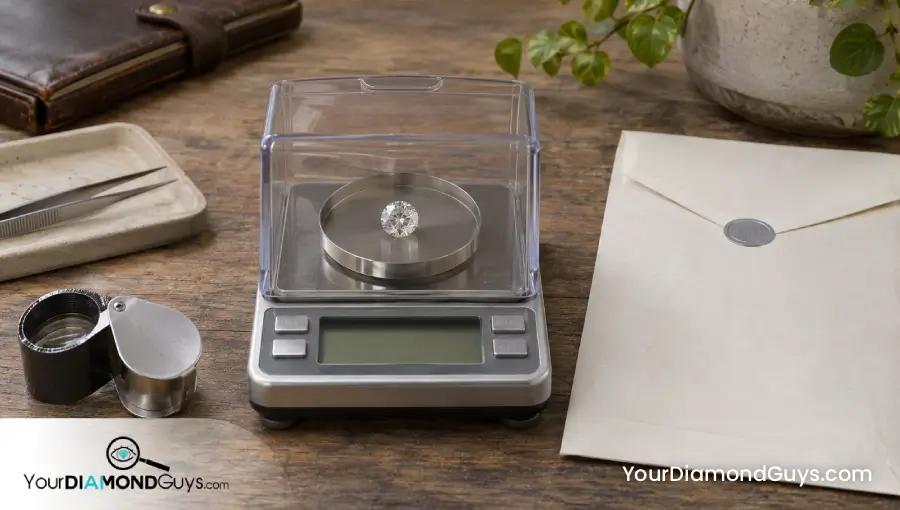
Loose diamond on a gem scale beside a report envelope.
A standard round brilliant can receive a cut grade. Fancy shapes often do not receive the same overall cut grade, so their report carries less information about beauty. A report can map clarity characteristics, but the map is an approximate identification tool, not a photograph of every feature.
The strongest use is comparison. You can hold two GIA natural diamond reports side by side and compare the same field definitions. That common language helps you spot where price, size, clarity risk, and cut data differ.
| The report can tell you | The report cannot tell you |
|---|---|
| Origin category and treatments found | Whether you will love the diamond in person |
| Carat, color, clarity, and measurements | Whether the asking price is fair |
| Round cut grade, polish, and symmetry | Complete light performance in every shape |
| Plotted or written identifying features | Whether every inclusion is eye clean |
| Report number and recorded inscription | Whether the loose stone in a listing matches the file |
What does certification never guarantee?
It never guarantees sparkle. Two diamonds with the same grades can have different facet precision, contrast, spread, transparency, and face up character.
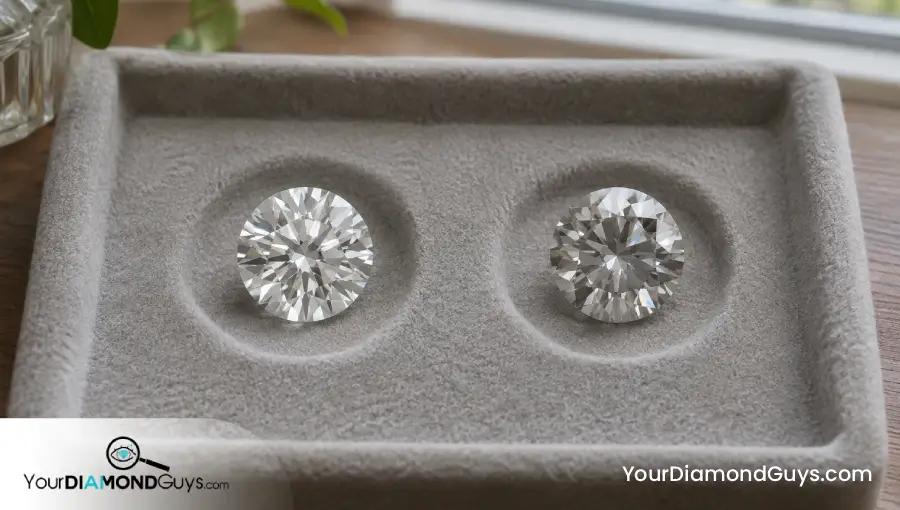
Two loose diamonds in a shared tray under diffuse window light.
It never guarantees price. A grading laboratory does not know the seller’s margin, return policy, setting quality, or the current deal in front of you. An appraisal handles a different job, and even an appraisal does not create a resale market.
It never guarantees identity after the report leaves the lab. That is why the report lookup, measurements, seller listing, and laser inscription need to agree before the return window closes.
Why does the laboratory name matter so much?
Diamond grades are opinions applied to standards. The market does not price every laboratory’s opinion as interchangeable.
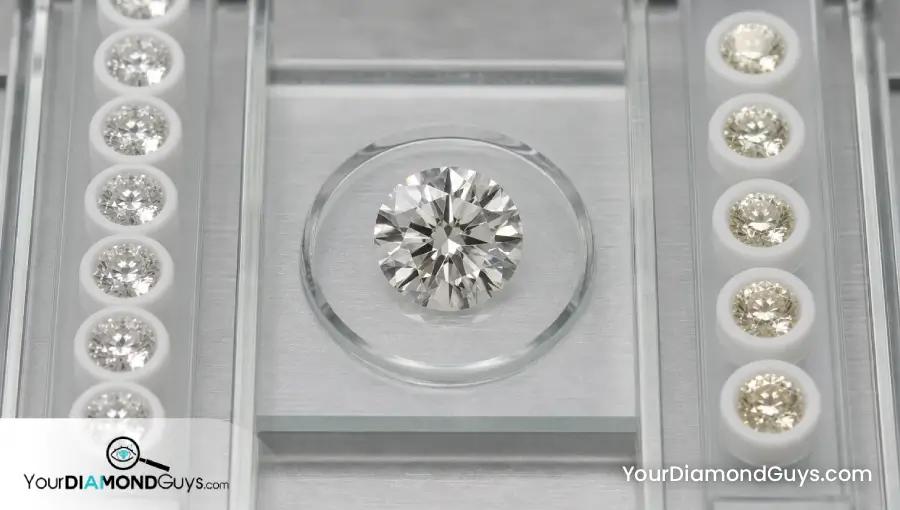
Round diamond compared between tightly spaced and broadly spaced unbranded master stone standards under identical light.
For natural diamonds, I start with GIA because the trade prices GIA graded stones as the cleanest common reference. A natural diamond with a different report can still be attractive. I simply will not compare its printed grade or price one for one with a GIA stone.
For lab grown diamonds, the report landscape works differently. IGI remains common and gives familiar 4Cs detail. GIA now uses Premium and Standard quality assessments for colorless to near colorless lab grown diamonds. The major lab comparison explains where each report fits.
Why do dealers say certificate when the lab says report?
Certificate is easy retail language. Buyers understand it quickly, so the word stuck.
Inside the trade, the distinction matters. A report records findings and carries limitations. It does not make the laboratory the owner, seller, insurer, or guarantor of the diamond’s future value.
I have watched beautiful paper sell average stones for decades. The report creates confidence, then the showroom lights finish the job. A smart buyer reverses that order. Verify the paper, inspect the diamond, then judge the price.
How should you use a certificate before buying?
Use it as a filter and an identity file. Start with the lab, report type, report date, report number, origin disclosure, and measurements. Then read grades, proportions, comments, and the clarity plot when present.
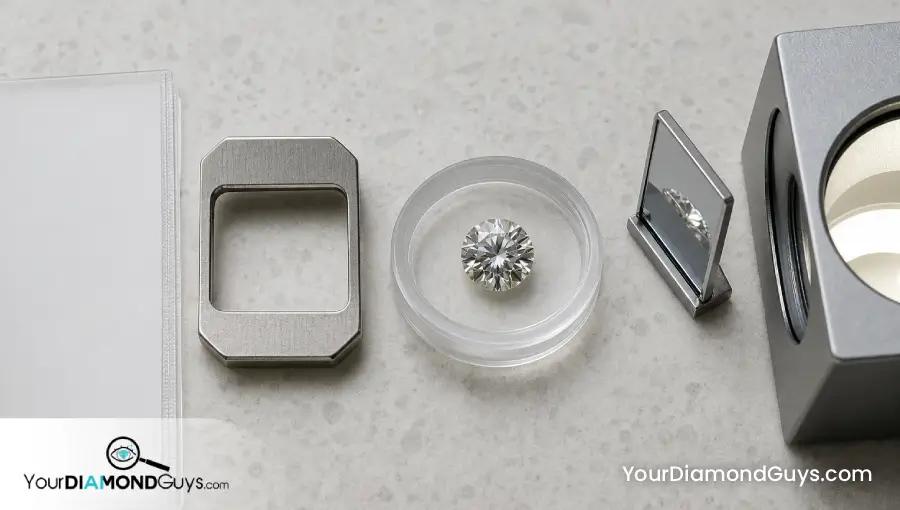
Round diamond moving from a blank report sleeve through measurement and girdle checks to neutral daylight inspection.
Verify the report on the issuing lab’s own website. Match every meaningful field to the listing. Ask for a clean video in neutral lighting, not only spotlight footage that makes every polished surface flash.
A report earns a diamond the right to be inspected. It does not earn the purchase. The lab report buying checklist turns that idea into a printable pass, investigate, or skip process.
How does certification fit into a real buying decision?
First, establish trust in the document. Second, establish that the document belongs to the stone. Third, decide whether the stone looks good. Fourth, decide whether its price reflects the lab, grades, cut, and evidence.
That order protects you from two opposite mistakes. You do not buy a weak diamond because the paper looks strong. You also do not reject a beautiful diamond because one harmless comment sounds technical.
A certified diamond comparison that exposes the risk
Say you are comparing two listings. Diamond A is a 1.01 carat natural round with a GIA report, G color, VS2 clarity, Excellent cut, and matching report data. The video shows crisp contrast and balanced brightness.
Diamond B has the same printed grades from an unfamiliar laboratory and costs 12 percent less. That is not automatically a deal. The discount can reflect a different grading opinion. I would require a current GIA report before comparing the two prices as equal specifications.
Diamond A still needs a visual review. Diamond B needs both a grading normalization and a visual review. The word certified does not erase that difference.
Where certified diamond buyers lose money
- Treating certified as a beauty grade.
- Comparing grades from different laboratories as identical.
- Skipping the issuing lab’s online report lookup.
- Assuming a PDF proves the stone and report still match.
- Using an appraisal value as proof of a bargain.
- Ignoring comments, treatments, measurements, and inscription details.
Six proof questions before you trust the paper
- Which laboratory issued the report?
- Can I verify the report number on the lab’s own website?
- Does the listing match the report line by line?
- Is the report number inscribed on the girdle?
- Can I see the actual diamond in neutral video?
- What is the return window if an independent inspection finds a mismatch?
My bottom line on diamond certification
For a natural diamond, start with a current GIA report. For a lab grown diamond, understand the lab’s current format and disclosures before comparing grades.
Then forget the sales word certified for a minute. Verify identity. Read the full report. Inspect the stone. Price the evidence you actually have.
Diamond Scams & Fake GIA Certificates: 6 Red Flags to Watch For
Questions? Reach out directly for a free consultation, or drop them in the Diamond Buyers Academy community — Rob and Josh answer personally.
What do buyers ask about certified diamonds?
← Browse all diamond grading guides
Want another set of eyes on the diamond?
Send the listing, grading report, price, and any video you have. We can look at the lab report, measurements, video, and price to make sure the evidence supports the price.
*Some links on our site may earn us a small commission at NO EXTRA cost to you, helping us keep our content free*