Emerald Cut Diamond Proportions With A Windowing Focus
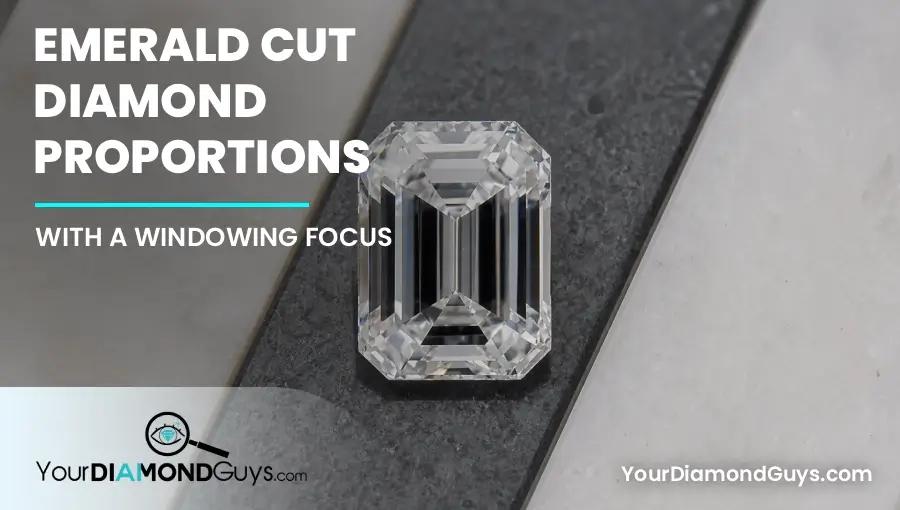
Move an emerald cut over contrast. A window exposes what sits behind the center.
By Rob Cornfield, Co-Founder of YourDiamondGuys.com. 30+ years in the global diamond trade. Specialist in diamond cut and light performance.
How we evaluate proportions: We reject obvious windowing first, then compare ratio, step pattern, extinction, corners, spread, and clarity. The GIA report narrows the field. Broad moving mirrors earn the yes.
Step cuts use broad, open facets. They reward clean geometry and punish weak light paths. The result looks either crisp and architectural or flat and glassy.
I can forgive a proportion number outside a chart when the steps work. I will not forgive a window because the spreadsheet says ideal.
For natural emerald cuts, start with GIA. GIA describes emerald cuts as fancy shapes without an overall cut grade, so table and depth ranges must stay subordinate to transparency and step behavior.
The Short Answer
Use a 1.30 to 1.50 ratio as the main rectangular style range, then choose how wide or slender you want the outline. Table around 58 to 65 percent and depth around 60 to 67 percent can form a useful search window, not a cut grade.
The purchase depends on centered steps, controlled windowing, moving contrast, corner balance, fair spread, and a video that shows the stone over both light and skin toned backgrounds.
Windowing Is The First Rejection Test
A window is a transparent area where background shows through the diamond instead of returning light. Tilt windows can appear at angles in many gems. A broad face up center window is the real problem.
View the emerald cut over a neutral card and over a skin toned surface. Move it slowly. Healthy steps alternate light and dark. A window stays transparent and lets the background dominate.
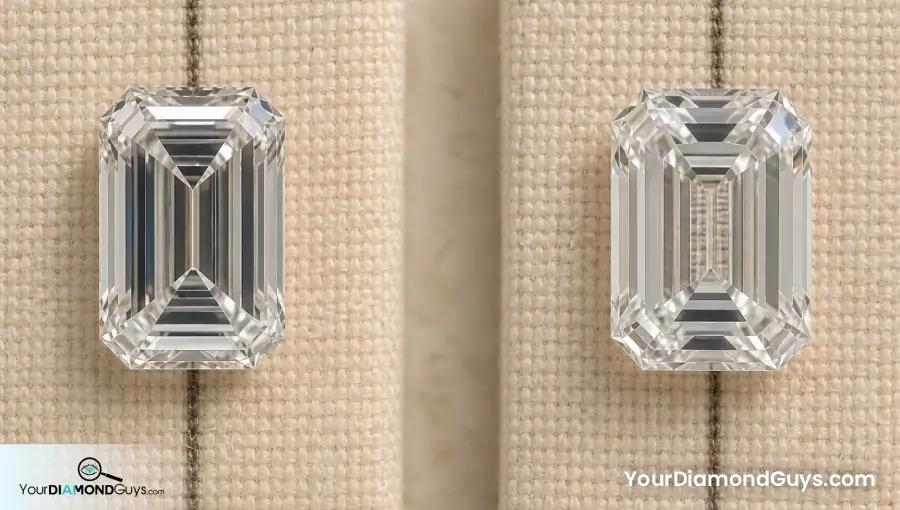
The thread is the giveaway. Healthy steps break it into reflections. A window lets you see it through the center.
Do not confuse a moment of darkness with windowing. Darkness is extinction or obstruction. Transparency is the clue.
Emerald Cut Proportion Starting Zones
Emerald cuts vary in corner size, step count, crown structure, and pavilion geometry. These numbers organize candidates with a familiar outline. They cannot promise a hall of mirrors pattern.
A depth above the range can hide weight. A shallow stone can spread well and still window. The video decides whether the geometry works.
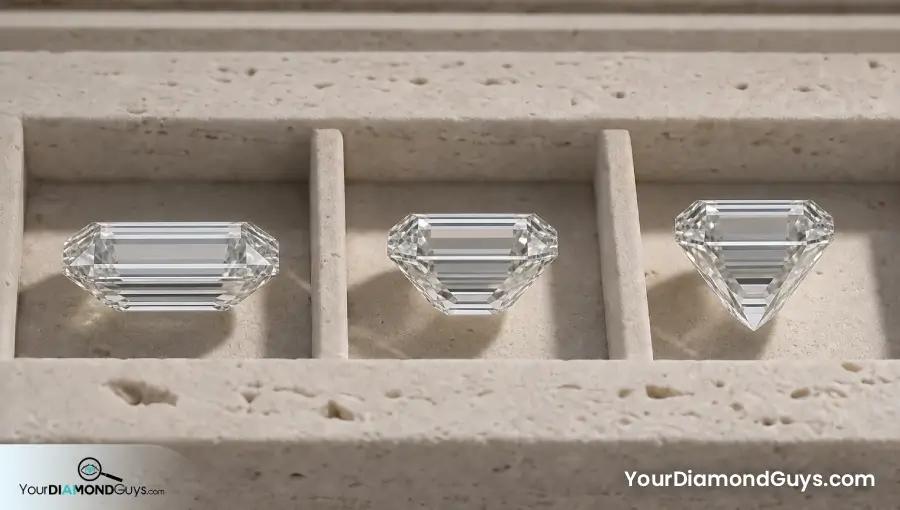
Depth changes where the carat sits. A shallow or deep stone still has to prove its face up spread and light path.
| Emerald cut attribute | Practical starting zone | What to verify |
|---|---|---|
| Length to width ratio | 1.30 to 1.50 | Preferred width, parallel sides, and corner balance |
| Table percentage | About 58 to 65 percent | Crown presence and step pattern |
| Depth percentage | About 60 to 67 percent | Windowing, spread, and hidden weight |
| Girdle | Avoid unexplained extremes | Corner security and weight |
| Polish and symmetry | Excellent or Very Good | Centered table and aligned steps |
Step Pattern And Extinction
The long facets should create organized bands that switch from light to dark as the stone moves. The pattern does not need to be perfectly even in every frame, but it should feel centered and deliberate.
Large black zones that stay fixed can make the center look dead. Broad white transparency can make it look watery. The best stones move between contrast states without losing the architecture.
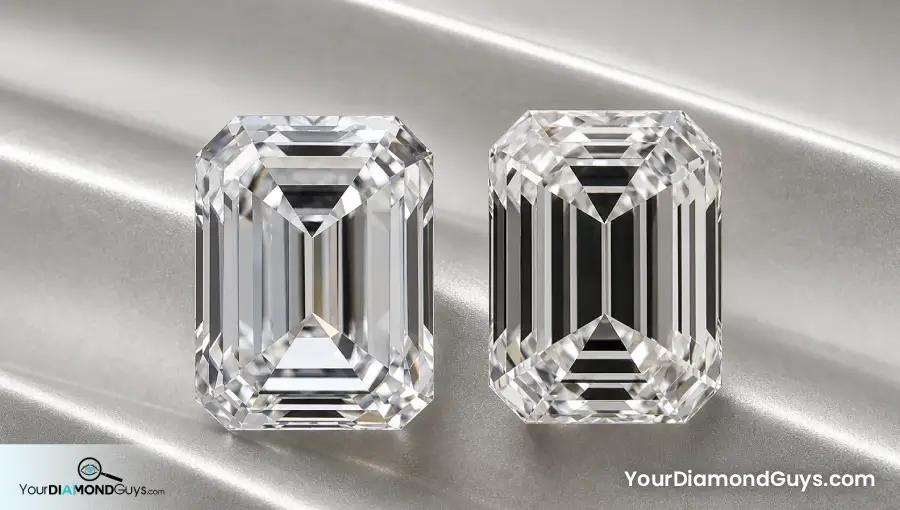
Good steps switch in organized bands. Fixed black mirrors create extinction. Broad see through white is windowing.
The fancy shape limits guide shows why no table and depth pair can replace that motion test.
Spread, Corners, And Clarity
Compare length and width with emerald cuts in the same ratio band. Deep pavilions and thick girdles can make a 1.50 carat stone face up like a lighter one.
Clipped corners should match. Sides should look parallel unless a deliberate taper is part of the design. The culet and table should sit on the center axis.
Use the outline quality guide to compare the four clipped corners and both long sides before the open step pattern captures all your attention.
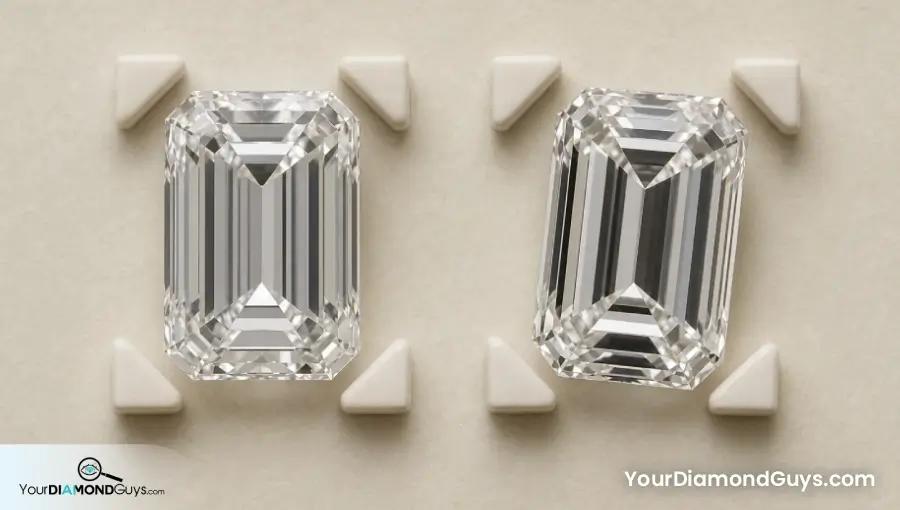
Equal corner gaps expose the geometry fast. The open center also gives inclusions nowhere to hide.
Step cuts reveal inclusions more readily than busy brilliant patterns. Review the center for a visible crystal, feather, cloud, or graining, and avoid structural risks such as a bruise, chip, cavity, knot, etched channel, or indented natural near the girdle or corner.
How I Screen An Emerald Cut
I pick the ratio and outline, then test windowing before I study fine proportion ranges. A face up window ends the review.
The survivors get step pattern, spread, corner, clarity, and side profile checks. I want a stone that looks architectural in ordinary light, not one that needs a dark studio to create contrast.
A Windowing Example
Emerald A has 63 percent table, 64 percent depth, and 1.40 ratio. Emerald B has the same three values.
Over a neutral card, Emerald A shows alternating steps. Emerald B shows the card through a broad center area. The numbers tie. Emerald A wins before price enters the room.
Mistakes I Would Avoid
- Calling an emerald cut ideal from table and depth alone.
- Testing only against a black background.
- Confusing darkness with transparency.
- Ignoring corner mismatch or a skewed table.
- Choosing low clarity without checking the open center at normal distance.
Questions To Ask Before Buying
- Can I see the stone over neutral and skin toned backgrounds?
- Does the center show a face up window?
- Do the steps switch cleanly as the diamond moves?
- Are the sides, corners, table, and culet centered?
- Does the footprint make sense for the carat weight and ratio?
Where To Compare The Proof
Affiliate disclosure: Your Diamond Guys can earn a small commission if you buy through a partner link. It does not change what you pay or which diamond we recommend.
Compare emerald cut videos on Blue Nile and Ritani with the background test in mind. Pause at face up, look for transparency, then watch whether the broad steps switch in an organized pattern.
The Emerald Cut I Would Choose
Use the ranges to find the right outline and remove obvious depth outliers. Let windowing and step behavior decide the cut.
A strong emerald cut looks crisp in normal light, stays centered, and hides no face up window behind a good report. That is the stone worth paying for.
If you want another set of eyes on the stone, book your free consultation with Your Diamond Guys.
Test The Steps, Not Just The Percentages
The broad emerald cut diamond guide covers shape, clarity, and buying strategy. Pair it with the step cut windowing guide, then check ratio and corner and outline quality.
Return to the diamond proportion relationships guide to connect step pattern and windowing with ratio, spread, depth, and outline quality.
Why Emerald Cut Diamonds Exude Timeless Elegance
Questions? Reach out directly for a free consultation, or drop them in the Diamond Buyers Academy community — Rob and Josh answer personally.
Questions Buyers Ask Us
*Some links on our site may earn us a small commission at NO EXTRA cost to you, helping us keep our content free*