Diamond Outline Quality And Shape Symmetry
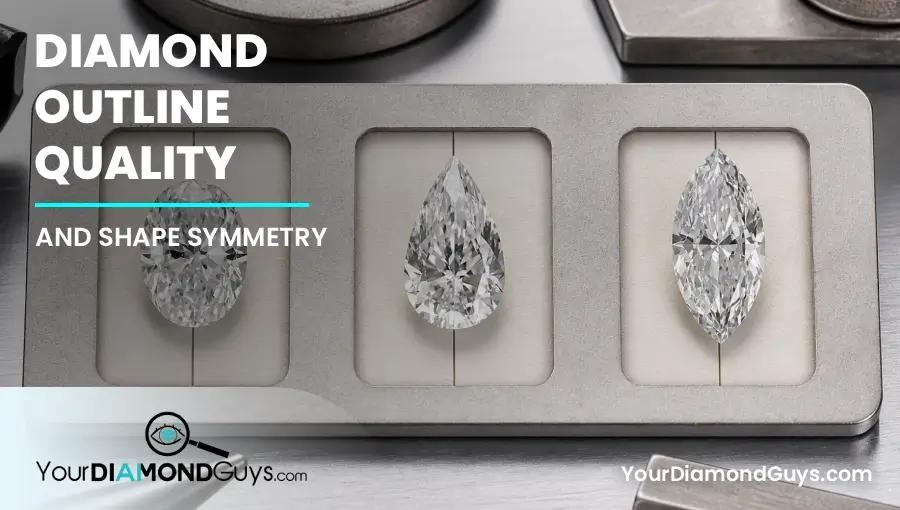
A ratio can match while the shoulders, belly, points, and symmetry still look wrong.
By Josh Allen, Co-Founder of YourDiamondGuys.com. Fifth generation diamantaire with 30+ years in the global diamond trade. Former supplier to Tiffany & Co., Cartier, and Harry Winston.
How we evaluate proportions: We use a straight top view to check shoulders, wings, points, corners, and the centerline, then compare those observations with ratio and symmetry. The report can describe the stone without grading its outline appeal.
The grade evaluates craftsmanship features. Outline appeal asks whether the curves, shoulders, wings, corners, lobes, and points form a balanced shape from the top.
A dealer notices a heavy shoulder before reading the ratio. Once you see it, you cannot unsee it. That is why the top view comes early in my shortlist.
For natural diamonds, start with GIA. GIA recommends checking oval halves, curves, and culet alignment, and the same centerline discipline works across other fancy outlines.
The Short Answer
Use a straight top view and draw an imaginary line through the long axis. The left and right sides should mirror each other closely. Then check the cross axis, center, culet, points, corners, and curve transitions.
Reject obvious flat spots, uneven shoulders, mismatched wings, crooked tips, lopsided lobes, and off center patterns unless the asymmetry is an intentional design you truly want.
The Centerline Test
Place the table face up and level. A tilted video can make one side look larger, so start from a straight frame.
Imagine a vertical line from top to bottom. Compare the two sides. Then imagine a horizontal line through the center and compare the upper and lower transitions where the shape requires it.
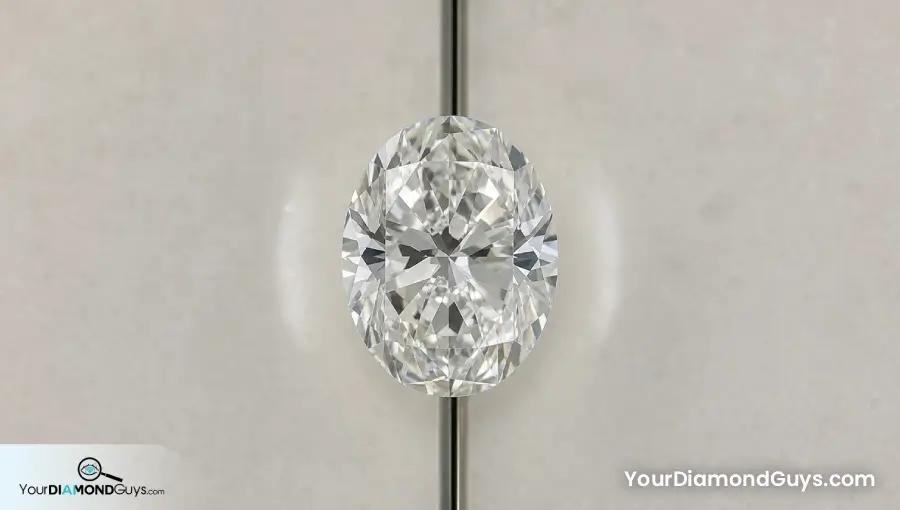
The centerline is a fast sanity check. Match the shoulders, belly, ends, and culet before sparkle distracts you.
The length to width ratio tells you how stretched the outline is. The centerline test tells you whether that stretch stays balanced.
Outline Problems By Shape
Each shape has its own failure points. The same bump that looks minor on a cushion can destroy the flow of a pear shoulder or heart lobe.
Use the table as a first scan, then zoom into any transition that looks abrupt. Smooth outline rhythm matters because prongs and halos often make irregularities more obvious, not less.
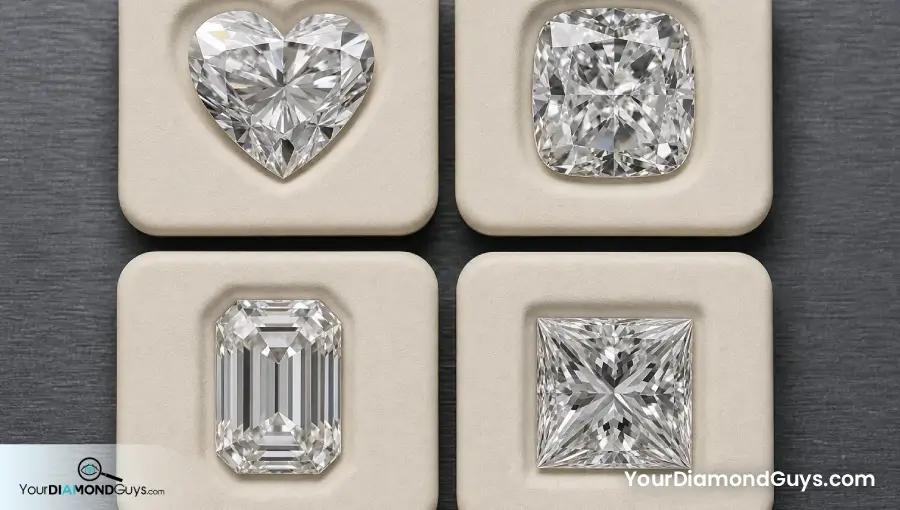
Every shape has its own perimeter traps. Judge the outline before the facet pattern gets your attention.
| Shape | Outline areas to inspect | Common distraction |
|---|---|---|
| Oval | Ends, shoulders, belly, and center axis | Flat ends, bulging sides, or egg shape |
| Pear | Shoulders, belly, wings, and tip | One heavy shoulder or crooked point |
| Marquise | Points, wings, belly, and axis | Mismatched points or flat wings |
| Heart | Lobes, cleft, wings, and point | Unequal lobes or off center cleft |
| Cushion | Corners, sides, and belly | One square corner or uneven bulge |
| Emerald and radiant | Parallel sides and clipped corners | Taper, unequal corners, or skew |
| Princess | Side equality and four corners | Trapezoid outline or damaged corner |
Outline Symmetry And Facet Symmetry Are Different
The outside perimeter can look balanced while the internal facet pattern looks uneven. The reverse can happen too. You need both views.
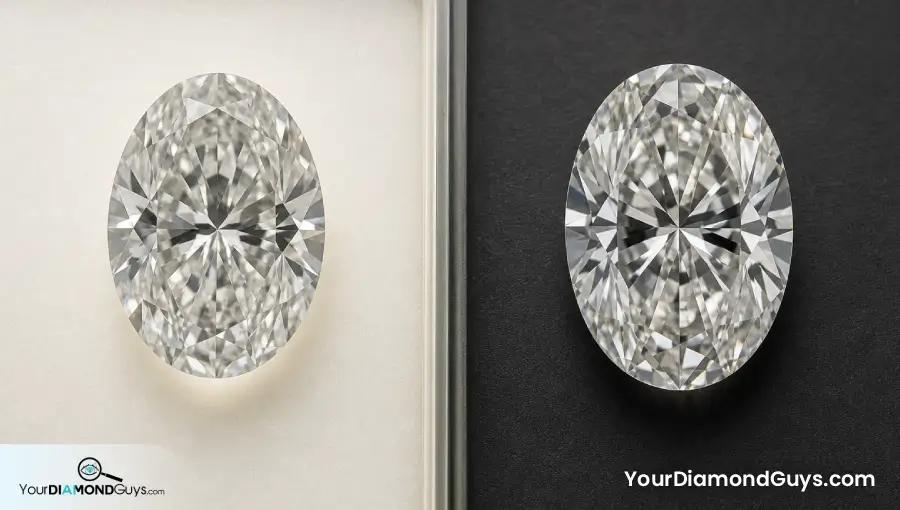
A clean perimeter can surround an uneven internal pattern. You need to inspect both.
GIA symmetry gives useful craftsmanship context, but a fancy shape still needs visual inspection because GIA does not assign an overall cut grade to these outlines.
The fancy shape proportion limits guide explains which visual checks replace a round style cut filter.
How The Setting Changes What You Notice
A solitaire exposes the outline. A halo traces it. A bezel draws a hard metal border around it. Each setting can amplify a flat spot or uneven shoulder.
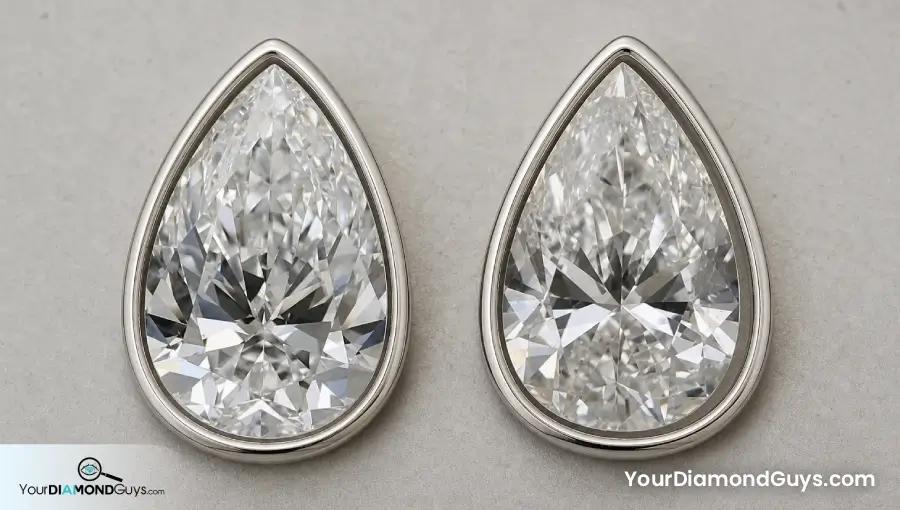
A bezel or halo draws a hard border around the stone. Flat spots and uneven shoulders get louder, not quieter.
Prongs can hide a tiny irregularity, but do not plan the whole purchase around camouflage. The prongs need to protect structural areas first.
Send the exact length, width, and depth to the setter. A stock head built for a different outline can force poor prong placement.
East to west settings change the axis your eye follows, but they do not remove asymmetry. Rotate the top image into the planned orientation and judge it again before the mounting goes into production.
How I Screen An Outline
I screen the outline before I run the full proportion red flag screen. A stone with an awkward silhouette does not become graceful because the table and depth fall inside a preferred band.
Once the shape passes, I inspect internal pattern, bow tie or windowing, spread, girdle, and durability. The outline earns the deeper review.
An Outline Balance Example
Two pears both measure 10.2 × 6.3 mm. Pear A has matching shoulders and a centered tip. Pear B has one flat shoulder and a tip that leans to the left.
The ratio is identical. The outline is not. Pear A will set more cleanly and look balanced every time the wearer looks down.
Mistakes I Would Avoid
- Using ratio as proof of a balanced outline.
- Judging a tilted frame instead of a straight top view.
- Ignoring shoulders, wings, corners, or lobes while watching sparkle.
- Assuming a halo will hide a poor shape.
- Treating the GIA symmetry grade as a personal outline preference score.
Questions To Ask Before Buying
- Can I see a level straight top image?
- Do the left and right sides mirror each other?
- Are the culet, table, and point on the same axis?
- Do the curves change smoothly without flat spots or bulges?
- Will the chosen setting trace or expose the outline?
Where To Compare The Proof
Affiliate disclosure: Your Diamond Guys can earn a small commission if you buy through a partner link. It does not change what you pay or which diamond we recommend.
Compare straight top videos on Brilliant Earth and Ritani. Pause the stones in the same orientation, ignore sparkle for a moment, and judge the outline before the facet pattern.
The Outline I Would Choose
Trust your eye on outline. A balanced shape looks calm before it sparkles.
Use the report for identity and craftsmanship context, then make the top view earn the setting. Numbers cannot smooth a flat shoulder after purchase.
If you want another set of eyes on the stone, book your free consultation with Your Diamond Guys.
Match The Outline To The Shape
Start with the broad diamond shape guide. Then calculate the length to width ratio, check the limits of the report numbers, and inspect shape specific issues in the pear, radiant, or princess guides.
Use the complete diamond proportions hub to connect outline quality with ratio, millimeters, spread, durability, and shape specific checks.
The Final Shortlist: Choosing Your Perfect Diamond
Questions? Reach out directly for a free consultation, or drop them in the Diamond Buyers Academy community — Rob and Josh answer personally.
Questions Buyers Ask Us
*Some links on our site may earn us a small commission at NO EXTRA cost to you, helping us keep our content free*