Fancy Shape Diamond Proportions Can Mislead
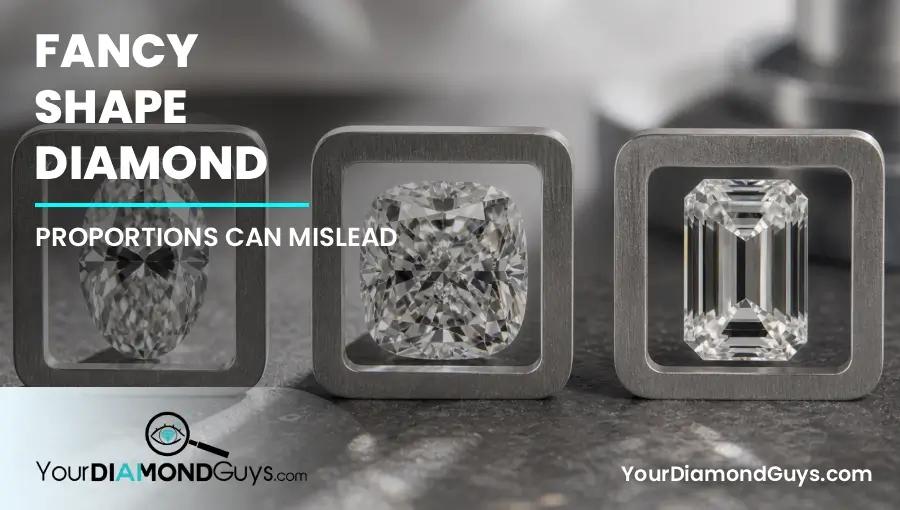
Matching table and depth numbers do not guarantee matching beauty in fancy shapes.
By Rob Cornfield, Co-Founder of YourDiamondGuys.com. 30+ years in the global diamond trade. Specialist in diamond cut and light performance.
How we evaluate proportions: We use the GIA report to confirm identity and measurements, then judge outline, bow tie, windowing, pattern, and spread in motion. Fancy shapes need shape specific proof, not one universal percentage chart.
Fancy shapes change outline, facet arrangement, virtual facet size, obstruction, and weight distribution all at once. Two percentages cannot compress that into a cut grade.
This is where decades in the trade matter. The report removes bad identity guesses. The moving stone removes bad cut guesses.
For natural diamonds, start with GIA. GIA currently gives an overall cut grade only to standard round brilliants, which tells you exactly why an oval or cushion needs more than a report filter.
The Short Answer
Use table, depth, measurements, ratio, girdle, polish, and symmetry to organize a fancy shape search. Do not use them to approve the cut.
Replace the missing overall cut grade with a straight top image, slow neutral video, outline review, face up spread comparison, bow tie or windowing test, and light performance image when available.
Why The Same Numbers Produce Different Diamonds
Fancy cuts can use different pavilion mains, extra facets, step arrangements, corner shapes, and outline curvature while keeping the same table and total depth.
An elongated cushion modified brilliant and a cushion brilliant can share 62 percent table and 65 percent depth. One can show chunky reflections. The other can show crushed texture. The report values do not identify the whole optical design.
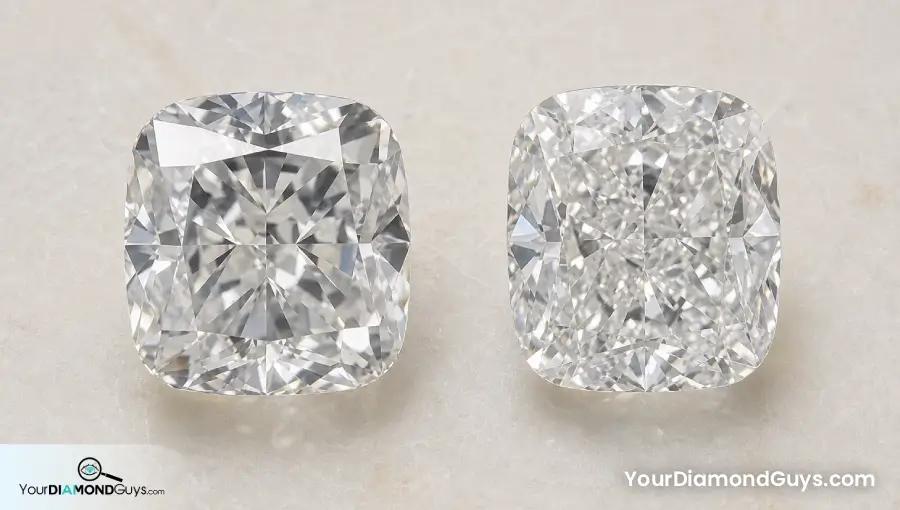
Same carat neighborhood. Similar proportions. Completely different facet personalities. The report cannot name that texture for you.
The table percentage guide and depth guide remain useful, but their role changes from approval to triage.
Which Numbers Still Matter
Measurements tell you visible footprint. Ratio tells you outline style. Girdle gives durability and hidden weight context. Polish and symmetry tell you about finish and craftsmanship.
Table and depth flag outliers or explain a small spread. They become stronger when compared with several stones of the same shape, ratio, and facet style.
| Report field | Useful for | Cannot prove |
|---|---|---|
| Length, width, depth | Footprint and vertical build | Brightness or balanced outline |
| Length to width ratio | Silhouette and setting fit | Bow tie or windowing |
| Table percentage | Outlier screening and facet context | Overall fancy cut quality |
| Depth percentage | Spread and hidden weight clues | Light return by itself |
| Girdle | Durability and perimeter weight | Face up beauty |
| Polish and symmetry | Craftsmanship | A complete optical grade |
Visual Checks That Replace A Round Cut Filter
Start with outline quality. A distorted silhouette never improves in a setting. Then watch the stone move slowly through diffused light.
Ovals and pears need bow tie review. Emerald cuts need windowing and step extinction review. Cushions and radiants need facet texture and dead zone review. Princess cuts need corner and center pattern review.
Keep the camera and light consistent across candidates. A rotating spotlight video can make every stone look active while hiding persistent darkness.
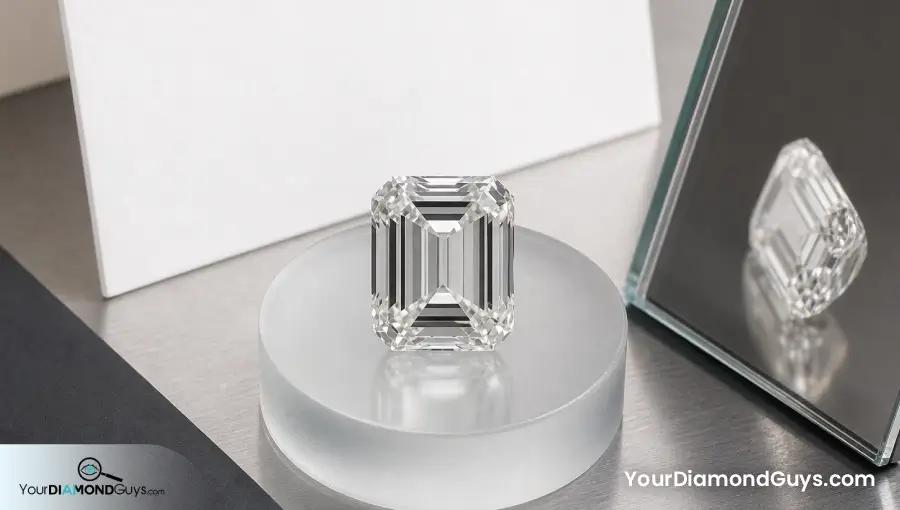
A straight view, diffused light, controlled contrast, slow movement, and a side reflection tell you more than a seller badge.
- Straight top still for outline and centering.
- Slow rotation for contrast movement.
- Diffused light for broad brightness and leakage.
- Mixed light for fire and real room behavior.
- Side view for depth, girdle, and pavilion bulge.
Shape Specific Guides Beat Universal Ranges
Use the oval guide for shoulders and bow tie, the pear guide for belly and tip, and the emerald cut guide for steps and windowing.
Cushions, radiants, and princess cuts need separate treatment too because their corner structure and pavilion styles use depth differently.
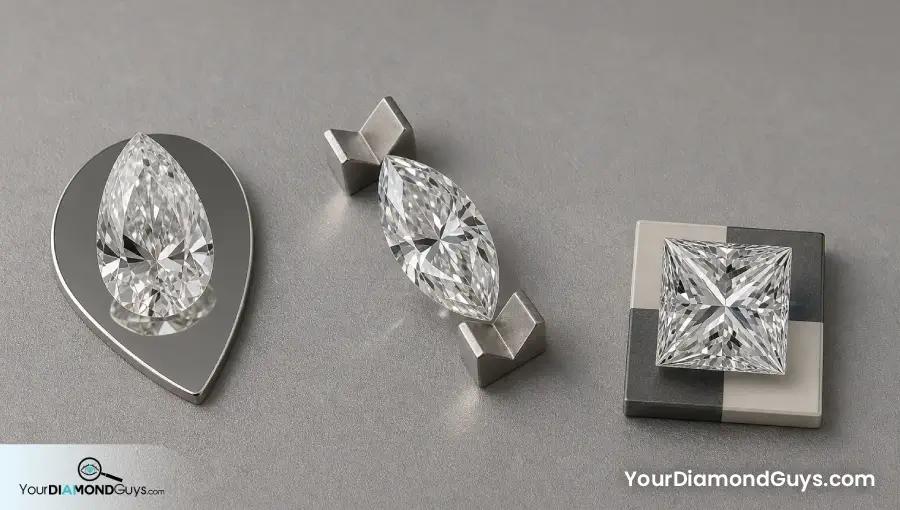
Pear shoulders, marquise tips, and princess corners need different tests. One universal range cannot do all three jobs.
A universal chart feels efficient. It also removes the attributes that make the shape what it is.
That does not mean buying blind. It means replacing one blunt chart with a short, repeatable visual routine that respects the actual shape.
How I Screen A Fancy Shape
I use the proportion red flags checklist to remove identity, treatment, finish, spread, and obvious proportion concerns. Then I start the real fancy shape cut review.
The stone must hold a balanced outline, controlled dark areas, active contrast, and a fair footprint in more than one light. A single perfect frame does not count.
Two Matching Reports, Two Different Stones
Two ovals both show 59 percent table, 62 percent depth, and 1.42 ratio. Oval A has broad dark obstruction across the center that stays through the rotation. Oval B shows a narrow contrast band that brightens as it moves.
The report cannot separate them. The video does. Oval B gives the more balanced appearance even though the numbers tie.
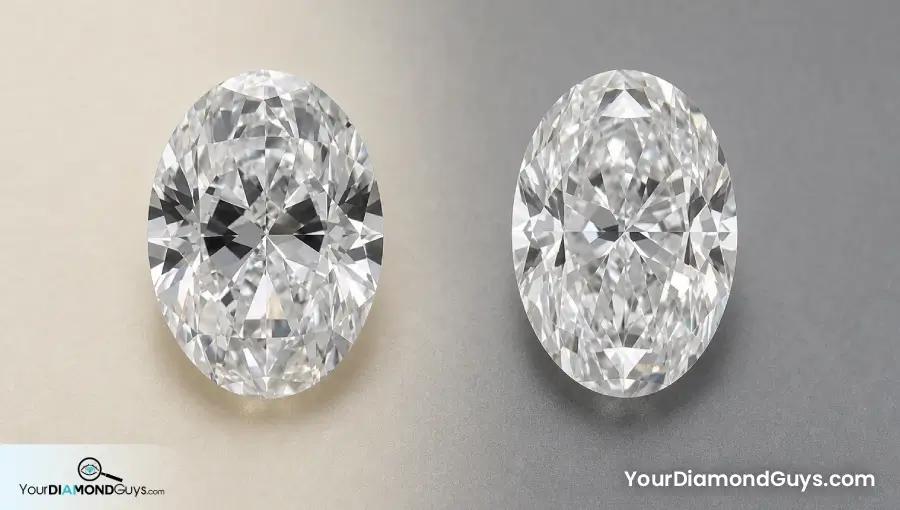
The broad bow tie stays dark. The narrower band breaks up and brightens. Matching percentages do not make the stones equal.
Mistakes I Would Avoid
- Using a universal ideal range across every fancy shape.
- Treating seller cut labels as laboratory grades.
- Watching only a spotlight rotation.
- Ignoring outline and spread because the table and depth look safe.
- Comparing different facet styles as if their percentages mean the same thing.
Questions To Ask Before Buying
- Does GIA provide an overall cut grade for this shape?
- Can I see the diamond in neutral diffused light?
- Does any dark or transparent zone stay fixed as it moves?
- Is the outline balanced at this ratio?
- How does spread compare with stones of the same shape and style?
Where To Compare The Proof
Affiliate disclosure: Your Diamond Guys can earn a small commission if you buy through a partner link. It does not change what you pay or which diamond we recommend.
Use broad fancy shape inventories on Blue Nile and Ritani to compare multiple videos inside one shape and ratio band. Ignore seller badges until the actual patterns separate the stones.
The Fancy Shape Rule I Trust
Use fancy shape numbers to narrow the search and explain problems. Never let them finish the cut decision.
The winning stone has a balanced outline, fair spread, and a pattern that stays alive outside spotlight theater. Make the visual evidence do the final work.
If you want another set of eyes on the stone, book your free consultation with Your Diamond Guys.
Use A Shape Specific Check
Start with the broader fancy shape cut guide. Then use the proportion check built for the stone in front of you: oval, pear, emerald, cushion, radiant, or princess.
Return to the diamond proportions screening guide for the measurement, architecture, shape, and proof checks that support a fancy shape decision.
Exploring Diamond Shapes
Questions? Reach out directly for a free consultation, or drop them in the Diamond Buyers Academy community — Rob and Josh answer personally.
Questions Buyers Ask Us
*Some links on our site may earn us a small commission at NO EXTRA cost to you, helping us keep our content free*