The first filter
Missing evidence is a reason to pause.
Don't buy a diamond you haven't been allowed to check. A grade, a stock photo, and a discount won't tell you how the stone looks. For a natural diamond, start with GIA. Put the full report, listing, actual video, and total price together before you shortlist it.
A red flag means ask another question. It doesn't automatically mean fraud or a bad stone. A clear answer lets you keep looking. A vague answer is a reason to move on. That's where our diamond second opinion service starts.
- Match the GIA number and measurements to the listing.
- Confirm natural or lab origin and any treatment disclosure.
- Ask for video of this stock number, not a representative stone.
- Get return eligibility for the exact diamond and setting in writing.
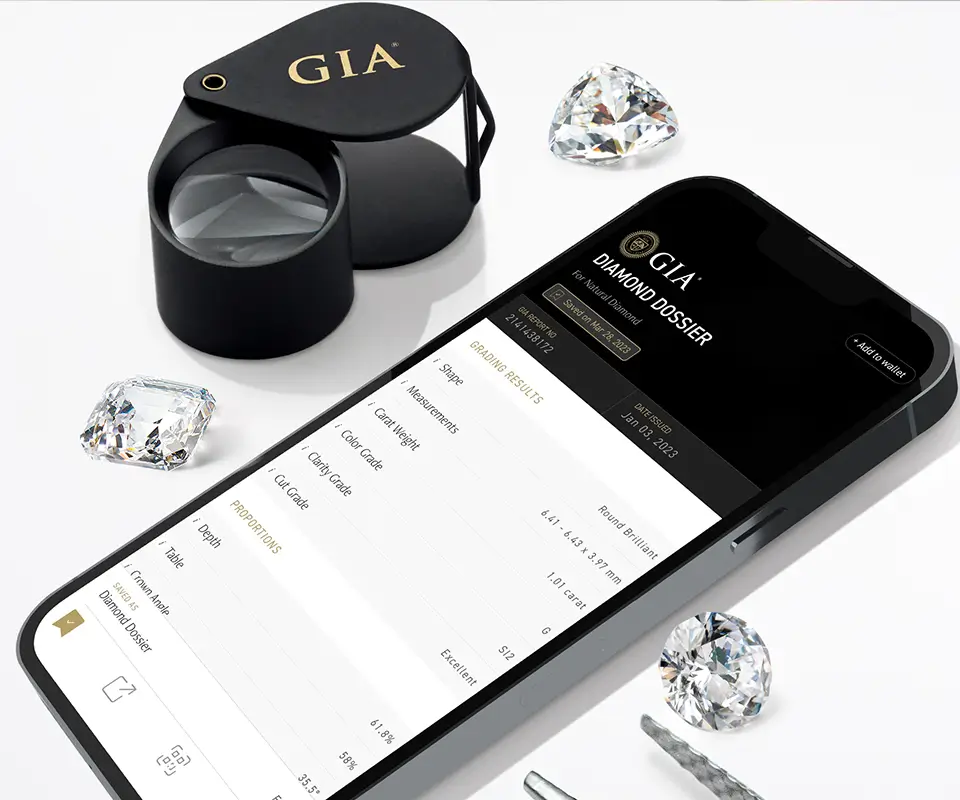
An annotated example
Read this listing like a buyer, not a search filter.
Here's a made up listing to practice on. It isn't a retailer screenshot, a current offer, or a client case. These are the five questions I'd ask before spending money.
- 1Report
- GIA Excellent. Number and full report missing.
- 2Size
- Carat weight shown. Millimeter measurements missing.
- 3Video
- Representative diamond image. No stock specific video.
- 4Price
- Discount highlighted. Complete ring quote missing.
- 5Terms
- Returns advertised. Custom setting eligibility unclear.
GIA sample: the fields to ask for.
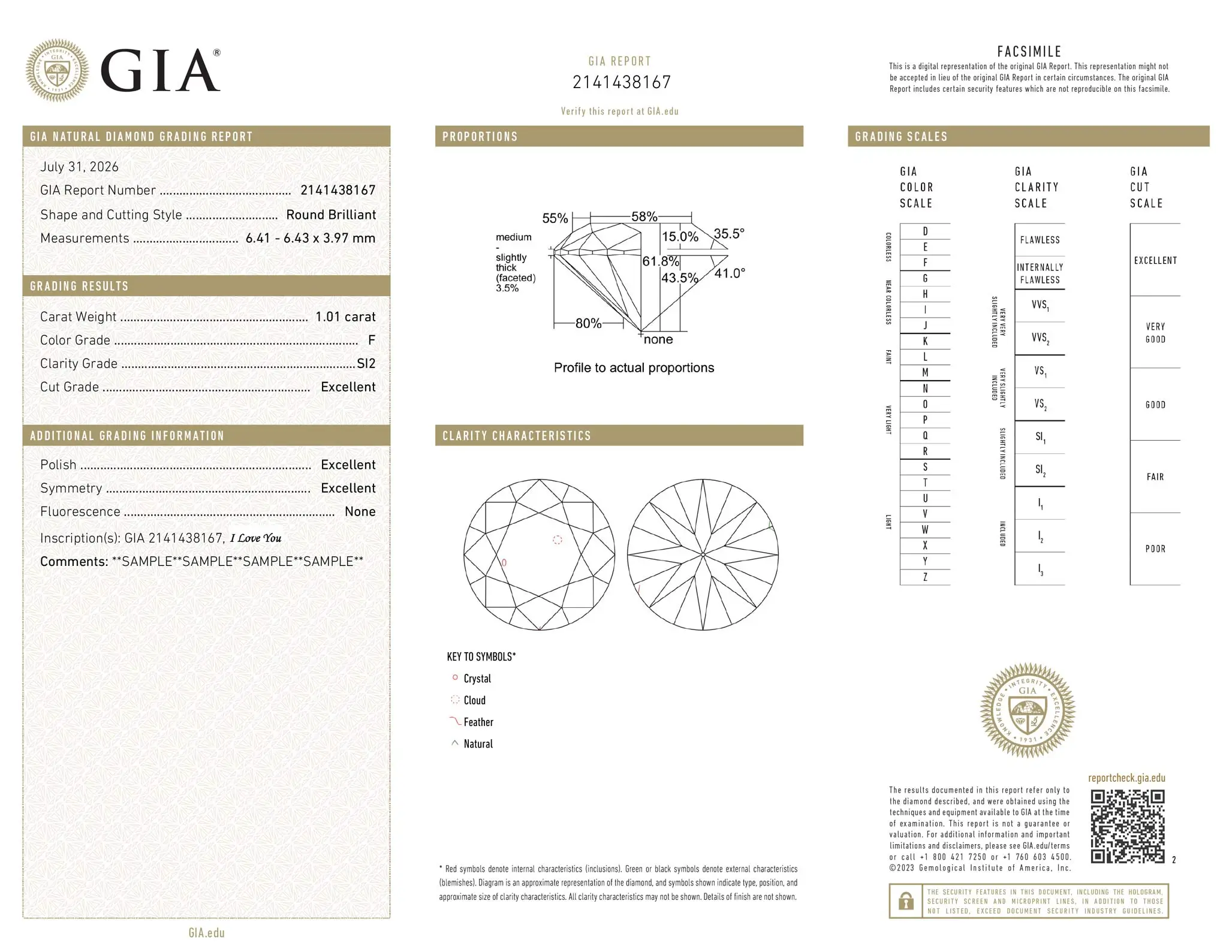
Here's what's missing. Find the report number, measurements, and full grading details on GIA's sample. This sample does not belong to the made up listing above. The seller still owes you actual video, a full quote, and written return terms.
Sample report: GIA. Original sample and facsimile markings retained.
| Check | Ask the seller | Why it changes the decision |
|---|---|---|
| 1 · Identity | Send the report number and full report. | Look up the record, then confirm the stone matches it. |
| 2 · Visible size | What are the length, width, depth, and proportions? | Weight hidden below the girdle does not make the stone look larger. |
| 3 · Appearance | Can I see this exact diamond moving in diffuse light? | A representative photo cannot establish its clarity or light return. |
| 4 · Cost | What is the final amount for this diamond and this setting? | Payment discounts, tax, and setting costs change the comparison. |
| 5 · Exit | Does this complete order qualify for a refund, and when does the clock start? | A custom setting can change the purchase conditions. |
Still missing an answer? Say so. “I don't have enough information” is a better buying decision than trusting a badge.
Identity and grading
A real report number does not identify the stone by itself.
Look up the number in GIA Report Check. Then match the shape, weight, measurements, color, clarity, fluorescence, and comments. Have the delivered diamond checked against that report while you can still return it. An inscription helps. It doesn't finish the job.
One of our published diamond investigations covers a GIA case with a false inscription. That doesn't tell us anything about the seller you're looking at. It tells us why checking a number and checking a diamond are two separate jobs.
A number can be copied.
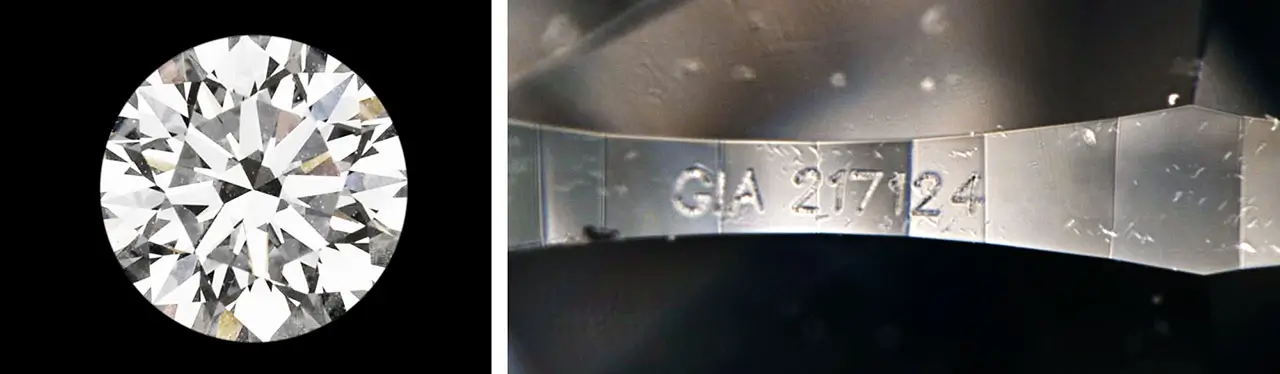
GIA documented this laboratory grown diamond with a false inscription matching a natural diamond report. A real number alone did not identify the stone. This is a published GIA case, not a YDG client listing.
Photos by Troy Ardon. Source: GIA, Gems & Gemology.
Cut and appearance
Excellent is a range. Look at the actual diamond.
For a natural round, my starting filter is a table of 56 to 58 percent, depth of 60 to 62.4 percent, crown angle of 34 to 35 degrees, and pavilion angle of 40.6 to 41 degrees. I also look for Excellent polish and symmetry and none to faint fluorescence. Treat those numbers as shortlist guardrails, not a promise of performance.
Outside those starting ranges? Ask why, then look harder at the images. Don't reject a diamond from one number alone. GIA's cut grade guide explains how the parts work together. Our cut quality hub shows you what to check when you're buying.
Know where those numbers sit.
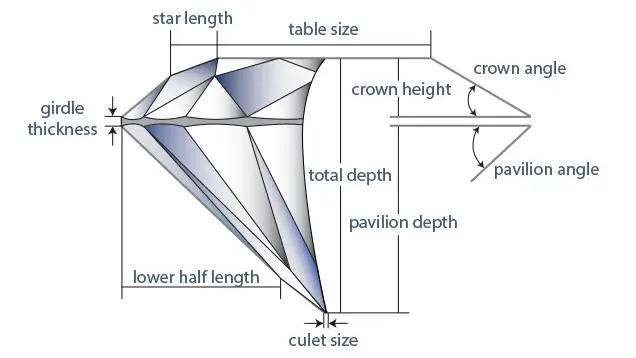
The table, crown, pavilion, and depth describe different parts of the same diamond. Read them together. This GIA diagram shows the anatomy. The narrower buying ranges above are Rob's starting screen, not GIA's full Excellent grade boundaries.
Diagram: GIA.
For an oval, pear, or marquise, watch the center and ends as the stone moves. Do not paste round proportion limits onto a fancy shape. A dark patch in one frame is not enough to diagnose a persistent bow tie. Compare the motion and lighting first.
Clarity and condition
Name the inclusion before accepting the reassurance.
“VS2” doesn't answer “Can I see it?” Ask what the inclusion is, where it sits, and whether it affects durability. Get a close view of any bruise, chip, cavity, knot, etched channel, or indented natural. Covering it with a prong doesn't answer a durability question.
Haze and transparency also deserve a separate answer. A bright studio video can make a stone look lively while leaving overall milkiness hard to judge. Ask for diffuse light and a clean stone. Read our cloud and transparency guide before treating a clean looking plot as a clean bill of health.
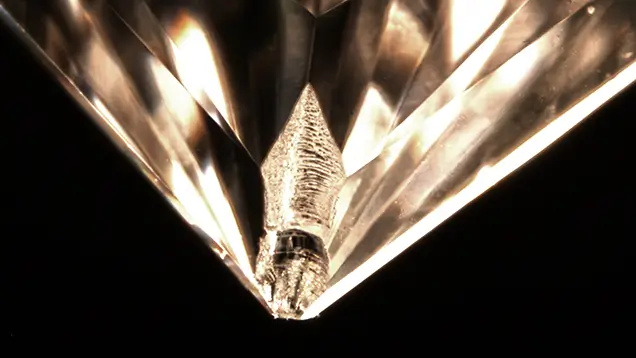
A chip and a cavity are specific concerns.
Chip at a corner
Open cavity at the girdle
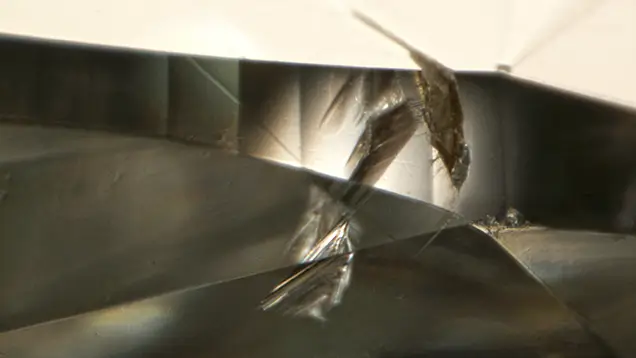
These magnified GIA examples show a stepped chip at a princess corner and an open cavity at a girdle. Ask where the feature sits, how large it is, and what risk it creates. These are separate examples, not a matched pair or a view at normal wearing distance.
Chip photo by James Gibson. Cavity photo by Mitch Lam. © GIA.
Your shortlist
Send the diamond. Tell us what's missing.
When you browse Ritani’s inventory and Blue Nile’s inventory, save the reports and actual videos. Compare how much each seller shows you, as well as what each one charges.
Send the listing, report, asking price, video, and your unanswered questions through our diamond review form. If you have two finalists, use our video comparison guide before choosing the one that looks brighter on your screen.
If the evidence checks out but the price still bothers you, use our complete quote price check before deciding whether the diamond is overpriced.
Buyer questions
Your questions, answered
Is a missing video an automatic reason to reject a diamond?
Ask for one first. You want to see the exact diamond and know how you'll inspect it before the return deadline. If the seller can't give you enough to work with, I'd move on.
Does a GIA Excellent cut grade mean the diamond will look great?
No. Excellent gets it onto the shortlist. Then I want to see the proportions, transparency, and actual stone in ordinary light.
Should I reject every diamond with an inclusion?
No. Identify the feature, where it sits, and what it does. A small harmless crystal is a different buying question from a chip or cavity near a vulnerable edge.
Can a report lookup prove that the delivered diamond is correct?
No. It confirms the report exists. You still need someone to match the actual diamond to that report while you can return it.