How we review diamond retailers
A retailer review should help you shop with your eyes open. We look at the buying experience, the evidence you can access, and the terms behind the offer.

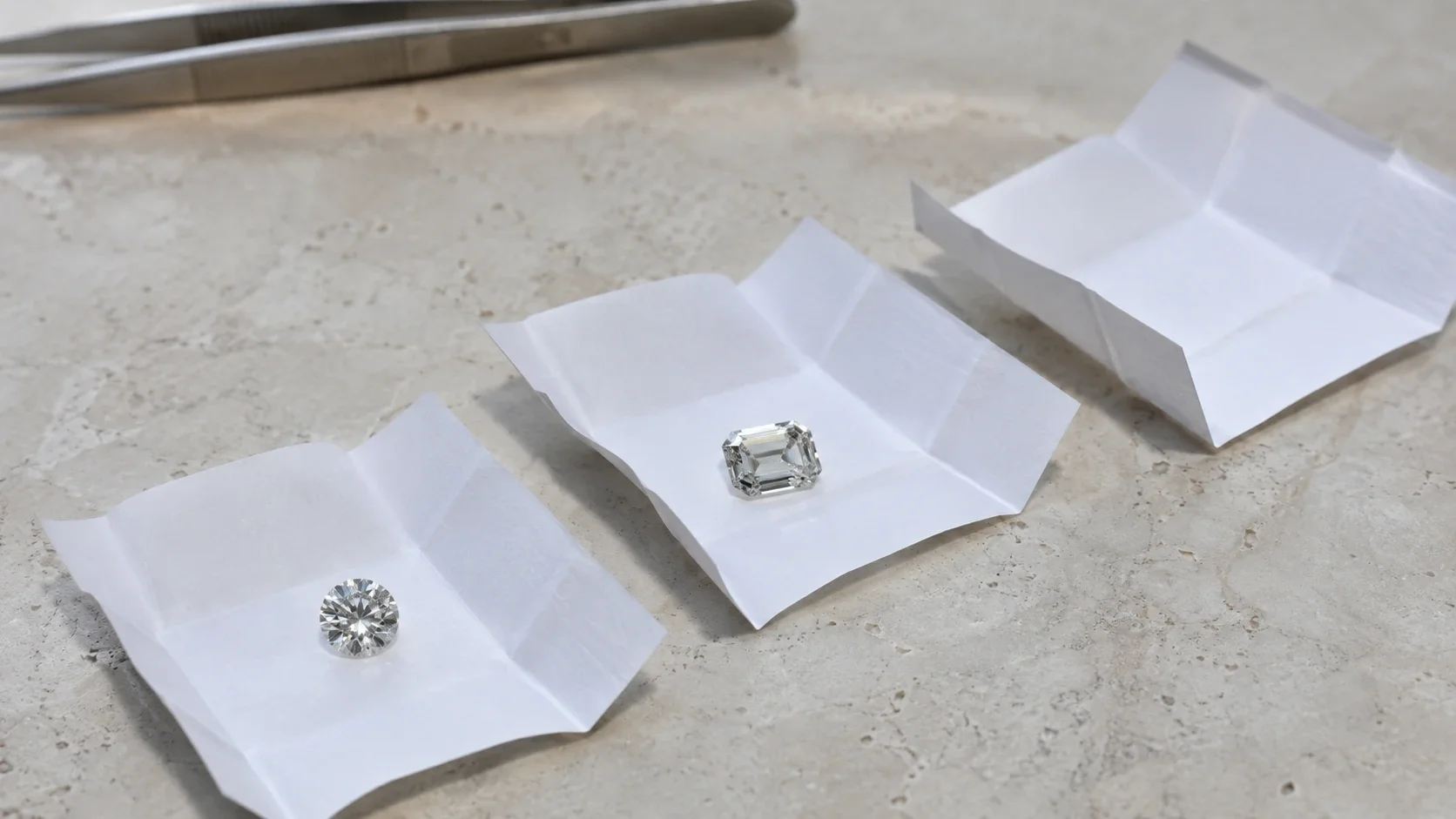
A good retailer still needs to show you a good diamond
Our retailer reviews look at the experience of finding, evaluating, and buying a diamond online. We look at what a buyer can learn, what the seller makes difficult, and which terms deserve a closer read.
A retailer score does not approve every stone in its inventory. Use the review to understand the seller. Use our diamond review method to judge the actual candidate.
The distinction matters in the trade. A large virtual inventory can list stones held by different suppliers. Thousands of listings do not mean thousands of diamonds sit in the retailer's office ready for inspection.
The six categories in our published reviews
Our retailer reviews use six categories with scores on a five point scale. The written findings explain what sits behind those numbers.
| Category | The buying question | What deserves attention |
|---|---|---|
| First Impressions | Can I understand the offer quickly? | Clear navigation, readable information, useful page organization, and distractions that obscure the task. |
| User Friendliness | Can I investigate and compare candidates? | Filters, report access, video controls, comparisons, saved selections, and the steps needed to move forward. |
| Inventory Selection | Does the selection support my search? | Relevant shapes and grades, actual images, available reports, supplier stock, and whether the seller can inspect a candidate. |
| Customer Service | Do I get useful answers? | Responses to specific diamond and policy questions, clarity about missing information, and sales pressure described in the review. |
| Price | Does the full offer make sense? | Comparable diamond specifications, visual evidence, setting costs, payment terms, and service included in the price. |
| Bells and Whistles | Do extra tools help me decide? | Useful viewers, light performance images, comparison features, and other tools that improve the buying decision. |
Good design cannot make a weak diamond a good buy. A useful tool can also lose value if it hides the report or shows a stock image where you expect the actual stone.
How to read the scores honestly
A score is editorial judgment, not a laboratory measurement. Small decimal differences should not make the decision for you. Read the category findings, then decide which differences matter to your purchase.
Our published reviews show category scores, but they do not provide a standard weighting formula for the overall rating. Read the written findings alongside the number. Do not assume that a headline score is a simple average of the six categories.
For a buyer who needs detailed cut evidence, report access and actual light performance images can matter more than the size of the inventory. For another buyer, a workable return window and clear resizing terms can change the choice. An overall number cannot settle those priorities.
Read the evidence behind the experience
The useful part of a review is the specific observation: a report that was easy to find, a comparison that required extra steps, a stock photo mistaken for a real image, or a service answer that clarified the purchase.
The Whiteflash review is one example of a written walkthrough that discusses search, imagery, comparison tools, customer service, and checkout. Treat those observations as a record of the reviewed experience. Confirm current features and policies before relying on them.
A walkthrough of checkout is not, by itself, proof of a completed purchase, delivery, return, or warranty claim. Do not infer a test that the review does not document.
Compare the complete purchase terms
Policy details can outweigh a small difference in the diamond price. Ask the retailer to confirm the terms for your exact item and destination.
| Check before buying | Question to put to the retailer |
|---|---|
| Availability | Is this exact diamond available, and who holds it? |
| Images and video | Are these images of the actual stone? Can you provide additional evidence? |
| Returns | When does the return window start, which items are excluded, and who pays insured return shipping? |
| Resizing | What is included, what costs extra, and does resizing affect return eligibility? |
| Upgrades | What minimum spend, diamond type, or other conditions apply? |
| Total price | What will I pay after the setting, tax, shipping, and payment terms? |
We do not assume one policy applies to every product a retailer sells. Custom work, engraved items, loose diamonds, and finished rings can have different conditions.
Josh and Rob bring different questions to the review
Josh Allen focuses on buyer strategy, price, retailer comparison, and the practical steps of the purchase. Rob Cornfield focuses on cut, sourcing, proportions, inclusions, and what the available diamond evidence can support.
Neither a retailer's reputation nor its tools remove the need to inspect your candidate. Start with GIA for natural diamonds, then connect the report to the actual images, video, and asking price.
Referral relationships belong in the picture
Qualifying purchases through our retailer links can earn YDG a commission at no extra cost to you. That relationship is relevant when you read a recommendation. Our referral disclosure explains it plainly.
Policies and websites change
Use any review date shown as context, and confirm live terms before buying. A redesign, new supplier arrangement, or changed return policy can make an older observation less useful.
If you find a discrepancy, send the review URL, the statement in question, and the retailer's current source through our contact and consultation page. That gives us something concrete to investigate.
If you already have a diamond in mind, bring the listing. Book your free consultation and we can talk through the stone and the seller together.