Lab Grown Diamonds for Engagement Rings
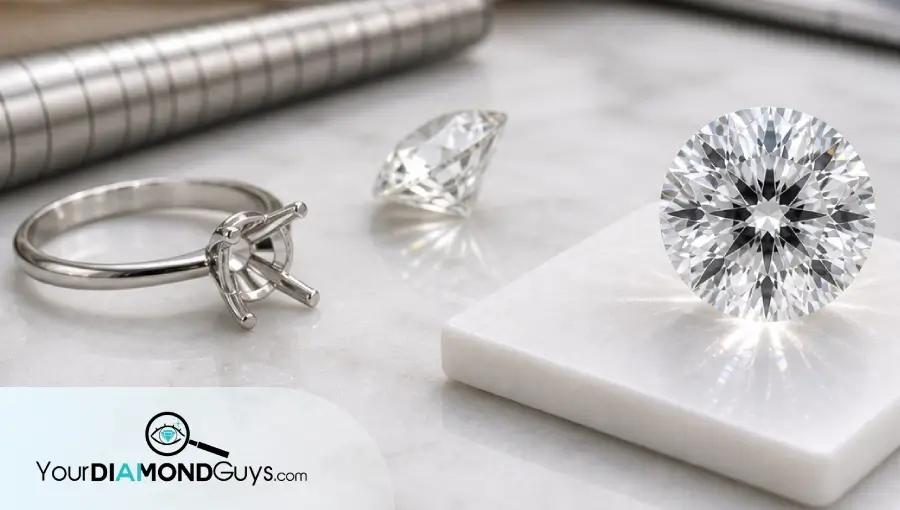
Use lab grown to buy a better ring, not a diamond with excuses.
By Josh Allen, Co-Founder of YourDiamondGuys.com. Fifth generation diamantaire with 25 years of experience in the global diamond trade. Former supplier to Tiffany & Co., Cartier, and Harry Winston.
A lab grown diamond engagement ring can be a smart buy when you use the savings for the right things, not just the biggest stone on the page.
Size is fun.
I like size.
But the ring still has to look clean, bright, balanced, and wearable every day.
The Fast Buyer Answer
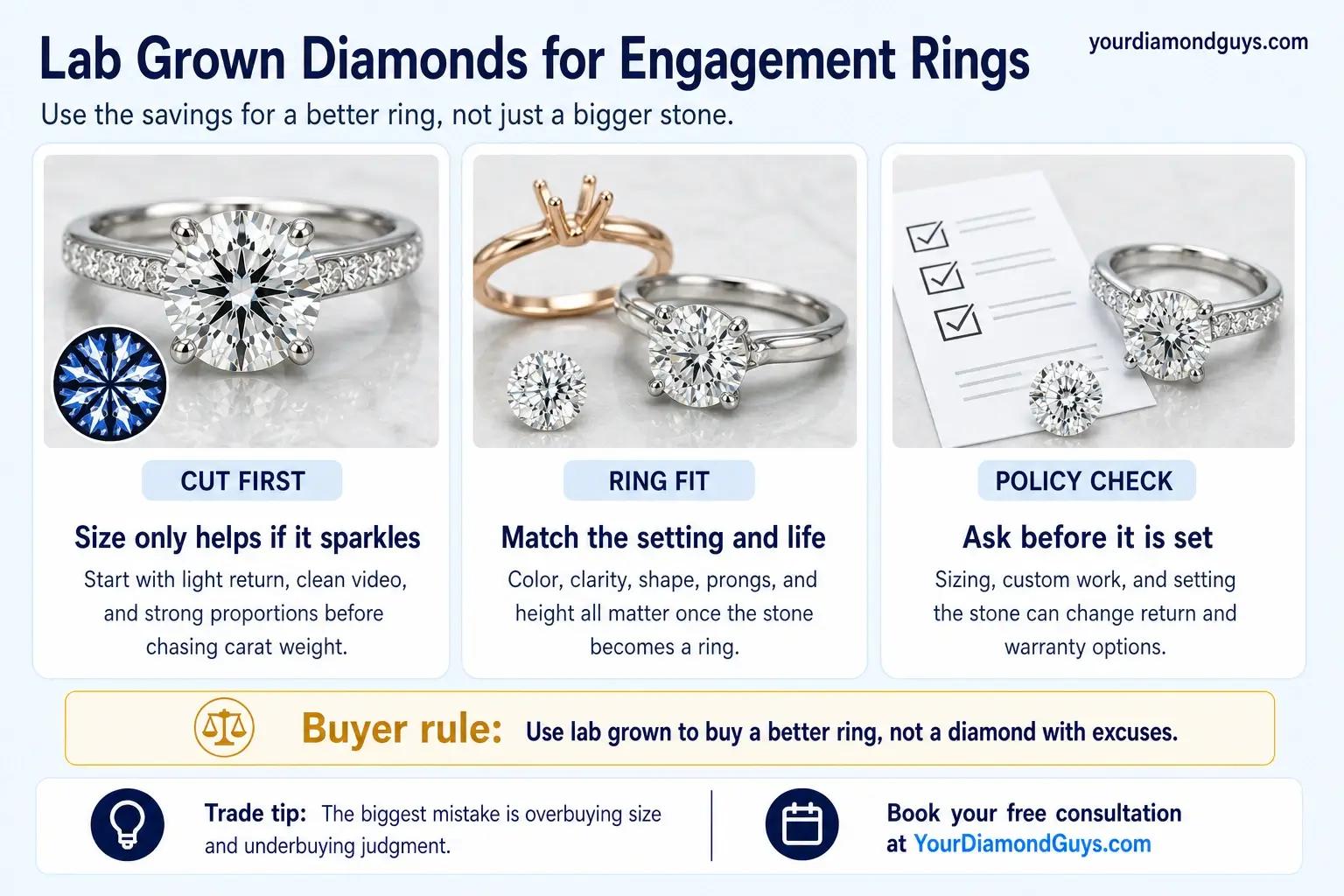
Start with cut, then choose size.
After that, match color, clarity, and shape to the setting and lifestyle. Then read the return and warranty policy before you pay.
That order keeps the ring from becoming a big certificate with a weak diamond attached.
Where Lab Grown Helps
Lab grown can let buyers choose a larger or higher grade diamond for the budget.
That is the appeal.
Use it wisely.
I would rather see a buyer choose a slightly smaller lab diamond with strong cut, clean transparency, and a beautiful outline than chase a huge stone with tint, haze, or dead light return.
Cut Comes First
Cut decides whether the diamond looks alive.
For round lab diamonds, start with table 56 to 58 percent, depth 60 to 62.4 percent, crown angle 34 to 35 degrees, pavilion angle 40.6 to 41 degrees, Excellent polish, and Excellent symmetry.
Then watch the actual video.
The lab diamond cut quality guide gives you the full screen.
Color Targets By Setting
White metal shows tint faster.
Yellow and rose gold can forgive warmth better.
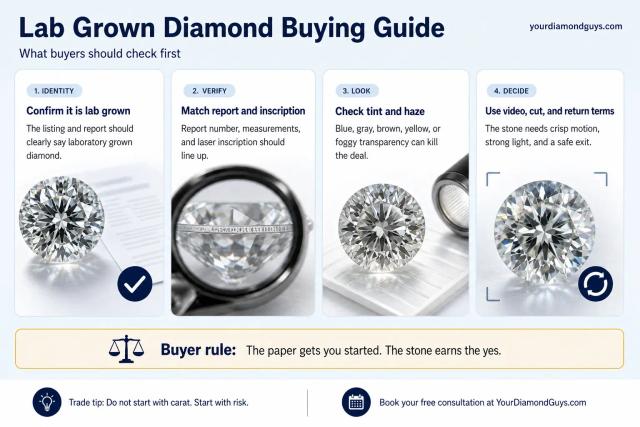
For lab grown diamonds, I still want neutral body color unless the buyer intentionally likes a warmer or cooler look. Watch for blue nuance, gray tint, brown tint, and yellow body color.
The blue nuance guide is worth reading before choosing a larger center stone.
Clarity Targets By Shape
Round brilliants hide small inclusions better than step cuts.
Emerald and Asscher cuts show clarity faster. Ovals, pears, and marquise stones need center and tip checks. Radiants and cushions can hide small features but still need transparency review.
Do not buy clarity from the grade alone.
Check the video.
Shape And Lifestyle
Some shapes need more setting protection.
Pear and marquise tips need smart prongs. Princess corners need protection. High open settings show more side color and can take more knocks during daily wear.
If the ring is for someone hard on jewelry, the setting matters as much as the diamond.
The fancy shape visual traps guide helps you avoid shape problems before setting choice takes over.
Engagement Ring Decision Table
| Buyer Goal | Smart Move |
|---|---|
| Bigger look | Size up only after cut and transparency pass |
| White metal setting | Be stricter on tint |
| Step cut style | Be stricter on clarity and body color |
| Daily wear | Choose secure setting and practical height |
| Future upgrade | Read policy before buying |
| Budget control | Compare look, not just grades |
Policy Matters For Rings
Loose diamond returns can be different from finished ring returns.
Ask before the stone is set.
Sizing, custom work, engraving, and special order settings can change return rights. Use the return and warranty checklist before the ring is built.
Trade Insider Moment
The most common lab grown engagement ring mistake is not buying lab grown.
It is overbuying size and underbuying judgment.
The buyer gets excited by the jump in carat weight and forgets to check the actual look. The ring arrives big, but not beautiful enough.
My Buyer Recommendation
Use lab grown to get a better ring, not just a larger stone.
Pick the shape she loves. Keep the cut strong. Keep body color clean. Keep clarity eye clean. Keep the setting practical. Keep the policy written.
That is a much better engagement ring than a huge stone with excuses.
What To Ask Before Buying
- Is the cut strong enough for the size?
- Does the diamond show tint or haze?
- Is clarity clean for this shape?
- Does the setting protect the shape?
- Can the ring be resized?
- Does setting the diamond change the return policy?
- Do I understand resale and upgrade expectations?
Reach out to Rob or me at YourDiamondGuys.com if you want help comparing stones for an engagement ring.
Where I Would Compare Rings And Protection
Use these sites as comparison tools, not automatic recommendations. For a setting and protection comparison, I would compare similar lab diamond rings on Brilliant Earth and review BriteCo for coverage rules before you decide.
Stop Trusting Every Diamond Lab!
Questions? Reach out directly for a free consultation, or drop them in the Diamond Buyers Academy community — Rob and Josh answer personally.
Questions Buyers Ask Us
Related Lab Grown Diamond Guides
Keep the full buying path close. These are the next checks that usually affect this decision.
*Some links on our site may earn us a small commission at NO EXTRA cost to you, helping us keep our content free*