Cushion Cut Proportions, Chunky Versus Crushed Ice
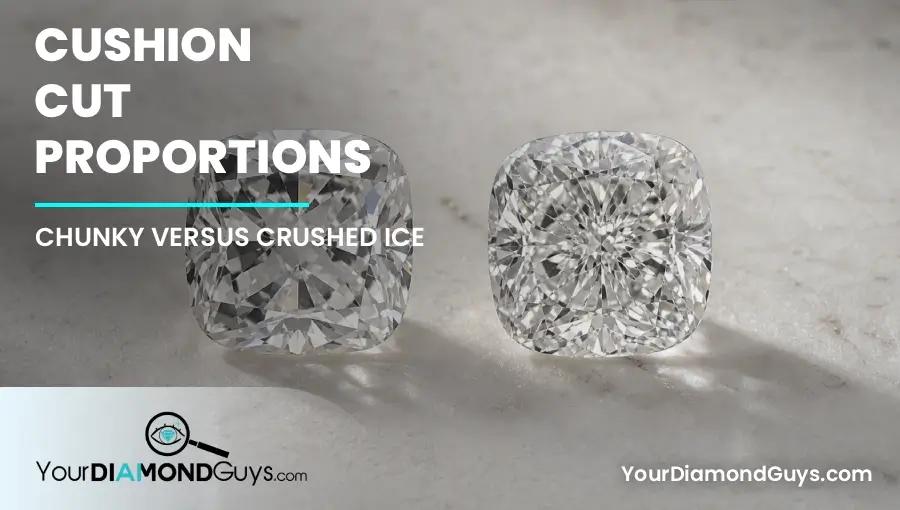
Chunky and crushed ice are facet personalities, not cut grades.
By Josh Allen, Co-Founder of YourDiamondGuys.com. Fifth generation diamantaire with 30+ years in the global diamond trade. Former supplier to Tiffany & Co., Cartier, and Harry Winston.
How we evaluate proportions: We identify chunky or crushed facet style first, then compare ratio, depth, spread, outline, and the moving pattern within that style. Mixing cushion types makes the numbers useless.
Chunky cushions show larger, broader reflections. Crushed ice cushions break the face into many small virtual facets. Neither style is automatically better. Weak execution is the problem.
In the trade, we sort cushions by look before numbers. The facet style changes what the numbers mean.
For natural cushion cuts, start with GIA. GIA distinguishes cushion brilliant and modified brilliant styles, which is why one proportion chart cannot judge every cushion.
The Short Answer
Choose the cushion style and outline first. Square cushions often sit around 1.00 to 1.08 ratio. Elongated cushions often sit around 1.15 to 1.30. The middle area creates a softly rectangular look.
Use table around 56 to 64 percent and depth around 61 to 68 percent as broad comparison zones. Then judge center texture, corner shape, spread, brightness, dead zones, and movement. Cushion style outranks a universal cutoff.
Identify The Facet Style Before Comparing Proportions
A cushion brilliant typically uses a simpler pavilion main structure and often creates broader reflections. A cushion modified brilliant adds facets and often produces finer, crushed texture. Antique inspired cushions can use tall crowns, small tables, open culets, and broad flashes.
The GIA cutting style description helps, but it does not fully describe the visible texture. Use a straight top image and slow video to classify the actual pattern.
Do not compare a chunky cushion with a crushed cushion on table, depth, and price alone. Decide which look you want first.
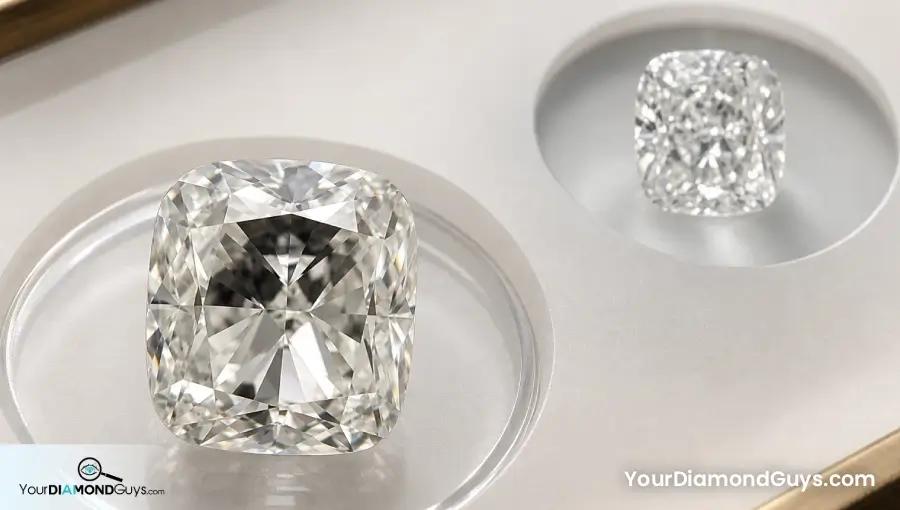
Under the same diffused light, broad chunky mirrors and fine crushed texture reveal two different cushion personalities.
Cushion Proportion Starting Zones
These zones create a workable shortlist. They are not a GIA cut grade and they do not tell you whether the center looks crisp or mushy.
Cushion outlines vary from round cornered squares to pillowy rectangles. Compare the outline quality before treating ratio as a style label.
| Cushion attribute | Practical starting zone | What to inspect |
|---|---|---|
| Square ratio | 1.00 to 1.08 | Side equality and corner match |
| Elongated ratio | 1.15 to 1.30 | Shoulders, belly, and center contrast |
| Table percentage | About 56 to 64 percent | Crown presence and facet texture |
| Depth percentage | About 61 to 68 percent | Spread, pavilion bulge, and hidden weight |
| Girdle | Avoid unexplained extremes | Corner thickness and face up size |
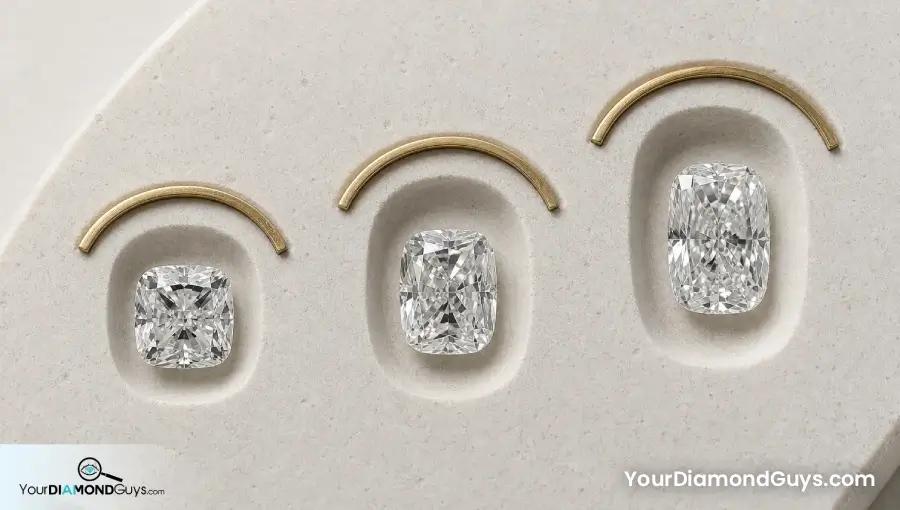
A cushion outline can move from square to softly rectangular to elongated before table and depth enter the conversation.
Chunky And Crushed Patterns Fail Differently
A chunky cushion can show a dead center, uneven mains, or large dark facets that do not switch. A crushed cushion can look gray, mushy, or glittery without clear brightness.
Strong chunky patterns show broad reflections that alternate cleanly. Strong crushed patterns show fine activity without a dull central smear.
The fancy shape limits guide explains why table and depth cannot identify either result. The moving pattern has to earn it.
Compare both patterns at normal viewing size after the magnified review. Fine facets that look fascinating on a large screen can merge into a quieter texture on the hand.
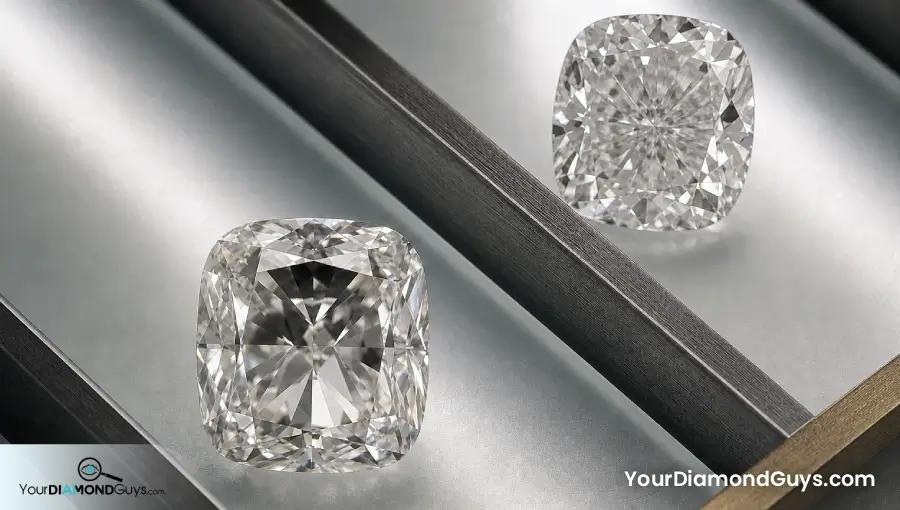
A stalled dark center hurts a chunky cushion. A gray, mushy center hurts a crushed pattern.
Depth Can Hide A Lot Of Cushion Weight
Cushions often face up smaller than rounds at the same carat because they carry depth, curved corners, and perimeter weight differently. A deep pavilion or thick girdle can tighten the footprint further.
Compare length and width within the same cushion style and ratio band. A chunky square and an elongated modified cushion do not form a fair peer pair.
A shallower cushion can spread better and still lose light. Use the spread score method to flag size, then let the video approve performance.
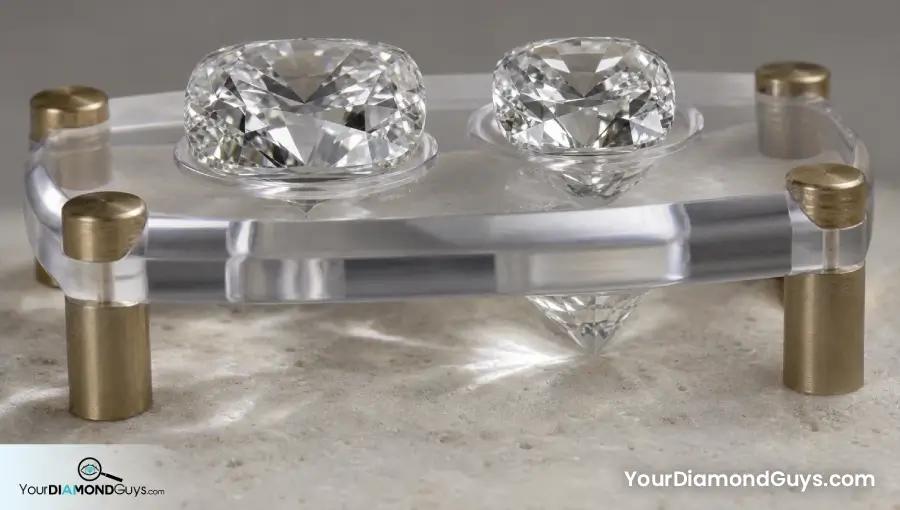
Two one carat cushions can carry weight differently. The deeper pavilion gives up face up spread.
How I Screen A Cushion
I ask one question first: broad chunky flashes or fine crushed texture? Then I compare only cushions that answer the same way.
The shortlist gets outline, spread, center texture, corner, girdle, and neutral video checks. A cushion wins when the style looks intentional across the whole face.
Two Cushions With Similar Numbers
Cushion A and Cushion B both have 61 percent tables, 65 percent depth, and 1.05 ratios. Cushion A is a cushion brilliant with broad mains. Cushion B is a modified brilliant with dense crushed texture.
The proportions do not make them substitutes. The buyer must choose the optical style, then compare execution inside that style.
Mistakes I Would Avoid
- Comparing chunky and crushed cushions as if the same ranges mean the same thing.
- Calling every modified brilliant a weak crushed ice stone.
- Ignoring depth and girdle when the cushion faces up small.
- Using ratio without judging corner and side shape.
- Buying from one frozen sparkle frame.
Questions To Ask Before Buying
- Is this a cushion brilliant or modified brilliant on the GIA report?
- Does the actual video show chunky or crushed texture?
- Does the center stay bright and active in diffused light?
- How does the footprint compare within the same style and ratio?
- Do all corners and sides form a balanced cushion outline?
Where To Compare The Proof
Affiliate disclosure: Your Diamond Guys can earn a small commission if you buy through a partner link. It does not change what you pay or which diamond we recommend.
Compare cushion cutting style, measurements, and videos on Brilliant Earth and Ritani. Build separate shortlists for broad chunky patterns and fine crushed patterns before comparing price.
The Cushion I Would Choose
Choose the facet style before the proportion range. The right cushion is the one whose texture you enjoy and whose execution stays bright and balanced.
Use ratio, table, and depth to organize the search. Use outline, spread, and movement to buy the stone.
If you want another set of eyes on the stone, book your free consultation with Your Diamond Guys.
Check The Whole Cushion
The broad cushion diamond guide covers the shape and buying strategy. For the technical screen, compare length to width ratio, outline quality, and the limits of fancy shape proportion ranges.
The diamond measurements and proportions hub connects cushion facet style with ratio, spread, outline, depth, and fancy shape limits.
Exploring the World of Cushion Cut Diamonds
Questions? Reach out directly for a free consultation, or drop them in the Diamond Buyers Academy community — Rob and Josh answer personally.
Questions Buyers Ask Us
*Some links on our site may earn us a small commission at NO EXTRA cost to you, helping us keep our content free*