Diamond Pavilion Depth And Pavilion Angle
By Rob Cornfield, Co-Founder of YourDiamondGuys.com. 30+ years in the global diamond trade. Specialist in diamond cut and light performance.
How we evaluate proportions: We read the GIA pavilion angle and pavilion depth, pair them with the crown, then inspect the center for leakage and weak contrast. The pavilion controls the light path, so the video has to confirm the report.
Here is the pavilion answer, pavilion depth measures vertical height and pavilion angle measures facet slope. For a natural round, start near 40.6 to 41 degrees and judge that number with the crown.
Most of the light that enters a round brilliant meets pavilion facets before it returns to your eye. Get those facets too shallow or too steep and the light exits where you do not want it.
We used to spot steep and deep makes across a parcel before anyone reached for a calculator. The center looked wrong. Modern reports give you the warning sooner, but you still need to look.
For natural diamonds, start with GIA. GIA explains that a pavilion that is too shallow or too deep can leak light, which is why I treat the pavilion as the engine of the cut.
The Short Answer
For natural round brilliants, I prefer a pavilion angle around 40.6 to 41 degrees. Pavilion depth commonly lands around 42.5 to 43.5 percent in the combinations I like, but angle gives the more useful optical clue.
The pavilion must pair with the crown. A 41 degree pavilion can work with a 34 degree crown. A 41.2 degree pavilion paired with a 35.5 degree crown carries much more leakage and darkness risk.
Pavilion Angle And Pavilion Depth Measure Different Things
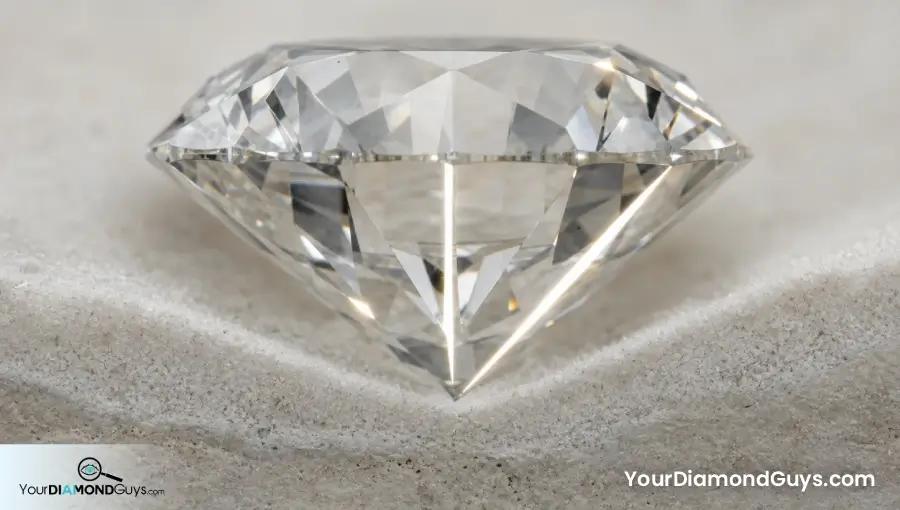
Pavilion angle describes the slope of the pavilion main facets. Pavilion depth describes the vertical distance from girdle to culet as a percentage of average diameter.
Facet geometry and rounding mean two stones with the same reported pavilion depth can have slightly different angle behavior. For rounds, I start with the angle and then use depth as a consistency check.
Do not confuse either value with total depth. Total depth includes crown, girdle, and pavilion. Pavilion depth covers only the lower section.
The Round Pavilion Zone I Trust First
A 40.6 to 41 degree pavilion angle gives me the cleanest round search. I still match the crown. Near 40.6, a slightly higher crown can work. Near 41, I prefer the crown closer to 34 degrees.
Pavilion angles sit near the critical route for light return. Small changes matter more here than most buyers expect, especially when the crown moves in the same steep or shallow direction.
| Pavilion angle | Main risk | What I want to see |
|---|---|---|
| Below 40.5 degrees | Shallow leakage and weak contrast | A compatible crown plus strong scope images |
| 40.6 to 40.9 degrees | Clean round search zone | Balanced arrows and minimal leakage |
| 41.0 degrees | Can work with the right crown | Crown near the lower part of the preferred range |
| 41.1 to 41.2 degrees | Steep leakage risk rises | Exceptional proof before keeping it |
| Above 41.2 degrees | Dark center and hidden depth risk | A clear reason not to move on |
Shallow And Steep Pavilions Fail Differently
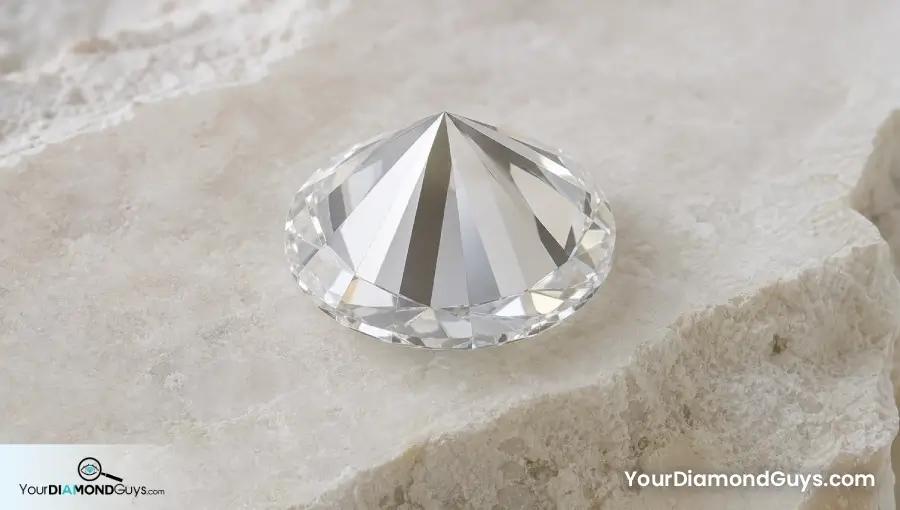
A pavilion that is too shallow can create leakage, weak contrast, and in severe cases a pale or fish eye effect. A pavilion that is too steep can create a dark center, extra total depth, and a smaller face up diameter.
Neither failure always looks obvious under jewelry store spotlights. Those lights create fast flashes from almost any polished facet. Diffused light and scope images expose the broader return pattern.
Pair the pavilion with the crown angle guide and table percentage guide. That three part relationship does more work than a seller's cut label.
When Fancy Shape Pavilion Data Is Missing
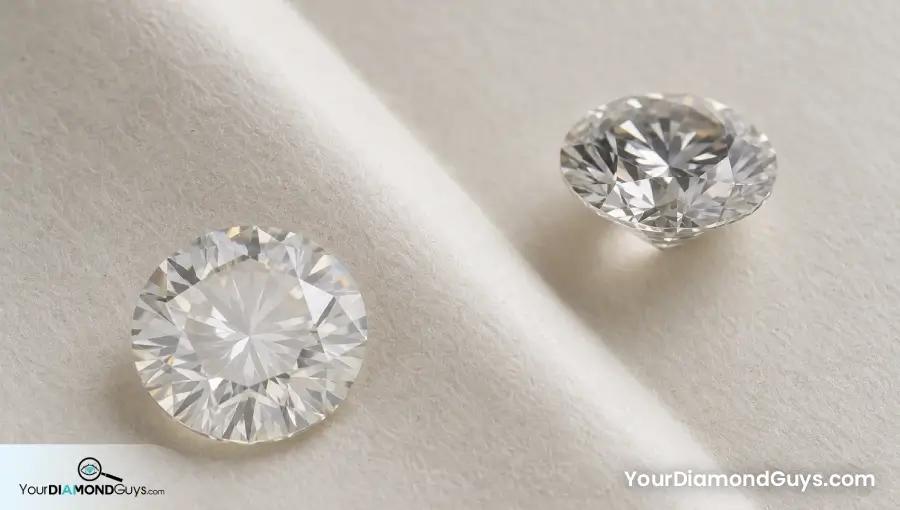
Most GIA reports for fancy shapes do not give the pavilion main angle set you want for a round style calculation. Even detailed scanner data can hide the complexity of mixed and modified facet arrangements.
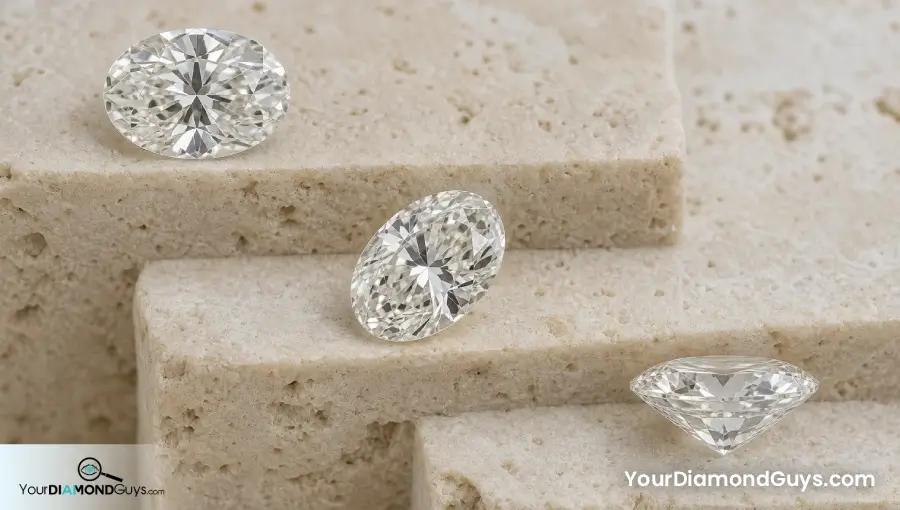
Replace missing numbers with evidence. Request a straight top view, a side profile, a slow rotation in diffused light, and an ASET or comparable light map when available. Watch for a dead center, broad window, persistent bow tie, or mushy zones that never brighten.
The fancy shape proportion limits guide explains why video outranks a borrowed pavilion target for ovals, cushions, radiants, pears, and emerald cuts.
How I Pair The Pavilion In A Shortlist
For rounds, I write the crown and pavilion as a pair, not separate columns. Then I check table, depth, lower half pattern, and scope images.
For fancy shapes, I accept that the report cannot finish the job. The stone stays only when the moving image shows bright areas switching on and off without a permanent dead zone controlling the face.
A Shallow Versus Steep Example
Round A has a 34 degree crown and 41 degree pavilion. Round B has a 35.5 degree crown and 41.2 degree pavilion. Both carry GIA Excellent cut.
Round A gets inspected first. Round B combines steep with steep, so I expect leakage or excessive darkness and demand strong scope proof. The shared Excellent label does not erase that difference.
Mistakes I Would Avoid
- Reading pavilion depth as total depth.
- Approving a pavilion angle without its crown pair.
- Assuming GIA Excellent guarantees the tightest light performance.
- Using jewelry store spotlight flashes as proof of return.
- Inventing a round style pavilion rule for a fancy shape with different faceting.
Questions To Ask Before Buying
- What are the pavilion angle and pavilion depth on the GIA report?
- What crown angle pairs with that pavilion?
- Do scope images show leakage under the table?
- Does the center stay dark as the stone moves?
- For a fancy shape, can I see a slow neutral video and light map?
Where To Compare The Proof
Affiliate disclosure: Your Diamond Guys can earn a small commission if you buy through a partner link. It does not change what you pay or which diamond we recommend.
Compare pavilion data beside actual cut proof on Whiteflash and Brian Gavin Diamonds. Look at the crown pair, then decide whether the scope pattern supports the report.
The Pavilion Pair I Would Choose
Keep round pavilion angles around 40.6 to 41 degrees and make the crown fit the choice. The closer a value gets to an edge, the more proof I want.
For fancy shapes, stop guessing when the report runs out of data. Ask for the images that show what the pavilion actually does.
If you want another set of eyes on the stone, book your free consultation with Your Diamond Guys.
Complete The Light Return Check
Use the combined crown and pavilion angle guide for the broad cut relationship. Then compare the crown, pavilion depth field, and table pairing.
Return to the diamond proportions screening guide to connect the pavilion with crown, table, total depth, and the finished light pattern.
The Perfect Diamond Pavilion Angle: How to Spot Light Leakage
Questions? Reach out directly for a free consultation, or drop them in the Diamond Buyers Academy community — Rob and Josh answer personally.
Questions Buyers Ask Us
*Some links on our site may earn us a small commission at NO EXTRA cost to you, helping us keep our content free*